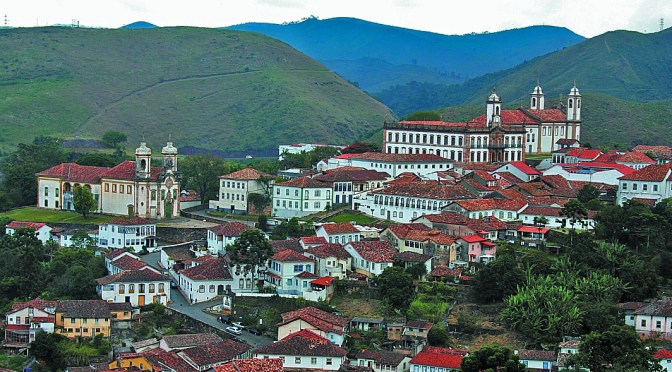
 As cidades históricas de Minas Gerais estão entre os maiores tesouros culturais do Brasil e atraem todos os anos inúmeros visitantes que seguem os passos da era do ouro e dos diamantes. Ouro Preto, Tiradentes, Diamantina e Congonhas preservam de maneira impressionante a memória do período colonial. Suas igrejas majestosas, praças e casarões testemunham a riqueza, a fé e a criatividade artística da época.

Ouro Preto foi a cidade do ouro mais importante do século XVIII e chegou a ser capital da província. Suas ruas estreitas e íngremes, calçadas de pedras, são ladeadas por igrejas barrocas, entre elas a famosa Igreja de São Francisco de Assis, obra do genial escultor Aleijadinho. O conjunto arquitetônico da cidade é considerado um patrimônio único e faz parte da lista da UNESCO. Hoje, muitos casarões abrigam museus, lojas de artesanato e aconchegantes pousadas.
Tiradentes, por sua vez, é menor e mais tranquila, mas igualmente encantadora. Nomeada em homenagem ao herói nacional Joaquim José da Silva Xavier, conhecido como Tiradentes, a cidade mantém um inconfundível charme colonial. A Matriz de Santo Antônio, decorada com talhas douradas, é considerada uma das mais belas igrejas do Brasil. Suas ruas de pedras transmitem a atmosfera de séculos passados, enquanto restaurantes e ateliês conferem à cidade um toque contemporâneo e acolhedor.
Diamantina, como o nome indica, prosperou com o ciclo dos diamantes. Também reconhecida pela UNESCO, encanta com suas casas brancas de janelas azuis, perfeitamente integradas à paisagem montanhosa. Foi em Diamantina que viveu Chica da Silva, figura marcante cuja história reflete tanto a opulência quanto as desigualdades da época. As serestas que ainda ecoam pelas ruas dão à cidade um caráter romântico e musical.
Congonhas, por fim, é célebre pelo Santuário do Bom Jesus de Matosinhos, igualmente tombado pela UNESCO. Ali, Aleijadinho criou as famosas esculturas dos doze profetas em pedra-sabão, consideradas um auge da arte barroca brasileira. Além das estátuas, as capelas que retratam as cenas da Paixão de Cristo completam o impacto do conjunto. Juntas, Ouro Preto, Tiradentes, Diamantina e Congonhas formam um verdadeiro museu vivo do período colonial brasileiro. Visitar essas cidades é viajar no tempo, descobrindo uma era marcada por contrastes: riqueza e exploração, arte e opressão, fé e poder. Hoje, são locais de memória cultural onde o passado e o presente se encontram de forma grandiosa.
 Die historischen Städte Minas Gerais’ gehören zu den bedeutendsten Kulturschätzen Brasiliens und ziehen jedes Jahr unzählige Besucher an, die auf den Spuren der Gold- und Diamantenära wandeln. Besonders Ouro Preto, Tiradentes, Diamantina und Congonhas bewahren eindrucksvoll die Erinnerung an die Kolonialzeit, ihre prächtigen Kirchen, Plätze und Bürgerhäuser zeugen von Reichtum, Glauben und künstlerischem Schaffen.
Ouro Preto war einst die wichtigste Goldstadt des 18. Jahrhunderts und zeitweise sogar Hauptstadt der Provinz. Die engen, steilen Kopfsteinpflasterstraßen sind von barocken Kirchen gesäumt, darunter die weltberühmte Igreja de São Francisco de Assis, die vom genialen Bildhauer Aleijadinho gestaltet wurde. Das Stadtbild ist ein einzigartiges Gesamtkunstwerk und UNESCO-Weltkulturerbe. In den alten Häusern befinden sich heute Museen, Kunsthandwerksläden und gemütliche Pensionen.
Tiradentes hingegen ist kleiner und beschaulicher, doch nicht weniger charmant. Benannt nach dem Nationalhelden Joaquim José da Silva Xavier, besser bekannt als Tiradentes, bewahrt die Stadt ein unvergleichliches koloniales Flair. Die Hauptkirche Matriz de Santo Antônio ist mit reich vergoldeten Schnitzereien verziert und gilt als eine der schönsten Kirchen Brasiliens. In den kopfsteingepflasterten Straßen spürt man die Ruhe und Gelassenheit vergangener Jahrhunderte, und die vielen kleinen Restaurants und Ateliers machen den Ort zu einem beliebten Ziel für Kunstliebhaber und Gourmets.
Diamantina, wie der Name schon sagt, wurde durch den Diamantenboom groß. Die Stadt ist ebenfalls UNESCO-Weltkulturerbe und bezaubert durch ihre weißen Häuser mit blauen Fenstern, die sich harmonisch in die hügelige Landschaft einfügen. Hier lebte die berühmte Sängerin Chica da Silva, deren Geschichte eng mit dem Reichtum und den sozialen Gegensätzen der damaligen Zeit verbunden ist. Die lebendigen Serenaden, die noch heute in den Straßen von Diamantina gespielt werden, geben der Stadt einen romantischen und musikalischen Charakter.
Congonhas schließlich ist vor allem für das Heiligtum Bom Jesus de Matosinhos bekannt, das ebenfalls auf der UNESCO-Liste steht. Dort schuf Aleijadinho seine berühmten zwölf Prophetenstatuen aus Speckstein, die als Höhepunkt der barocken Bildhauerkunst in Brasilien gelten. Die Anlage beeindruckt nicht nur durch die Skulpturen, sondern auch durch die Kapellen mit Szenen des Leidenswegs Christi. Zusammen bilden Ouro Preto, Tiradentes, Diamantina und Congonhas eine Art lebendiges Museum der brasilianischen Kolonialzeit. Wer diese Städte besucht, reist zurück in eine Zeit voller Gegensätze: Reichtum und Ausbeutung, Kunst und Unterdrückung, Glauben und Macht. Heute sind sie Orte des kulturellen Gedächtnisses, in denen sich Vergangenheit und Gegenwart auf eindrucksvolle Weise begegnen.
 The historic cities of Minas Gerais are among Brazil’s greatest cultural treasures and attract countless visitors each year who retrace the steps of the gold and diamond era. Ouro Preto, Tiradentes, Diamantina and Congonhas preserve the memory of the colonial period in an impressive way. Their majestic churches, squares and mansions testify to the wealth, faith and artistic creativity of the time.
Ouro Preto was once the most important gold city of the 18th century and even served as the provincial capital. Its narrow, steep cobblestone streets are lined with baroque churches, including the world-famous Church of Saint Francis of Assisi, designed by the genius sculptor Aleijadinho. The city as a whole is a unique architectural ensemble and a UNESCO World Heritage Site. Today, many old houses host museums, craft shops and charming guesthouses.
Tiradentes, in contrast, is smaller and quieter, but equally enchanting. Named after the national hero Joaquim José da Silva Xavier, known as Tiradentes, the town retains an unmistakable colonial charm. The Main Church of Santo Antônio, richly decorated with golden carvings, is considered one of the most beautiful in Brazil. Its cobbled streets convey the calm atmosphere of centuries past, while restaurants and art studios add a welcoming contemporary flair.
Diamantina, as its name suggests, flourished during the diamond boom. Also recognized by UNESCO, it fascinates with its white houses with blue windows, harmoniously set against the hilly landscape. It was here that the famous singer Chica da Silva lived, whose story reflects both the wealth and the inequalities of the time. The serenades still performed in its streets give Diamantina a romantic and musical character.
Congonhas, finally, is renowned for the Sanctuary of Bom Jesus de Matosinhos, also listed by UNESCO. Here, Aleijadinho created his famous soapstone sculptures of the twelve prophets, considered the pinnacle of Brazilian baroque sculpture. In addition to the statues, the chapels depicting the Passion of Christ complete the ensemble’s striking impact. Together, Ouro Preto, Tiradentes, Diamantina and Congonhas form a living museum of Brazil’s colonial period. Visiting these cities means traveling back in time to an era of contrasts: wealth and exploitation, art and oppression, faith and power. Today, they are places of cultural memory where past and present meet in a powerful way.
 imagenseviagens.com.br/travelandimages.com