Arquivo da categoria: Europa

Bruges/Brügge

Bruges é uma das cidades medievais mais bonitas e bem preservadas da Europa. Localizada no noroeste da Bélgica, na província da Flandres Ocidental, a cidade atrai milhões de visitantes de todo o mundo todos os anos. Devido à sua importância histórica e ao seu centro antigo extraordinariamente bem conservado, Bruges foi declarada Patrimônio Mundial da UNESCO.

A história de Bruges remonta à Idade Média, quando a cidade era um importante centro comercial da Europa. Graças à sua localização estratégica e à ligação com o Mar do Norte, tornou-se um ponto de encontro para comerciantes de diversos países. A prosperidade econômica e o intercâmbio cultural marcaram o desenvolvimento da cidade e deixaram um legado de impressionantes monumentos históricos.

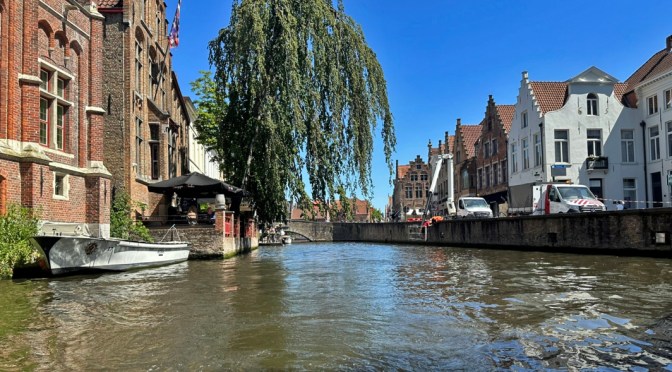
Bruges é especialmente famosa pelos seus canais pitorescos, que lhe renderam o apelido de “Veneza do Norte”. Os visitantes podem fazer passeios de barco e admirar edifícios históricos e pontes românticas de uma perspectiva única. A Praça do Mercado, com o seu famoso campanário, está entre as principais atrações turísticas da cidade. Do topo da torre, é possível desfrutar de uma vista magnífica sobre os telhados de Bruges.

A cidade também oferece uma rica vida cultural. Diversos museus exibem obras de mestres flamengos e contam a história da região. As ruas estreitas, as praças históricas e as igrejas góticas criam uma atmosfera especial. Além disso, Bruges é conhecida pelos seus chocolates, pelas rendas artesanais e pelas tradicionais cervejas belgas.

Em qualquer época do ano, a cidade possui um encanto particular. Na primavera, os parques e jardins florescem; no verão, as ruas ganham vida com turistas; no outono, as folhas coloridas criam um ambiente romântico; e, no inverno, os mercados de Natal transformam a cidade em um cenário festivo. Por isso, Bruges é um destino ideal para amantes da história, da cultura e para todos aqueles que desejam conhecer uma cidade europeia única.

Brügge ist eine der schönsten und am besten erhaltenen mittelalterlichen Städte Europas. Die Stadt liegt im Nordwesten Belgiens in der Provinz Westflandern und zieht jedes Jahr Millionen von Besuchern aus aller Welt an. Aufgrund ihrer historischen Bedeutung und ihres außergewöhnlich gut erhaltenen Stadtbildes wurde die Altstadt von Brügge zum UNESCO-Weltkulturerbe erklärt.

Die Geschichte Brügges reicht bis ins Mittelalter zurück, als die Stadt ein bedeutendes Handelszentrum Europas war. Dank ihrer günstigen Lage und der Verbindung zur Nordsee entwickelte sie sich zu einem wichtigen Knotenpunkt für Kaufleute aus vielen Ländern. Wohlstand und kultureller Austausch prägten die Entwicklung der Stadt und hinterließen zahlreiche beeindruckende Bauwerke.

Besonders bekannt ist Brügge für seine malerischen Kanäle, die der Stadt den Beinamen „Venedig des Nordens“ eingebracht haben. Besucher können bei einer Bootsfahrt die historischen Gebäude und romantischen Brücken aus einer einzigartigen Perspektive bewundern. Der Marktplatz mit seinem berühmten Belfried zählt zu den wichtigsten Sehenswürdigkeiten der Stadt. Von der Spitze des Turms bietet sich ein beeindruckender Blick über die Dächer Brügges.

Auch kulturell hat Brügge viel zu bieten. Zahlreiche Museen präsentieren Kunstwerke flämischer Meister sowie die Geschichte der Region. Die engen Gassen, die historischen Plätze und die gotischen Kirchen verleihen der Stadt eine besondere Atmosphäre. Darüber hinaus ist Brügge für seine Schokolade, seine Spitzenkunst und seine traditionellen belgischen Biere bekannt.

Zu jeder Jahreszeit besitzt die Stadt ihren eigenen Charme. Im Frühling blühen die Parks und Gärten, im Sommer beleben zahlreiche Touristen die Straßen, im Herbst sorgen die bunten Blätter für eine romantische Stimmung, und im Winter verwandeln Weihnachtsmärkte die Stadt in eine festliche Kulisse. Brügge ist daher ein ideales Reiseziel für Geschichtsinteressierte, Kulturfreunde und alle, die eine einzigartige europäische Stadt entdecken möchten.

Bruges is one of the most beautiful and best-preserved medieval cities in Europe. Located in the northwest of Belgium, in the province of West Flanders, the city attracts millions of visitors from around the world every year. Due to its historical importance and exceptionally well-preserved old town, Bruges has been designated a UNESCO World Heritage Site.

The history of Bruges dates back to the Middle Ages, when it was a major trading center in Europe. Thanks to its strategic location and connection to the North Sea, the city became an important hub for merchants from many countries. Economic prosperity and cultural exchange shaped its development and left behind an impressive collection of historic buildings.

Bruges is especially famous for its picturesque canals, which have earned it the nickname “The Venice of the North.” Visitors can enjoy boat tours and admire historic buildings and charming bridges from a unique perspective. The Market Square, with its famous Belfry tower, is one of the city’s main attractions. From the top of the tower, visitors can enjoy a spectacular view over the rooftops of Bruges.

The city also offers a rich cultural experience. Numerous museums display works by Flemish masters and present the history of the region. Narrow streets, historic squares, and Gothic churches create a distinctive atmosphere. In addition, Bruges is well known for its chocolate, lace-making traditions, and famous Belgian beers.

Every season gives the city a different charm. In spring, parks and gardens bloom with colorful flowers; in summer, the streets are filled with visitors; in autumn, colorful leaves create a romantic setting; and in winter, Christmas markets transform the city into a festive wonderland. For these reasons, Bruges is an ideal destination for history enthusiasts, culture lovers, and anyone wishing to discover a unique European city.

Copenhague/Kopenhagen/Copenhagen

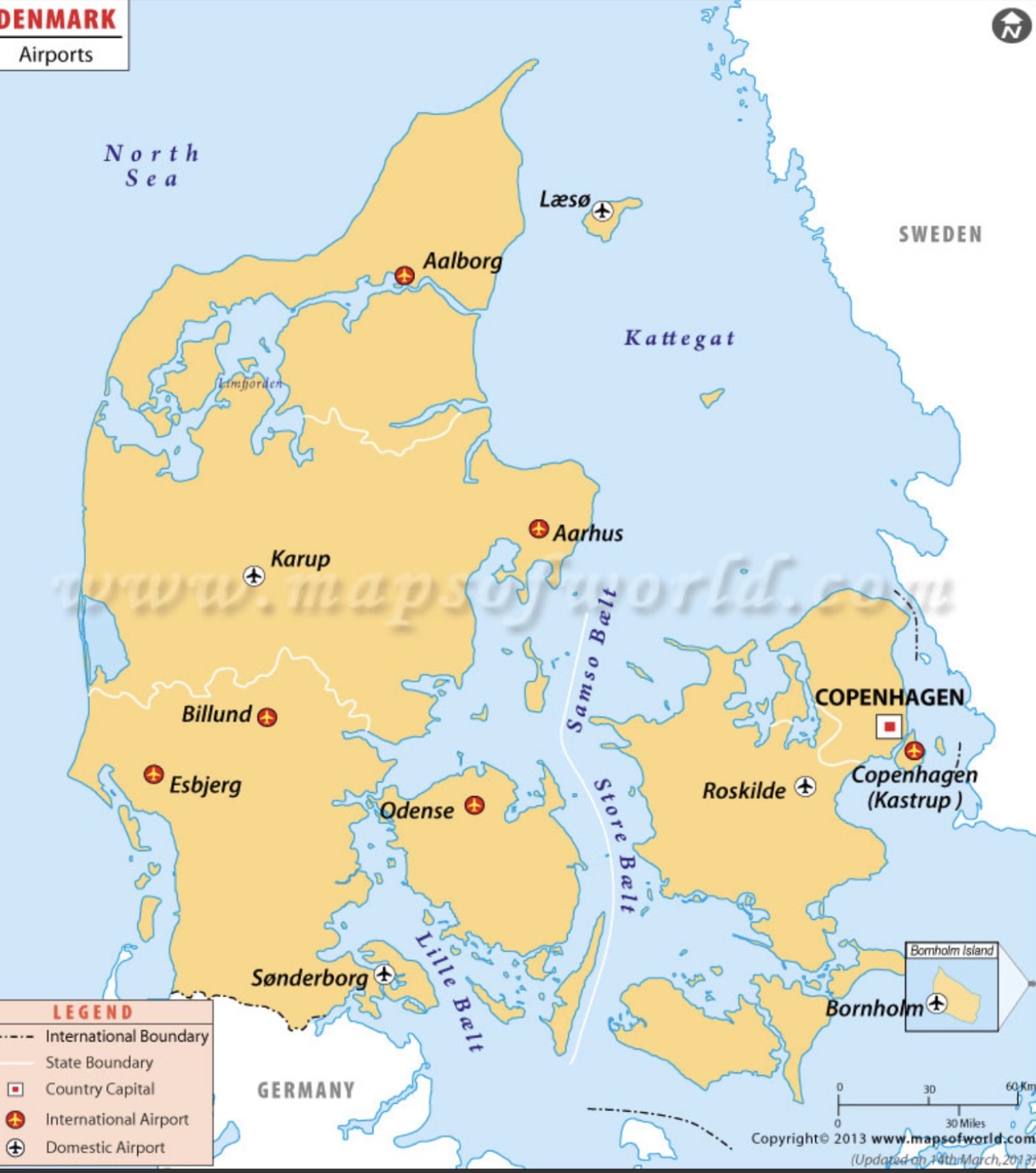
Copenhague é a capital da Dinamarca e está localizada na costa leste da ilha da Zelândia.

Fonte/Quelle/Source: https://www.mapsofworld.com/international-airports/europe/denmark.html

A cidade é considerada uma das metrópoles mais habitáveis da Europa. Os visitantes apreciam a combinação de arquitetura histórica e design moderno.

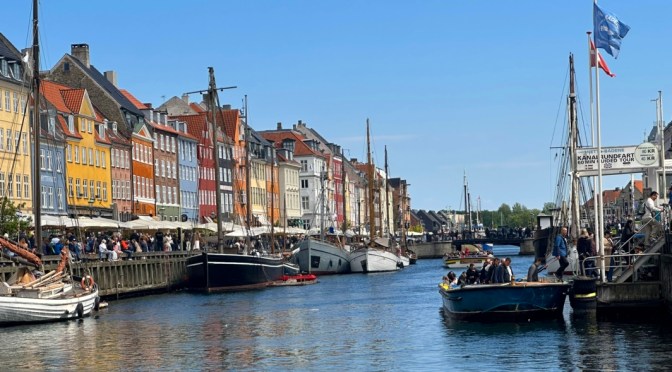
O colorido bairro portuário de Nyhavn está entre as atrações mais famosas da cidade. Ali, antigas casas de comerciantes se alinham ao longo da água.

Copenhague também é famosa por sua extensa rede de ciclovias. Grande parte da população se desloca diariamente de bicicleta pela cidade. Isso cria uma atmosfera relaxada e ambientalmente sustentável.

No centro fica o Tivoli, um dos parques de diversão mais antigos do mundo. À noite, a iluminação cria um clima especialmente encantador. A estátua da Pequena Sereia, inspirada em Hans Christian Andersen, atrai numerosos turistas todos os anos. Os palácios reais também merecem uma visita. O Palácio de Amalienborg serve como residência da família real dinamarquesa. A troca da guarda em frente ao palácio é um espetáculo popular. Copenhague possui uma cena cultural vibrante, com museus, teatros e concertos. O Museu Nacional oferece uma visão abrangente da história da Dinamarca. A arquitetura moderna pode ser encontrada, entre outros lugares, no bairro de Ørestad. Lá se destacam edifícios futuristas e projetos habitacionais inovadores. A cidade também tem muito a oferecer em termos de gastronomia. O restaurante Noma ganhou fama internacional por sua culinária nórdica. Além da alta gastronomia, há muitos cafés aconchegantes e mercados de comida de rua.

Os dinamarqueses valorizam muito o conceito de “hygge”, que significa aconchego e bem-estar. Esse estilo de vida pode ser sentido em muitos restaurantes e bairros da cidade. Os calçadões à beira d’água convidam a caminhar e relaxar. No verão, muitas pessoas utilizam os banhos portuários para nadar.

A cidade combina tradição e inovação de maneira notável. Copenhague investe fortemente em desenvolvimento urbano sustentável e tecnologias verdes. Por isso, a cidade é considerada uma referência em proteção climática. Ao mesmo tempo, preserva sua identidade histórica e seu charme nórdico. Quem visita Copenhague encontra uma capital moderna, aberta e cheia de vida. 

Kopenhagen ist die Hauptstadt Dänemarks und liegt an der Ostküste der Insel Seeland.

Fonte/Quelle/Source: https://www.mapsofworld.com/international-airports/europe/denmark.html

Die Stadt gilt als eine der lebenswertesten Metropolen Europas. Besucher schätzen die Mischung aus historischer Architektur und modernem Design. Das farbenfrohe Hafenviertel Nyhavn gehört zu den bekanntesten Sehenswürdigkeiten.

Dort reihen sich alte Kaufmannshäuser entlang des Wassers. Kopenhagen ist außerdem für seine vielen Fahrradwege berühmt. Ein großer Teil der Bevölkerung bewegt sich täglich mit dem Fahrrad durch die Stadt. Das macht die Atmosphäre entspannt und umweltfreundlich.

Im Zentrum befindet sich der Tivoli, einer der ältesten Vergnügungsparks der Welt. Besonders am Abend sorgt die Beleuchtung für eine besondere Stimmung. Die Kleine Meerjungfrau, inspiriert von Hans Christian Andersen, zieht jedes Jahr zahlreiche Touristen an. Auch die königlichen Schlösser sind einen Besuch wert. Schloss Amalienborg dient als Residenz der dänischen Königsfamilie. Die Wachablösung vor dem Schloss ist ein beliebtes Schauspiel. Kopenhagen besitzt eine lebendige Kulturszene mit Museen, Theatern und Konzerten. Das Nationalmuseum vermittelt einen umfassenden Einblick in die Geschichte Dänemarks. Moderne Architektur findet man unter anderem im Viertel Ørestad. Dort stehen futuristische Gebäude und innovative Wohnprojekte.

Kulinarisch hat die Stadt ebenfalls viel zu bieten. Internationale Bekanntheit erlangte das Restaurant Noma mit seiner nordischen Küche. Neben gehobener Gastronomie gibt es zahlreiche gemütliche Cafés und Street-Food-Märkte. Die Dänen legen großen Wert auf das Konzept „Hygge“, also auf Gemütlichkeit und Wohlbefinden. Dieses Lebensgefühl spürt man in vielen Restaurants und Wohnvierteln. Die Uferpromenaden laden zum Spazieren und Entspannen ein. Im Sommer nutzen viele Menschen die Hafenbäder zum Schwimmen. Die Stadt verbindet Tradition und Innovation auf bemerkenswerte Weise.

Kopenhagen investiert stark in nachhaltige Stadtentwicklung und grüne Technologien. Dadurch gilt die Stadt als Vorreiter im Bereich Klimaschutz. Gleichzeitig bewahrt sie ihre historische Identität und ihren nordischen Charme. Wer Kopenhagen besucht, erlebt eine moderne, offene und lebensfrohe Hauptstadt.

Copenhagen is the capital of Denmark and is located on the eastern coast of the island of Zealand.

Fonte/Quelle/Source: https://www.mapsofworld.com/international-airports/europe/denmark.html

The city is considered one of the most livable metropolises in Europe. Visitors appreciate the combination of historic architecture and modern design. The colorful harbor district of Nyhavn is among the city’s most famous attractions. Old merchant houses line the waterfront there. Copenhagen is also famous for its extensive network of bicycle paths. A large part of the population travels through the city by bicycle every day. This creates a relaxed and environmentally friendly atmosphere. In the center lies Tivoli, one of the oldest amusement parks in the world. In the evening, the illumination creates a particularly special atmosphere. The Little Mermaid statue, inspired by Hans Christian Andersen, attracts numerous tourists every year. The royal palaces are also well worth a visit. Amalienborg Palace serves as the residence of the Danish royal family. The changing of the guard in front of the palace is a popular spectacle. Copenhagen has a vibrant cultural scene with museums, theaters, and concerts. The National Museum offers a comprehensive insight into Denmark’s history. Modern architecture can be found, among other places, in the Ørestad district. Futuristic buildings and innovative housing projects stand there. The city also has much to offer in terms of cuisine. The restaurant Noma gained international fame for its Nordic cuisine. In addition to fine dining, there are many cozy cafés and street-food markets. Danes place great value on the concept of “hygge,” meaning coziness and well-being. This way of life can be felt in many restaurants and neighborhoods. The waterfront promenades invite visitors to walk and relax. In summer, many people use the harbor baths for swimming. The city combines tradition and innovation in a remarkable way. Copenhagen invests heavily in sustainable urban development and green technologies. As a result, the city is regarded as a pioneer in climate protection. At the same time, it preserves its historic identity and Nordic charm. Anyone who visits Copenhagen experiences a modern, open, and lively capital.

Passau

Passau está localizada no sudeste da Alemanha, no estado da Baviera, e é uma das cidades mais bonitas do Danúbio.
A cidade é mundialmente conhecida como a Cidade dos Três Rios, onde se encontram o Danúbio, o Inn e o Ilz.
Cada rio possui uma cor própria, tornando o espetáculo natural ainda mais impressionante.
O centro histórico situa-se de forma pitoresca numa estreita península entre o Danúbio e o Inn.
Ruas estreitas, fachadas barrocas e praças históricas marcam a paisagem urbana.
Depois de um grande incêndio no século XVII, Passau foi reconstruída em estilo barroco.
Muitos edifícios lembram a arquitetura italiana e dão à cidade um charme meridional.
Acima da cidade ergue-se a poderosa fortaleza Veste Oberhaus do século XIII.
De lá se tem uma vista magnífica de Passau e dos três rios.
Hoje a fortaleza abriga um museu e miradouros populares.
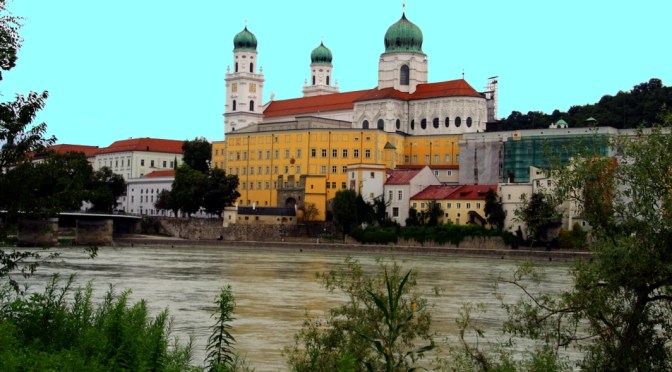
Outro símbolo importante é a Catedral de Santo Estêvão no coração da cidade antiga.
A catedral possui um dos maiores órgãos de igreja da Europa.
Concertos regulares de órgão atraem visitantes do mundo inteiro.
As margens dos rios convidam para caminhadas e passeios de bicicleta.
Muitos cruzeiros pelo Danúbio começam ou terminam aqui.
Por isso, Passau é também um importante centro de turismo fluvial.
A cidade possui uma universidade dinâmica e de reputação internacional.
Isso dá a Passau uma atmosfera jovem, aberta e culturalmente diversa.
Cafés, pequenas lojas e tavernas tradicionais animam o centro histórico.
Especialidades bávaras são servidas com prazer.
Pretzels, bolinhos e cervejas regionais são especialmente populares.
No verão acontecem numerosas festas e eventos.
No período natalino, mercados transformam a cidade num cenário festivo.
As enchentes também marcaram muitas vezes a história de Passau.
Hoje medidas modernas protegem melhor a cidade contra inundações.
Sua localização próxima da Áustria faz de Passau uma importante cidade fronteiriça.
A partir daqui, Salzburgo, Linz e Munique são facilmente acessíveis.
Arte, história e natureza unem-se aqui de forma especial.
Passau é considerada uma das cidades mais encantadoras do sul da Alemanha.
Quem visita Passau vive cultura, paisagens fluviais e hospitalidade bávara ao mesmo tempo.

Passau liegt im Südosten Deutschlands im Bundesland Bayern und ist eine der schönsten Städte an der Donau.
Die Stadt ist weltweit bekannt als Dreiflüssestadt, weil hier Donau, Inn und Ilz zusammenfließen.
Jeder dieser Flüsse besitzt eine eigene Farbe, was das Naturschauspiel besonders eindrucksvoll macht.
Die Altstadt liegt malerisch auf einer schmalen Halbinsel zwischen Donau und Inn.
Enge Gassen, barocke Fassaden und historische Plätze prägen das Stadtbild.
Nach einem großen Brand im 17. Jahrhundert wurde Passau im barocken Stil neu aufgebaut.
Viele Gebäude erinnern an italienische Architektur und verleihen der Stadt südliches Flair.
Über der Stadt erhebt sich die mächtige Veste Oberhaus aus dem 13. Jahrhundert.
Von dort hat man einen herrlichen Blick auf Passau und die drei Flüsse.
Heute beherbergt die Burg ein Museum und beliebte Aussichtspunkte.
Ein weiteres Wahrzeichen ist der Stephansdom im Herzen der Altstadt.
Der Dom besitzt eine der größten Kirchenorgeln Europas.
Regelmäßige Orgelkonzerte ziehen Besucher aus aller Welt an.
Die Uferpromenaden laden zu Spaziergängen und Radtouren ein.
Viele Kreuzfahrtschiffe auf der Donau beginnen oder beenden hier ihre Reisen.
Passau ist daher auch ein wichtiges Zentrum des Flusstourismus.
Die Stadt besitzt eine lebendige Universität mit internationalem Ruf.
Dadurch wirkt Passau jung, offen und kulturell vielseitig.
Cafés, kleine Geschäfte und traditionelle Wirtshäuser beleben die Altstadt.
Bayerische Spezialitäten werden hier gerne serviert.
Besonders beliebt sind Brezen, Knödel und regionale Biere.
Im Sommer finden zahlreiche Feste und Veranstaltungen statt.
Zur Weihnachtszeit verwandeln Märkte die Stadt in eine festliche Kulisse.
Auch Hochwasser hat die Geschichte Passaus immer wieder geprägt.
Heute schützen moderne Maßnahmen die Stadt besser vor Überschwemmungen.
Die Lage nahe Österreich macht Passau zu einem wichtigen Grenzort.
Von hier aus sind Salzburg, Linz und München gut erreichbar.
Kunst, Geschichte und Natur verbinden sich hier auf besondere Weise.
Passau gilt als eine der reizvollsten Städte Süddeutschlands.
Wer Passau besucht, erlebt Kultur, Wasserlandschaften und bayerische Gastfreundschaft zugleich.

Passau is located in southeastern Germany in the state of Bavaria and is one of the most beautiful towns on the Danube.
The city is world-famous as the City of Three Rivers, where the Danube, Inn and Ilz meet.
Each river has its own color, making the natural spectacle especially impressive.
The old town lies picturesquely on a narrow peninsula between the Danube and Inn.
Narrow streets, baroque façades and historic squares shape the cityscape.
After a great fire in the 17th century, Passau was rebuilt in baroque style.
Many buildings recall Italian architecture and give the city a southern charm.
Above the city rises the mighty Veste Oberhaus fortress from the 13th century.
From there, visitors enjoy a wonderful view over Passau and the three rivers.
Today the fortress houses a museum and popular viewpoints.
Another landmark is St. Stephen’s Cathedral in the heart of the old town.
The cathedral has one of the largest church organs in Europe.
Regular organ concerts attract visitors from around the world.
The river promenades invite people to walk and cycle.
Many Danube cruise ships begin or end their journeys here.
Passau is therefore an important center of river tourism.
The city has a lively university with an international reputation.
This gives Passau a young, open and culturally diverse atmosphere.
Cafés, small shops and traditional inns enliven the old town.
Bavarian specialties are gladly served here.
Pretzels, dumplings and regional beers are especially popular.
Many festivals and events take place in summer.
At Christmas time, markets transform the city into a festive setting.
Flooding has also shaped Passau’s history many times.
Today modern measures protect the city better from floods.
Its location near Austria makes Passau an important border town.
From here Salzburg, Linz and Munich are easily reachable.
Art, history and nature combine here in a special way.
Passau is considered one of the most charming towns in southern Germany.
Anyone visiting Passau experiences culture, river landscapes and Bavarian hospitality at once.

De Budapeste à Viena, de carro/Die Autofahrt von Budapest nach Vienna/The drive from Budapest to Vienna

A viagem de carro de Budapest até Viena é uma das rotas mais bonitas da Europa Central, combinando cultura, natureza e história de forma impressionante.
Ao sair de Budapest, a paisagem se abre com colinas suaves e amplas planícies em direção ao oeste.
Logo se chega ao Lago Balaton, cujo brilho e charme mediterrâneo encantam os visitantes.
A estrada segue pela margem norte, repleta de pequenas vilas e vinhedos.
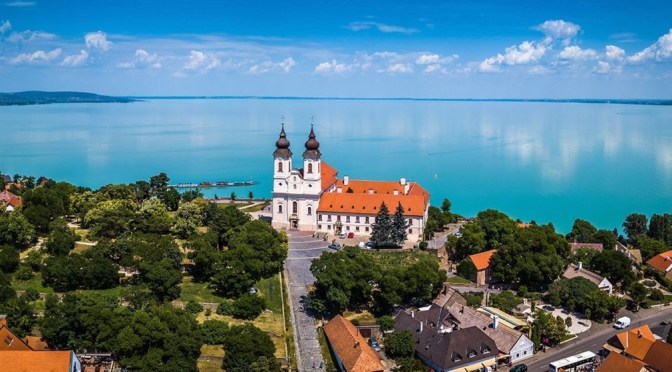
Um dos primeiros destaques é a península de Tihany com a famosa Abadia de Tihany, que se ergue majestosamente sobre o lago.
Dali se tem uma vista deslumbrante da água e da paisagem ao redor.
A arquitetura barroca e a atmosfera tranquila convidam a um passeio relaxante.
Campos de lavanda e cafés acolhedores criam um ambiente quase provençal.
Após essa parada cultural, a viagem continua pela estrada sinuosa à beira do lago.
Novas perspectivas do lago e das colinas surgem a todo momento.
Outra parada imperdível é o Castelo de Szigliget, situado sobre uma colina vulcânica.
A subida é recompensada com uma vista panorâmica espetacular.
As ruínas contam histórias do passado húngaro.
Vinícolas próximas oferecem especialidades regionais e excelentes vinhos.
A rota segue por vilarejos charmosos, pomares e campos.
Aos poucos, aproxima-se da fronteira com a Áustria e a paisagem muda novamente.
As estradas ficam mais amplas e a arquitetura assume características austríacas.
Após cruzar a fronteira, percorre-se o Burgenland, região conhecida por seus vinhos e paisagens abertas.
Colinas suaves, turbinas eólicas e vilas pitorescas definem o cenário.
Ao se aproximar de Viena, o trânsito aumenta, mas a viagem continua agradável.
Finalmente, chega-se a Viena, uma cidade repleta de música, história e elegância imperial.
Seus edifícios magníficos e diversidade cultural encerram a viagem com grande estilo.
Essa rota combina perfeitamente natureza e cultura.
É ideal para quem prefere estradas panorâmicas em vez de autoestradas.
Cada parada ao longo do Balaton oferece novas impressões.
A combinação de lago, colinas e patrimônios históricos torna a viagem única.
A região também encanta pela gastronomia, com pratos de peixe e vinhos locais.
A atmosfera tranquila convida a permanecer mais tempo.
Assim, a viagem de Budapest a Viena torna-se uma experiência inesquecível.

Die Autofahrt von Budapest nach Vienna gehört zu den schönsten Routen Mitteleuropas und verbindet Kultur, Natur und Geschichte auf eindrucksvolle Weise.
Schon beim Verlassen von Budapest öffnet sich die Landschaft, und sanfte Hügel sowie weite Ebenen begleiten den Weg Richtung Westen.
Bald erreicht man den Balaton, auch bekannt als Plattensee, der mit seinem glitzernden Wasser und mediterranem Flair beeindruckt.
Die Straße führt entlang des Nordufers, wo sich zahlreiche kleine Orte und Weinberge aneinanderreihen.
Ein erster Höhepunkt ist die Halbinsel Tihany mit der berühmten Abtei Tihany, die majestätisch über dem See thront.
Von hier aus genießt man einen atemberaubenden Blick über das Wasser und die umliegenden Landschaften.
Die barocke Architektur und die ruhige Atmosphäre laden zu einem entspannten Spaziergang ein.
Lavendelfelder und kleine Cafés verleihen dem Ort ein beinahe südfranzösisches Ambiente.
Nach diesem kulturellen Zwischenstopp setzt man die Fahrt entlang der kurvenreichen Uferstraße fort.
Immer wieder eröffnen sich neue Perspektiven auf den See und die sanften Hügel des Balaton-Oberlands.
Ein weiterer lohnenswerter Halt ist die Burg Szigliget, die auf einem vulkanischen Hügel über der Region wacht.
Der Aufstieg zur Burg wird mit einem spektakulären Rundblick über den See und die umliegenden Weinlandschaften belohnt.
Die Ruinen erzählen von bewegten Zeiten und laden dazu ein, in die Geschichte Ungarns einzutauchen.
In der Umgebung bieten kleine Weingüter regionale Spezialitäten und ausgezeichnete Weine an.
Die Route führt weiter durch charmante Dörfer und vorbei an Obstgärten und Feldern.
Langsam nähert man sich der österreichischen Grenze, und die Landschaft verändert sich erneut.
Die Straßen werden breiter, und die Architektur nimmt zunehmend österreichische Züge an.
Nach dem Grenzübertritt geht die Fahrt durch das Burgenland, eine Region, die für ihre Weine und weiten Ebenen bekannt ist.
Sanfte Hügel, Windräder und idyllische Ortschaften prägen das Bild.
Je näher man Wien kommt, desto lebendiger wird der Verkehr, doch die Fahrt bleibt angenehm.
Schließlich erreicht man Vienna, eine Stadt voller Musik, Geschichte und kaiserlicher Eleganz.
Die prächtigen Gebäude und die kulturelle Vielfalt bilden einen würdigen Abschluss der Reise.
Diese Strecke vereint Naturerlebnis und kulturelle Highlights auf ideale Weise.
Sie ist besonders für Reisende geeignet, die gerne abseits der Autobahn unterwegs sind.
Jeder Stopp entlang des Balaton bietet neue Eindrücke und unvergessliche Momente.
Die Kombination aus See, Hügeln und historischen Bauwerken macht diese Route einzigartig.
Auch kulinarisch hat die Region viel zu bieten, von Fischgerichten bis zu lokalen Weinen.
Die entspannte Atmosphäre entlang des Sees lädt zum Verweilen ein.
So wird die Fahrt von Budapest nach Wien zu einem Erlebnis, das weit über das Ziel hinaus begeistert.

The drive from Budapest to Vienna is one of the most scenic routes in Central Europe, combining culture, nature, and history in an impressive way.
As you leave Budapest, the landscape opens up, with gentle hills and wide plains stretching toward the west.
Soon you reach Lake Balaton, whose shimmering waters and Mediterranean charm captivate visitors.
The road follows the northern shore, lined with small villages and vineyards.
A first highlight is the Tihany Peninsula with the famous Tihany Abbey, rising majestically above the lake.
From here, you enjoy breathtaking views of the water and surrounding landscapes.
The baroque architecture and peaceful atmosphere invite a relaxing walk.
Lavender fields and cozy cafés give the place an almost southern French feeling.
After this cultural stop, the journey continues along the winding lakeside road.
New perspectives of the lake and rolling hills constantly appear.
Another worthwhile stop is Szigliget Castle, perched on a volcanic hill.
Climbing up rewards you with spectacular panoramic views over the lake and vineyards.
The ruins tell stories of Hungary’s rich past.
Nearby wineries offer regional specialties and excellent wines.
The route continues through charming villages and past orchards and fields.
Gradually, you approach the Austrian border and the scenery changes again.
Roads become wider and the architecture takes on Austrian characteristics.
After crossing the border, you drive through Burgenland, known for its wines and open landscapes.
Gentle hills, wind turbines, and picturesque villages shape the view.
As you get closer to Vienna, traffic increases but the journey remains pleasant.
Finally, you arrive in Vienna, a city full of music, history, and imperial elegance.
Its magnificent buildings and cultural diversity provide a fitting end to the trip.
This route perfectly combines natural beauty and cultural highlights.
It is ideal for travelers who prefer scenic roads over highways.
Every stop along Lake Balaton offers new impressions and unforgettable moments.
The mix of lake, hills, and historic landmarks makes this journey unique.
The region is also rich in culinary delights, from fish dishes to local wines.
The relaxed atmosphere invites you to linger.
Thus, the drive from Budapest to Vienna becomes an experience far beyond the destination itself.

Fortaleza de Golubac/Festung Golubac/Goluback Fortress

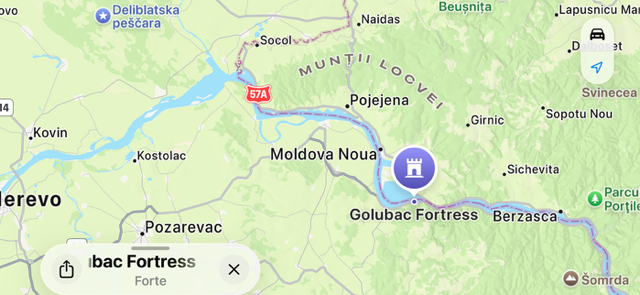
A Fortaleza de Golubac está situada de forma impressionante na margem direita do rio Danúbio, no leste da Sérvia, perto da fronteira com a Romênia. Ela se ergue no ponto onde o rio se estreita e marca a entrada do famoso Desfiladeiro do Portão de Ferro.

Fonte/Source/Quelle: Google Maps

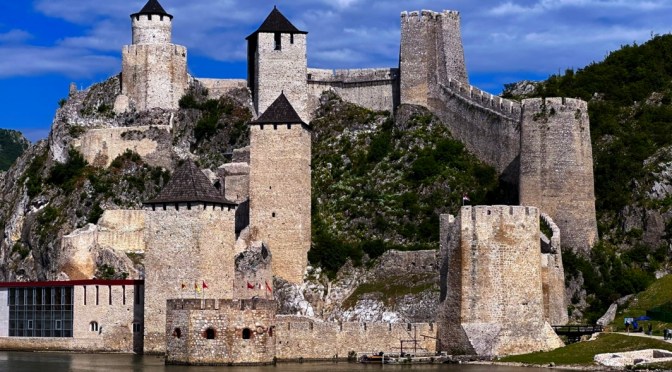
Com suas muralhas imponentes e dez torres marcantes, a fortaleza parece saída de um conto de fadas. Golubac foi construída na Idade Média, provavelmente no século XIV, e teve grande importância estratégica. Devido à sua localização, foi disputada durante séculos por húngaros, sérvios e otomanos. A fortaleza servia para controlar o tráfego fluvial no Danúbio e proteger importantes rotas comerciais. É especialmente impressionante a harmonia entre a arquitetura e a natureza, pois as muralhas parecem surgir diretamente das rochas. Atualmente, a Fortaleza de Golubac foi cuidadosamente restaurada e está aberta à visitação. Trilhas, mirantes e exposições oferecem uma visão profunda da história da região. Das torres, é possível apreciar vistas espetaculares do Danúbio e do Parque Nacional Đerdap. A Fortaleza de Golubac é considerada uma das mais belas e bem preservadas fortalezas medievais da Sérvia e atrai tanto amantes da cultura quanto da natureza.

Para saber mais sobre a Fortaleza Golubac, clique aqui.

Die Festung Golubac liegt eindrucksvoll am rechten Ufer der Donau im Osten Serbiens, nahe der Grenze zu Rumänien. Sie erhebt sich dort, wo sich der Fluss dramatisch verengt und den Eingang zum berühmten Eisernen Tor markiert.

Fonte/Source/Quelle: Google Maps

Mit ihren massiven Mauern und zehn markanten Türmen wirkt die Festung wie aus einem Märchen entsprungen. Errichtet wurde Golubac im Mittelalter, vermutlich im 14. Jahrhundert, und spielte eine bedeutende strategische Rolle. Aufgrund ihrer Lage war sie über Jahrhunderte hinweg ein umkämpfter Punkt zwischen Ungarn, Serben und Osmanen. Die Festung diente zur Kontrolle des Schiffsverkehrs auf der Donau und zur Sicherung wichtiger Handelsrouten. Besonders beeindruckend ist die harmonische Verbindung von Architektur und Natur, da die Mauern direkt aus den Felsen zu wachsen scheinen. Heute ist Golubac aufwendig restauriert und für Besucher zugänglich. Spazierwege, Aussichtspunkte und Ausstellungen ermöglichen einen tiefen Einblick in die Geschichte der Region. Von den Türmen aus eröffnet sich ein spektakulärer Blick auf die Donau und den Đerdap-Nationalpark. Die Festung Golubac gilt als eines der schönsten und besterhaltenen mittelalterlichen Bauwerke Serbiens und ist ein beliebtes Ziel für Kultur- und Naturliebhaber gleichermaßen.

Um mehr über die Festung Golubac zu erfahren, klicken Sie hier.

The Golubac Fortress is dramatically located on the right bank of the Danube in eastern Serbia, close to the Romanian border. It rises at the point where the river narrows and marks the entrance to the famous Iron Gate gorge.

Fonte/Source/Quelle: Google Maps

With its massive walls and ten striking towers, the fortress looks like something from a fairy tale. Golubac was built in the Middle Ages, probably in the 14th century, and played an important strategic role. Due to its location, it was contested for centuries by Hungarians, Serbs, and Ottomans. The fortress was used to control river traffic on the Danube and to protect key trade routes. Particularly impressive is the harmony between architecture and nature, as the walls seem to grow directly out of the rock. Today, Golubac Fortress has been carefully restored and is open to visitors. Walking paths, viewpoints, and exhibitions offer deep insight into the region’s history. From the towers, visitors enjoy spectacular views of the Danube and the Đerdap National Park. Golubac Fortress is considered one of the most beautiful and best-preserved medieval fortresses in Serbia and is a popular destination for both cultural and nature tourism.

To learn more about the Golubac Fortress, click here.

Ilhas Canárias/Kanarischen Inseln/Canary Islands

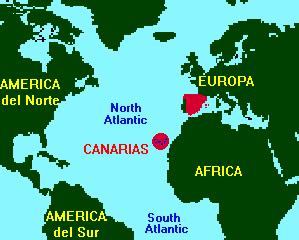
As Ilhas Canárias estão localizadas no Oceano Atlântico, ao largo da costa noroeste da África.

Source/Quelle/fonte: https://www.ctspanish.com/communities/canary/location.htm

Elas pertencem politicamente à Espanha, mas estão geograficamente mais próximas da África do que da Europa.
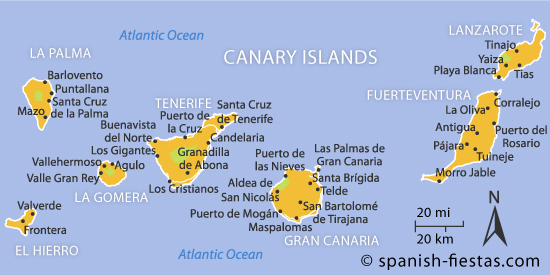
O arquipélago é composto por sete ilhas principais e várias ilhas menores.
Entre as ilhas mais conhecidas estão Tenerife, Gran Canaria e Lanzarote. Durante o nosso cruzeiro também visitamos Santa Cruz de La Palma e Fuerteventura.

Source/Quelle/Fonte: https://www.spanish-fiestas.com/regions/canary-islands/

Cada ilha possui seu próprio caráter e paisagens únicas.
O clima das Ilhas Canárias é ameno e agradável durante todo o ano.
Por esse motivo, elas são frequentemente chamadas de ilhas da eterna primavera.
A origem vulcânica molda as paisagens de todo o arquipélago.
A montanha mais alta da Espanha, o Monte Teide, está localizada em Tenerife.
Sua silhueta impressionante pode ser vista à distância.
As praias das Ilhas Canárias são muito diversas e únicas.
Existem praias de lava negra, praias de areia dourada e até praias de areia branca.
A areia de algumas praias vem do Deserto do Saara.
O mar ao redor das ilhas é claro e rico em vida marinha.
Baleias e golfinhos podem ser observados regularmente.
A culinária canária é uma mistura de influências espanholas e africanas.
Pratos típicos incluem papas arrugadas com molho mojo.
O peixe fresco desempenha um papel importante na alimentação local.
O cultivo de bananas também é muito significativo nas ilhas.
O turismo é um dos setores econômicos mais importantes da região.
Milhões de pessoas visitam as Ilhas Canárias todos os anos.
Muitos viajantes apreciam a tranquilidade e a natureza.
Outros vêm pelas atividades esportivas, como surfe ou trilhas.
As ilhas oferecem numerosas trilhas por áreas vulcânicas.
Parques nacionais protegem a flora e a fauna únicas.
A vegetação é adaptada ao clima seco.
Muitas espécies animais existem apenas nas Ilhas Canárias.
A história das ilhas remonta aos habitantes originais, os guanches.
Sua cultura ainda influencia as ilhas atualmente.
Tradições e festas desempenham um papel importante no dia a dia.
O carnaval é uma das festas mais famosas das ilhas.
O Carnaval de Santa Cruz de Tenerife é especialmente famoso no mundo todo.
A música e a dança fazem parte essencial da cultura canária.
As pessoas são consideradas abertas, simpáticas e relaxadas.
O ritmo de vida tranquilo é valorizado por muitos visitantes.
A arquitetura varia de cidades modernas a pequenas aldeias.
Casas brancas com varandas de madeira são típicas em muitos lugares.
As Ilhas Canárias combinam natureza, cultura e descanso.
Elas são um destino popular para jovens e idosos.
Nômades digitais estão cada vez mais atraídos pelas ilhas.
A boa infraestrutura facilita a vida no local.
Aeroportos conectam as ilhas à Europa e ao mundo.
Balsas permitem viagens entre as ilhas individuais.
Apesar do turismo, muitos locais preservam sua autenticidade.
As Ilhas Canárias oferecem diversidade em um espaço reduzido.
Elas encantam com seus contrastes e cores.
Cada viagem às Ilhas Canárias é única.
As ilhas deixam impressões duradouras em muitos visitantes.

Para conhecer mais sobre as Ilhas Canárias, clique aqui.

Die Kanarischen Inseln liegen im Atlantischen Ozean vor der Nordwestküste Afrikas.

Source/Quelle/fonte: https://www.ctspanish.com/communities/canary/location.htm

Sie gehören politisch zu Spanien, sind geografisch jedoch Afrika näher als Europa.
Die Inselgruppe besteht aus sieben Hauptinseln und mehreren kleineren Inseln.
Zu den bekanntesten Inseln zählen Teneriffa, Gran Canaria und Lanzarote. Wir besuchten auf unserer Kreuzfahrt zudem Santa Cruz De La Palma und Fuerteventura.

Source/Quelle/Fonte: https://www.spanish-fiestas.com/regions/canary-islands/

Jede Insel besitzt ihren eigenen Charakter und landschaftliche Besonderheiten.
Das Klima der Kanarischen Inseln ist ganzjährig mild und angenehm.
Aus diesem Grund werden sie oft als die Inseln des ewigen Frühlings bezeichnet.
Vulkanische Ursprünge prägen die Landschaften der gesamten Inselgruppe.
Der höchste Berg Spaniens, der Teide, befindet sich auf Teneriffa.
Seine imposante Silhouette ist schon von weitem sichtbar.
Die Strände der Kanaren sind sehr vielfältig und einzigartig.
Es gibt schwarze Lavastrände, goldene Sandstrände und sogar weiße Strände.
Der Sand einiger Strände stammt aus der Sahara.
Das Meer rund um die Inseln ist klar und reich an Meereslebewesen.
Wale und Delfine können dort regelmäßig beobachtet werden.
Die kanarische Küche ist eine Mischung aus spanischen und afrikanischen Einflüssen.
Typische Gerichte sind Papas arrugadas mit Mojo-Soße.
Frischer Fisch spielt eine wichtige Rolle in der lokalen Ernährung.
Auch der Anbau von Bananen ist auf den Inseln sehr bedeutend.
Der Tourismus ist einer der wichtigsten Wirtschaftszweige der Region.
Jährlich besuchen Millionen Menschen die Kanarischen Inseln.
Viele Reisende schätzen die Ruhe und die Natur.
Andere kommen wegen der Sportmöglichkeiten wie Surfen oder Wandern.
Die Inseln bieten zahlreiche Wanderwege durch Vulkangebiete.
Nationalparks schützen die einzigartige Flora und Fauna.
Die Pflanzenwelt ist an das trockene Klima angepasst.
Viele Tierarten kommen nur auf den Kanarischen Inseln vor.
Die Geschichte der Inseln reicht bis zu den Ureinwohnern, den Guanchen, zurück.
Ihre Kultur beeinflusst die Inseln bis heute.
Traditionen und Feste spielen eine große Rolle im Alltag.
Der Karneval ist eines der bekanntesten Feste der Kanaren.
Besonders der Karneval in Santa Cruz de Tenerife ist weltberühmt.
Musik und Tanz sind fester Bestandteil der kanarischen Kultur.
Die Menschen gelten als offen, freundlich und entspannt.
Das langsame Lebenstempo wird von vielen Besuchern geschätzt.
Die Architektur variiert von modernen Städten bis zu kleinen Dörfern.
Weiße Häuser mit Holzbalkonen sind typisch für viele Orte.
Die Kanarischen Inseln verbinden Natur, Kultur und Erholung.
Sie sind ein beliebtes Reiseziel für Jung und Alt.
Auch digitale Nomaden zieht es zunehmend auf die Inseln.
Die gute Infrastruktur erleichtert das Leben vor Ort.
Flughäfen verbinden die Inseln mit Europa und der Welt.
Fähren ermöglichen Reisen zwischen den einzelnen Inseln.
Trotz des Tourismus bewahren viele Orte ihre Ursprünglichkeit.
Die Kanarischen Inseln bieten Vielfalt auf kleinem Raum.
Sie faszinieren durch ihre Gegensätze und Farben.
Jede Reise auf die Kanaren ist einzigartig.
Die Inseln hinterlassen bei vielen Besuchern bleibende Eindrücke.

Um mehr über die Kanarischen Inseln zu erfahren, klicken Sie hier.

The Canary Islands are located in the Atlantic Ocean off the northwest coast of Africa.

Source/Quelle/fonte: https://www.ctspanish.com/communities/canary/location.htm

They politically belong to Spain but are geographically closer to Africa than to Europe.
The archipelago consists of seven main islands and several smaller ones.
Among the best-known islands are Tenerife, Gran Canaria, and Lanzarote. During our cruise we also visited Santa Cruz de La Palma and Fuerteventura.

Source/Quelle/Fonte: https://www.spanish-fiestas.com/regions/canary-islands/

Each island has its own character and unique landscapes.
The climate of the Canary Islands is mild and pleasant all year round.
For this reason, they are often called the islands of eternal spring.
Volcanic origins shape the landscapes of the entire archipelago.
Spain’s highest mountain, Mount Teide, is located on Tenerife.
Its impressive silhouette can be seen from far away.
The beaches of the Canary Islands are very diverse and unique.
There are black lava beaches, golden sandy beaches, and even white beaches.
The sand on some beaches comes from the Sahara Desert.
The sea around the islands is clear and rich in marine life.
Whales and dolphins can be observed there regularly.
Canarian cuisine is a mix of Spanish and African influences.
Typical dishes include papas arrugadas with mojo sauce.
Fresh fish plays an important role in the local diet.
Banana cultivation is also very significant on the islands.
Tourism is one of the most important economic sectors of the region.
Millions of people visit the Canary Islands every year.
Many travelers appreciate the peace and nature.
Others come for sports activities such as surfing or hiking.
The islands offer numerous hiking trails through volcanic areas.
National parks protect the unique flora and fauna.
The plant life is adapted to the dry climate.
Many animal species exist only on the Canary Islands.
The history of the islands dates back to the indigenous Guanches.
Their culture still influences the islands today.
Traditions and festivals play a major role in daily life.
Carnival is one of the most famous celebrations on the islands.
The Carnival of Santa Cruz de Tenerife is especially world-famous.
Music and dance are an integral part of Canarian culture.
The people are considered open, friendly, and relaxed.
The slow pace of life is appreciated by many visitors.
Architecture ranges from modern cities to small villages.
White houses with wooden balconies are typical in many places.
The Canary Islands combine nature, culture, and relaxation.
They are a popular destination for young and old alike.
Digital nomads are increasingly drawn to the islands.
Good infrastructure makes life there easier.
Airports connect the islands with Europe and the world.
Ferries allow travel between the individual islands.
Despite tourism, many places preserve their authenticity.
The Canary Islands offer diversity in a small area.
They fascinate visitors with their contrasts and colors.
Every trip to the Canary Islands is unique.
The islands leave lasting impressions on many visitors.

To learn more about the Canary Islands, click here.

A bela excursão a três “Pueblos Blancos”/Der wunderschöne Ausflug zu drei “Weißen Dörfern”/The beautiful excursion to three “White Villages”

Um passeio de um dia desde Sevilha até Zahara de la Sierra, Setenil de las Bodegas e Ronda combina natureza, história e o encanto andaluz de forma memorável. Logo pela manhã, parte-se de Sevilha atravessando colinas suaves e extensos olivais em direção às aldeias brancas.

Fonte/Quelle/Google Maps
Fonte/Quelle/Source: Google Maps

Zahara de la Sierra recebe os visitantes com um reservatório de águas verde-esmeralda, ruas estreitas e um castelo no topo da colina, de onde se tem uma vista ampla do Parque Natural da Sierra de Grazalema.

Após uma breve caminhada e uma pausa, a viagem continua até Setenil de las Bodegas, uma das localidades mais singulares da Andaluzia. Ali, as casas estão construídas sob enormes saliências rochosas que oferecem sombra fresca no verão. Passear pelas ruas e almoçar em um bar escavado na rocha é um dos pontos altos do dia.

À tarde, o percurso segue para Ronda, situada de forma dramática sobre um planalto rochoso acima do profundo desfiladeiro de El Tajo. A famosa Puente Nuevo liga a cidade antiga à moderna e proporciona vistas inesquecíveis. Em Ronda, há tempo para visitar a histórica Praça de Touros, explorar o centro antigo e apreciar um café com vista. Ao anoitecer, o retorno a Sevilha acontece com a sensação de ter conhecido três faces muito diferentes da Andaluzia em apenas um dia.

Obs.: Este tipo de excursão está disponível nos aplicativos que oferecem excursões na Internet.

Ein Eintages-Ausflug von Sevilla nach Zahara de la Sierra, Setenil de las Bodegas und Ronda verbindet Natur, Geschichte und andalusischen Charme auf eindrucksvolle Weise. Früh am Morgen verlässt man Sevilla und fährt durch sanfte Hügel und Olivenhaine in Richtung der weißen Dörfer.

Fonte/Quelle/Google Maps
Fonte/Quelle/Source: Google Maps

Zahara de la Sierra empfängt Besucher mit einem smaragdgrünen Stausee, engen Gassen und einer Burg, von der aus sich ein weiter Blick über den Naturpark Sierra de Grazalema öffnet.

Nach einem kurzen Spaziergang und einer Pause geht es weiter nach Setenil de las Bodegas, einem der ungewöhnlichsten Orte Andalusiens. Hier schmiegen sich die Häuser spektakulär unter riesige Felsüberhänge, die im Sommer kühlen Schatten spenden. Ein Bummel durch die Straßen und ein Mittagessen in einer der Höhlenbars gehören zu den Höhepunkten des Tages.

Am Nachmittag führt die Route nach Ronda, dramatisch auf einem Felsplateau über der tiefen Schlucht El Tajo gelegen. Die berühmte Puente Nuevo verbindet die Alt- und Neustadt und bietet unvergessliche Ausblicke. In Ronda bleibt Zeit für die historische Stierkampfarena, die Altstadt mit ihren Palästen und einen entspannten Kaffee mit Aussicht. Am Abend kehrt man mit vielen Eindrücken, Fotos und dem Gefühl zurück, drei sehr unterschiedliche Gesichter Andalusiens an nur einem Tag erlebt zu haben.

Hinweis: Diese Art von Ausflug ist über Apps verfügbar, die Online-Touren anbieten.

A one-day trip from Seville to Zahara de la Sierra, Setenil de las Bodegas, and Ronda beautifully combines nature, history, and Andalusian charm. Early in the morning, travelers leave Seville and pass rolling hills and olive groves toward the famous white villages.

Fonte/Quelle/Google Maps
Fonte/Quelle/Source: Google Maps

Zahara de la Sierra welcomes visitors with an emerald-green reservoir, narrow streets, and a hilltop castle offering wide views over the Sierra de Grazalema Natural Park. After a short walk and a break, the journey continues to Setenil de las Bodegas, one of Andalusia’s most unusual towns. Here, houses are built directly beneath massive rock overhangs that provide cool shade in summer. Strolling through the streets and enjoying lunch in a cave restaurant is a highlight of the day. In the afternoon, the route leads to Ronda, dramatically set on a rocky plateau above the deep El Tajo gorge. The famous Puente Nuevo connects the old and new towns and offers unforgettable views. In Ronda, there is time to visit the historic bullring, explore the old town with its palaces, and relax with a coffee overlooking the landscape. In the evening, travelers return to Seville with lasting memories of experiencing three very different faces of Andalusia in a single day.

Note: This type of excursion is available on apps that offer online tours.


Ilha da Madeira/Insel Madeira/Madeira Island

A ilha da Madeira, muitas vezes chamada de “Pérola do Atlântico”, fica cerca de 1.000 quilômetros a sudoeste de Portugal.

É famosa pelo clima ameno, que oferece temperaturas agradáveis durante todo o ano. As falésias dramáticas e os vales profundos moldam a paisagem única da ilha.

Particularmente impressionantes são as muitas levadas,

canais de irrigação artificiais que atravessam montanhas e florestas. Caminhantes do mundo inteiro visitam a Madeira para explorar estas trilhas fascinantes.

A vegetação exuberante, incluindo as florestas de loureiros, faz parte do Patrimônio Natural da UNESCO.

A capital, Funchal, encanta com seus edifícios históricos e mercados animados. O Mercado dos Lavradores é um local colorido repleto de frutas e flores exóticas. A catedral Sé, do século XV, é outra atração.

Madeira também é famosa pelo seu vinho tradicional, apreciado mundialmente. Muitos visitantes exploram as antigas adegas para provar este vinho especial.

O jardim botânico do Funchal oferece uma vista magnífica sobre a cidade, com plantas de várias zonas climáticas.

Viajantes aventureiros visitam o Cabo Girão, uma das falésias mais altas da Europa, com uma plataforma de vidro que proporciona vistas espetaculares.

Embora as praias sejam principalmente de origem vulcânica, a costa é convidativa, especialmente as piscinas naturais de Porto Moniz. As aldeias de montanha revelam arquitetura tradicional, com casas brancas e telhados vermelhos, e Santana é conhecida por suas casas triangulares de colmo.

Muitas vezes, a névoa envolve as florestas, criando um ambiente místico. O Pico Ruivo, com 1.862 metros, é o ponto mais alto da ilha e um dos trilhos mais belos. A gastronomia local oferece peixe fresco, espetadas e o famoso pão bolo do caco.

A tradicional bebida Poncha é indispensável. Festivais como a Festa da Flor atraem muitos visitantes, transformando as ruas do Funchal num mar de flores. O Réveillon é outro destaque, com um dos maiores fogos de artifício da Europa. Madeira combina natureza, cultura e hospitalidade de forma única, deixando cada visitante profundamente impressão.

Obs.: o voo entre Lisboa e Funchal, capital da Ilha da Madeira, é de 1 hora e 45 minutos. O aeroporto de Funchal tem o nome de Cristiano Ronaldo, que nasceu lá.

Die Insel Madeira, oft als „Perle des Atlantiks“ bezeichnet, liegt rund 1.000 Kilometer südwestlich von Portugal.

Sie ist berühmt für ihr mildes Klima, das das ganze Jahr über angenehme Temperaturen bietet und Besucher aus aller Welt anzieht. Die dramatischen Klippen und tief eingeschnittenen Täler prägen das charakteristische Landschaftsbild, das Madeira so einzigartig macht. Besonders beeindruckend sind die zahlreichen Levadas,

künstliche Wasserläufe, die sich durch Berge, Schluchten und üppige Wälder ziehen. Entlang dieser Wege erleben Wanderer spektakuläre Ausblicke und eine nahezu unberührte Natur. Die Lorbeerwälder Madeiras zählen zum UNESCO-Weltnaturerbe und vermitteln das Gefühl eines urzeitlichen Paradieses.

Die Hauptstadt Funchal begeistert mit historischen Gebäuden, lebhaften Märkten und einer charmanten Altstadt. Der Mercado dos Lavradores ist ein farbenfroher Treffpunkt voller exotischer Früchte, Blumen und traditioneller Produkte. Auch die Kathedrale Sé aus dem 15. Jahrhundert gehört zu den kulturellen Höhepunkten der Insel. Madeira ist zudem weltberühmt für seinen aromatischen Wein, der in alten Weinkellereien verkostet werden kann. Ein Besuch im botanischen Garten von Funchal bietet großartige Ausblicke über die Stadt und eine Vielfalt an Pflanzen aus unterschiedlichen Klimazonen.

Abenteuerlustige zieht es zum spektakulären Cabo Girão, einer der höchsten Klippen Europas, deren gläserne Aussichtsplattform atemberaubende Tiefblicke ermöglicht. Die Küsten Madeiras laden trotz ihrer meist vulkanischen Strände zum Entspannen ein, besonders die natürlichen Meeresschwimmbecken von Porto Moniz sind ein beliebtes Ziel. In den Bergdörfern beeindrucken traditionelle Häuser mit weißen Wänden und roten Dächern, während Santana mit seinen strohbedeckten Dreieckshäusern ein besonderes Highlight darstellt. Nebel, der durch die Wälder zieht, verleiht dem Inselinneren häufig eine mystische Stimmung. Der Pico Ruivo, mit 1.862 Metern der höchste Berg Madeiras, bietet Wanderern unvergessliche Erlebnisse. Die lokale Küche verwöhnt mit frischem Fisch, Espetada-Spießen und dem berühmten Bolo do Caco. Dazu passt hervorragend die traditionelle Poncha, ein Getränk aus Zuckerrohrschnaps. Festivals wie das Blumenfest verwandeln Funchal jedes Jahr in ein duftendes Blütenmeer. Auch das spektakuläre Silvesterfeuerwerk gehört zu den Höhepunkten der Insel. Madeira vereint Natur, Kultur, Gastfreundschaft und Vielfalt auf beeindruckende Weise – ein Reiseziel, das nachhaltig in Erinnerung bleibt.

Hinweis: Der Flug zwischen Lissabon und Funchal, der Hauptstadt der Insel Madeira, dauert 1 Stunde und 45 Minuten. Der Flughafen Funchal ist nach Cristiano Ronaldo benannt, der dort geboren wurde.

Madeira, often called the “Pearl of the Atlantic,” lies about 1,000 kilometers southwest of Portugal. 

It is famous for its mild climatewhich offers pleasant temperatures all year roundDramatic cliffs and deeply carved valleys shape the island’s unique landscape.

Particularly impressive are the many levadas, man-made

 irrigation channels that run through mountains and forestsHikers from all over the world come to Madeira to experience breathtaking tours along these routes. The lush vegetationincluding laurel forestsis part of the UNESCO World Natural Heritage. The capital Funchal impresses with its historic buildings and lively markets. The Mercado dos Lavradores is a colorful place full of exotic fruits and flowers. The 15th-century Sé Cathedral is another highlight. Madeira is also famous for its traditional wineappreciated worldwideMany visitors tour the old wine cellars to taste this special drink. The botanical garden of Funchal offers a splendid view over the city and hosts plants from various climate zones. Adventurous travelers visit Cabo Girão, one of Europe’s highest cliffsfeaturing a glass platform with stunning viewsAlthough Madeira’s beaches are mostly volcanicthe coast invites relaxationespecially the natural sea pools of Porto Moniz. The mountain villages offer traditional architecturewith white houses and red roofswhile Santana is known for its thatched triangular homes. Mist often drifts through the island’s forestscreating a mystical atmosphere. Pico Ruivo, at 1,862 metersis the island’s highest peak and a favorite hiking destinationThe local cuisine features fresh fishespetada skewersand the famous bolo do caco bread. The traditional drink Poncha is not to be missedFestivals like the Flower Festival attract many visitors each yearturning Funchal’s streets into a sea of blossomsNew Year’s Eve is another highlight, with one of Europe’s largest fireworks showsMadeira beautifully combines naturecultureand hospitalityleaving every visitor deeply impressed. 

Note: The flight between Lisbon and Funchal, the capital of Madeira Island, takes 1 hour and 45 minutes. Funchal Airport is named after Cristiano Ronaldo, who was born there.

Veliko Tarnovo

Veliko Tarnovo, a antiga capital da Bulgária, está pitorescamente situada sobre três colinas – Tsarevets, Trapezitsa e Sveta Gora – e é suavemente cercada pelo rio Yantra.

A cidade é considerada uma das mais belas e históricas da Bulgária. Na Idade Média, foi o centro político, cultural e espiritual do Segundo Império Búlgaro. A fortaleza de Tsarevets domina a paisagem urbana e oferece vistas deslumbrantes da cidade e do vale do rio. Especialmente impressionante é o espetáculo noturno de som e luz que revive a história da Bulgária nas ruínas da fortaleza. O centro histórico, com suas ruas estreitas de paralelepípedos e casas tradicionais, remete a séculos passados. Artesãos, galerias e pequenos cafés dão-lhe um charme vibrante. Vale a pena visitar a rua Samovodska Charshia, onde o artesanato tradicional ainda é praticado. Numerosas igrejas, mosteiros e museus contam a rica história da cidade. De Veliko Tarnovo, pode-se facilmente chegar a Arbanassi, uma vila com magníficas casas históricas. A cidade encanta os visitantes com sua combinação de história, cultura e beleza natural. Hoje, Veliko Tarnovo é também uma importante cidade universitária que combina de forma harmoniosa juventude e tradição.

Veliko Tarnovo, die alte Hauptstadt Bulgariens, liegt malerisch auf drei Hügeln – Tsarevets, Trapezitsa und Sveta Gora – und wird vom Fluss Jantra in sanften Schleifen umflossen. Die Stadt gilt als eine der schönsten und geschichtsträchtigsten Bulgariens.

Im Mittelalter war sie das politische, kulturelle und geistige Zentrum des Zweiten Bulgarischen Reiches. Die Festung Tsarevets dominiert das Stadtbild und bietet von ihren Mauern einen atemberaubenden Blick über die Stadt und das Flusstal. Besonders eindrucksvoll ist die abendliche Licht- und Tonshow, die die Geschichte Bulgariens auf den Ruinen der Festung zum Leben erweckt. Die Altstadt mit ihren engen, kopfsteingepflasterten Gassen und traditionellen Häusern erinnert an vergangene Jahrhunderte. Kunsthandwerker, Galerien und kleine Cafés verleihen ihr ein lebendiges Flair. Besonders sehenswert ist die Straße der Samovodska Charshia, wo alte Handwerkskunst bis heute gepflegt wird. Zahlreiche Kirchen, Klöster und Museen erzählen von der reichen Vergangenheit. Von Veliko Tarnovo aus erreicht man leicht das nahegelegene Arbanassi, ein Dorf mit prächtigen historischen Häusern. Die Stadt zieht Besucher mit ihrer Kombination aus Geschichte, Kultur und landschaftlicher Schönheit in ihren Bann. Heute ist Veliko Tarnovo auch eine bedeutende Universitätsstadt, die Jugend und Tradition harmonisch verbindet .

 Veliko Tarnovo, the old capital of Bulgaria, is picturesquely situated on three hills – Tsarevets, Trapezitsa, and Sveta Gora – and is gently encircled by the Yantra River.

The city is considered one of the most beautiful and historic in Bulgaria. In the Middle Ages, it was the political, cultural, and spiritual center of the Second Bulgarian Empire. The Tsarevets Fortress dominates the cityscape and offers breathtaking views over the town and the river valley. Particularly impressive is the evening sound and light show that brings Bulgaria’s history to life on the fortress ruins. The old town, with its narrow cobblestone streets and traditional houses, recalls centuries past. Artisans, galleries, and small cafés give it a vibrant charm. The Samovodska Charshia street is especially worth visiting, where traditional crafts are still practiced today. Numerous churches, monasteries, and museums tell of the city’s rich past. From Veliko Tarnovo, one can easily reach nearby Arbanassi, a village with splendid historic houses. The city captivates visitors with its mix of history, culture, and natural beauty. Today, Veliko Tarnovo is also an important university town that harmoniously combines youth and tradition.


Portão de Ferro/Eiserne Tor/Iron Gate

O chamado “Portão de Ferro” é um impressionante desfiladeiro do rio Danúbio que marca a fronteira entre a Sérvia e a Romênia.


Ao longo de muitos quilômetros, o largo rio se estreita e forma uma passagem espetacular.
O Danúbio atravessa montanhas cársticas íngremes, criando uma das paisagens mais dramáticas da Europa.
O nome “Portão de Ferro” é simbólico: já na Antiguidade a passagem era considerada perigosa e intransponível.
Os barcos enfrentavam grandes dificuldades para atravessar corredeiras e redemoinhos.
Somente com a engenharia moderna, represas e eclusas, a região se tornou navegável.
Hoje o Portão de Ferro é uma via fluvial importante e também uma atração turística.
Um destaque é a enorme estátua de Decebalo, último rei dos dácios, esculpida na rocha.
Do lado sérvio, ergue-se a imponente fortaleza de Golubac, que vigiava a passagem por séculos.
Do lado romeno, encontram-se mosteiros históricos e pequenas aldeias.
O cenário combina maravilhas naturais e patrimônio cultural.
Os viajantes podem desfrutar de vistas panorâmicas em miradouros e passeios de barco.
Muitos cruzeiros no Danúbio fazem paradas aqui para admirar a paisagem única.
O desfiladeiro é também um parque nacional e abriga diversas espécies animais e vegetais.
Águias, lobos e plantas raras encontram refúgio nas montanhas inacessíveis.
Geologicamente, trata-se de um dos cânions mais profundos e estreitos do Danúbio.
Em alguns pontos, as rochas chegam a 300 metros de altura.
A região é, há milênios, um ponto de encontro de culturas e povos.
Os romanos deixaram vestígios, como as ruínas da ponte de Trajano.
Também comerciantes e viajantes medievais precisavam passar pelo Portão de Ferro.
Hoje o local simboliza a ligação entre o Leste e o Sudeste europeu.
Une natureza, história e técnica de forma fascinante.
O Danúbio torna-se aqui uma verdadeira artéria vital entre dois países.
O Portão de Ferro é não apenas uma curiosidade geográfica, mas também um monumento cultural.
Os visitantes experimentam uma paisagem selvagem, misteriosa e cheia de história.
É um lugar que inspira tanto estudiosos quanto aventureiros.
O desfiladeiro simboliza a força da natureza e o esforço humano.
Sem dúvida, é uma das maiores maravilhas naturais da Europa.
Quem viaja pelo Danúbio não deve perder este lugar mágico.

Das sogenannte „Eiserne Tor“ ist eine beeindruckende Flussschlucht an der Donau, die die Grenze zwischen Serbien und Rumänien markiert.


Über viele Kilometer hinweg verengt sich der breite Strom hier zu einer spektakulären Passage.
Die Donau zwängt sich zwischen steilen Karstbergen hindurch und bildet eine der dramatischsten Landschaften Europas.
Der Name „Eisernes Tor“ ist dabei sinnbildlich: Schon in der Antike galt die Passage als gefährlich und unbezwingbar.
Schiffe hatten große Mühe, die Stromschnellen und Wirbel zu durchqueren.
Erst durch moderne Ingenieurskunst, Staudämme und Schleusen wurde der Abschnitt schiffbar gemacht.
Heute ist das Eiserne Tor nicht nur eine bedeutende Wasserstraße, sondern auch ein touristisches Highlight.
Besonders berühmt ist die Stelle mit der riesigen Statue von Decebalus, dem letzten König der Daker.
Sie wurde direkt in den Felsen geschlagen und erinnert an die Geschichte der Region.
Von serbischer Seite aus erhebt sich die imposante Festung Golubac, die über Jahrhunderte die Passage überwachte.
Auch auf rumänischer Seite finden sich historische Klöster und kleine Dörfer.
Das Panorama ist geprägt von einer Mischung aus Naturwundern und Kulturerbe.
Für Reisende bietet das Eiserne Tor atemberaubende Ausblicke von Aussichtspunkten und Schiffsrouten.
Viele Kreuzfahrten auf der Donau legen hier Zwischenstopps ein, um die einzigartige Landschaft zu erleben.
Die Schlucht ist gleichzeitig ein Nationalpark und beherbergt zahlreiche Tier- und Pflanzenarten.
Steinadler, Wölfe und seltene Pflanzen finden in den unzugänglichen Bergen einen Lebensraum.
Geologisch gesehen handelt es sich um eine der tiefsten und engsten Donauschluchten.
An manchen Stellen sind die Felsen bis zu 300 Meter hoch.
Die Region ist seit Jahrtausenden ein Schnittpunkt von Kulturen und Völkern.
Schon die Römer hinterließen hier Spuren, etwa die Überreste von Trajans Brücke.
Auch mittelalterliche Händler und Reisende mussten das Eiserne Tor passieren.
Heute ist der Ort Symbol für die Verbindung zwischen Ost- und Südosteuropa.
Er vereint Natur, Geschichte und Technik in faszinierender Weise.
Die Donau wird hier zu einer wahren Lebensader zwischen zwei Ländern.
Das Eiserne Tor ist nicht nur eine geografische Besonderheit, sondern auch ein kulturelles Denkmal.
Besucher erleben eine Landschaft, die zugleich wild, geheimnisvoll und geschichtsträchtig wirkt.
Es ist ein Ort, der sowohl Forscher als auch Abenteurer inspiriert.
Die Schlucht bleibt ein Sinnbild für die Kraft der Natur und die Leistung des Menschen.
Das Eiserne Tor ist ohne Zweifel eines der größten Naturwunder Europas.
Wer entlang der Donau reist, sollte diesen magischen Ort nicht verpassen.

The so-called “Iron Gate” is an impressive river gorge on the Danube, forming the border between Serbia and Romania.


For many kilometers, the wide river narrows into a spectacular passage.
The Danube cuts through steep karst mountains, creating one of Europe’s most dramatic landscapes.
The name “Iron Gate” is symbolic: even in antiquity, the passage was considered dangerous and unconquerable.
Ships had great difficulties navigating the rapids and whirlpools.
Only with modern engineering, dams, and locks did the area become navigable.
Today the Iron Gate is not only a vital waterway but also a tourist attraction.
A highlight is the massive statue of Decebalus, the last king of the Dacians, carved into the rock.
On the Serbian side stands the mighty Golubac Fortress, which guarded the passage for centuries.
On the Romanian side, one finds historic monasteries and small villages.
The panorama is a blend of natural wonders and cultural heritage.
Travelers can enjoy breathtaking views from lookout points and river cruises.
Many Danube cruises stop here to admire the unique scenery.
The gorge is also a national park, home to diverse animal and plant species.
Eagles, wolves, and rare plants find refuge in the inaccessible mountains.
Geologically, it is one of the deepest and narrowest Danube gorges.
In some places, the cliffs rise up to 300 meters.
For thousands of years, the region has been a crossroads of cultures and peoples.
The Romans left traces here, such as the remains of Trajan’s Bridge.
Medieval merchants and travelers also had to pass through the Iron Gate.
Today the site symbolizes the connection between Eastern and Southeastern Europe.
It unites nature, history, and technology in a fascinating way.
Here, the Danube becomes a true lifeline between two countries.
The Iron Gate is not only a geographical feature but also a cultural monument.
Visitors experience a landscape that feels wild, mysterious, and full of history.
It is a place that inspires both scholars and adventurers.
The gorge stands as a symbol of nature’s power and human achievement.
Without doubt, it is one of Europe’s greatest natural wonders.
Anyone traveling along the Danube should not miss this magical place.