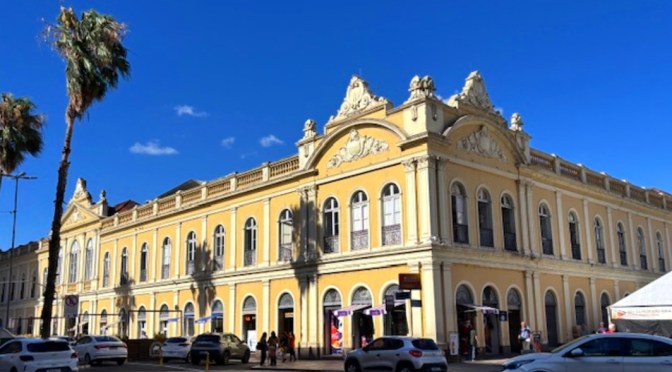
Porto Alegre é a capital do estado brasileiro do Rio Grande do Sul e uma das cidades mais importantes do sul do país. A cidade está situada às margens do Guaíba, que na verdade é um grande delta de rios e teve um papel importante na história e no desenvolvimento da região. Porto Alegre foi fundada em 1772 e rapidamente se tornou um importante centro comercial. Muitos dos primeiros colonos vieram de Portugal, mas imigrantes alemães, italianos e espanhóis também influenciaram fortemente a cultura da cidade. Essa influência europeia ainda pode ser vista hoje na arquitetura, nas tradições e na gastronomia.
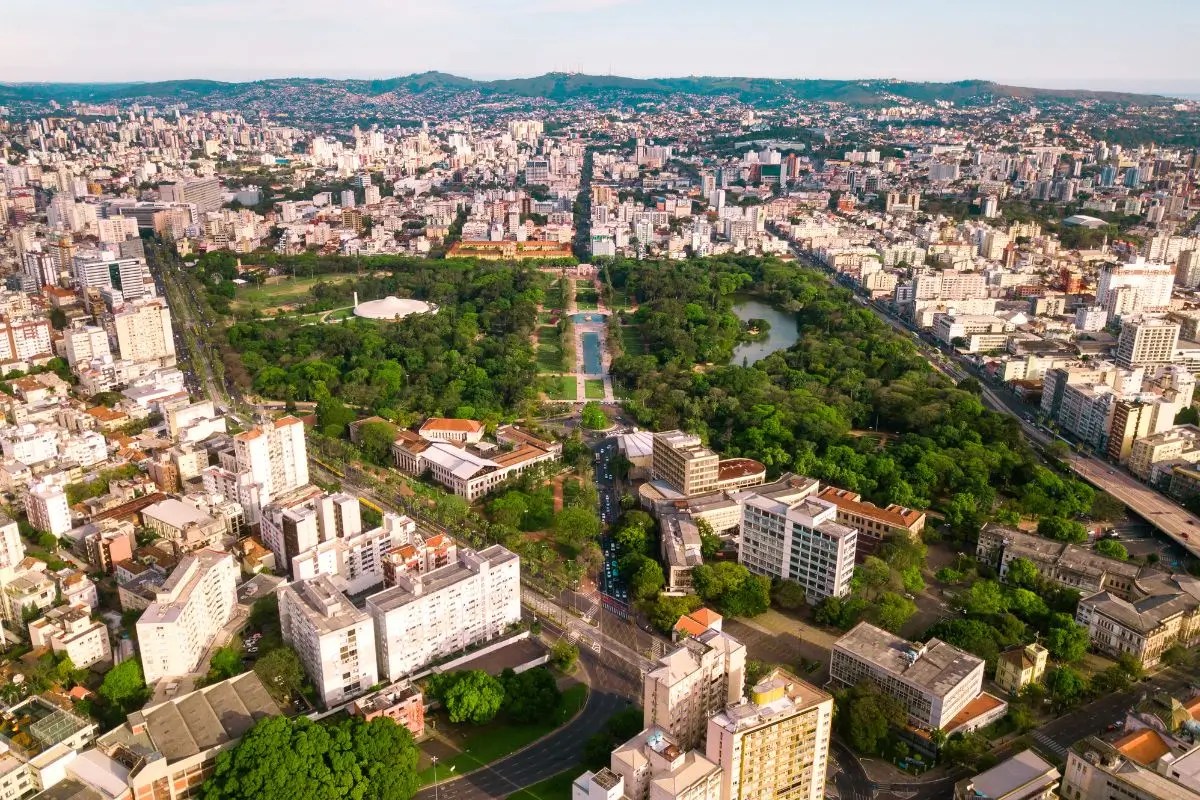
A paisagem urbana de Porto Alegre é uma mistura de arranha-céus modernos, prédios históricos e grandes áreas verdes. Um dos lugares mais conhecidos é o Parque Farroupilha, também chamado de Redenção, que é um ponto de encontro popular para moradores e visitantes. Nos fins de semana acontecem feiras, eventos musicais e atividades culturais.
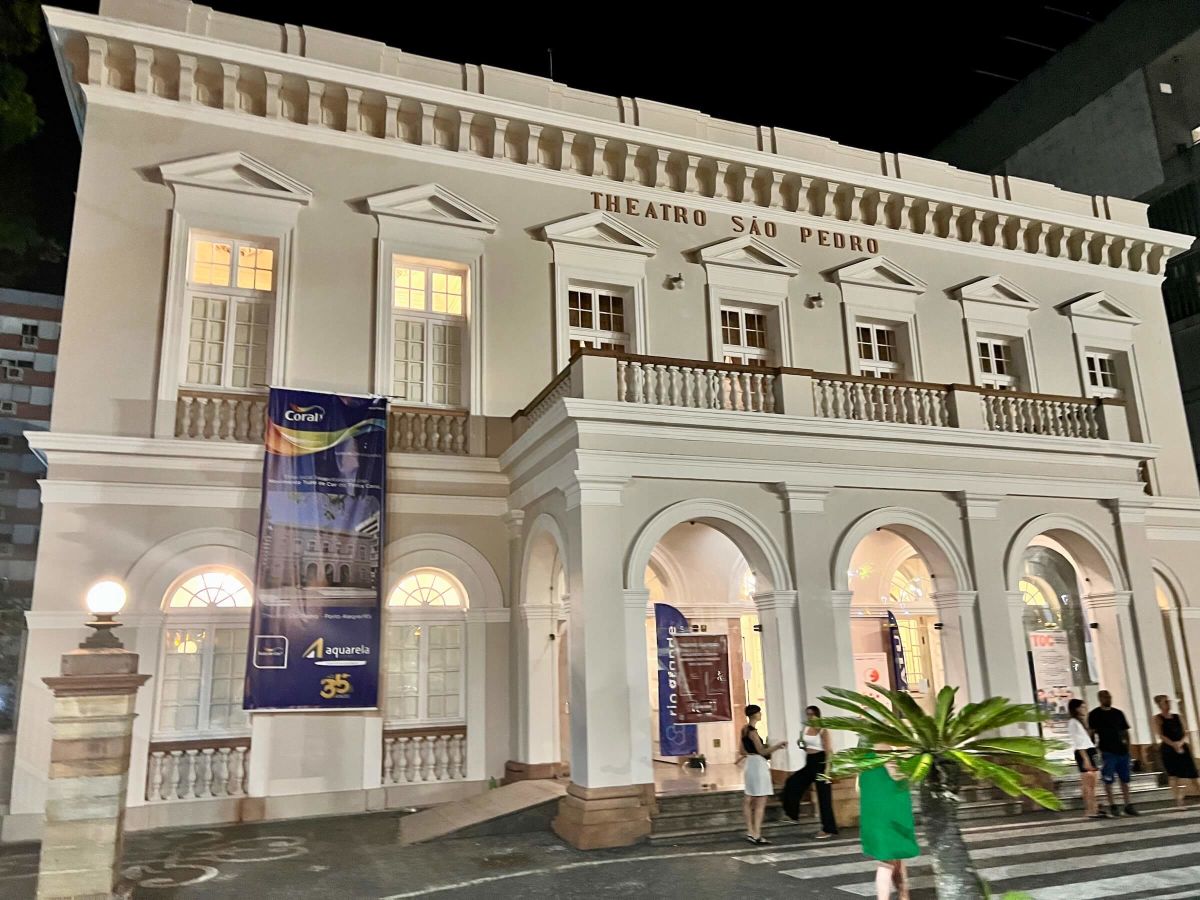
Outro símbolo da cidade é o centro histórico com suas igrejas antigas, museus e teatros. O Theatro São Pedro é uma das instituições culturais mais importantes do sul do Brasil.
Porto Alegre também é uma importante cidade universitária. A Universidade Federal do Rio Grande do Sul está entre as melhores do Brasil e atrai estudantes de todo o país. Por causa do grande número de jovens, a cidade tem uma vida cultural muito ativa com concertos, festivais e exposições. O esporte também tem grande importância. Os clubes de futebol Grêmio e Internacional estão entre os mais famosos do Brasil e conquistaram muitos títulos nacionais e internacionais.
O clima em Porto Alegre é diferente de muitas outras cidades brasileiras, pois os invernos podem ser mais frios. No verão pode fazer muito calor, enquanto no inverno as temperaturas podem ficar abaixo de dez graus. Essas diferenças climáticas tornam a região bastante diversa. A culinária de Porto Alegre é fortemente influenciada pela cultura gaúcha. Um dos pratos mais populares é o churrasco, o tradicional churrasco brasileiro, que tem longa tradição nesta região.
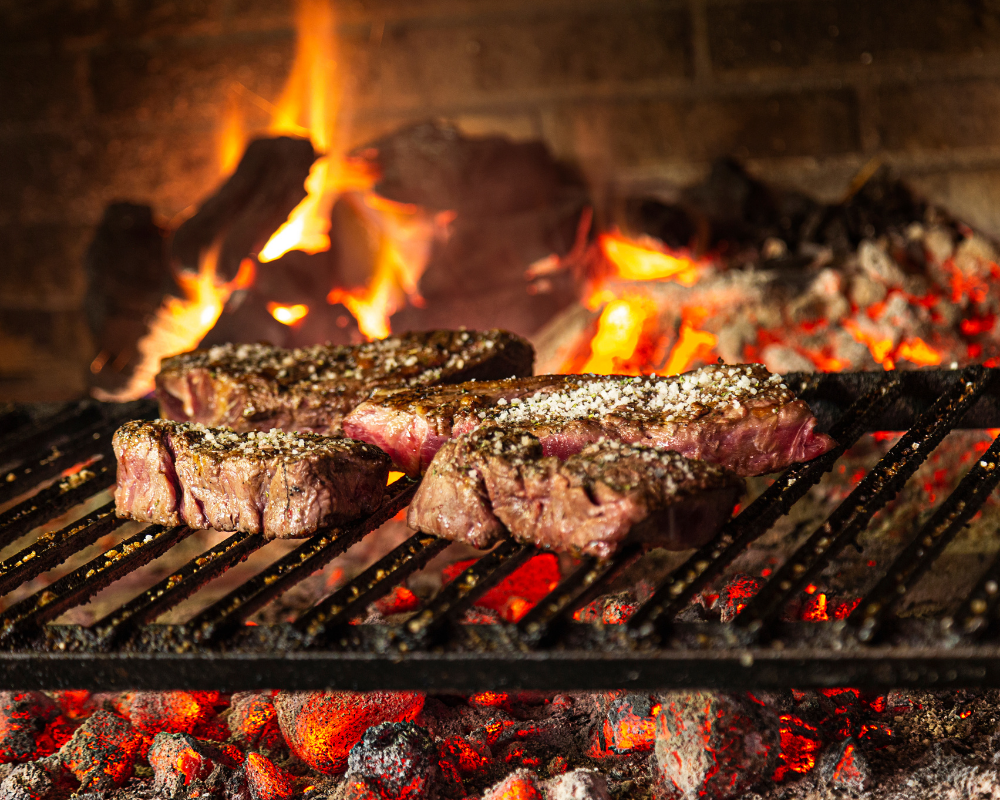
Hoje, Porto Alegre é considerada uma cidade moderna, aberta e culturalmente diversa, que combina tradição e progresso. Por causa de sua localização no sul do Brasil, é um importante centro econômico e cultural e uma porta de entrada para os países vizinhos Uruguai e Argentina. Os visitantes apreciam a atmosfera tranquila, os belos pores do sol no Guaíba e as pessoas simpáticas que têm orgulho de sua cidade.

Porto Alegre ist die Hauptstadt des südbrasilianischen Bundesstaates Rio Grande do Sul und eine der wichtigsten Städte im Süden des Landes. Die Stadt liegt am Ufer des Guaíba-Sees, der eigentlich ein großer Flussdelta ist und eine bedeutende Rolle für die Geschichte und Entwicklung der Region spielt. Porto Alegre wurde im Jahr 1772 gegründet und entwickelte sich schnell zu einem wichtigen Handelszentrum. Viele der ersten Siedler stammten aus Portugal, aber auch deutsche, italienische und spanische Einwanderer haben die Kultur der Stadt stark geprägt. Noch heute erkennt man diesen europäischen Einfluss in der Architektur, in den Traditionen und in der Gastronomie.
Das Stadtbild von Porto Alegre ist eine Mischung aus modernen Hochhäusern, historischen Gebäuden und großen Grünanlagen. Besonders bekannt ist der Parque Farroupilha, auch Redenção genannt, der ein beliebter Treffpunkt für Einheimische und Besucher ist. Dort finden am Wochenende Märkte, Musikveranstaltungen und kulturelle Aktivitäten statt.
Ein weiteres Wahrzeichen der Stadt ist das historische Zentrum mit seinen alten Kirchen, Museen und Theatern. Das Theatro São Pedro gehört zu den wichtigsten kulturellen Einrichtungen im Süden Brasiliens.
Porto Alegre ist auch eine bedeutende Universitätsstadt. Die Bundesuniversität von Rio Grande do Sul zählt zu den besten Hochschulen des Landes und zieht Studenten aus ganz Brasilien an. Durch die vielen jungen Menschen hat die Stadt ein lebendiges kulturelles Leben mit Konzerten, Festivals und Ausstellungen. Auch sportlich spielt Porto Alegre eine große Rolle. Die beiden Fußballvereine Grêmio und Internacional gehören zu den bekanntesten Teams Brasiliens und haben viele nationale und internationale Titel gewonnen.
Das Klima in Porto Alegre unterscheidet sich von vielen anderen brasilianischen Städten, da es hier deutlich kühlere Winter gibt. Im Sommer kann es sehr heiß werden, während im Winter Temperaturen unter zehn Grad möglich sind. Diese klimatischen Unterschiede machen die Region besonders vielfältig. Die Küche von Porto Alegre ist stark von der Kultur der Gauchos geprägt. Besonders beliebt ist Churrasco, das traditionelle brasilianische Grillfleisch, das in dieser Region eine lange Tradition hat.
Heute gilt Porto Alegre als eine moderne, offene und kulturell vielfältige Stadt, die Tradition und Fortschritt miteinander verbindet. Durch ihre Lage im Süden Brasiliens ist sie ein wichtiges wirtschaftliches und kulturelles Zentrum und ein Tor zu den Nachbarländern Uruguay und Argentinien. Besucher schätzen die entspannte Atmosphäre, die schönen Sonnenuntergänge am Guaíba und die freundlichen Menschen, die stolz auf ihre Stadt sind.

Porto Alegre is the capital of the southern Brazilian state of Rio Grande do Sul and one of the most important cities in the south of the country. The city lies on the shores of Lake Guaíba, which is actually a large river delta and played an important role in the history and development of the region. Porto Alegre was founded in 1772 and quickly developed into an important trading center. Many of the first settlers came from Portugal, but German, Italian, and Spanish immigrants also strongly influenced the culture of the city. This European influence can still be seen today in the architecture, traditions, and cuisine.
The cityscape of Porto Alegre is a mix of modern skyscrapers, historic buildings, and large green parks. One of the most famous places is Farroupilha Park, also called Redenção, which is a popular meeting point for locals and visitors. On weekends, markets, music events, and cultural activities take place there.
Another landmark is the historic center with its old churches, museums, and theaters. Theatro São Pedro is one of the most important cultural institutions in southern Brazil.
Porto Alegre is also an important university city. The Federal University of Rio Grande do Sul is one of the best universities in Brazil and attracts students from all over the country. Because of the many young people, the city has a lively cultural life with concerts, festivals, and exhibitions. Sports also play an important role. The football clubs Grêmio and Internacional are among the most famous teams in Brazil and have won many national and international titles.
The climate in Porto Alegre is different from many other Brazilian cities, because winters can be much cooler. Summers can be very hot, while in winter temperatures below ten degrees Celsius are possible. These climate differences make the region very diverse. The cuisine of Porto Alegre is strongly influenced by the Gaucho culture. One of the most popular dishes is churrasco, the traditional Brazilian barbecue, which has a long tradition in this region.
Today, Porto Alegre is considered a modern, open, and culturally diverse city that combines tradition and progress. Because of its location in southern Brazil, it is an important economic and cultural center and a gateway to the neighboring countries Uruguay and Argentina. Visitors appreciate the relaxed atmosphere, the beautiful sunsets over the Guaíba, and the friendly people who are proud of their city.
 imagenseviagens.com.br/travelandimages.com