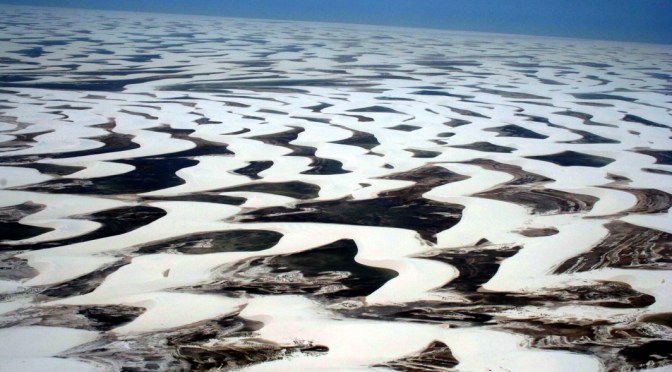

O Parque Nacional dos Lençóis Maranhenses está localizado no estado brasileiro do Maranhão e é uma das paisagens naturais mais impressionantes do país. O parque cobre uma área de cerca de 1.550 km² e é famoso por suas espetaculares dunas de areia branca e lagoas turquesas, que se enchem de água durante a estação chuvosa, entre junho e setembro.
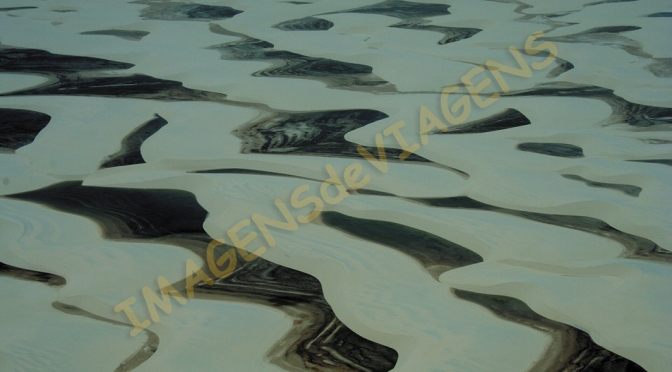
Apesar de sua aparência desértica, a região recebe uma grande quantidade de chuva anualmente, resultando na formação de diversas lagoas de água doce. Essas lagoas são alimentadas pela água da chuva e servem de habitat para várias espécies de peixes e outros animais.
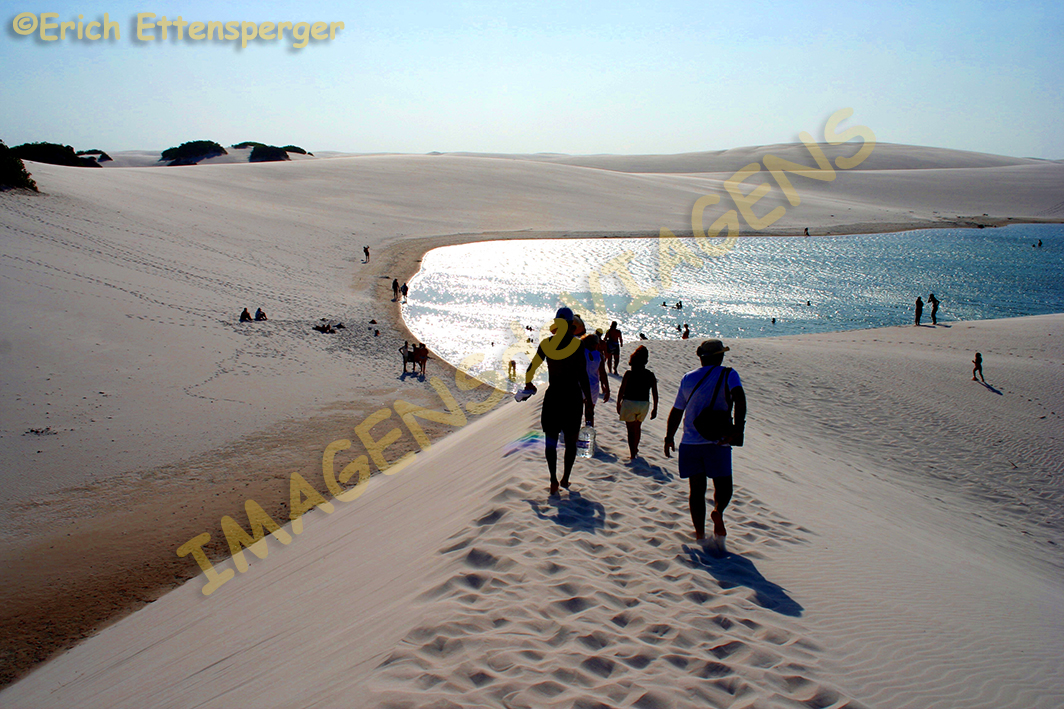
As dunas do parque nacional podem atingir alturas de até 40 metros e estão em constante mudança devido ao vento. As lagoas mais famosas são Lagoa Azul e Lagoa Bonita, que atraem turistas com suas águas cristalinas.
O parque nacional foi criado em 1981 para proteger essa paisagem única. Ele faz parte do ecossistema do Cerrado e abriga uma flora e fauna diversificadas, incluindo animais selvagens como raposas, tartarugas e aves raras.
Embora a área seja protegida como parque nacional, algumas comunidades tradicionais vivem dentro dela, dedicando-se à pesca e à criação de gado. A cidade de Barreirinhas é o principal ponto de partida para passeios no parque.
As atividades para os visitantes incluem passeios de buggy, caminhadas, passeios de barco no Rio Preguiças e banhos nas lagoas. O parque nacional é considerado um dos destinos mais espetaculares do Brasil e é frequentemente descrito como uma das paisagens desérticas mais belas do mundo.
O Parque Nacional dos Lençóis Maranhenses é reconhecido como Patrimônio Natural da Organização das Nações Unidas para a Educação, a Ciência e a Cultura – UNESCO.

Der Nationalpark Lençóis Maranhenses liegt im brasilianischen Bundesstaat Maranhão und ist eine der beeindruckendsten Naturlandschaften des Landes. Der Park erstreckt sich über eine Fläche von etwa 1.550 km² und ist bekannt für seine spektakulären weißen Sanddünen und die türkisen Lagunen, die sich in der Regenzeit zwischen Juni und September mit Wasser füllen.
Trotz seines wüstenähnlichen Aussehens erhält die Region jährlich eine hohe Niederschlagsmenge, was zur Entstehung der zahlreichen Süßwasserlagunen führt. Diese sind von Regenwasser gespeist und bieten Lebensraum für verschiedene Fischarten und andere Tiere.
Die Dünen des Nationalparks können Höhen von bis zu 40 Metern erreichen und verändern sich ständig durch den Wind. Die bekanntesten Lagunen sind Lagoa Azul und Lagoa Bonita, die Touristen mit ihrem kristallklaren Wasser anlocken.
Der Nationalpark wurde 1981 gegründet, um diese einzigartige Landschaft zu schützen. Er ist Teil des Cerrado-Ökosystems und beherbergt eine vielfältige Flora und Fauna, darunter Wildtiere wie Füchse, Schildkröten und seltene Vögel.
Obwohl das Gebiet als Nationalpark unter Schutz steht, leben einige traditionelle Gemeinden darin, die sich dem Fischfang und der Viehzucht widmen. Besonders die Stadt Barreirinhas dient als Ausgangspunkt für Touren in den Park.
Aktivitäten für Besucher umfassen Buggy-Touren, Wanderungen, Bootsfahrten auf dem Rio Preguiças sowie Schwimmen in den Lagunen. Der Nationalpark zählt zu den spektakulärsten Reisezielen Brasiliens und wird oft als eine der schönsten Wüstenlandschaften der Welt beschrieben.
Der Parque Nacional dos Lençóis Maranhenses wurde als natürliches Kulturerbe der UNESCO für Bildung, Wissenschaft und Kultur anerkannt.

The Lençóis Maranhenses National Park is located in the Brazilian state of Maranhão and is one of the country’s most impressive natural landscapes. The park covers an area of about 1,550 km² and is famous for its spectacular white sand dunes and turquoise lagoons, which fill with water during the rainy season between June and September.
Despite its desert-like appearance, the region receives a high amount of annual rainfall, leading to the formation of numerous freshwater lagoons. These are fed by rainwater and provide habitat for various fish species and other animals.
The dunes of the national park can reach heights of up to 40 meters and are constantly shifting due to the wind. The most famous lagoons are Lagoa Azul and Lagoa Bonita, which attract tourists with their crystal-clear water.
The national park was established in 1981 to protect this unique landscape. It is part of the Cerrado ecosystem and is home to diverse flora and fauna, including wildlife such as foxes, turtles, and rare birds.
Although the area is protected as a national park, some traditional communities live within it, engaging in fishing and cattle raising. The town of Barreirinhas serves as the main gateway for tours into the park.
Activities for visitors include buggy tours, hiking, boat trips on the Rio Preguiças, and swimming in the lagoons. The national park is considered one of Brazil’s most spectacular destinations and is often described as one of the world’s most beautiful desert landscapes.
The Lençóis Maranhenses National Park is recognized as a Natural Heritage Site by the United Nations Educational, Scientific and Cultural Organization – UNESCO.




 imagenseviagens.com.br/travelandimages.com