
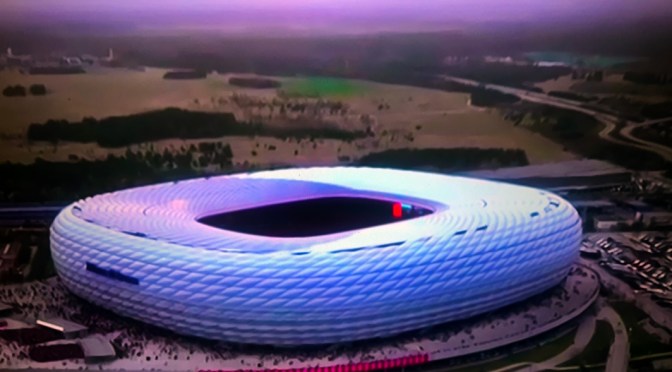
A Allianz Arena em Munique é um dos estádios de futebol mais famosos do mundo e lar do FC Bayern de Munique. Foi inaugurada em 2005 e é conhecida por seu design inovador e moderno. A cobertura externa da arena é composta por mais de 2.800 almofadas de ar que podem ser iluminadas em diferentes cores, fazendo com que a arena pareça vermelha, azul ou branca dependendo da ocasião.
A capacidade da Allianz Arena é de aproximadamente 75.000 lugares para jogos de futebol e pode ser utilizada para outros eventos, como concertos ou eventos corporativos. O estádio também é ecologicamente avançado devido à sua arquitetura e tecnologia, tendo recebido uma classificação de sustentabilidade “muito boa”.
Os visitantes podem explorar a arena em visitas guiadas para aprender sobre a história do estádio e os times que jogam lá. A Allianz Arena não é apenas um local para o futebol, mas também uma maravilha arquitetônica e tecnológica que atrai visitantes de todo o mundo.
A Allianz Arena em Munique é facilmente acessível por transporte público.
Nós visitamos, através de uma visita guiada (compramos o ticket quando chegamos lá, existe a possibilidade de se ter o tour em inglês ou alemão) esse belo estádio e utilizamos o transporte público.
O metrô (Linha U6 do U-Bahn) é o método mais conveniente e recomendado para chegar à Allianz Arena, especialmente durante jogos de futebol ou outros grandes eventos, quando o tráfego ao redor do estádio pode ser intenso.
Em geral, em grandes eventos como jogos de futebol em estádios importantes como a Allianz Arena, uma quantidade considerável de cerveja, salsichas e outros lanches são vendidos para atender ao grande número de visitantes. Os estádios geralmente estão bem preparados para atender à demanda e oferecer uma variedade de alimentos e bebidas para satisfazer os gostos dos diferentes visitantes.
Formas de chegar à Allianz Arena:
- Metropolitano (Linha U6 do U-Bahn): A Linha U6 do metropolitano vai diretamente para a estação “Fröttmaning”, que está próxima à arena. Esta linha de metrô conecta a arena ao centro da cidade de Munique. O tempo de viagem do centro da cidade de Munique (por exemplo, do Marienplatz) até a estação de Fröttmaning é de aproximadamente 20 a 25 minutos.
- S-Bahn e Ônibus: Outra opção é usar as linhas S2 ou S4 do S-Bahn até a estação “Feldmoching” e depois fazer a transferência para o ônibus 294 (em direção à “Allianz Arena”). Esta é uma rota um pouco mais longa, mas ainda é uma opção prática, especialmente se você estiver em uma área mais distante do metrô.
- Carro: Se você estiver indo de carro, existem estacionamentos ao redor da arena. No entanto, observe que o estacionamento durante eventos pode ser muito procurado e encher rapidamente. É recomendável chegar cedo para garantir uma vaga de estacionamento.
- Bicicleta: A Allianz Arena possui espaços para estacionamento de bicicletas para visitantes que preferem chegar de bicicleta. Esta opção é ambientalmente amigável e uma boa maneira de evitar congestionamentos de trânsito.
Para mais informações sobre a Allianz Arena e inclusive comprar conhecer os tipos de tours e comprar tickets, clique aqui.

Die Allianz Arena in München ist eines der bekanntesten Fußballstadien der Welt und die Heimat des FC Bayern München. Sie wurde im Jahr 2005 eröffnet und ist für ihr innovatives, modernes Design bekannt. Die Außenhaut der Arena besteht aus über 2.800 Luftkissen, die in verschiedenen Farben beleuchtet werden können und somit die Arena je nach Anlass in Rot, Blau oder Weiß erscheinen lassen.
Die Kapazität der Allianz Arena beträgt etwa 75.000 Plätze bei Fußballspielen und kann für andere Veranstaltungen wie Konzerte oder Firmenevents genutzt werden. Das Stadion ist durch seine Architektur und Technologie auch ökologisch fortschrittlich und wurde mit dem Prädikat „sehr gut“ im Bereich Nachhaltigkeit ausgezeichnet.
Besucher können die Arena auf Führungen erkunden und mehr über die Geschichte des Stadions sowie die Teams, die dort spielen, erfahren. Die Allianz Arena ist nicht nur ein Ort für Fußball, sondern auch ein architektonisches und technologisches Wunder, das Besucher aus aller Welt anzieht.
Die Allianz Arena in München ist gut mit öffentlichen Verkehrsmitteln zu erreichen.
Die U-Bahn (U-Bahn-Linie U6) ist jedoch die bequemste und empfohlene Methode, um die Allianz Arena zu erreichen, insbesondere während Fußballspielen oder anderen Großveranstaltungen, wenn der Verkehr um das Stadion herum stark sein kann.
Generell kann man sagen, dass bei großen Veranstaltungen wie Fußballspielen in großen Stadien wie der Allianz Arena eine beträchtliche Menge an Bier, Würstchen und anderen Snacks verkauft wird, um die große Anzahl an Besuchern zu versorgen. Stadien sind oft gut darauf vorbereitet, die Nachfrage zu decken und bieten eine Vielzahl von Speisen und Getränken an, um den Geschmack verschiedener Besucher zu treffen.
Wir besuchten die Arena im Rahmen einer Führung (wir kauften das Ticket vor Ort, es besteht die Möglichkeit, die Tour auf Englisch oder Deutsch zu machen), dieses wunderschöne Stadion und nutzten die öffentlichen Verkehrsmittel.
Anreisemöglichkeiten zur Allianz Arena:
- U-Bahn (U-Bahn-Linie U6): Die U-Bahn-Linie U6 fährt direkt zur Station “Fröttmaning”, die sich in unmittelbarer Nähe der Arena befindet. Diese U-Bahn-Linie verbindet die Arena mit dem Stadtzentrum von München. Die Fahrtzeit von der Münchner Innenstadt (zum Beispiel vom Marienplatz) zur Station Fröttmaning beträgt etwa 20-25 Minuten.
- S-Bahn und Bus: Eine weitere Möglichkeit ist die Nutzung der S-Bahn-Linie S2 oder S4 bis zur Station “Feldmoching” und dann Umstieg in den Bus 294 (Richtung “Allianz Arena”). Dies ist eine etwas längere Route, aber immer noch eine praktikable Option, besonders wenn du in einem Bereich bist, der von der U-Bahn weiter entfernt ist.
- Auto: Wenn du mit dem Auto kommst, gibt es Parkplätze rund um die Arena. Beachte jedoch, dass das Parken während Veranstaltungen stark nachgefragt ist und sich stark füllen kann. Es wird empfohlen, frühzeitig anzukommen, um Parkplätze zu sichern.
- Fahrrad: Die Allianz Arena verfügt über Fahrradstellplätze für Besucher, die mit dem Fahrrad anreisen möchten. Diese Option ist umweltfreundlich und eine gute Möglichkeit, den Verkehr zu vermeiden.
Weitere Informationen zur Allianz Arena sowie zum Ticketkauf, zu den Tourenarten und zum Ticketkauf finden Sie hier.

The Allianz Arena in Munich is one of the most famous football stadiums in the world and home to FC Bayern Munich. It was opened in 2005 and is renowned for its innovative, modern design. The outer shell of the arena consists of over 2,800 air-filled cushions that can be illuminated in different colors, making the arena appear red, blue, or white depending on the occasion.
The capacity of the Allianz Arena is approximately 75,000 seats for football matches and can be used for other events such as concerts or corporate functions. The stadium is also environmentally advanced due to its architecture and technology, having been awarded a “very good” sustainability rating.
Visitors can explore the arena on guided tours to learn about the stadium’s history and the teams that play there. The Allianz Arena is not just a place for football but also an architectural and technological marvel that attracts visitors from around the world.
The subway (U-Bahn Line U6) is the most convenient and recommended method to reach the Allianz Arena, especially during football matches or other major events when traffic around the stadium can be heavy.
We visited the Arena, through a guided tour (we bought the ticket when we got there, there is the possibility of having the tour in English or German) this beautiful stadium and used public transport.
In general, at large events like football matches in major stadiums such as the Allianz Arena, a considerable amount of beer, sausages, and other snacks are sold to cater to the large number of visitors. Stadiums are often well-prepared to meet the demand and offer a variety of food and beverages to satisfy the tastes of different visitors.
The Allianz Arena in Munich is well accessible by public transportation. Here are the best options:
- Subway (U-Bahn Line U6): The U-Bahn Line U6 goes directly to the “Fröttmaning” station, which is in close proximity to the arena. This subway line connects the arena with the city center of Munich. The travel time from Munich’s city center (for example, from Marienplatz) to Fröttmaning station is approximately 20-25 minutes.
- S-Bahn and Bus: Another option is to use the S-Bahn lines S2 or S4 to the “Feldmoching” station and then transfer to Bus 294 (heading towards “Allianz Arena”). This is a slightly longer route but still a practical option, especially if you are in an area further away from the U-Bahn.
- Car: If you are coming by car, there are parking lots around the arena. However, note that parking during events can be in high demand and fill up quickly. It is recommended to arrive early to secure parking.
- Bicycle: The Allianz Arena has bicycle parking spaces for visitors who prefer to arrive by bike. This option is environmentally friendly and a good way to avoid traffic congestion.
For more information about the Allianz Arena and including purchasing, finding out about the types of tours and purchasing tickets, click here.

 imagenseviagens.com.br/travelandimages.com