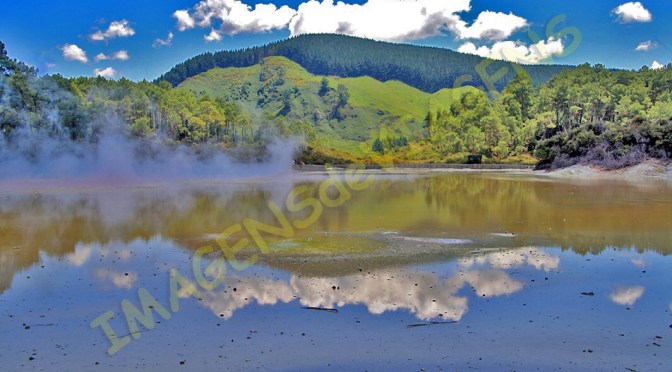
Way-O-Tapu, maravilha da natureza/Wunder der Natur/wonder of nature

  • Wai-O-Tapu está localizado na Ilha Norte da Nova Zelândia, ao sul de Rotorua.
  • É uma maravilha geotérmica com fenômenos naturais espetaculares.
  • A área faz parte do campo vulcânico de Taupō, muito ativo geologicamente.
  • O nome “Wai-O-Tapu” significa “água sagrada” na língua Māori.
  • Os visitantes encontram fontes termais coloridas, poças de lama e crateras fumegantes.
  • Uma das atrações mais famosas é a Champagne Pool.
  • A piscina tem cerca de 65 metros de diâmetro e cores vibrantes.
  • A borda laranja é causada por depósitos de arsênio e antimônio.
  • O cheiro de enxofre é constante e típico das áreas geotérmicas.
  • O gêiser Lady Knox é outra atração popular.
  • Ele entra em erupção todos os dias por volta das 10:15 – com ajuda humana.
  • O jato pode atingir até 20 metros de altura.
  • Poças de lama borbulhante também ficam nas proximidades.
  • É um paraíso para fotógrafos e amantes da natureza.
  • Trilhas conduzem por paisagens coloridas.
  • Lagos de enxofre, piscinas verdes e fendas fumegantes criam visões únicas.
  • A atividade termal resulta de processos vulcânicos profundos.
  • Wai-O-Tapu é um parque natural protegido.
  • Os turistas devem permanecer nas trilhas sinalizadas.
  • Algumas piscinas atingem temperaturas acima de 100 graus Celsius.
  • As cores dos lagos vão de verde fluorescente a amarelo brilhante.
  • Minerais como enxofre, óxido de ferro e silício causam essa diversidade.
  • O ambiente é áspero, mas fascinante.
  • A fauna também se adaptou às condições quentes.
  • O centro de visitantes oferece informações sobre a geologia local.
  • A entrada é paga, mas vale a pena.
  • Wai-O-Tapu é uma das atrações naturais mais visitadas da Nova Zelândia.
  • A atmosfera parece quase extraterrestre.
  • Uma visita é inesquecível.
  • Wai-O-Tapu mostra a força bruta da natureza em uma beleza colorida.

  • Wai-O-Tapu liegt auf der Nordinsel Neuseelands, südlich von Rotorua.
  • Es ist ein geothermisches Wunderland mit spektakulären Naturphänomenen.
  • Das Gebiet gehört zum Taupō-Vulkanfeld, das geologisch sehr aktiv ist.
  • Der Name “Wai-O-Tapu” bedeutet „heiliges Wasser“ in der Sprache der Māori.
  • Besucher erleben farbenfrohe heiße Quellen, Schlammtümpel und dampfende Krater.
  • Eine der bekanntesten Attraktionen ist der Champagne Pool.
  • Der Pool ist rund 65 Meter im Durchmesser und hat leuchtende Farben.
  • Die orangefarbene Umrandung entsteht durch Ablagerungen von Arsen und Antimon.
  • Der Schwefelgeruch ist allgegenwärtig und typisch für geothermische Gebiete.
  • Der Lady Knox Geysir ist eine weitere beliebte Attraktion.
  • Er bricht täglich um ca. 10:15 Uhr aus – durch menschliche Auslösung.
  • Die Fontäne kann bis zu 20 Meter hoch sprühen.
  • In der Nähe befinden sich auch brodelnde Schlammtümpel.
  • Das Gebiet ist ein Paradies für Fotografen und Naturfreunde.
  • Wanderwege führen durch farbenprächtige Landschaften.
  • Schwefelseen, grüne Wasserbecken und dampfende Spalten bieten einzigartige Eindrücke.
  • Die Thermalaktivität ist das Ergebnis vulkanischer Prozesse tief unter der Erde.
  • Wai-O-Tapu ist ein geschützter Naturpark.
  • Touristen sind angehalten, die markierten Wege nicht zu verlassen.
  • Die Temperaturen mancher Becken erreichen über 100 Grad Celsius.
  • Die Farben der Seen reichen von giftgrün bis leuchtend gelb.
  • Mineralien wie Schwefel, Eisenoxid und Silizium verursachen die Farbvielfalt.
  • Die Umgebung ist rau, aber faszinierend.
  • Auch Vögel und Insekten haben sich an die heißen Bedingungen angepasst.
  • Das Besucherzentrum bietet interessante Informationen zur Geologie der Region.
  • Eintritt wird erhoben, aber es lohnt sich.
  • Wai-O-Tapu ist eine der meistbesuchten Naturattraktionen Neuseelands.
  • Die Atmosphäre wirkt fast außerirdisch.
  • Ein Besuch bleibt unvergesslich.
  • Wai-O-Tapu zeigt die rohe Kraft der Natur in farbenfroher Schönheit.

  • Wai-O-Tapu is located on New Zealand’s North Island, south of Rotorua.
  • It is a geothermal wonderland with spectacular natural phenomena.
  • The area is part of the geologically active Taupō Volcanic Zone.
  • The name “Wai-O-Tapu” means “sacred water” in the Māori language.
  • Visitors see colorful hot springs, mud pools, and steaming craters.
  • One of the most famous attractions is the Champagne Pool.
  • The pool is about 65 meters wide and displays vibrant colors.
  • The orange edge is caused by deposits of arsenic and antimony.
  • The smell of sulfur is ever-present and typical for geothermal sites.
  • The Lady Knox Geyser is another popular attraction.
  • It erupts daily around 10:15 a.m. with human assistance.
  • The water jet can reach up to 20 meters in height.
  • Bubbling mud pools are also found nearby.
  • It’s a paradise for photographers and nature lovers.
  • Walking tracks lead through colorful landscapes.
  • Sulfur lakes, green pools, and steaming fissures create unique sights.
  • The thermal activity results from volcanic processes deep underground.
  • Wai-O-Tapu is a protected natural park.
  • Tourists are asked to stay on marked paths.
  • Some pools reach temperatures over 100 degrees Celsius.
  • The lake colors range from neon green to bright yellow.
  • Minerals like sulfur, iron oxide, and silica cause the color diversity.
  • The environment is harsh but fascinating.
  • Birds and insects have adapted to the hot conditions.
  • The visitor center provides geological information about the region.
  • There is an entrance fee, but it’s worth it.
  • Wai-O-Tapu is one of New Zealand’s most visited natural sites.
  • The atmosphere feels almost otherworldly.
  • A visit is truly unforgettable.
  • Wai-O-Tapu showcases the raw power of nature in vibrant beauty.

30 Aspectos sobre Singapura/30 Fakten über Singapur/30 Facts about Singapore

  1. Singapura é uma cidade-estado no Sudeste Asiático.
  2. Fica ao sul da Malásia.
  3. Singapura tem cerca de 5,9 milhões de habitantes.
  4. A moeda oficial é o Dólar de Singapura.
  5. Singapura é conhecida por sua limpeza.
  6. O chiclete é fortemente regulado lá.
  7. A cidade é um importante centro financeiro.
  8. Há quatro línguas oficiais: inglês, mandarim, malaio e tâmil.
  9. O inglês é a principal língua de ensino.
  10. Singapura é marcada pelo multiculturalismo.
  11. A comida é diversificada e deliciosa.
  12. A comida de rua nos “hawker centres” é muito popular.
  13. O Aeroporto de Changi é um dos melhores do mundo.
  14. Marina Bay Sands é um hotel famoso.
  15. O Jardim Botânico é Patrimônio Mundial da UNESCO.
  16. Singapura é um país muito seguro.
  17. Existem leis e regras rigorosas.
  18. O transporte público é muito eficiente.
  19. A cidade é moderna e limpa.
  20. O horizonte urbano é impressionante.
  21. Singapura está localizada perto do equador.
  22. O clima é quente e úmido o ano todo.
  23. Chove com frequência, especialmente à tarde.
  24. O feriado nacional é em 9 de agosto.
  25. Singapura tornou-se independente em 1965.
  26. Há muitos arranha-céus e parques.
  27. A população é bem-educada.
  28. A educação tem grande importância.
  29. Muitas empresas internacionais estão sediadas lá.
  30. O turismo é uma importante fonte de renda.

  1. Singapur ist ein Stadtstaat in Südostasien.
  2. Er liegt südlich von Malaysia.
  3. Singapur hat etwa 5,9 Millionen Einwohner.
  4. Die offizielle Währung ist der Singapur-Dollar.
  5. Singapur ist bekannt für seine Sauberkeit.
  6. Kaugummi ist dort streng reguliert.
  7. Die Stadt ist ein bedeutendes Finanzzentrum.
  8. Es gibt vier Amtssprachen: Englisch, Mandarin, Malaiisch und Tamil.
  9. Englisch ist die Hauptunterrichtssprache.
  10. Singapur ist multikulturell geprägt.
  11. Das Essen ist vielfältig und lecker.
  12. Der Hawker-Street-Food-Stil ist sehr beliebt.
  13. Der Flughafen Changi ist einer der besten der Welt.
  14. Die Marina Bay Sands ist ein berühmtes Hotel.
  15. Der botanische Garten gehört zum UNESCO-Welterbe.
  16. Singapur ist ein sehr sicheres Land.
  17. Es gibt strenge Gesetze und Regeln.
  18. Der öffentliche Nahverkehr ist sehr effizient.
  19. Die Stadt ist sehr modern und sauber.
  20. Die Skyline ist beeindruckend.
  21. Singapur liegt fast am Äquator.
  22. Es ist ganzjährig warm und feucht.
  23. Es regnet häufig, besonders am Nachmittag.
  24. Der Nationalfeiertag ist am 9. August.
  25. Singapur wurde 1965 unabhängig.
  26. Es gibt viele Wolkenkratzer und Parks.
  27. Die Bevölkerung ist gut ausgebildet.
  28. Bildung hat einen hohen Stellenwert.
  29. Es gibt viele internationale Unternehmen.

Tourismus ist eine wichtige Einkommensquelle

  1. Singapore is a city-state in Southeast Asia.
  2. It lies south of Malaysia.
  3. Singapore has about 5.9 million inhabitants.
  4. The official currency is the Singapore Dollar.
  5. Singapore is known for its cleanliness.
  6. Chewing gum is strictly regulated there.
  7. The city is a major financial hub.
  8. There are four official languages: English, Mandarin, Malay, and Tamil.
  9. English is the main language of instruction.
  10. Singapore is shaped by multiculturalism.
  11. The food is diverse and delicious.
  12. Hawker street food is very popular.
  13. Changi Airport is one of the best in the world.
  14. Marina Bay Sands is a famous hotel.
  15. The Botanic Gardens are a UNESCO World Heritage Site.
  16. Singapore is a very safe country.
  17. There are strict laws and rules.
  18. Public transportation is very efficient.
  19. The city is modern and clean.
  20. The skyline is impressive.
  21. Singapore is located near the equator.
  22. It is warm and humid all year round.
  23. It rains frequently, especially in the afternoon.
  24. The national holiday is on August 9.
  25. Singapore became independent in 1965.
  26. There are many skyscrapers and parks.
  27. The population is well educated.
  28. Education is highly valued.
  29. Many international companies are based there.
  30. Tourism is an important source of income.

Chapada Diamantina

A Chapada Diamantina está localizada no estado da Bahia, no nordeste do Brasil, e é famosa por suas paisagens montanhosas, cachoeiras espetaculares e grutas impressionantes. O Parque Nacional da Chapada Diamantina cobre cerca de 152 mil hectares e protege uma rica biodiversidade.

O nome “Diamantina” vem da corrida dos diamantes no século XIX, quando a região atraiu garimpeiros de todo o país. Hoje, cidades como Lençóis, Vale do Capão, Igatu e Mucugê são pontos de partida para trilhas incríveis e aventuras na natureza.

Entre as atrações mais famosas estão:

  • Cachoeira da Fumaça (com 340 metros de altura)
  • Poço Encantado e Poço Azul (com águas cristalinas e flutuantes)
  • Morro do Pai Inácio, com vista panorâmica
  • Gruta da Lapa Doce e Pratinha

A região oferece também cultura local rica, culinária típica, artesanato e hospitalidade acolhedora. É ideal para ecoturismo, trilhas, fotografia e experiências autênticas no interior do Brasil.

Die Chapada Diamantina liegt im Bundesstaat Bahia im Nordosten Brasiliens und ist bekannt für ihre atemberaubenden Landschaften mit Bergen, Höhlen und spektakulären Wasserfällen. Der Nationalpark Chapada Diamantina erstreckt sich über etwa 152.000 Hektar und schützt eine einzigartige Flora und Fauna.

Der Name “Diamantina” stammt aus dem 19. Jahrhundert, als dort Diamanten gefunden wurden und viele Glückssucher in die Region strömten. Heute sind Orte wie Lençóis, Vale do Capão, Mucugê und Igatu beliebte Ausgangspunkte für Wanderungen und Naturerlebnisse.

Highlights der Region sind:

  • Der Cachoeira da Fumaça, mit 340 Metern einer der höchsten Wasserfälle Brasiliens
  • Der Poço Encantado und Poço Azul, mit glasklarem, schwebendem Wasser
  • Der Morro do Pai Inácio, mit spektakulärem Rundblick
  • Tropfsteinhöhlen wie die Gruta da Lapa Doce

Die Chapada ist ein Paradies für Wanderer, Naturfreunde, Fotograf:innen und alle, die authentische brasilianische Kultur erleben möchten – samt lokaler Küche, Musik und Gastfreundschaft.

Chapada Diamantina is located in the state of Bahia, in northeastern Brazil. It’s famous for its dramatic landscapes, high waterfalls, mystical caves, and rich biodiversity. The Chapada Diamantina National Park spans around 152,000 hectares and is a prime destination for ecotourism.

The name “Diamantina” comes from the diamond rush of the 1800s, when miners flocked to the area. Today, towns like Lençóis, Vale do Capão, Igatu, and Mucugê serve as gateways to some of Brazil’s most stunning natural attractions.

Top highlights include:

  • The Cachoeira da Fumaça, a 340-meter waterfall
  • The magical Poço Encantado and Poço Azul, with crystal-clear water
  • The iconic Morro do Pai Inácio, offering panoramic views
  • Limestone caves like Gruta da Lapa Doce

Visitors can enjoy hiking, swimming, cave exploring, and soaking in local culture through food, music, and artisan crafts. Chapada Diamantina is a true hidden gem for nature lovers and adventurers alike.