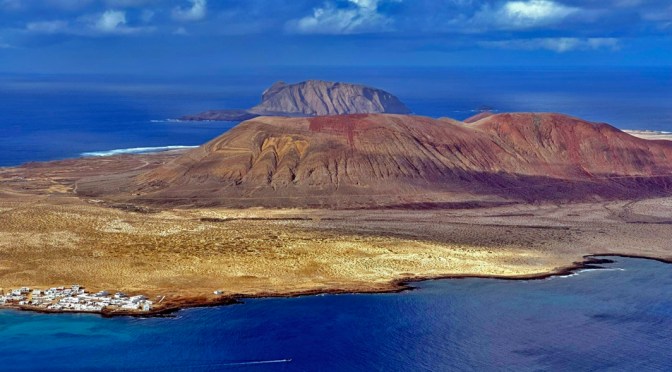
As Ilhas Canárias estão localizadas no Oceano Atlântico, ao largo da costa noroeste da África.
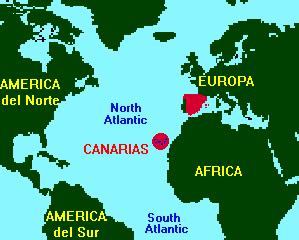
Elas pertencem politicamente à Espanha, mas estão geograficamente mais próximas da África do que da Europa.
O arquipélago é composto por sete ilhas principais e várias ilhas menores.
Entre as ilhas mais conhecidas estão Tenerife, Gran Canaria e Lanzarote. Durante o nosso cruzeiro também visitamos Santa Cruz de La Palma e Fuerteventura.
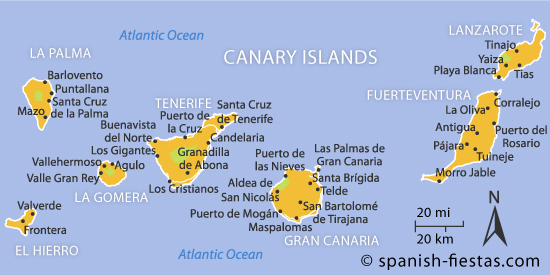
Cada ilha possui seu próprio caráter e paisagens únicas.
O clima das Ilhas Canárias é ameno e agradável durante todo o ano.
Por esse motivo, elas são frequentemente chamadas de ilhas da eterna primavera.
A origem vulcânica molda as paisagens de todo o arquipélago.
A montanha mais alta da Espanha, o Monte Teide, está localizada em Tenerife.
Sua silhueta impressionante pode ser vista à distância.
As praias das Ilhas Canárias são muito diversas e únicas.
Existem praias de lava negra, praias de areia dourada e até praias de areia branca.
A areia de algumas praias vem do Deserto do Saara.
O mar ao redor das ilhas é claro e rico em vida marinha.
Baleias e golfinhos podem ser observados regularmente.
A culinária canária é uma mistura de influências espanholas e africanas.
Pratos típicos incluem papas arrugadas com molho mojo.
O peixe fresco desempenha um papel importante na alimentação local.
O cultivo de bananas também é muito significativo nas ilhas.
O turismo é um dos setores econômicos mais importantes da região.
Milhões de pessoas visitam as Ilhas Canárias todos os anos.
Muitos viajantes apreciam a tranquilidade e a natureza.
Outros vêm pelas atividades esportivas, como surfe ou trilhas.
As ilhas oferecem numerosas trilhas por áreas vulcânicas.
Parques nacionais protegem a flora e a fauna únicas.
A vegetação é adaptada ao clima seco.
Muitas espécies animais existem apenas nas Ilhas Canárias.
A história das ilhas remonta aos habitantes originais, os guanches.
Sua cultura ainda influencia as ilhas atualmente.
Tradições e festas desempenham um papel importante no dia a dia.
O carnaval é uma das festas mais famosas das ilhas.
O Carnaval de Santa Cruz de Tenerife é especialmente famoso no mundo todo.
A música e a dança fazem parte essencial da cultura canária.
As pessoas são consideradas abertas, simpáticas e relaxadas.
O ritmo de vida tranquilo é valorizado por muitos visitantes.
A arquitetura varia de cidades modernas a pequenas aldeias.
Casas brancas com varandas de madeira são típicas em muitos lugares.
As Ilhas Canárias combinam natureza, cultura e descanso.
Elas são um destino popular para jovens e idosos.
Nômades digitais estão cada vez mais atraídos pelas ilhas.
A boa infraestrutura facilita a vida no local.
Aeroportos conectam as ilhas à Europa e ao mundo.
Balsas permitem viagens entre as ilhas individuais.
Apesar do turismo, muitos locais preservam sua autenticidade.
As Ilhas Canárias oferecem diversidade em um espaço reduzido.
Elas encantam com seus contrastes e cores.
Cada viagem às Ilhas Canárias é única.
As ilhas deixam impressões duradouras em muitos visitantes.
Para conhecer mais sobre as Ilhas Canárias, clique aqui.

Die Kanarischen Inseln liegen im Atlantischen Ozean vor der Nordwestküste Afrikas.
Sie gehören politisch zu Spanien, sind geografisch jedoch Afrika näher als Europa.
Die Inselgruppe besteht aus sieben Hauptinseln und mehreren kleineren Inseln.
Zu den bekanntesten Inseln zählen Teneriffa, Gran Canaria und Lanzarote. Wir besuchten auf unserer Kreuzfahrt zudem Santa Cruz De La Palma und Fuerteventura.
Jede Insel besitzt ihren eigenen Charakter und landschaftliche Besonderheiten.
Das Klima der Kanarischen Inseln ist ganzjährig mild und angenehm.
Aus diesem Grund werden sie oft als die Inseln des ewigen Frühlings bezeichnet.
Vulkanische Ursprünge prägen die Landschaften der gesamten Inselgruppe.
Der höchste Berg Spaniens, der Teide, befindet sich auf Teneriffa.
Seine imposante Silhouette ist schon von weitem sichtbar.
Die Strände der Kanaren sind sehr vielfältig und einzigartig.
Es gibt schwarze Lavastrände, goldene Sandstrände und sogar weiße Strände.
Der Sand einiger Strände stammt aus der Sahara.
Das Meer rund um die Inseln ist klar und reich an Meereslebewesen.
Wale und Delfine können dort regelmäßig beobachtet werden.
Die kanarische Küche ist eine Mischung aus spanischen und afrikanischen Einflüssen.
Typische Gerichte sind Papas arrugadas mit Mojo-Soße.
Frischer Fisch spielt eine wichtige Rolle in der lokalen Ernährung.
Auch der Anbau von Bananen ist auf den Inseln sehr bedeutend.
Der Tourismus ist einer der wichtigsten Wirtschaftszweige der Region.
Jährlich besuchen Millionen Menschen die Kanarischen Inseln.
Viele Reisende schätzen die Ruhe und die Natur.
Andere kommen wegen der Sportmöglichkeiten wie Surfen oder Wandern.
Die Inseln bieten zahlreiche Wanderwege durch Vulkangebiete.
Nationalparks schützen die einzigartige Flora und Fauna.
Die Pflanzenwelt ist an das trockene Klima angepasst.
Viele Tierarten kommen nur auf den Kanarischen Inseln vor.
Die Geschichte der Inseln reicht bis zu den Ureinwohnern, den Guanchen, zurück.
Ihre Kultur beeinflusst die Inseln bis heute.
Traditionen und Feste spielen eine große Rolle im Alltag.
Der Karneval ist eines der bekanntesten Feste der Kanaren.
Besonders der Karneval in Santa Cruz de Tenerife ist weltberühmt.
Musik und Tanz sind fester Bestandteil der kanarischen Kultur.
Die Menschen gelten als offen, freundlich und entspannt.
Das langsame Lebenstempo wird von vielen Besuchern geschätzt.
Die Architektur variiert von modernen Städten bis zu kleinen Dörfern.
Weiße Häuser mit Holzbalkonen sind typisch für viele Orte.
Die Kanarischen Inseln verbinden Natur, Kultur und Erholung.
Sie sind ein beliebtes Reiseziel für Jung und Alt.
Auch digitale Nomaden zieht es zunehmend auf die Inseln.
Die gute Infrastruktur erleichtert das Leben vor Ort.
Flughäfen verbinden die Inseln mit Europa und der Welt.
Fähren ermöglichen Reisen zwischen den einzelnen Inseln.
Trotz des Tourismus bewahren viele Orte ihre Ursprünglichkeit.
Die Kanarischen Inseln bieten Vielfalt auf kleinem Raum.
Sie faszinieren durch ihre Gegensätze und Farben.
Jede Reise auf die Kanaren ist einzigartig.
Die Inseln hinterlassen bei vielen Besuchern bleibende Eindrücke.
Um mehr über die Kanarischen Inseln zu erfahren, klicken Sie hier.

The Canary Islands are located in the Atlantic Ocean off the northwest coast of Africa.
They politically belong to Spain but are geographically closer to Africa than to Europe.
The archipelago consists of seven main islands and several smaller ones.
Among the best-known islands are Tenerife, Gran Canaria, and Lanzarote. During our cruise we also visited Santa Cruz de La Palma and Fuerteventura.
Each island has its own character and unique landscapes.
The climate of the Canary Islands is mild and pleasant all year round.
For this reason, they are often called the islands of eternal spring.
Volcanic origins shape the landscapes of the entire archipelago.
Spain’s highest mountain, Mount Teide, is located on Tenerife.
Its impressive silhouette can be seen from far away.
The beaches of the Canary Islands are very diverse and unique.
There are black lava beaches, golden sandy beaches, and even white beaches.
The sand on some beaches comes from the Sahara Desert.
The sea around the islands is clear and rich in marine life.
Whales and dolphins can be observed there regularly.
Canarian cuisine is a mix of Spanish and African influences.
Typical dishes include papas arrugadas with mojo sauce.
Fresh fish plays an important role in the local diet.
Banana cultivation is also very significant on the islands.
Tourism is one of the most important economic sectors of the region.
Millions of people visit the Canary Islands every year.
Many travelers appreciate the peace and nature.
Others come for sports activities such as surfing or hiking.
The islands offer numerous hiking trails through volcanic areas.
National parks protect the unique flora and fauna.
The plant life is adapted to the dry climate.
Many animal species exist only on the Canary Islands.
The history of the islands dates back to the indigenous Guanches.
Their culture still influences the islands today.
Traditions and festivals play a major role in daily life.
Carnival is one of the most famous celebrations on the islands.
The Carnival of Santa Cruz de Tenerife is especially world-famous.
Music and dance are an integral part of Canarian culture.
The people are considered open, friendly, and relaxed.
The slow pace of life is appreciated by many visitors.
Architecture ranges from modern cities to small villages.
White houses with wooden balconies are typical in many places.
The Canary Islands combine nature, culture, and relaxation.
They are a popular destination for young and old alike.
Digital nomads are increasingly drawn to the islands.
Good infrastructure makes life there easier.
Airports connect the islands with Europe and the world.
Ferries allow travel between the individual islands.
Despite tourism, many places preserve their authenticity.
The Canary Islands offer diversity in a small area.
They fascinate visitors with their contrasts and colors.
Every trip to the Canary Islands is unique.
The islands leave lasting impressions on many visitors.
To learn more about the Canary Islands, click here.
 imagenseviagens.com.br/travelandimages.com