
Arquivo da categoria: Brasil
Feliz Natal/Frohe Weihnachten! Merry Christmas!


Inhotim

Inhotim é um lugar único no Brasil, estendendo-se por mais de 7.000 hectares, proporcionando uma deslumbrante combinação de arte, natureza e jardinagem. Foi fundado pelo empresário brasileiro Bernardo Paz e é hoje um dos centros de arte mais importantes da América Latina.
O coração de Inhotim são as numerosas esculturas e obras de arte espalhadas por meio de jardins exuberantes e florestas. Os visitantes podem admirar uma impressionante coleção de arte contemporânea, incluindo obras de artistas como Adriana Varejão, Olafur Eliasson e Cildo Meireles.
A diversidade da flora e fauna em Inhotim também é notável, com jardins especiais apresentando espécies de plantas raras de todo o mundo. Este local é um paraíso não apenas para amantes da arte, mas também para amantes da natureza.
Nós visitamos o Museu do Inhotim em um dia. Compramos o ingresso no site do museu e no momento da compra também incluímos o transporte interno pela área que é muito grande. Se você tem apenas um dia para visitar, recomendamos esse transporte. Fomos de ônibus até o Museu. Compramos antecipado o bilhete do transporte nesse site, ele nos deixa na porta do museu:
- Transfer Belvitur
- Embarque: 7h45
- Saída: 8h.
- Ponto de embarque: Hotel Holiday INN, Rua Professor Moraes, nº 600 – Savassi, Belo Horizonte.
- Retorno: quarta a sexta-feira, às 16h30 | sábado, domingo e feriado, às 17h30.
Para saber mais sobre o Inhotim, clique aqui.

Inhotim ist ein einzigartiger Ort in Brasilien, der sich über 7000 Hektar erstreckt und eine atemberaubende Kombination aus Kunst, Natur und Gartenbau bietet. Es wurde von dem brasilianischen Unternehmer Bernardo Paz gegründet und ist heute eines der bedeutendsten Kunstzentren Lateinamerikas.
Das Herzstück von Inhotim sind die zahlreichen Skulpturen und Kunstwerke, die inmitten üppiger Gärten und Wälder verstreut sind. Besucher können eine beeindruckende Sammlung zeitgenössischer Kunstwerke bewundern, darunter Werke von Künstlern wie Adriana Varejão, Olafur Eliasson und Cildo Meireles.
Die Vielfalt der Flora und Fauna in Inhotim ist ebenfalls bemerkenswert, und es gibt spezielle Gärten, die seltene Pflanzenarten aus der ganzen Welt präsentieren. Dieser Ort ist nicht nur ein Paradies für Kunstliebhaber, sondern auch für Naturliebhaber.
Wir besuchten das Inhotim Museum an einem Tag. Wir haben das Ticket auf der Website des Museums gekauft und zum Zeitpunkt des Kaufs auch den internen Transport in das sehr große Gebiet eingeschlossen. Wenn Sie nur einen Tag Zeit für den Besuch haben, empfehlen wir diesen Transport. Wir fuhren mit dem Bus zum Museum. Wir haben das Fahrticket im Voraus auf dieser Website gekauft und es setzt uns an der Museumstür ab:
• Übertragen Sie Belvitur
• Einschiffung: 7:45 Uhr
• Abfahrt: 8 Uhr.
• Einstiegspunkt: Hotel Holiday INN, Rua Professor Moraes, Nr. 600 – Savassi, Belo Horizonte.
• Rückkehr: Mittwoch bis Freitag, um 16:30 Uhr | Samstag, Sonntag und Feiertage um 17:30 Uhr.
Um mehr über Inhotim zu erfahren, klicken Sie hier.

Inhotim is a unique place in Brazil, spanning over 7,000 hectares and offering a breathtaking combination of art, nature, and gardening. It was founded by Brazilian entrepreneur Bernardo Paz and is today one of the most significant art centers in Latin America.
The heart of Inhotim consists of numerous sculptures and artworks scattered amidst lush gardens and forests. Visitors can admire an impressive collection of contemporary art, including works by artists such as Adriana Varejão, Olafur Eliasson, and Cildo Meireles.
The diversity of flora and fauna in Inhotim is also remarkable, with special gardens showcasing rare plant species from around the world. This place is a paradise not only for art lovers but also for nature enthusiasts.
We visited the Inhotim Museum in one day. We bought the ticket on the museum website and at the time of purchase we also included internal transport around the area, which is very large. If you only have one day to visit, we recommend this transport. We went by bus to the Museum. We bought the transport ticket in advance on this website, it drops us off at the museum door:
• Transfer Belvitur
• Boarding: 7:45 am
• Departure: 8am.
• Boarding point: Hotel Holiday INN, Rua Professor Moraes, nº 600 – Savassi, Belo Horizonte.
• Return: Wednesday to Friday, at 4:30 pm | Saturday, Sunday and holidays, at 5:30 pm.
To find out more about Inhotim, click here.

Sabará, pequena jóia mineira/Sabará, ein kleines Juwel aus Minas Gerais/Sabará, a little gem from Minas Gerais
Sabará, pequena jóia mineira
Sabará é uma cidade histórica localizada no estado de Minas Gerais, no Brasil. Fundada no século XVII, Sabará é caracterizada por sua arquitetura colonial bem preservada e rica história. O centro histórico de Sabará é um destino turístico popular, com ruas de paralelepípedos, igrejas impressionantes e edifícios históricos.
“O centro histórico de Sabará, em Minas Gerais, foi tombado pelo Iphan, em 1938, e a Rua Direita (Rua Dom Pedro II) uma das mais importantes áreas do conjunto arquitetônico e urbanístico, tombada em 1965. Implantada no início do século XVIII, a antiga Rua Direita, constituía a principal via do primitivo núcleo da Barra, onde funcionava a sede da Vila do Sabará. Seu conjunto, pelo expressivo número de edificações remanescentes do período colonial, é considerado o mais significativo do acervo arquitetônico da cidade” (Texto retirado do site do IPHAN).
Sabará foi o primeiro povoamento do estado de Minas Gerais e surgiu como consequência da busca do bandeirante Fernão Dias Paes e Borba Gato, seu genro, que procuravam esmeraldas e outras preciosidades. A cidade desempenhou papel importante como ponto estratégico e comercial conectado diretamente à Estrada Real.
Passeamos durante uma manhã em Sabará e além de visitar o seu bem preservado Centro Histórico, tivemos a oportunidade de conhecer algumas de suas Igrejas, como a Igreja de Nossa Senhora do Carmo, que possui várias obras do Aleijadinho e a Matriz de Nossa Senhora da Conceição, com uma fachada simples e um interior espetacular! Também visitamos a Igreja de Nossa Senhora do Ó. Outro monumento que merece ser visitado é o Teatro Municipal localizado na Rua Direita. Vale a pena destacar outros monumentos que valem a pena serem visitados:Igreja de Santana (Capela de Santana);Igreja de Nossa Senhora das Mercês; Igreja de Nossa Senhora do Rosário (Igreja de Nossa Senhora do Rosário dos Pretos da Barra); Igreja de São Francisco de Assis;Capela de Santo Antônio (Capela de Santo Antônio do Pompeu); Casa Borba Gato (atual Centro de Memória do Museu do Ouro – no dia da nossa visita estava fechada para obras) – Paço Municipal (Casa à rua Dom Pedro II, Solar Jacinto Dias e Solar do Padre Correia) – Sede da Prefeitura Municipal de Sabará; Passo do Carmo (Passo de Nossa Senhora do Carmo, Passo do Calvário);Casa Azul (Casa à Rua Dom Pedro II, 215);Casa da Intendência (Real Intendência do Ouro);Chafariz do Caquende; Chafariz do Rosário; Hospício da Terra Santa e Capela de Nossa Senhora do Pilar (Hospício de Jerusalém e Igreja do Pilar).
Sua localização às margens do Rio das Velhas proporciona a Sabará uma paisagem pitoresca e oferece oportunidades para atividades ao ar livre, como trilhas e esportes aquáticos. A natureza circundante é caracterizada por uma vegetação exuberante.
A tradição culinária de Sabará é influenciada pelos sabores brasileiros e portugueses. Restaurantes locais servem pratos deliciosos, como a tradicional Feijoada e a típica culinária de Minas Gerais.
Os moradores de Sabará se orgulham de seu patrimônio cultural e preservam suas tradições e costumes. A comunidade é unida e contribui para fazer de Sabará um lugar único e fascinante.
Sabará está localizada a 23 km de Belo Horizonte. Visitamos a cidade de taxi. Fizemos um acordo com um taxista que nos cobrou R$ 250,00 (duzentos e cinquente reais – valor cobrado em setembro/2023). Ele nos levou, esperou que nós visitássemos o centro histórico, nos levou à Igreja de Nossa Senhora do Ó (que é um pouco afastada do centro) e nos levou de volta ao hotel em Belo Horizonte localizado no bairro Savassi.
Sabará, ein kleines Juwel aus Minas Gerais
Sabará ist eine historische Stadt im Bundesstaat Minas Gerais in Brasilien. Gegründet im 17. Jahrhundert, zeichnet sich Sabará durch seine gut erhaltene koloniale Architektur und reiche Geschichte aus. Die Altstadt von Sabará ist ein beliebtes Touristenziel, mit kopfsteingepflasterten Straßen, beeindruckenden Kirchen und historischen Gebäuden.
„Das historische Zentrum von Sabará in Minas Gerais wurde 1938 von Iphan unter Denkmalschutz gestellt, und die Rua Direita (Rua Dom Pedro II) ist einer der wichtigsten Bereiche des architektonischen und städtischen Komplexes, der 1965 unter Denkmalschutz steht. Gegründet Anfang Im 18. Jahrhundert bildete die alte Rua Direita die Hauptstraße im ursprünglichen Kern von Barra, wo sich der Hauptsitz von Vila do Sabará befand. Sein Ensemble gilt aufgrund der beträchtlichen Anzahl von Gebäuden aus der Kolonialzeit als das bedeutendste der Architektursammlung der Stadt.“ (Text entnommen aus der IPHAN).
Sabará war die erste Siedlung im Bundesstaat Minas Gerais und entstand als Ergebnis der Suche nach dem Bandeiranten Fernão Dias Paes und Borba Gato, seinem Schwiegersohn, die nach Smaragden und anderen Kostbarkeiten suchten. Die Stadt spielte eine wichtige Rolle als strategischer und kommerzieller Punkt, der direkt mit der Estrada Real verbunden war.
Wir gingen einen Morgen lang in Sabará spazieren und hatten nicht nur die Möglichkeit, das gut erhaltene historische Zentrum zu besichtigen, sondern auch einige seiner Kirchen zu besichtigen, beispielsweise die Kirche Nossa Senhora do Carmo, in der sich mehrere Werke von Aleijadinho und der Matriz de befinden Nossa Senhora da Conceição, mit einer einfachen Fassade und einem spektakulären Innenraum! Wir besuchten auch die Kirche Nossa Senhora do Ó. Ein weiteres sehenswertes Denkmal ist das Stadttheater in der Rua Direita. Es lohnt sich, andere Denkmäler hervorzuheben, die einen Besuch wert sind: Santana-Kirche (Capela de Santana); Kirche Nossa Senhora das Mercês; Kirche Nossa Senhora do Rosário (Igreja de Nossa Senhora do Rosário dos Pretos da Barra); Kirche von São Francisco de Assis; Kapelle von Santo Antônio (Kapelle von Santo Antônio do Pompeu); Casa Borba Gato (aktuelles Erinnerungszentrum des Goldmuseums – am Tag unseres Besuchs war es wegen Arbeiten geschlossen) – Stadtpalast (Haus in der Rua Dom Pedro II, Solar Jacinto Dias und Solar do Padre Correia) – Sitz der Gemeindeverwaltung von Sabará; Passo do Carmo (Passo de Nossa Senhora do Carmo, Passo do Calvário);Casa Azul (Haus in der Rua Dom Pedro II, 215);Casa da Intendência (Real Intendência do Ouro);Chafariz do Caquende; Brunnen von Rosário; Hospiz des Heiligen Landes und Kapelle Unserer Lieben Frau von Pilar (Hospiz von Jerusalem und Kirche von Pilar).
Die Lage am Ufer des Rio das Velhas verleiht Sabará eine malerische Umgebung und bietet Möglichkeiten für Aktivitäten im Freien wie Wandern und Wassersport. Die umgebende Natur ist von üppiger Vegetation geprägt.
Die kulinarische Tradition von Sabará ist von brasilianischen und portugiesischen Einflüssen geprägt. Die örtlichen Restaurants servieren köstliche Gerichte wie die traditionelle Feijoada und typische Gerichte aus Minas Gerais.
Die Einwohner von Sabará sind stolz auf ihr kulturelles Erbe und pflegen ihre Traditionen und Bräuche. Die Gemeinschaft ist eng miteinander verbunden und trägt dazu bei, dass Sabará ein einzigartiger und faszinierender Ort ist.
Sabará liegt 23 km von Belo Horizonte entfernt. Wir besuchten die Stadt mit dem Taxi. Wir haben eine Vereinbarung mit einem Taxifahrer getroffen, der uns 250,00 R$ (zweihundertfünfzig Reais – Betrag, der im September/2023 berechnet wurde) in Rechnung stellte. Er nahm uns mit, wartete auf uns, um das historische Zentrum zu besichtigen, brachte uns zur Kirche Nossa Senhora do Ó (die etwas weit vom Zentrum entfernt liegt) und brachte uns zurück zum Hotel in Belo Horizonte im Viertel Savassi.
Sabará, a little gem from Minas Gerais
Sabará is a historic city located in the state of Minas Gerais, Brazil. Founded in the 17th century, Sabará is characterized by its well-preserved colonial architecture and rich history. The old town of Sabará is a popular tourist destination, with cobblestone streets, impressive churches, and historical buildings.
“The historic center of Sabará, in Minas Gerais, was listed by Iphan in 1938, and Rua Direita (Rua Dom Pedro II) is one of the most important areas of the architectural and urban complex, listed in 1965. Established at the beginning of the 18th century , the old Rua Direita, constituted the main road in the original nucleus of Barra, where the headquarters of Vila do Sabará were located. Its ensemble, due to the significant number of buildings remaining from the colonial period, is considered the most significant of the city’s architectural collection” (Text taken from the IPHAN).
Sabará was the first settlement in the state of Minas Gerais and emerged as a result of the search for the bandeirante Fernão Dias Paes and Borba Gato, his son-in-law, who were looking for emeralds and other precious things. The city played an important role as a strategic and commercial point directly connected to Estrada Real.
We walked for a morning in Sabará and in addition to visiting its well-preserved Historic Center, we had the opportunity to visit some of its churches, such as the Church of Nossa Senhora do Carmo, which has several works by Aleijadinho and the Matriz de Nossa Senhora da Conceição , with a simple facade and a spectacular interior! We also visited the Church of Nossa Senhora do Ó. Another monument worth visiting is the Municipal Theater located on Rua Direita. It is worth highlighting other monuments that are worth visiting: Santana Church (Capela de Santana); Church of Nossa Senhora das Mercês; Church of Nossa Senhora do Rosário (Igreja de Nossa Senhora do Rosário dos Pretos da Barra); Church of São Francisco de Assis; Chapel of Santo Antônio (Chapel of Santo Antônio do Pompeu); Casa Borba Gato (current Memory Center of the Gold Museum – on the day of our visit it was closed for works) – Municipal Palace (House on Rua Dom Pedro II, Solar Jacinto Dias and Solar do Padre Correia) – Headquarters of the Municipality of Sabará ; Passo do Carmo (Passo de Nossa Senhora do Carmo, Passo do Calvário);Casa Azul (House at Rua Dom Pedro II, 215);Casa da Intendência (Real Intendência do Ouro);Chafariz do Caquende; Fountain of Rosário; Hospice of the Holy Land and Chapel of Our Lady of Pilar (Hospice of Jerusalem and Church of Pilar).
Its location on the banks of the Rio das Velhas provides Sabará with a picturesque setting and offers opportunities for outdoor activities such as hiking and water sports. The surrounding nature is characterized by lush vegetation.
Sabará’s culinary tradition is influenced by both Brazilian and Portuguese flavors. Local restaurants serve delicious dishes like the traditional Feijoada and typical Minas Gerais cuisine.
The residents of Sabará take pride in their cultural heritage and preserve their traditions and customs. The community is closely-knit and contributes to making Sabará a unique and fascinating place.
Sabará is located 23 km from Belo Horizonte. We visited the city by taxi. We made an agreement with a taxi driver who charged us R$250.00 (two hundred and fifty reais – amount charged in September/2023). He took us, waited for us to visit the historic center, took us to the Church of Nossa Senhora do Ó (which is a little far from the center) and took us back to the hotel in Belo Horizonte located in the Savassi neighborhood.

Blumenau e Pomerode, para quem quer curtir a cultura alemã
Blumenau e Pomerode são duas belas cidades do estado de Santa Catarina, no sul do Brasil. Ambas as cidades têm uma rica história e cultura que atraem visitantes de todo o mundo.
Blumenau é mais conhecida pela Oktoberfest, que acontece todos os anos no mês de outubro e é a maior festa folclórica alemã fora da Alemanha. Fundada por imigrantes alemães no século 19, a cidade tem forte presença alemã em sua cultura, arquitetura e gastronomia. A cidade também tem uma variedade de edifícios históricos, museus e parques para explorar. Vale a pena visitar o museu de história local, que oferece informações sobre a vida dos imigrantes alemães, e o jardim botânico, que abriga uma impressionante coleção de plantas e flores da região.
Pomerode é outra cidade com forte presença e cultura alemã, conhecida como a “cidade mais alemã do Brasil”. A cidade foi fundada por imigrantes alemães no século 19 e tem uma arquitetura única e uma atmosfera que lembra as pequenas cidades alemãs. Pomerode também é conhecida por suas festas e comemorações tradicionais, como a Páscoa e a Festa do Vinho. Os visitantes também podem visitar o Pomerode Garden Hotel, que possui um belo jardim com variedade de plantas e animais, e a Casa do Imigrante, que oferece um vislumbre da vida do imigrante.
Ambas as cidades também oferecem uma variedade de experiências gastronômicas, incluindo pratos tradicionais alemães como chucrute, bratwurst e cerveja. Também há muitas oportunidades para comprar artesanato local e produtos como cerâmica, joias e artesanato.
No geral, Blumenau e Pomerode oferecem uma combinação única de cultura alemã, história e natureza. As cidades são imperdíveis para quem busca experiências culturais autênticas no Brasil.
Blumenau und Pomerode sind zwei wunderschöne Städte im Bundesstaat Santa Catarina im Süden Brasiliens. Beide Städte haben eine reiche Geschichte und Kultur, die Besucher aus der ganzen Welt anziehen.
Blumenau ist vor allem bekannt für das Oktoberfest, das jedes Jahr im Oktober stattfindet und das größte deutsche Volksfest außerhalb Deutschlands ist. Die Stadt wurde im 19. Jahrhundert von deutschen Einwanderern gegründet und hat eine starke deutsche Präsenz in ihrer Kultur, Architektur und Küche. Die Stadt hat auch eine Vielzahl von historischen Gebäuden, Museen und Parks zu bieten, die es zu erkunden gilt. Besonders sehenswert ist das Heimatmuseum, das Einblicke in das Leben der deutschen Einwanderer bietet, sowie der Botanische Garten, der eine beeindruckende Sammlung von Pflanzen und Blumen aus der Region beherbergt.
Pomerode ist eine weitere Stadt mit starker deutscher Präsenz und Kultur, die als die “deutscheste Stadt Brasiliens” bekannt ist. Die Stadt wurde von deutschen Einwanderern im 19. Jahrhundert gegründet und hat eine einzigartige Architektur und Atmosphäre, die an deutsche Kleinstädte erinnert. Pomerode ist auch bekannt für seine traditionellen Feste und Feiern, wie das Osterfest und das Weinfest. Besucher können auch das Pomerode-Gartenhotel besuchen, das einen schönen Garten mit einer Vielzahl von Pflanzen und Tieren bietet, sowie das Casa do Imigrante, das Einblicke in das Leben der Einwanderer bietet.
Beide Städte bieten auch eine Vielzahl von kulinarischen Erlebnissen, darunter traditionelle deutsche Gerichte wie Sauerkraut, Bratwurst und Bier. Es gibt auch viele Möglichkeiten, lokale Handwerkskunst und Produkte wie Keramik, Schmuck und Handarbeiten zu kaufen.
Insgesamt bieten Blumenau und Pomerode eine einzigartige Kombination aus deutscher Kultur, Geschichte und Natur. Die Städte sind ein Muss für jeden, der auf der Suche nach authentischen kulturellen Erlebnissen in Brasilien ist.
Blumenau and Pomerode are two beautiful cities in the state of Santa Catarina in southern Brazil. Both cities have a rich history and culture that attract visitors from all over the world.
Blumenau is best known for the Oktoberfest, which takes place every year in October and is the largest German folk festival outside of Germany. Founded by German immigrants in the 19th century, the city has a strong German presence in its culture, architecture and cuisine. The city also has a variety of historical buildings, museums and parks to explore. The local history museum, which offers insights into the life of the German immigrants, and the botanical garden, which houses an impressive collection of plants and flowers from the region, are particularly worth seeing.
Pomerode is another city with a strong German presence and culture, known as the “most German city in Brazil”. The city was founded by German immigrants in the 19th century and has a unique architecture and atmosphere reminiscent of small German towns. Pomerode is also known for its traditional festivals and celebrations, such as Easter and the Wine Festival. Visitors can also visit the Pomerode Garden Hotel, which features a beautiful garden with a variety of plants and animals, and the Casa do Imigrante, which offers a glimpse into immigrant life.
Both cities also offer a variety of dining experiences, including traditional German fare like sauerkraut, bratwurst, and beer. There are also plenty of opportunities to shop for local handicrafts and products such as ceramics, jewelry and handicrafts.
Overall, Blumenau and Pomerode offer a unique combination of German culture, history and nature. The cities are a must-see for anyone looking for authentic cultural experiences in Brazil.

O belo manguezal da Ponta do Tubarão/Die schöne Mangrove von Ponta do Tubarão/The beautiful mangrove of Ponta do Tubarão
O Rio Grande do Norte está localizado na região nordeste do Brasil e é um estado famoso por possuir praias deslumbrantes. Natal é o portão de entrada para se conhecer as belezas desse pequeno estado. Porém, os atrativos naturais da terra potiguar não se resumem apenas às praias. Existem outras surpresas naturais que encantam os amantes da natureza.
Neste post gostaria de apresentar para vocês as belezas da Reserva de Desenvolvimento Sustentável Ponta do Tubarão localizada nos municípios de Macau e Guamaré, litoral setentrional do Rio Grande do Norte. Trata-se da “…região compreendida pelo sistema estuarino do Rio Tubarão, a Ponta do Tubarão, as dunas e a restinga adjacentes aos Distritos de Diogo Lopes e Barreiras…” (Lei Estadual no.8.349 de 18/07/2003). A principal atividade econômica nessa área é a pesca artesanal.
Os principais ecossistemas existentes nessa RDS são as restinga, manguezal, dunas, falésias, estuário, caatinga e lagoas.
Erich e eu tivemos a oportunidade de visitar essa região e ficamos encantados com a beleza do lugar. A paisagem é deslumbrante e atrai definitivamente os que gostam de estar pertinho da natureza. O que mais nos encantou foi um passeio de barco que realizamos com um pescador nativo que nos conduziu pelas gamboas do manguezal onde pudemos apreciar a beleza da vegetação, os pássaros que faziam sobrevoo perto do nosso barco, o som dos habitantes desse ecossistema tão rico que é o mangue. Aliás, vale ressaltar que o manguezal, de acordo com o Portal de Ecologia Aquática, “… é considerado um ecossistema costeiro de transição entre os ambientes terrestre e marinho…”.
Além desse passeio de barco, essa região é muito visitada pelos que praticam o kitesurf, principalmente entre os meses de setembro até março, quando os ventos predominantes propiciam condições ideias para a prática desse esporte. Essa parte da costa do Rio Grande do Norte também possui praias com areia branquinha de onde se pode avistar algumas plataformas de exploração de petróleo. Para os que gostam de usar caiaques, é possível realizar passeios tranquilos pelas águas do Rio Tubarão.
A infraestrutura do lugar é básica, a RDS Ponta do Tubarão possui poucas pousadas e restaurantes.
Como chegar: sair de Natal na direção de Macau. Antes de chegar nessa cidade, entre à direita no sentido RDS Ponta do Tubarão. São três comunidades localizadas na área da RDS: Barreiras, Diogo Lopes e Sertãozinho. Nos hospedamos em Barreiras, na Pousada Dona Fátima, que está localizada em torno de 170 km do Aeroporto Internacional de Natal.
Die schöne Mangrove von Ponta do Tubarão
Rio Grande do Norte liegt im Nordosten Brasiliens und ist berühmt für seine atemberaubenden Strände. Natal ist das Tor, um die Schönheiten dieses kleinen Bundesstaates zu entdecken. Die natürlichen Attraktionen des „Potiguar-Landes“ beschränken sich jedoch nicht nur auf die Strände. Es gibt noch weitere Attraktionen für Naturliebhaber.
In diesem Beitrag möchte ich Ihnen die Schönheiten des Reservats für nachhaltige Entwicklung Ponta do Tubarão vorstellen, welches sich in den Gemeinden Macau und Guamaré an der Nordküste von Rio Grande do Norte befindet. Dies ist die „…Region, die das Mündungssystem des Flusses Tubarão, Ponta do Tubarão, die Dünen und die Restinga umfasst, die an die Distrikte Diogo Lopes und Barreiras angrenzt…“ (Staatsgesetz Nr. 8.349 vom 18.07.) 2003). Die wichtigste wirtschaftliche Aktivität in diesem Gebiet ist die handwerkliche Fischerei.
Die wichtigsten bestehenden Ökosysteme in diesem RDS sind Sandbänke, Mangroven, Dünen, Klippen, Flussmündungen, Caatinga und Seen.
Erich und ich hatten die Gelegenheit, diese Region zu besuchen und waren von der Schönheit des Ortes begeistert. Die Landschaft ist atemberaubend und zieht definitiv diejenigen an, die gerne in der Natur unterwegs sind. Was uns am meisten verzauberte war eine Bootsfahrt, die wir mit einem einheimischen Fischer unternahmen, der uns durch die Mangroven führte, wo wir die Schönheit der Vegetation, die Vögel, die in der Nähe unseres Bootes flogen, und die Geräusche der Bewohner dieses so reichen Ökosystems genießen konnten Es ist die Mangrove. Erwähnenswert ist übrigens, dass die Mangrove laut dem Aquatic Ecology Portal „…als Küstenökosystem des Übergangs zwischen der terrestrischen und der marinen Umwelt gilt…“.
Abgesehen von dieser Bootsfahrt wird diese Region viel von Kitesurfern besucht, insbesondere zwischen September und März, wenn die vorherrschenden Winde ideale Bedingungen für die Ausübung dieses Sports bieten. Dieser Teil der Küste von Rio Grande do Norte hat auch Strände mit weißem Sand, von denen aus Sie einige Ölförderplattformen sehen können. Für diejenigen, die gerne Kajaks benutzen, ist es möglich, friedliche Spazierfahrten durch die Gewässer des Flusses Tubarão zu unternehmen.
Die Infrastruktur des Ortes ist einfach, RDS Ponta do Tubarão hat wenige Gasthäuser und Restaurants.
Wegbeschreibung: Verlassen Sie Natal in Richtung Macau. Bevor Sie diese Stadt erreichen, biegen Sie rechts in Richtung RDS Ponta do Tubarão ab. Im RDS-Gebiet befinden sich drei Gemeinden: Barreiras, Diogo Lopes und Sertãozinho. Wir übernachteten in Barreiras in der Pousada Dona Fátima, die etwa 170 km vom internationalen Flughafen Natal entfernt liegt.
The beautiful mangrove of Ponta do Tubarão
Located in northeastern Brazil, Rio Grande do Norte is famous for its stunning beaches. Natal is the gateway to discover the beauties of this small state. However, the natural attractions of “Potiguar Land” are not limited to the beaches. There are other attractions for nature lovers.
In this post I want to introduce you to the beauties of the Ponta do Tubarão Sustainable Development Reserve, located in the municipalities of Macau and Guamaré, on the north coast of Rio Grande do Norte. This is the “…region that includes the estuary system of the Tubarão River, Ponta do Tubarão, the Dunes and the Restinga, bordering the districts of Diogo Lopes and Barreiras…” (State Law No. 8.349 of 07/18) 2003). The main economic activity in this area is artisanal fishing.
The major existing ecosystems in this RDS are sandbars, mangroves, dunes, cliffs, estuaries, caatinga and lakes.
Erich and I had the opportunity to visit this region and were amazed by the beauty of the place. The scenery is stunning and definitely attracts those who enjoy being in nature. What enchanted us the most was a boat trip we took with a local fisherman who took us through the mangroves so rich in the beauty of the vegetation, the birds that flew near our boat and the sounds of the residents ecosystem, the mangrove. Incidentally, it is worth noting that, according to the Aquatic Ecology Portal, the mangrove “…is considered a coastal ecosystem of transition between the terrestrial and marine environments…”.
Apart from this boat trip, this region is very popular with kitesurfers, especially between September and March when the prevailing winds offer ideal conditions for practicing this sport. This part of the Rio Grande do Norte coast also has white sand beaches from which you can see some oil platforms. For those who enjoy using kayaks, it is possible to take peaceful cruises through the waters of the Tubarão River.
The infrastructure of the place is simple, RDS Ponta do Tubarão has few inns and restaurants.
How to get there: Leave Natal for Macau. Before reaching this town, turn right towards RDS Ponta do Tubarão. There are three municipalities in the RDS area: Barreiras, Diogo Lopes and Sertãozinho. We stayed in Barreiras at the Pousada Dona Fátima, which is about 170 km from Natal International Airport.
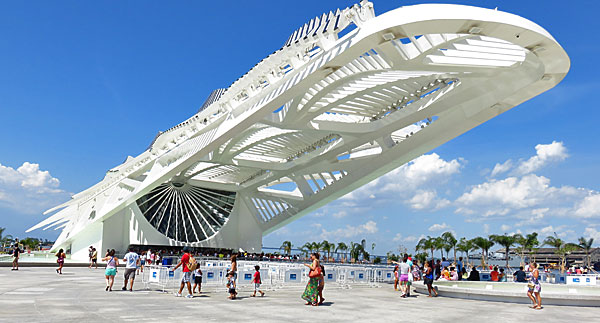
Museu do Amanhã/Museum von Morgen/Museum of Tomorrow
O Rio de Janeiro é cheio de belezas que atraem visitantes de diversas partes do mundo. Isso todo mundo sabe. Erich e eu já visitamos essa cidade inúmeras vezes, porém, estava faltando conhecer o Museu do Amanhã. Eu, arquiteta, desde o primeiro momento que tomei conhecimento sobre o Projeto de Arquitetura do Museu fiquei impressionada com a concepção arquitetônica do mesmo e curiosa para conhecer seu acervo.
Primeiro, é importante destacar que a construção desse edifício está inserido no “maior projeto de desenvolvimento urbano…”do país, que é o projeto de requalificação da região do porto da cidade do Rio de Janeiro com uma área de 34,6 mil metros quadrados do Píer Mauá.
O Museu do Amanhã possui 15 mil metros quadrados de área construída e está localizado no Porto Maravilha, na cidade do Rio de Janeiro. O edifício é circundado por área de lazer, ciclovia, espelhos d´água e jardim, sendo o último projetado pelo escritório Burle Marx. O projeto arquitetônico é do renomado arquiteto espanhol Santiago Calatrava. A forma do edifício foi inspirada nas bromélias do Jardim Botânico, de acordo com Calatrava.
Segundo o site do Museu, essa instituição “…é um museu de ciências diferente. Um ambiente de ideias, explorações e perguntas sobre a época de grandes mudanças em que vivemos e os diferentes caminhos que se abrem para o futuro.
A Exposição Principal do Museu do Amanhã está localizada no segundo andar do prédio e o visitante percorre cinco áreas: Cosmos, Terra, Antropoceno, Amanhãs e Nós, com diversas informações apresentadas em português, espanhol e inglês.
Para conhecer mais sobre o Museu do Amanhã, clique aqui.
Museum von Morgen
Rio de Janeiro ist voller Attraktionen, welche Besucher aus aller Welt anziehen. Das weiß jeder. Erich und ich haben diese Stadt schon oft besucht, aber was gefehlt hat, war das Museum of Tomorrow. Ich, ein Architekt, war vom ersten Moment an, als ich vom Architekturprojekt des Museums erfuhr, beeindruckt von seinem architektonischen Design und neugierig auf seine Sammlungen.
Zunächst ist es wichtig hervorzuheben, dass der Bau dieses Gebäudes Teil des „größten Stadtentwicklungsprojekts …“ des Landes ist, nämlich des Requalifizierungsprojekts für die Hafenregion der Stadt Rio de Janeiro mit einer Fläche von 34.600 Quadratmetern vom Pier Mauá.
Das Museum of Tomorrow hat eine bebaute Fläche von 15.000 Quadratmetern und befindet sich in Porto Maravilha in der Stadt Rio de Janeiro. Das Gebäude ist umgeben von einem Freizeitbereich, einem Fahrradweg, reflektierenden Wasserbecken und einem Garten, der vom Büro Burle Marx entworfen wurde. Das architektonische Projekt stammt von dem renommierten spanischen Architekten Santiago Calatrava. Die Form des Gebäudes sei von den Bromelien des Botanischen Gartens inspiriert, so Calatrava.
Laut der Website des Museums ist diese Institution „… ein etwas anderes Wissenschaftsmuseum. Ein Umfeld voller Ideen, Erkundungen und Fragen über die Zeit großer Veränderungen, in der wir leben, und die verschiedenen Wege, die sich für die Zukunft eröffnen.“
Die Hauptausstellung des Museum of Tomorrow befindet sich im zweiten Stock des Gebäudes und der Besucher reist durch fünf Bereiche: Kosmos, Erde, Anthropozän, Morgen und Wir, mit verschiedenen Informationen, die auf Portugiesisch, Spanisch und Englisch präsentiert werden.
Um mehr über das Museum of Tomorrow zu erfahren, klicken Sie hier.
Museum of Tomorrow
Rio de Janeiro is full of attractions that attract visitors from all over the world. Everyone knows that. Erich and I have visited this city many times, but what was missing was the Museum of Tomorrow. I, an architect, from the first moment I learned about the museum’s architectural project, I was impressed by its architectural design and curious about its collections.
First of all it is important to point out, that the construction of this building is part of the country’s “largest urban development project…”, namely the requalification project for the port area of the city of Rio de Janeiro, covering an area of 34,600 square meters from the Pier Mauá.
The Museum of Tomorrow has a built area of 15,000 square meters and is located in Porto Maravilha in the city of Rio de Janeiro. The building is surrounded by a leisure area, a bike path, reflecting pools and a garden designed by the Burle Marx office. The architectural project comes from the renowned Spanish architect Santiago Calatrava. According to Calatrava, the shape of the building was inspired by the bromeliads in the botanical gardens.
According to the museum’s website, this institution is “…a science museum with a difference. An environment full of ideas, explorations and questions about the time of great change we are living in and the different avenues opening up for the future.”
The main exhibition of the Museum of Tomorrow is on the second floor of the building and the visitor travels through five areas: Cosmos, Earth, Anthropocene, Tomorrow and We, with various information presented in Portuguese, Spanish and English.
To learn more about the Museum of Tomorrow, click here.
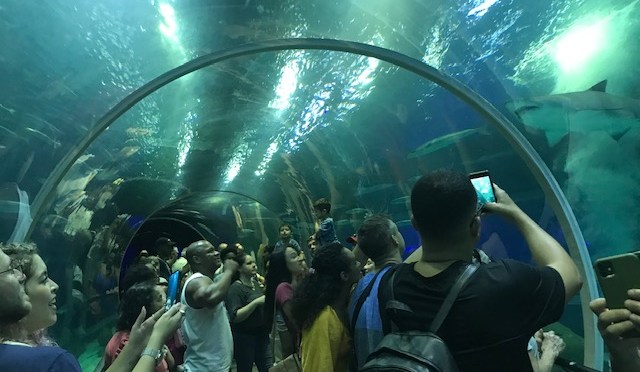
Aquário do Rio de Janeiro, um mundo de água e cores/Aquarium von Rio de Janeiro – eine Welt aus Wasser und Farben/Aquarium of Rio de Janeiro – a world of water and colors
O Rio de Janeiro é definitivamente uma das cidades mais famosas do Brasil e quando se fala sobre ela imediatamente lembramos do Pão de Açucar, da Praia de Copacabana e do Cristo Redentor. Mas, o Rio de Janeiro possui muitos outros atrativos interessantes, principalmente se você viaja com crianças. O Aquário do Rio de Janeiro ou AquaRio, como é conhecido, é uma dessas atrações.
Erich e eu estivemos no Rio de Janeiro recentemente e aproveitamos para visitar o Aquário. É um passeio muito interessante para crianças e para adultos. As pessoas interessadas em conhecer mais sobre as belezas dos oceanos vão apreciar bastante esse passeio. Eu acredito que esse tipo de passeio, além de prazeroso é uma aula de educação ambiental. Os visitantes saem de lá com o sentimento que todos nós somos responsáveis por proteger os mares e a vida marinha que habita lá.
Ele é considerado o maior aquário marinho da América do Sul e tem mais de 2 mil animais em exposição! O Aquário ocupa uma área de 26 mil m2 de área construída e 4,5 milhões de litros de água!
O que mais me chamou a atenção e é considerado uma das maiores atrações desse aquário é o tanque principal chamado de Recinto Oceânico. Ele possui 3,5 milhões de litros de água, com sete metros de altura além disso possui um túnel que corta seu interior. Os visitantes adoram! Acho que é o lugar mais instagramável desse atrativo! É tão interessante atravessar esse túnel e apreciar os belos animais que estão em volta de você!
Além desse tanque principal, o Aquário possui 27 outros belos tanques secundários que encantam a todos que visitam esse lugar especial.
Agora uma dica: no local do Aquário existe também um Museu de Cera e vizinho ao prédio do Aquário encontra-se a Roda Gigante do Rio de Janeiro, outra atração bem especial!
Para conhecer mais o Aquário Rio clique aqui.
Aquarium von Rio de Janeiro – eine Welt aus Wasser und Farben
Rio de Janeiro ist definitiv eine der berühmtesten Städte Brasiliens und wenn wir darüber sprechen, dann denken wir sofort an den Zuckerhut, den Copacabana-Strand und die Christusstatue. Aber Rio de Janeiro hat viele andere interessante Attraktionen, besonders wenn Sie mit Kindern reisen. Das Rio de Janeiro Aquarium oder AquaRio, wie es genannt wird, ist eine dieser Attraktionen.
Erich und ich waren kürzlich wieder einmal in Rio de Janeiro und nutzten die Gelegenheit, um das Aquarium zu besuchen. Es ist ein sehr interessanter Ausflug für Kinder und Erwachsene. Menschen, die mehr über die Schönheiten der Ozeane erfahren möchten, werden diese Tour sehr zu schätzen wissen. Ich glaube, dass diese Art von Aktivität nicht nur angenehm ist, sondern auch eine Art Umweltbildungskurs darstellt. Die Besucher gehen dann mit dem Gefühl, dass wir alle für den Schutz der Meere und der dort lebenden Meereslebewesen verantwortlich sind.
Es gilt als das größte Meeresaquarium Südamerikas und beherbergt mehr als 2.000 Tiere! Das Aquarium beansprucht eine Fläche von 26.000 m2 mit 4,5 Millionen Liter Wasser!
Was meine Aufmerksamkeit am meisten auf sich zog und als eine der größten Attraktionen dieses Aquariums gilt, ist das Hauptbecken namens Recinto Oceânico. Es fasst 3,5 Millionen Liter Wasser, ist sieben Meter hoch und hat einen Tunnel, der sein Inneres durchschneidet. Die Besucher lieben dies sehr! Ich denke, es ist der instagrammwürdigste Ort dieser Attraktion!
Es ist sehr interessant, durch diesen Tunnel zu gehen und all die schönen Tiere zu genießen, die überall um dich herumschwimmen!
Neben diesem Hauptbecken verfügt das Aquarium über 27 weitere schöne Nebenbecken, die jeden begeistern, der diesen besonderen Ort besucht.
Jetzt noch ein Tipp: Beim Aquarium gibt es auch noch ein Wachsfigurenkabinett und neben dem Aquariumgebäude befindet sich auch das Riesenrad von Rio de Janeiro, eine weitere ganz besondere Attraktion!
Um mehr über das Rio Aquarium zu erfahren, klicken Sie hier.
Aquarium of Rio de Janeiro – a world of water and colors
Rio de Janeiro is definitely one of the most famous cities in Brazil and when we talk about it, we immediately think of Sugar Loaf, Copacabana Beach and Christ the Redeemer. But Rio de Janeiro has many other interesting attractions, especially if you are traveling with children. The Rio de Janeiro Aquarium, or AquaRio as it’s known, is one of those attractions.
Erich and I were recently in Rio de Janeiro again and took the opportunity to visit the aquarium. It is a very interesting excursion for both children and adults. People who want to learn more about the beauties of the oceans will greatly appreciate this tour. I believe that this type of activity is not only enjoyable, but also constitutes a kind of environmental education course. Visitors then leave feeling that we all have a responsibility to protect the oceans and the marine life in them.
It is considered the largest marine aquarium in South America and is home to more than 2,000 animals! The aquarium covers an area of 26,000 m2 with 4.5 million liters of water!
What caught my attention the most and is considered one of the biggest attractions of this aquarium is the main tank called Recinto Oceânico. It holds 3.5 million liters of water, is seven meters high and has a tunnel cutting through its interior. Visitors love this very much! I think it’s the most Instagrammable spot of this attraction!
It is very interesting to walk through this tunnel and enjoy all the beautiful animals that are all swimming around you!
In addition to this main tank, the aquarium has 27 other beautiful sub-tanks that will delight everyone who visits this special place.
Another tip: the aquarium also has a wax museum and next to the aquarium building is the Ferris wheel of Rio de Janeiro, another very special attraction!
To learn more about the Rio Aquarium, click here.
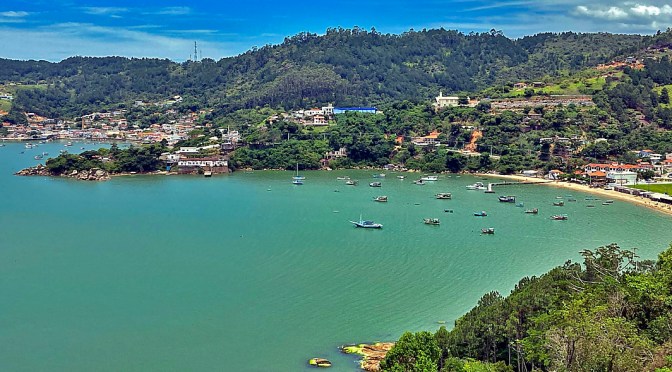
As belas praias de Governador Celso Ramos/Die schönen Strände von Governador Celso Ramos/
Santa Catariana é um estado brasileiro com belas e diversificadas atrações turísticas, dentre as quais lindas praias e paisagens deslumbrantes nas montanhas. A capital Florianópolis também é recheada de cenários espetaculares.
Erich e eu gostamos de visitar Santa Catarina e apreciar seus encantos. Da última vez que estivemos lá, fomos direto para um lugar bem especial: Governador Celso Ramos, município integrante da Grande Florianópolis, localizado em uma península com recortes que formam bonitas enseadas e dividem essa costa em 60 praias, além de resquiscios de Mata Atlântica. Todas essas belezas naturais proporcionam a prática de esportes e aventuras como o rapel, mergulhos, caminhadas, surf, dentre outros.
Esse munícipio, com uma população estimada de 15 mil habitantes, está localizado a 40 km de Florianópolis, em torno de uns 50 minutos de automóvel. Ele possui uma paisagem típica de uma aldeia de pescadores com costumes açorianos.
Dentre as principais atrações turísticas de Governador Celso Ramos destacamos a Orla de Ganchos do Meio, a Ilha de Anhatormirim (sede da Fortaleza de Santa Cruz), as Praias de Palmas, de Armação da Piedade, de Calheiros, Grande, Bananeiras, do Sissial, Fazenda da Armação, do Paiol, de Ganchos de Fora, dentre outras. Há praias com ótima infraestrutura, como a de Palmas e outras desertas, como Ilhéus e Sissial.
Esse município abriga também a Reserva Biológica Marinha do Arvoredo, com uma rica fauna e flora, além de sítios arqueológicos. Ela possui 17.800 hectares.
A vila de pescadores de Governador Celso Ramos foi no passado a sede do mais relevante e maior centro baleeiro de Santa Catarina, a Armação da Piedade. O local era ponto de partida para os escravos e arpoadores que partiam em simples embarcações para capturar baleias. Atualmente essa área é local de procriação e amamentação dos filhotes das Baleias Franca que visitam essa costa com esse propósito e graças, elas são protegidas por leis ambientais.
Além das praias, existe também a possibilidade de se realizar trilhas e apreciar de pertinho a vegetação exuberante da região. Na entrada de Ganchos do Meio há um mirante de onde se aprecia um belo de algumas praias emolduradas pelo verde da Mata Atlântica.
Nós hospedamos no Hotel Ponta dos Ganchos Resort e chegamos lá em um transfer que foi solicitado ao hotel.
Para conhecer mais sobre Governador Celso Ramos, clique aqui.
Die schönen Strände von Governador Celso Ramos
Santa Catariana ist ein brasilianischer Bundesstaat mit wunderschönen und vielfältigen Touristenattraktionen, darunter wunderschöne Strände und eine atemberaubende Berglandschaft. Auch die Hauptstadt Florianópolis ist voller spektakulärer Landschaften.
Erich und ich besuchen Santa Catarina gerne und genießen dessen Charme. Als wir das letzte Mal dort waren, sind wir direkt zu einem ganz besonderen Ort gefahren: Governador Celso Ramos, eine Gemeinde, die Teil des Großraums Florianópolis ist und auf einer Halbinsel mit wunderschönen Buchten gelegen ist und somit diese Küste in 60 Strände unterteilt, die Reste des Atlantischen Regenwaldes. All diese Naturschönheiten ermöglichen unter anderem die Ausübung von Sport und Abenteuern wie Abseilen, Tauchen, Wandern, Surfen usw.
Diese Gemeinde mit einer geschätzten Bevölkerung von 15.000 Einwohnern liegt 40 km von Florianópolis entfernt, etwa 50 Minuten mit dem Auto. Sie hat den Charakter eines typischen Fischerdorfes mit Azoren-Bräuchen.
Unter den wichtigsten Touristenattraktionen in Governador Celso Ramos sind die Orla de Ganchos do Meio, die Insel Anhatormirim (Hauptsitz der Festung von Santa Cruz), die Strände von Palmas, Armação da Piedade, Calheiros, Grande, Bananeiras, Sissial, Armação , Paiol und Ganchos de Fora zu benennen.. Es gibt Strände mit ausgezeichneter Infrastruktur wie Palmas und andere total menschenleere wie Ilhéus und Sissial.
Die Gemeinde beherbergt auch das Meeresbiologische Reservat Arvoredo mit einer reichen Flora und Fauna sowie archäologischen Stätten, insgesamt 17.800 Hektar.
Das Fischerdorf Governador Celso Ramos war in der Vergangenheit Sitz des bedeutendsten und größten Walfangzentrums in Santa Catarina, Armação da Piedade. Der Ort war Ausgangspunkt für Sklaven und Harpunierer, die in einfachen Booten aufbrachen, um Wale zu fangen. Derzeit ist dieses Gebiet ein Ort für die Zucht und das Stillen von Glattwalkälbern, die zu diesem Zweck diese Küste besuchen und dank dessen sind sie durch Umweltschutzgesetze geschützt.
Neben den Stränden gibt es auch die Möglichkeit zu wandern und die üppige Vegetation der Region hautnah zu genießen. Am Ortseingang von Ganchos do Meio befindet sich ein Aussichtspunkt, von dem aus man einen schönen Blick auf einige vom Grün des Atlantischen Regenwaldes umrahmte Strände genießen kann.
Wir übernachteten im Hotel Ponta dos Ganchos Resort und kamen dort mit einem vom Hotel offerierten Transfer an.
Um mehr über Gouverneur Celso Ramos zu erfahren, klicken Sie hier.
The beautiful beaches of Governador Celso Ramos
Santa Catariana is a Brazilian state with beautiful and many tourist attractions including beautiful beaches and stunning mountain scenery. The capital Florianópolis is also full of spectacular landscapes.
Erich and I like to visit Santa Catarina and enjoy its charm. The last time we were there, we went straight to a very special place: Governador Celso Ramos, a municipality that is part of the greater Florianópolis area and is located on a peninsula with beautiful bays, thus dividing this coast into 60 beaches that Remnants of the Atlantic Rainforest. All these natural beauties allow, among others, the practice of sports and adventures such as abseiling, diving, hiking, surfing, etc.
Diese Gemeinde mit einer geschätzten Bevölkerung von 15.000 Einwohnern liegt 40 km von Florianópolis entfernt, etwa 50 Minuten mit dem Auto. Sie hat den Charakter eines typischen Fischerdorfes mit Azoren-Bräuchen.
Unter den wichtigsten Touristenattraktionen in Governador Celso Ramos sind die Orla de Ganchos do Meio, die Insel Anhatormirim (Hauptsitz der Festung von Santa Cruz), die Strände von Palmas, Armação da Piedade, Calheiros, Grande, Bananeiras, Sissial, Armação , Paiol and Ganchos de Fora zu benennen.. Es gibt Strände mit ausgezeichneter Infrastruktur wie Palmas und andere total menschenleere wie Ilhéus und Sissial.
The municipality also hosts the Arvoredo Marine Biological Reserve with rich flora and fauna and archaeological sites, totaling 17,800 hectares.
The fishing village of Governador Celso Ramos was in the past the seat of the most important and largest whaling center in Santa Catarina, Armação da Piedade. The place was the starting point for slaves and harpooners who set out in simple boats to catch whales. Currently, this area is a place for breeding and nursing of right whale calves, which visit this coast for this purpose and thanks to that they are protected by environmental protection laws.
In addition to the beaches, there is also the opportunity to hike and enjoy the lush vegetation of the region up close. At the entrance to Ganchos do Meio there is a viewpoint from which you can enjoy a beautiful view of some beaches framed by the green of the Atlantic Forest.
We stayed at Hotel Ponta dos Ganchos Resort and arrived there with a transfer provided by the hotel.
To learn more about Governor Celso Ramos, click here.

Mirantes do Rio de Janeiro
Quando se fala sobre a cidade do Rio de Janeiro, imediatamente lembramos de Copacabana, do Bondinho do Pão de Açúcar, do Cristo Redentor localizado no Morro do Corcovado. Acredito que esses são os atrativos mais lembrados na mente dos turistas. Os dois últimos locais mencionados são lugares de onde você tem uma vista espetacular da cidade maravilhosa.
O Rio de Janeiro possui alguns lugares de onde se descortina uma paisagem muito bonita da cidade, como os já mencionados acima e outros, que eu Erich visitamos durante a nossa última visita ao Rio. Estivemos nos Mirantes da Vista Chinesa, da Mesa do Imperador e no de Dona Marta, ambos localizados dentro do Parque Nacional da Tijuca. Além desses, também estivemos no Parque Dois Irmãos, de onde se descortina uma bela paisagem da praia do Leblon. Outro ponto de onde se a cidade aparece bela é do Forte localizado do outro lado da Ponte Rio-Niterói.
No post de hoje, apresentamos algumas imagens de lugares de onde se avista paisagens belíssimas do Rio de Janeiro.
Para conhecer mais sobre esses lugares com vistas fantásticas, visite os seguintes sites:
– Parque Bondinho do Pão de Açúcar
– Parque Natural Municipal Dois Irmãos – Dois Cariocas – Sérgio Bernardes e Alfredo Sirkis
– Fortaleza de Santa Cruz, em Niterói (essa cidade possui sete fortes)
A cidade do Rio de Janeiro, possui outros mirantes, mas, este blog destacou apenas os que foram visitados por nós.
Nós tentamos visitar esses mirantes através de uma agência de turismo, porém, os preços eram muito altos. Sendo assim, fomos de táxi aos seguintes mirantes: Vista Chinesa, Mesa do Imperador, Dona Marta e o dos Dois Irmãos. O passeio durou em torno de três horas e meia e pagamos R$ 180,00 (preço do taxímetro) em janeiro de 2023.
Aussichtspunkte von Rio de Janeiro
Wenn wir über die Stadt Rio de Janeiro sprechen, denken wir sofort an Copacabana, die Seilbahn zum Pão de Açúcar (Zuckerhut), Christo, der sich auf dem Berg Corcovado befindet. Ich glaube, das sind die Attraktionen, die Touristen am meisten in Erinnerung bleiben. Die beiden letztgenannten Attraktionen sind Orte, von denen man einen spektakulären Blick auf die wunderbare Stadt hat.
Rio de Janeiro offeriert einige Aussichtspunkte, von denen man einen sehr schönen Blick auf die Stadt-Landschaft der City sehen kann, das sind, die wie oben bereits erwähnten und andere, die Erich und ich bei unserer letzten Reise in Rio besucht haben. Wir waren an den Aussichtspunkten Vista Chinesa, Mesa do Imperador und Dona Marta, die beide im Nationalpark Tijuca liegen. Darüber hinaus waren wir auch im Parque Dois Irmãos, von wo aus man einen wunderschönen Blick auf den Strand von Leblon hat. Ein weiterer Punkt, von dem aus die Stadt schön erscheint, ist das Fort, das sich auf der anderen Seite der Rio-Niterói-Brücke befindet.
Im heutigen Beitrag präsentieren wir nun einige Orten, von denen Sie die wunderschöne Landschaften von Rio de Janeiro geniessen können.
Um mehr über diese Orte mit fantastischer Aussicht zu erfahren, besuchen Sie die folgenden Websites:
– Städtischer Naturpark Dois Irmãos – Zwei Cariocas – Sérgio Bernardes und Alfredo Sirkis
– Festung von Santa Cruz, in Niterói (diese Stadt hat sieben Festungen)
Wir haben versucht, diese Aussichtspunkte über ein Reisebüro zu besuchen, aber die Preise waren extrem zu teuer. Also fuhren wir mit dem Taxi zu den folgenden Aussichtspunkten: Vista Chinesa, Mesa do Imperador, Dona Marta und Dois Irmãos. Die Tour dauerte etwa dreieinhalb Stunden und wir zahlten im Januar 2023 BRL 180 (Taxameterpreis). Das waren umgerechnet etwa 30 EURO!
Viewpoints of Rio de Janeiro
When we talk about the city of Rio de Janeiro, we immediately think of Copacabana, the cable car to Pão de Açúcar (sugarloaf), Christo, located on Mount Corcovado. I think these are the attractions that are most memorable for tourists. The latter two attractions are places that offer spectacular views of the wonderful city.
Rio de Janeiro offers some vantage points from which one can see a very nice view of the city landscapes, these are the ones mentioned above and others that Erich and I visited on our last trip to Rio. We’ve been to the Vista Chinesa, Mesa do Imperador, and Dona Marta viewpoints, both of which are in the Tijuca National Park. In addition, we were also in the Parque Dois Irmãos, from where you have a beautiful view of the Leblon beach. Another point from which the city appears beautiful is the Fort, which is located on the other side of the Rio Niterói Bridge.
Now, in today’s post, we present some places from which you can enjoy the beautiful landscapes of Rio de Janeiro.
To learn more about these places with fantastic views, visit the following websites:
– Sugarloaf cable car parking lot
– Dois Irmãos Urban Natural Park – Two Cariocas – Sérgio Bernardes and Alfredo Sirkis
– Fortress of Santa Cruz, in Niterói (this city has seven fortresses)
We tried visiting these viewpoints through a travel agent but the prices were extremely overpriced. So we took a taxi to the following viewpoints: Vista Chinesa, Mesa do Imperador, Dona Marta and Dois Irmãos. The tour lasted about three and a half hours and we paid BRL 180 (metered rate) in January 2023. That was the equivalent of about 30 EURO!
 imagenseviagens.com.br/travelandimages.com