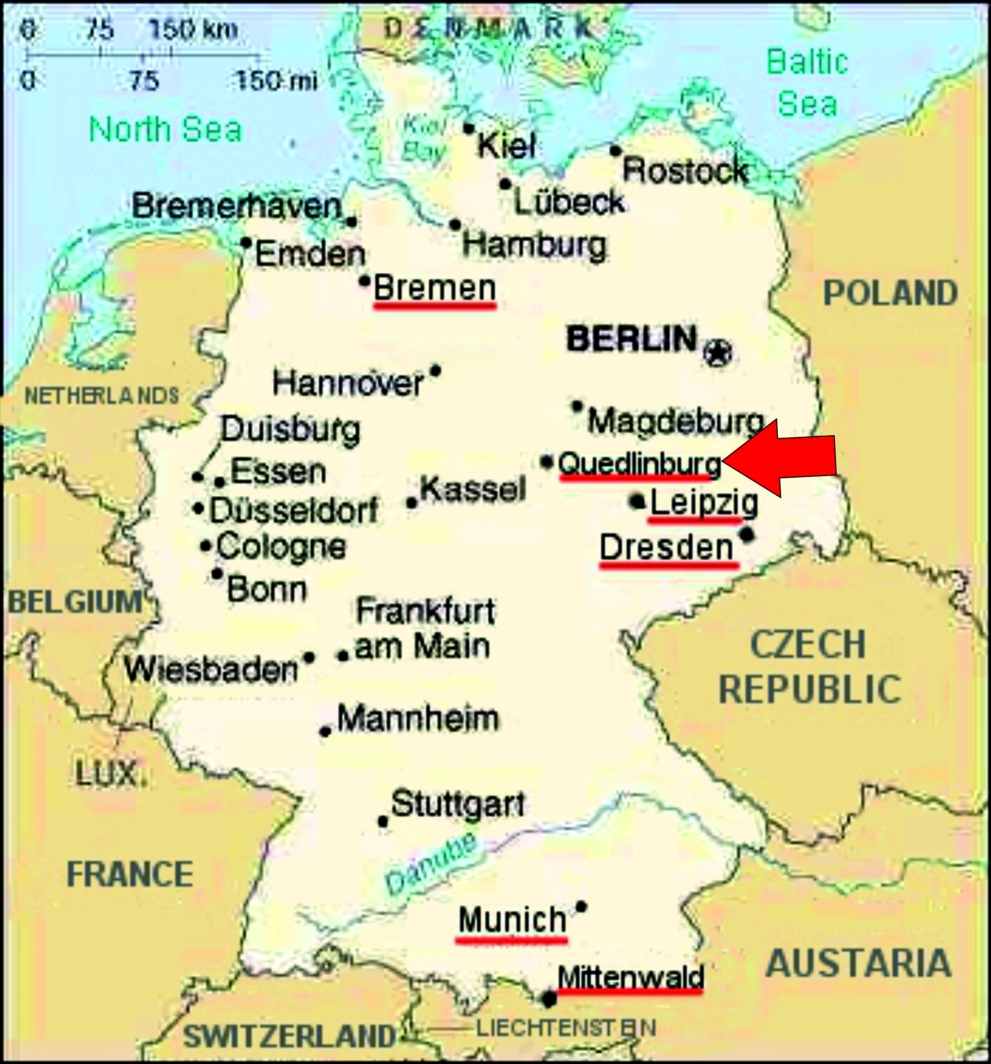
Quedlinburg é uma cidade histórica na Saxônia-Anhalt, Alemanha.
Está situada de forma pitoresca no extremo norte das montanhas Harz.
A cidade tem cerca de 24.000 habitantes.
Quedlinburg faz parte do Patrimônio Mundial da UNESCO.
A cidade é famosa pelo seu centro histórico bem preservado.
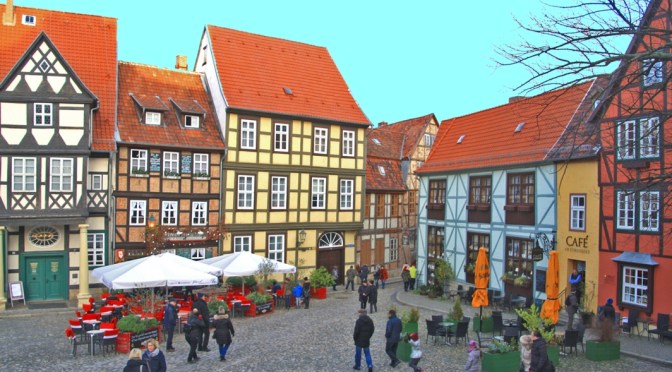
Mais de 2.000 casas em enxaimel moldam a paisagem urbana.
A maioria das casas data da Idade Média.
A praça do mercado é um ponto de encontro central.
Lá está a impressionante prefeitura do século XIV.
A colina do castelo domina a paisagem urbana.
Ali encontra-se a Igreja Colegiada de São Servácio.
Ela abriga o famoso Tesouro de Quedlinburg.
Quedlinburg já foi a residência dos Otonianos.
O rei Henrique I acredita-se estar enterrado aqui.
A cidade foi um centro importante na Idade Média.
Hoje, atrai muitos turistas.
Há inúmeros museus e pontos turísticos.
O mercado de Natal de Quedlinburg é particularmente popular.
A cidade também é conhecida por seus jardins e parques.
Um passeio por suas ruas é como uma viagem no tempo.
O rio Bode atravessa Quedlinburg.
Existem muitos cafés e restaurantes aconchegantes.
As especialidades locais incluem queijo Harz e bolo Bienenstich.
Quedlinburg é facilmente acessível de trem.
A região ao redor convida para caminhadas.
A primavera é especialmente bela com jardins floridos.
O Castelo de Quedlinburg também merece uma visita.
No verão, ocorrem muitos eventos culturais.
Quedlinburg combina história e modernidade de forma única.
Quedlinburg ist eine historische Stadt in Sachsen-Anhalt, Deutschland.
Sie liegt malerisch am Nordrand des Harzes.
Die Stadt hat etwa 24.000 Einwohner.
Quedlinburg gehört zum UNESCO-Weltkulturerbe.
Die Stadt ist für ihre gut erhaltene Altstadt bekannt.
Über 2.000 Fachwerkhäuser prägen das Stadtbild.
Die meisten Häuser stammen aus dem Mittelalter.
Der Marktplatz ist ein zentraler Treffpunkt.
Dort steht das imposante Rathaus aus dem 14. Jahrhundert.
Der Schlossberg dominiert das Stadtbild.
Dort befindet sich die Stiftskirche St. Servatius.
Sie beherbergt den berühmten Domschatz.
Quedlinburg war einst die Residenz der Ottonen.
König Heinrich I. soll hier begraben sein.
Die Stadt war im Mittelalter ein bedeutendes Zentrum.
Heute zieht sie viele Touristen an.
Es gibt zahlreiche Museen und Sehenswürdigkeiten.
Der Quedlinburger Weihnachtsmarkt ist besonders beliebt.
Die Stadt ist auch für ihre Gärten und Parks bekannt.
Ein Spaziergang durch die Gassen ist wie eine Zeitreise.
Die Bode fließt durch Quedlinburg.
Es gibt viele gemütliche Cafés und Restaurants.
Regionale Spezialitäten sind Harzer Käse und Bienenstich.
Quedlinburg ist gut mit dem Zug erreichbar.
Die Umgebung lädt zum Wandern ein.
Besonders schön ist der Frühling mit blühenden Gärten.
Auch das Quedlinburger Schloss ist sehenswert.
Im Sommer finden viele kulturelle Veranstaltungen statt.
Quedlinburg vereint Geschichte und Moderne auf einzigartige Weise.
Quedlinburg is a historic town in Saxony-Anhalt, Germany.
It is picturesquely located at the northern edge of the Harz Mountains.
The town has about 24,000 inhabitants.
Quedlinburg is part of the UNESCO World Heritage.
The town is famous for its well-preserved old town.
More than 2,000 half-timbered houses shape the cityscape.
Most houses date back to the Middle Ages.
The market square is a central meeting point.
There stands the impressive town hall from the 14th century.
The castle hill dominates the cityscape.
There, you find the Collegiate Church of St. Servatius.
It houses the famous Quedlinburg treasure.
Quedlinburg was once the residence of the Ottonians.
King Henry I is said to be buried here.
The town was an important center in the Middle Ages.
Today, it attracts many tourists.
There are numerous museums and sights.
The Quedlinburg Christmas market is particularly popular.
The town is also known for its gardens and parks.
A walk through its alleys feels like a journey through time.
The Bode River flows through Quedlinburg.
There are many cozy cafés and restaurants.
Local specialties include Harz cheese and Bienenstich cake.
Quedlinburg is easily accessible by train.
The surrounding area invites visitors to go hiking.
Spring is particularly beautiful with blooming gardens.
Quedlinburg Castle is also worth a visit.
In summer, many cultural events take place.
Quedlinburg uniquely combines history and modernity.
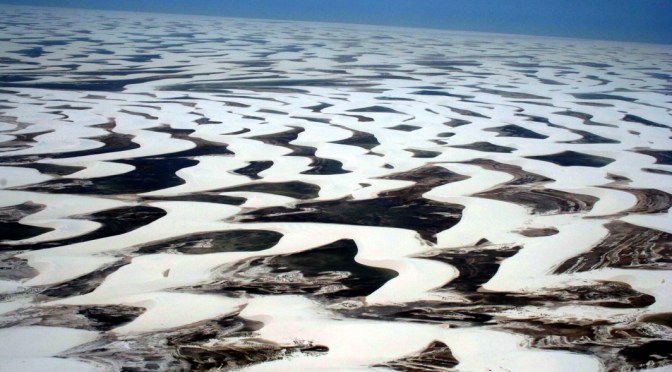
O Parque Nacional dos Lençóis Maranhenses está localizado no estado brasileiro do Maranhão e é uma das paisagens naturais mais impressionantes do país. O parque cobre uma área de cerca de 1.550 km² e é famoso por suas espetaculares dunas de areia branca e lagoas turquesas, que se enchem de água durante a estação chuvosa, entre junho e setembro.
Apesar de sua aparência desértica, a região recebe uma grande quantidade de chuva anualmente, resultando na formação de diversas lagoas de água doce. Essas lagoas são alimentadas pela água da chuva e servem de habitat para várias espécies de peixes e outros animais.
As dunas do parque nacional podem atingir alturas de até 40 metros e estão em constante mudança devido ao vento. As lagoas mais famosas são Lagoa Azul e Lagoa Bonita, que atraem turistas com suas águas cristalinas.
O parque nacional foi criado em 1981 para proteger essa paisagem única. Ele faz parte do ecossistema do Cerrado e abriga uma flora e fauna diversificadas, incluindo animais selvagens como raposas, tartarugas e aves raras.
Embora a área seja protegida como parque nacional, algumas comunidades tradicionais vivem dentro dela, dedicando-se à pesca e à criação de gado. A cidade de Barreirinhas é o principal ponto de partida para passeios no parque.
As atividades para os visitantes incluem passeios de buggy, caminhadas, passeios de barco no Rio Preguiças e banhos nas lagoas. O parque nacional é considerado um dos destinos mais espetaculares do Brasil e é frequentemente descrito como uma das paisagens desérticas mais belas do mundo.
O Parque Nacional dos Lençóis Maranhenses é reconhecido como Patrimônio Natural da Organização das Nações Unidas para a Educação, a Ciência e a Cultura – UNESCO.
Der Nationalpark Lençóis Maranhenses liegt im brasilianischen Bundesstaat Maranhão und ist eine der beeindruckendsten Naturlandschaften des Landes. Der Park erstreckt sich über eine Fläche von etwa 1.550 km² und ist bekannt für seine spektakulären weißen Sanddünen und die türkisen Lagunen, die sich in der Regenzeit zwischen Juni und September mit Wasser füllen.
Trotz seines wüstenähnlichen Aussehens erhält die Region jährlich eine hohe Niederschlagsmenge, was zur Entstehung der zahlreichen Süßwasserlagunen führt. Diese sind von Regenwasser gespeist und bieten Lebensraum für verschiedene Fischarten und andere Tiere.
Die Dünen des Nationalparks können Höhen von bis zu 40 Metern erreichen und verändern sich ständig durch den Wind. Die bekanntesten Lagunen sind Lagoa Azul und Lagoa Bonita, die Touristen mit ihrem kristallklaren Wasser anlocken.
Der Nationalpark wurde 1981 gegründet, um diese einzigartige Landschaft zu schützen. Er ist Teil des Cerrado-Ökosystems und beherbergt eine vielfältige Flora und Fauna, darunter Wildtiere wie Füchse, Schildkröten und seltene Vögel.
Obwohl das Gebiet als Nationalpark unter Schutz steht, leben einige traditionelle Gemeinden darin, die sich dem Fischfang und der Viehzucht widmen. Besonders die Stadt Barreirinhas dient als Ausgangspunkt für Touren in den Park.
Aktivitäten für Besucher umfassen Buggy-Touren, Wanderungen, Bootsfahrten auf dem Rio Preguiças sowie Schwimmen in den Lagunen. Der Nationalpark zählt zu den spektakulärsten Reisezielen Brasiliens und wird oft als eine der schönsten Wüstenlandschaften der Welt beschrieben.
Der Parque Nacional dos Lençóis Maranhenses wurde als natürliches Kulturerbe der UNESCO für Bildung, Wissenschaft und Kultur anerkannt.
The Lençóis Maranhenses National Park is located in the Brazilian state of Maranhão and is one of the country’s most impressive natural landscapes. The park covers an area of about 1,550 km² and is famous for its spectacular white sand dunes and turquoise lagoons, which fill with water during the rainy season between June and September.
Despite its desert-like appearance, the region receives a high amount of annual rainfall, leading to the formation of numerous freshwater lagoons. These are fed by rainwater and provide habitat for various fish species and other animals.
The dunes of the national park can reach heights of up to 40 meters and are constantly shifting due to the wind. The most famous lagoons are Lagoa Azul and Lagoa Bonita, which attract tourists with their crystal-clear water.
The national park was established in 1981 to protect this unique landscape. It is part of the Cerrado ecosystem and is home to diverse flora and fauna, including wildlife such as foxes, turtles, and rare birds.
Although the area is protected as a national park, some traditional communities live within it, engaging in fishing and cattle raising. The town of Barreirinhas serves as the main gateway for tours into the park.
Activities for visitors include buggy tours, hiking, boat trips on the Rio Preguiças, and swimming in the lagoons. The national park is considered one of Brazil’s most spectacular destinations and is often described as one of the world’s most beautiful desert landscapes.
The Lençóis Maranhenses National Park is recognized as a Natural Heritage Site by the United Nations Educational, Scientific and Cultural Organization – UNESCO.
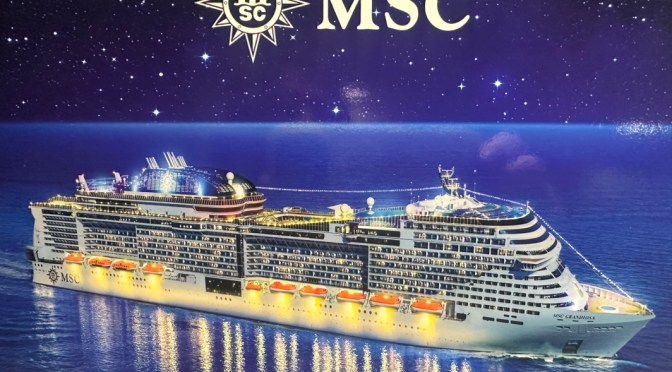
O MSC Grandiosa é um dos maiores e mais modernos navios de cruzeiro da companhia italiana MSC Cruzeiros. Pertence à classe Meraviglia-Plus e foi batizado em 31 de outubro de 2019, em Hamburgo. Com 331 metros de comprimento, o navio tem capacidade para até 6.334 passageiros e 1.704 tripulantes.
O design do MSC Grandiosa combina elegância moderna com tecnologia inovadora. Um dos destaques é a cúpula LED de 93 metros na “Galleria Grandiosa”, uma avenida (chamada de promenade) coberta com restaurantes, lojas e opções de entretenimento.
A bordo, há diversas opções de lazer e relaxamento, incluindo várias piscinas, um parque aquático, um spa luxuoso e um centro de fitness. Para o entretenimento, há shows ao estilo da Broadway no teatro e apresentações exclusivas do Cirque du Soleil.
Gastronomicamente, os hóspedes podem desfrutar de até 12 restaurantes que oferecem uma grande variedade de pratos internacionais. O serviço é complementado por vários bares e lounges.
O MSC Grandiosa também é ecologicamente avançado, com tecnologia ambiental de última geração. O navio conta com um sistema híbrido de purificação de gases, um sistema inovador de tratamento de águas residuais e soluções de eficiência energética.
O navio opera em várias rotas, principalmente no Mediterrâneo, proporcionando aos passageiros uma experiência de cruzeiro inesquecível, cheia de luxo, conforto e aventura.
Embarcamos no Grandiosa em dezembro de 2024 com o propósito principal de apreciar a queima de fogos em Copacabana, no Rio de Janeiro. A nossa rota foi a seguinte:
Viajamos na categoria Áurea. Abaixo apresentamos nossas impressões e algumas dicas para quem pretende viajar nesse navio:
Comprar a categoria Áurea ajuda muito, desde o check in. Ficamos pouco tempo na fila para embarque e desembarque;
A academia é cheia, mas se você tiver paciência é possível conseguir bicicleta, elíptico em poucos minutos nos dias quando o navio está só navegando. Para conseguir uma esteira leva mais tempo;
O melhor horário de ir para a academia é entre 12-13 horas, tem menos gente;
As áreas das piscinas são sempre superlotadas, barulhentas e algumas com animações e música alta. Depende do seu gosto pessoal;
A categoria Áurea permite o acesso à área termal do spa Áurea, mas você precisa agendar;
A categoria Áurea oferece um restaurante exclusivo, mas é somente para o jantar;
Evite o restaurante Marketing Place é lotado quase o tempo todo;
Com a categoria Áurea você pode solicitar o café da manhã na cabine, mas é um café da manhã reduzido, porém você pode ir ao grande e barulhento Buffet, no restaurante Marketing Place e pegar um complemento para seu café da manhã na cabine;
Na categoria Áurea você janta no horário que quiser;
O navio é imenso;
A Galeria Grandiosa é linda, com um teto impressionante onde são projetadas imagens lindas quase o tempo todo!
A qualidade da comida é boa nos restaurantes de cortesia, aliás eles são imensos e quando lotados, muito barulhentos;
A área termal do spa Áurea é boa;
Os shows são bons, você deve sempre agendar na noite da véspera, através do aplicativo MSC For Me ou nos telões espalhados nas principais áreas do navio;
É fundamental ter o aplicativo Msc For Me no seu telefone. Com ele você pode reservar lugar no teatro, nos restaurantes de especialidade, comprar excursões, dentre outros;
Se você tiver uma cabine com varanda, é possível escutar claramente a conversa das pessoas que estão nas varandas das cabines vizinhas;
A cabine da categoria Áurea é muito boa. Tem um sofá, o banheiro tem um tamanho bom;
Se você sair para alguma excursão lembre-se que para voltar para o navio, nos locais onde é usado os tender boats, existe uma fila imensa para pegá-los e a fila continua no interior do navio para apresentar o cartão e escanear as bolsas e compras. Há também uma fiscalização com um cachorro antes de entrar no tender boat em Búzios;
Nos dias quando há excursões do navio é possível encontrar a academia e outros espaços mais vazios;
Planeje com cuidado seu desembarque para que você possa pegar seu avião, seu ônibus para voltar para casa;
A qualidade da Internet para ver vídeos é ruim;
Sugiro comprar os pacotes de bebidas, de restaurantes especiais, excursões, antes da viagem, pois você pode escolher com tranquilidade e dividir o pagamento em parcelas. Se você deixar para comprar as bebidas quando já estiver no navio, vai sempre pagar os 15% de serviço;
Para quem comprou a categoria Áurea, o desembarque ocorreu às 7:45 e todo o processo, incluindo pegar as malas durou em torno de uns 30 minutos;
Existem 2 tipos de tomadas na cabine. Se você precisar usar todas as tomadas, então recomendo levar um adaptador. Veja abaixo os modelos:
25. Não é possível saber como vai ser a posição do navio quando ele chegar em Copacabana, ou seja, você não vai saber com antecedência se você vai ter a sorte de ter sua cabine voltada para a praia para ver melhor a queima dos fogos porque isso depende das condições do mar. Sendo assim, no dia 31/12, caso você precise ir para o deck aberto onde vão estar a grande parte dos hóspedes para ver os fogos, se programe para ir cedo para pegar um bom lugar. Nós fomos tarde, quase meia-noite, não pegamos mais um lugar na primeira fila de pessoas, mas mesmo assim, conseguimos ver o lindo espetáculo!
Obs.: Para voltar para São Paulo tomamos o ônibus da Empresa Expresso Luxo, que sai da plataforma 23 do Terminal de Passageiros de Santos que nos levou até ao Aeroporto de Congonhas, em São Paulo.
Die MSC Grandiosa ist eines der größten und modernsten Kreuzfahrtschiffe der italienischen Reederei MSC Cruises. Sie gehört zur Meraviglia-Plus-Klasse und wurde am 31. Oktober 2019 in Hamburg getauft. Mit einer Länge von 331 Metern bietet das Schiff Platz für bis zu 6.334 Passagiere und 1.704 Besatzungsmitglieder.
Das Design der MSC Grandiosa kombiniert moderne Eleganz mit innovativer Technologie. Ein Highlight ist die 93 Meter lange LED-Himmelskuppel im “Galleria Grandiosa”, einem überdachten Promenadenbereich mit Restaurants, Boutiquen und Unterhaltungsmöglichkeiten.
An Bord gibt es zahlreiche Freizeit- und Entspannungsangebote, darunter mehrere Pools, ein Aqua-Park, ein luxuriöses Spa und ein Fitnesscenter. Für Unterhaltung sorgen Broadway-ähnliche Shows im Theater sowie exklusive Cirque du Soleil-Shows.
Kulinarisch werden Gäste in bis zu 12 Restaurants verwöhnt, die eine Vielfalt von internationalen Gerichten anbieten. Ergänzt wird das Angebot durch zahlreiche Bars und Lounges.
Besonders umweltfreundlich ist die MSC Grandiosa durch ihre Ausstattung mit modernster Umwelttechnologie. Sie verfügt über ein hybrides Abgasreinigungssystem, eine innovative Abwasseraufbereitungsanlage und energieeffiziente Lösungen.
Das Schiff bedient verschiedene Routen, vor allem im Mittelmeer, und bietet seinen Gästen ein unvergessliches Kreuzfahrterlebnis voller Luxus, Komfort und Abenteuer.
Wir gingen im Dezember 2024 an Bord der Grandiosa, hauptsächlich um das Feuerwerk in Copacabana in Rio de Janeiro zu genießen. Unsere Erfahrungen an Bord waren wie folgt:
Wir reisten in der Kategorie Áurea. Nachfolgend präsentieren wir unsere Eindrücke und einige Tipps für diejenigen, die eine Reise mit diesem Schiff beabsichtigen:
Der Kauf der Kategorie Áurea ist bereits beim Check-in eine große Hilfe. Wir verbrachten nur relativ kurze Zeit zum Ein- und Auschecken;
Das Fitnessstudio ist immer relativ voll, aber mit ein bisschen Geduld können Sie an Abfahrtstagen des Schiffs in wenigen Minuten ein Fahrrad oder einen Crosstrainer bekommen. Es dauert länger, ein Laufband zu bekommen;
Die beste Zeit, um ins Fitnessstudio zu gehen, ist zwischen 12 und 13 Uhr, da sind immer weniger Leute da;
Die Poolbereiche sind immer überfüllt und sehr laut. Dies hängt von Ihrem persönlichen Geschmack ab;
Die Kategorie Áurea ermöglicht den Zugang zum Thermalbereich des Áurea-Spas, allerdings ist eine Reservierung erforderlich;
Die Kategorie Áurea bietet ein exklusives Restaurant, allerdings nur zum Abendessen;
Vermeiden Sie das Restaurant „Marketing Place“, es ist fast immer überfüllt.
In der Kategorie Áurea können Sie Frühstück auch in der Kabine bestellen, allerdings handelt es sich dabei um ein sehr reduziertes Frühstück. Sie können jedoch zum großen und lauten Buffet im Restaurant „Marketing Place“ gehen, um ihr Frühstück in der Kabine zu ergänzen.
In der Kategorie Áurea können Sie speisen, wann immer Sie möchten;
Das Schiff ist riesig;
Die Grand Gallery ist wunderschön und hat eine beeindruckende Decke, an die fast ständig wunderschöne Bilder projiziert werden!
Die Qualität des Essens in den kostenlosen Restaurants ist gut, sie sind tatsächlich riesig und, wenn sie voll sind auch sehr laut;
Der Thermalbereich des Áurea-Spas ist gut;
Die Shows sind gut, Sie sollten sie immer am Vorabend buchen, über die „MSC For Me-App“ oder auf den großen Bildschirmen, die in den Hauptbereichen des Schiffs vorfindbar sind;
Es ist wichtig, dass Sie die „MSC For Me-App“ auf Ihrem Telefon haben. Damit können Sie unter anderem Sitzplätze im Theater oder in Spezialitätenrestaurants reservieren oder Ausflüge buchen.
Falls Sie eine Kabine mit Balkon haben, können oder müssen Sie die Gespräche auf den Balkonen der Nachbarkabinen leider deutlich mithören;
Die Kabine der Kategorie Áurea ist sehr gut. Es gibt ein Sofa, das Badezimmer hat eine sehr angenehme Größe;
Falls Sie einen Ausflug machen, denken Sie daran, dass sich bei der Rückkehr zum Schiff an den Orten, wo die Tenderboote ablegen sehr große Warteschlangen bilden. Diese Warteschlange setzt sich auch auf dem Schiff fort, um die Bord-Karte vorzuzeigen und die Taschen und Einkäufe zu scannen. Auch in Búzios erfolgt vor dem Betreten des Tenderbootes eine Kontrolle mit Hunden;
An Tagen mit Exkursionen können das Fitnessstudio und andere Räumlichkeiten wesentlich leerer sein.
Planen Sie Ihren Abreisetag sorgfältig, damit Sie Ihr Flugzeug und/oder Ihren Bus für die Heimreise erreichen.
Die Qualität des Internets zum Ansehen von Videos ist schlecht;
Ich empfehle, Getränkepakete, spezielle Restaurants und Ausflüge vor der Reise zu buchen, damit Sie bequem auswählen und die Zahlung in Raten aufteilen können. Sollten Sie mit dem Kauf von Getränken erst auf dem Schiff beginnen, zahlen Sie grundsätzlich 15 % Service-Aufschlag;
Für diejenigen, die die Kategorie Áurea gebucht hatten, begann die Ausschiffung um 7:45 Uhr und der gesamte Vorgang, einschließlich der Abholung des Gepäcks, dauerte etwa 30 Minuten;
In der Kabine gibt es zwei Arten von Steckdosen. Falls Sie alle Steckdosen nutzen wollen, empfehle ich Ihnen, einen Adapter mitzubringen. Sehen Sie sich die Modelle unten an:
25. Es ist nicht möglich, die Position des Schiffes bei seiner Ankunft in Copacabana vorherzusagen. Das heißt, Sie werden nicht im Voraus wissen, ob Sie das Glück haben werden, eine Kabine mit Blick auf den Strand zu haben, um das Feuerwerk besser sehen zu können, denn das hängt von den jeweiligen Seeverhältnissen ab. Falls Sie also am 31.12. zum offenen Deck möchten, wo sich die meisten Gäste aufhalten, um das Feuerwerk anzuschauen, sollten Sie früh kommen, um einen guten Platz zu bekommen. Wir waren spät da, es war schon fast Mitternacht, und wir haben keinen Platz in der ersten Reihe bekommen, aber trotzdem konnten wir die wunderschöne Feuerwerks-Show genießen!
Hinweis: Für die Rückfahrt nach São Paulo nahmen wir den Bus Expresso Luxo, der vom Bahnsteig 23 des Santos Passenger Terminal abfährt und uns zum Flughafen Congonhas in São Paulo brachte.
MSC Grandiosa is one of the largest and most modern cruise ships of the Italian company MSC Cruises. It belongs to the Meraviglia-Plus class and was christened on October 31, 2019, in Hamburg. At 331 meters long, the ship can accommodate up to 6,334 passengers and 1,704 crew members.
MSC Grandiosa’s design combines modern elegance with innovative technology. One of the highlights is the 93-meter LED dome in the “Galleria Grandiosa”, a covered promenade with restaurants, shops and entertainment options.
On board, there are numerous leisure and relaxation options, including several swimming pools, a water park, a luxurious spa and a fitness center. For entertainment, there are Broadway-style shows in the theater and exclusive performances by Cirque du Soleil.
Guests can enjoy up to 12 restaurants offering a wide variety of international dishes. The service is complemented by several bars and lounges.
The MSC Grandiosa is also environmentally advanced, with state-of-the-art environmental technology. The ship has a hybrid gas purification system, an innovative wastewater treatment system and energy efficiency solutions.
The ship operates on several routes, mainly in the Mediterranean, providing passengers with an unforgettable cruise experience, full of luxury, comfort and adventure.
We embarked on the Grandiosa in December 2024 with the main purpose of enjoying the fireworks display in Copacabana, Rio de Janeiro. Our route was as follows:
We traveled in the Áurea category. Below are our impressions and some tips for those who intend to travel on this ship:
Buying the Áurea category helps a lot, right from check-in. We didn’t wait long in line to board and disembark;
The gym is full, but if you’re patient, you can get a bike or elliptical in a few minutes on days when the ship is only sailing. It takes longer to get a treadmill;
The best time to go to the gym is between 12-1 pm, when there are fewer people;
The pool areas are always overcrowded, noisy and some have loud music and entertainment. It depends on your personal taste;
The Áurea category allows access to the thermal area of the Áurea spa, but you need to make a reservation;
The Áurea category offers an exclusive restaurant, but it is only for dinner;
Avoid the Marketing Place restaurant, which is packed almost all the time;
With the Áurea category you can order breakfast in your cabin, but it is a reduced breakfast, however you can go to the large and noisy Buffet, in the Marketing Place restaurant and get a complement to your breakfast in your cabin;
In the Áurea category you can dine at whatever time you want;
The ship is huge;
The Grand Gallery is beautiful, with an impressive ceiling where beautiful images are projected almost all the time!
The quality of the food is good in the complimentary restaurants, in fact they are huge and when crowded, very noisy;
The thermal area of the Áurea spa is good;
The shows are good, you should always book them the night before, through the MSC For Me app or on the big screens spread throughout the main areas of the ship;
It is essential to have the MSC For Me app on your phone. With it, you can reserve a seat in the theater, specialty restaurants, buy excursions, among others;
If you have a cabin with a balcony, you can clearly hear the conversations of people on the balconies of neighboring cabins;
The Áurea category cabin is very good. It has a sofa, and the bathroom is a good size;
If you go on an excursion, remember that to return to the ship, in the areas where the tender boats are used, there is a huge line to catch them and the line continues inside the ship to present your card and scan your bags and purchases. There is also a dog inspection before boarding the tender boat in Búzios;
On days when the ship has excursions, you may find the gym and other areas more empty;
Plan your disembarkation carefully so that you can catch your plane and your bus to return home;
The quality of the Internet for watching videos is poor;
I suggest purchasing beverage packages, special restaurants, and excursions before the trip, so you can choose with ease and split the payment into installments. If you leave the purchase of beverages until you are already on the ship, you will always pay the 15% service fee;
For those who purchased the Áurea category, disembarkation took place at 7:45 and the entire process, including picking up the luggage, took about 30 minutes;
There are 2 types of outlets in the cabin. If you need to use all the outlets, then I recommend bringing an adapter. See the models below:
25. It is not possible to know what the position of the ship will be when it arrives in Copacabana, that is, you will not know in advance if you will be lucky enough to have your cabin facing the beach to better see the fireworks because this depends on the sea conditions.Therefore, on 12/31, if you need to go to the open deck where most of the guests will be to watch the fireworks, plan to go early to get a good spot. We went late, almost midnight, and we didn’t get a spot in the front row, but we still managed to see the beautiful spectacle!
Note: To return to São Paulo, we took the Expresso Luxo bus, which leaves from platform 23 of the Santos Passenger Terminal and took us to Congonhas Airport in São Paulo.
Bonito é uma pequena e pitoresca cidade no estado de Mato Grosso do Sul, Brasil, famosa por sua deslumbrante natureza e diversas atividades ao ar livre. A região atrai turistas interessados em ecoturismo e aventuras na natureza. Em Bonito, há muitas atividades, como snorkeling em rios de águas cristalinas, trilhas até cachoeiras e exploração de cavernas.
As atrações mais conhecidas são o rio Rio da Prata, onde é possível nadar e observar a fascinante vida aquática, e as Grutas de Anhumas, que oferecem impressionantes formações de estalactites. A região é rica em flora e fauna, o que agrada observadores de aves e amantes da natureza.
Para chegar a Bonito, existem várias opções. As cidades maiores mais próximas são Campo Grande e Corumbá. De Campo Grande, é possível ir de carro ou ônibus para Bonito, o que leva cerca de 4 a 5 horas. Também há voos diretos para Campo Grande a partir de cidades maiores, como São Paulo ou Brasília.
Outra opção é reservar um transfer ou um pacote turístico, que muitas vezes combinam transporte e atividades. Ao chegar em Bonito, muitas atrações são de fácil acesso e podem ser exploradas a pé ou de bicicleta. É aconselhável reservar com antecedência, pois as vagas para atividades podem ser limitadas. A melhor época para visitar é durante a estação seca, de maio a setembro, quando os níveis de água estão ideais e a visibilidade subaquática é a melhor.
Bonito ist eine kleine, malerische Stadt im Bundesstaat Mato Grosso do Sul, Brasilien, bekannt für ihre atemberaubende Natur und vielfältigen Outdoor-Aktivitäten. Die Region zieht Touristen an, die sich für Ökotourismus und Abenteuer in der Natur interessieren. In Bonito gibt es viele Aktivitäten wie Schnorcheln in glasklaren Flüssen, Wanderungen zu Wasserfällen und Höhlenexkursionen.
Die bekanntesten Attraktionen sind der Fluss Rio da Prata, wo man im Wasser schwimmen und die faszinierende Unterwasserwelt beobachten kann, sowie die Grotten von Anhumas, die beeindruckende Tropfsteinformationen bieten. Die Umgebung ist reich an Flora und Fauna, was Vogelbeobachtern und Naturliebhabern Freude bereitet.
Um nach Bonito zu gelangen, gibt es verschiedene Möglichkeiten. Die nächstgelegenen größeren Städte sind Campo Grande und Corumbá. Von Campo Grande aus kann man mit dem Auto oder Bus nach Bonito fahren, was etwa 4 bis 5 Stunden in Anspruch nimmt. Es gibt auch direkte Flüge nach Campo Grande von größeren Städten wie São Paulo oder Brasília.
Ein weiterer Weg ist, einen Transfer oder einen geführten Touranbieter zu buchen, die oft Transport und Aktivitäten kombinieren. In Bonito angekommen, sind viele Attraktionen gut erreichbar und oft sogar zu Fuß oder mit Fahrrädern zu erkunden. Es ist ratsam, im Voraus zu buchen, da die Plätze für Aktivitäten begrenzt sein können. Die beste Reisezeit ist während der Trockenzeit von Mai bis September, wenn die Wasserstände ideal sind und die Sicht unter Wasser am besten ist.
Um mehr über „schön“ zu erfahren, klicken Sie hier.
Bonito is a small, picturesque town in the state of Mato Grosso do Sul, Brazil, known for its stunning nature and diverse outdoor activities. The region attracts tourists interested in ecotourism and adventures in nature. In Bonito, there are many activities such as snorkeling in crystal-clear rivers, hiking to waterfalls, and exploring caves.
The most famous attractions include the Rio da Prata, where you can swim and observe the fascinating underwater life, and the Anhumas Caves, which feature impressive stalactite formations. The area is rich in flora and fauna, delighting bird watchers and nature lovers.
To get to Bonito, there are several options. The nearest larger cities are Campo Grande and Corumbá. From Campo Grande, you can drive or take a bus to Bonito, which takes about 4 to 5 hours. There are also direct flights to Campo Grande from larger cities like São Paulo or Brasília.
Another option is to book a transfer or a guided tour, which often combine transport and activities. Once in Bonito, many attractions are easily accessible and can often be explored on foot or by bicycle. It’s advisable to book in advance, as spots for activities can be limited. The best time to visit is during the dry season from May to September, when water levels are ideal and underwater visibility is at its best.
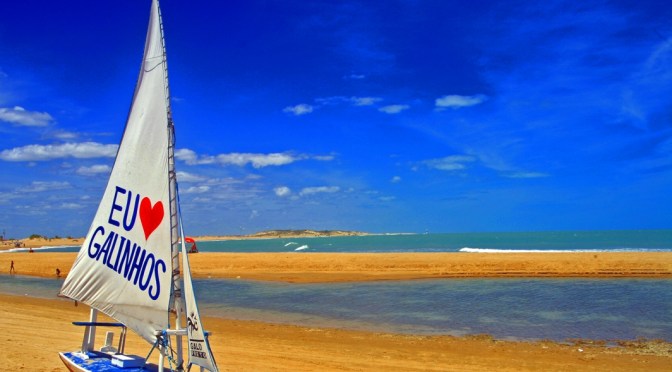
Galinhos é uma pequena vila de pescadores no estado do Rio Grande do Norte, no nordeste do Brasil. Está localizada em uma península, acessível apenas por barco ou veículos com tração nas quatro rodas, o que confere à vila um caráter isolado e encantador. A paisagem ao redor é marcada por praias intocadas, águas cristalinas e dunas deslumbrantes. Em Galinhos vivem cerca de 2.000 pessoas, que dependem principalmente da pesca e do turismo.
O farol de Galinhos é um marco famoso e oferece uma vista espetacular do mar e das salinas próximas, que desempenham um papel importante na economia local. A vila tem uma atmosfera tranquila e relaxante, ideal para os visitantes que desejam escapar do agito das grandes cidades.
Um dos maiores destaques de Galinhos são os passeios de barco pelos manguezais e pelo delta do Rio Aratuá. Esses passeios permitem explorar a rica flora e fauna da região, incluindo muitas espécies de aves e peixes. Os visitantes também podem desfrutar das piscinas naturais, formadas durante a maré baixa, que são perfeitas para nadar.
Os habitantes de Galinhos são conhecidos por sua hospitalidade. Embora o turismo tenha crescido nos últimos anos, a vila preserva seu caráter autêntico. Existem algumas pequenas pousadas e restaurantes que servem frutos do mar frescos e especialidades regionais.
No geral, Galinhos oferece uma mistura perfeita de natureza, tranquilidade e isolamento, sendo uma joia escondida do nordeste brasileiro que espera ser descoberta.
Galinhos ist ein kleines Fischerdorf im Bundesstaat Rio Grande do Norte im Nordosten Brasiliens. Es liegt auf einer Halbinsel, die nur mit dem Boot oder speziellen Geländefahrzeugen erreichbar ist, was dem Ort einen abgelegenen und charmanten Charakter verleiht. Die Umgebung ist geprägt von unberührten Stränden, kristallklarem Wasser und einer atemberaubenden Dünenlandschaft. In Galinhos leben etwa 2.000 Menschen, die hauptsächlich vom Fischfang und Tourismus leben.
Der Leuchtturm von Galinhos ist ein bekanntes Wahrzeichen und bietet einen spektakulären Ausblick auf das Meer und die umliegenden Salzpfannen, die eine wichtige Rolle in der lokalen Wirtschaft spielen. Das Dorf hat eine ruhige und entspannte Atmosphäre, die sich perfekt für Besucher eignet, die dem Trubel der großen Städte entfliehen möchten.
Eines der größten Highlights von Galinhos sind die Bootstouren durch die Mangrovenwälder und das Delta des Rio Aratuá. Diese Touren ermöglichen es, die reiche Flora und Fauna der Region zu erkunden, darunter viele Vogelarten und Fische. Besucher können auch die natürlichen Pools (Piscinas Naturais) genießen, die bei Ebbe entstehen und eine wunderbare Gelegenheit zum Schwimmen bieten.
Die Einwohner von Galinhos sind bekannt für ihre Gastfreundschaft. Obwohl der Tourismus in den letzten Jahren zugenommen hat, hat der Ort seinen authentischen Charakter bewahrt. Es gibt einige kleine Pensionen und Restaurants, die frische Meeresfrüchte und regionale Spezialitäten anbieten.
Insgesamt bietet Galinhos eine perfekte Mischung aus Natur, Ruhe und Abgeschiedenheit und ist ein verstecktes Juwel im brasilianischen Nordosten, das darauf wartet, entdeckt zu werden.
Galinhos is a small fishing village in the state of Rio Grande do Norte, in northeastern Brazil. It is located on a peninsula, accessible only by boat or four-wheel drive vehicles, which gives the place a secluded and charming character. The surrounding area is characterized by pristine beaches, crystal-clear waters, and stunning sand dunes. About 2,000 people live in Galinhos, mostly relying on fishing and tourism.
The Galinhos lighthouse is a famous landmark and offers a spectacular view of the sea and the nearby salt pans, which play an important role in the local economy. The village has a quiet and relaxing atmosphere, ideal for visitors seeking to escape the hustle and bustle of big cities.
One of the main highlights of Galinhos is the boat tours through the mangroves and the delta of the Rio Aratuá. These tours allow you to explore the rich flora and fauna of the region, including many species of birds and fish. Visitors can also enjoy the natural pools, formed at low tide, which are perfect for swimming.
The residents of Galinhos are known for their hospitality. Although tourism has increased in recent years, the village has maintained its authentic character. There are a few small guesthouses and restaurants serving fresh seafood and regional specialties.
Overall, Galinhos offers a perfect blend of nature, tranquility, and seclusion, and is a hidden gem in northeastern Brazil waiting to be discovered.
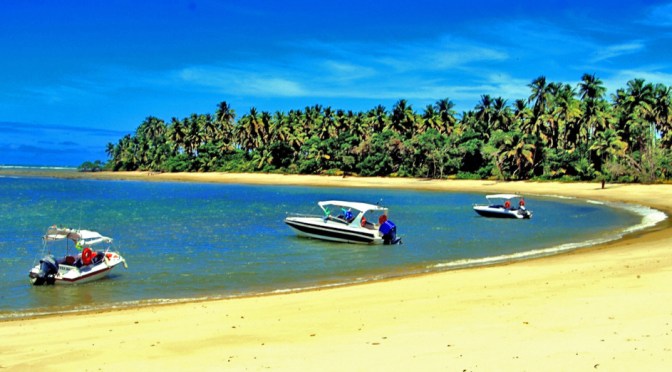
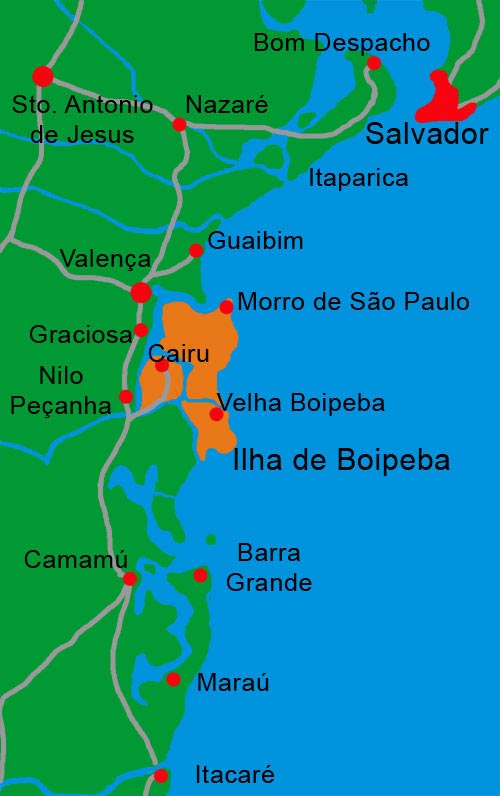
Ela é conhecida por suas praias intocadas, águas claras e turquesas, e vegetação exuberante. A ilha faz parte da zona de proteção do arquipélago Tinharé-Boipeba, famoso por sua rica biodiversidade e importância para a conservação ambiental.
Boipeba é um destino popular para amantes da natureza e para aqueles que procuram tranquilidade, já que a ilha é relativamente remota e de difícil acesso. Não há carros na ilha, e o transporte é feito principalmente a pé ou por barcos. Isso contribui para a atmosfera tranquila e relaxante que muitos visitantes apreciam.
As praias de Boipeba, como Boca da Barra, Moreré e Ponta dos Castelhanos, são ladeadas por palmeiras e oferecem condições perfeitas para mergulho com snorkel, mergulho e natação. Os recifes de corais na região são ricos em vida marinha e convidam à exploração.
Além das praias, Boipeba também oferece experiências culturais. A vila de Velha Boipeba, o principal povoado da ilha, encanta com sua arquitetura rústica e charmosa e a calorosa hospitalidade dos moradores. Pratos tradicionais com frutos do mar frescos são um destaque culinário.
A ilha se esforçou para evitar o turismo de massa, a fim de preservar sua beleza natural e autenticidade cultural. Por isso, há um número limitado de acomodações, geralmente operadas por moradores locais. Isso cria um modelo de turismo sustentável, que beneficia tanto os visitantes quanto os residentes.
No geral, Ilha de Boipeba é um paraíso escondido, que encanta os visitantes com sua beleza natural, rica cultura e estilo de vida descontraído.
Para conhecer mais sobre a Ilha de Boipeba, clique aqui e clique aqui.
Ilha de Boipeba ist eine idyllische Insel an der brasilianischen Küste, die zur Gemeinde Cairu im Bundesstaat Bahia gehört. Sie ist bekannt für ihre unberührten Strände, das klare, türkisfarbene Wasser und die üppige Vegetation. Die Insel ist Teil des Schutzzonen-Archipels Tinharé-Boipeba, das für seine reiche Artenvielfalt und die Bedeutung für den Umweltschutz bekannt ist.
Boipeba ist ein beliebtes Reiseziel für Naturfreunde und Ruhesuchende, da die Insel relativ abgelegen und nur schwer erreichbar ist. Es gibt keine Autos auf der Insel, und der Transport erfolgt hauptsächlich zu Fuß oder mit Booten. Dies trägt zur ruhigen und entspannten Atmosphäre bei, die viele Besucher schätzen.
Die Strände von Boipeba, wie Boca da Barra, Moreré und Ponta dos Castelhanos, sind von Palmen gesäumt und bieten perfekte Bedingungen zum Schnorcheln, Tauchen und Schwimmen. Die Korallenriffe in der Umgebung sind reich an Meeresleben und laden zum Entdecken ein.
Neben den Stränden bietet Boipeba auch kulturelle Erlebnisse. Das Dorf Velha Boipeba, der Hauptort der Insel, besticht durch seine charmante, rustikale Architektur und die herzliche Gastfreundschaft der Einwohner. Traditionelle Gerichte mit frischen Meeresfrüchten sind ein kulinarisches Highlight.
Die Insel hat sich bemüht, den Massentourismus zu vermeiden, um ihre natürliche Schönheit und kulturelle Authentizität zu bewahren. Deshalb gibt es eine begrenzte Anzahl an Unterkünften, die meist von Einheimischen betrieben werden. Dies sorgt für ein nachhaltiges Tourismusmodell, das sowohl den Besuchern als auch den Bewohnern zugutekommt.
Insgesamt ist Ihla de Boipeba ein verstecktes Paradies, das Besucher mit seiner natürlichen Schönheit, der reichen Kultur und der entspannten Lebensart begeistert.
Ilha de Boipeba is an idyllic island on the Brazilian coast, belonging to the municipality of Cairu in the state of Bahia. It is known for its pristine beaches, clear turquoise waters, and lush vegetation. The island is part of the Tinharé-Boipeba protected archipelago, famous for its rich biodiversity and environmental conservation significance.
Boipeba is a popular destination for nature lovers and those seeking tranquility, as the island is relatively remote and difficult to access. There are no cars on the island, and transportation is mainly on foot or by boat. This contributes to the peaceful and relaxing atmosphere that many visitors appreciate.
The beaches of Boipeba, such as Boca da Barra, Moreré, and Ponta dos Castelhanos, are lined with palm trees and offer perfect conditions for snorkeling, diving, and swimming. The coral reefs in the area are rich in marine life and invite exploration.
Besides the beaches, Boipeba also offers cultural experiences. The village of Velha Boipeba, the main settlement on the island, charms with its rustic architecture and the warm hospitality of its residents. Traditional dishes featuring fresh seafood are a culinary highlight.
The island has made efforts to avoid mass tourism to preserve its natural beauty and cultural authenticity. As a result, there is a limited number of accommodations, mostly run by locals. This creates a sustainable tourism model that benefits both visitors and residents.
Overall, Ihla de Boipeba is a hidden paradise that delights visitors with its natural beauty, rich culture, and relaxed lifestyle.
O Parque Ibirapuera, localizado na cidade de São Paulo, é um dos mais emblemáticos e queridos espaços públicos da metrópole. Inaugurado em 1954 em comemoração ao quarto centenário da cidade, o parque foi projetado pelo renomado arquiteto Oscar Niemeyer e pelo paisagista Roberto Burle Marx, resultando em um ambiente que mescla harmoniosamente a natureza com a arquitetura moderna.
Com uma extensão de aproximadamente 1,6 milhão de metros quadrados, o Ibirapuera oferece uma variedade de opções de lazer e cultura para os visitantes. Possui lagos, amplas áreas verdes, trilhas para caminhadas e ciclovias, proporcionando um refúgio urbano para quem busca escapar do agito da cidade. As alamedas arborizadas e os jardins bem cuidados criam um ambiente propício para atividades ao ar livre, como piqueniques, prática de esportes e relaxamento.
Além da beleza natural, o parque abriga diversos espaços culturais e instituições importantes. O Museu de Arte Moderna de São Paulo (MAM) e o Museu Afro Brasil são exemplos de instituições que enriquecem a experiência dos visitantes com exposições de arte e cultura. O Auditório Ibirapuera, outro destaque arquitetônico, recebe eventos culturais e apresentações artísticas, tornando-se um ponto de encontro para apreciadores de música e teatro.
O Pavilhão Japonês, com seu jardim típico e arquitetura tradicional, é uma atração única que destaca a diversidade cultural presente no parque. Além disso, o Obelisco Mausoléu aos Heróis de 32 e o Monumento às Bandeiras são marcos históricos que remetem ao passado da cidade e do país.
O Parque Ibirapuera não é apenas um local de lazer, mas também um espaço democrático que atrai pessoas de diferentes idades, classes sociais e origens. Nos fins de semana, é comum ver famílias, praticantes de esportes, estudantes e turistas desfrutando da atmosfera única que o parque proporciona.
Em resumo, o Parque Ibirapuera é uma joia verde no coração de São Paulo, combinando natureza, cultura e história de maneira singular. Sua importância vai além do aspecto paisagístico, sendo um ponto de encontro para a diversidade, celebração da arte e preservação do patrimônio histórico da cidade.
Quando visitamos o Parque Ibirapuera também visitamos a 35ª Bienal de Arte em São Paulo. É um evento importante na cena artística internacional. Realizada no Parque Ibirapuera, um dos maiores parques urbanos de São Paulo, proporciona um cenário deslumbrante para a exposição. Artistas de todo o mundo apresentam suas obras aqui, e a Bienal tornou-se um importante fórum para a arte contemporânea.
O Parque Ibirapuera em si é um local impressionante, com gramados verdes, lagos e arquitetura moderna, que permite aos visitantes experimentar a natureza e a arte em conjunto.
Primeiro exploramos o enorme parque em um passeio divertido com um veículo elétrico e muita informação divertida, depois aproveitamos a 35ª Bienal de Arte com uma grande variedade de exposições e formas de arte contemporâneas.
Para conhecer mais sobre o Parque Ibirapuera, clique aqui.
Nota: O parque dispõe de um serviço de um carrinho elétrico que faz um tour guiado no parque. Para mais informações sobre esse serviço, clique aqui.
Der Ibirapuera-Park, gelegen in der Stadt São Paulo, ist einer der emblematischsten und beliebtesten öffentlichen Plätze in der Metropole. Er wurde 1954 zur Feier des vierhundertjährigen Bestehens der Stadt eröffnet und wurde vom renommierten Architekten Oscar Niemeyer und dem Landschaftsarchitekten Roberto Burle Marx entworfen, was zu einer Umgebung führte, die Natur harmonisch mit moderner Architektur verbindet.
Mit einer Fläche von etwa 1,6 Millionen Quadratmetern bietet der Ibirapuera eine Vielzahl von Freizeit- und Kulturmöglichkeiten für Besucher. Er verfügt über Seen, ausgedehnte Grünflächen, Wanderwege und Radwege, die einen städtischen Rückzugsort für diejenigen bieten, die dem Trubel der Stadt entkommen möchten. Die baumbestandenen Alleen und gepflegten Gärten schaffen eine Atmosphäre, die sich gut für Outdoor-Aktivitäten wie Picknicks, Sport und Entspannung eignet.
Neben seiner natürlichen Schönheit beherbergt der Park verschiedene Kulturräume und wichtige Institutionen. Das Museum für Moderne Kunst von São Paulo (MAM) und das Afro-Brasilianische Museum sind Beispiele für Institutionen, die die Erfahrungen der Besucher mit Kunst und Kultur bereichern. Das Ibirapuera-Auditorium, ein weiteres architektonisches Highlight, beherbergt kulturelle Veranstaltungen und künstlerische Aufführungen und wird zu einem Treffpunkt für Musik- und Theaterliebhaber.
Der Japanische Pavillon mit seinem typischen Garten und seiner traditionellen Architektur ist eine einzigartige Attraktion, die die kulturelle Vielfalt im Park hervorhebt. Darüber hinaus sind der Obelisk Mausoleum der Helden von 32 und das Monument für die Bandeiras historische Wahrzeichen, die an die Vergangenheit der Stadt und des Landes erinnern.
Der Ibirapuera-Park ist nicht nur ein Freizeitziel, sondern auch ein demokratischer Raum, der Menschen unterschiedlichen Alters, sozialen Klassen und Hintergründen anzieht. An Wochenenden ist es üblich, Familien, Sportbegeisterte, Studenten und Touristen zu sehen, die die einzigartige Atmosphäre des Parks genießen.
Zusammenfassend ist der Ibirapuera-Park eine grüne Perle im Herzen von São Paulo, die Natur, Kultur und Geschichte auf einzigartige Weise kombiniert. Seine Bedeutung geht über die Landschaft hinaus und dient als Treffpunkt für Vielfalt, als Feier der Kunst und als Bewahrung des historischen Erbes der Stadt.
Wenn wir den Ibirapuera-Park besuchen, besuchen wir auch den Die 35. Kunst-Biennale in São Paulo ist eine bedeutende Veranstaltung in der internationalen Kunstszene. Sie findet im Parque Ibirapuera statt, einem der größten Stadtparks in São Paulo, der eine atemberaubende Kulisse für die Ausstellung bietet. Künstler aus aller Welt präsentieren hier ihre Werke, und die Biennale hat sich zu einem wichtigen Forum für zeitgenössische Kunst entwickelt. Der Parque Ibirapuera selbst ist ein beeindruckender Ort mit grünen Wiesen, Seen und moderner Architektur, der die Besucher inmitten der Natur und Kunst erleben lässt.
Wir erkundeten zunächst den riesigen Park auf einer kurzweiligen Tour mit einem Elektromobil und vielen auch lustigen Informationen, danach genossen wir die 35. Kunstbiennale mit den unterschiedlichsten zeitgenössischen Ausstellungs- und Kunstformen.
Um mehr über den Ibirapuera-Park zu erfahren, klicken Sie hier.
Hinweis: Der Park bietet einen Elektrokarren-Service an, der eine geführte Tour durch den Park ermöglicht. Weitere Informationen zu diesem Service finden Sie hier.
The Ibirapuera Park, located in the city of São Paulo, is one of the most emblematic and beloved public spaces in the metropolis. Inaugurated in 1954 to commemorate the city’s quadricentennial, the park was designed by the renowned architect Oscar Niemeyer and landscape designer Roberto Burle Marx, resulting in an environment that harmoniously blends nature with modern architecture.
With an extension of approximately 1.6 million square meters, Ibirapuera offers a variety of leisure and cultural options for visitors. It features lakes, extensive green areas, walking trails, and bike paths, providing an urban refuge for those seeking to escape the hustle and bustle of the city. The tree-lined avenues and well-maintained gardens create a conducive environment for outdoor activities such as picnics, sports, and relaxation.
In addition to its natural beauty, the park houses various cultural spaces and important institutions. The São Paulo Museum of Modern Art (MAM) and the Afro Brazil Museum are examples of institutions that enrich visitors’ experiences with art and culture. The Ibirapuera Auditorium, another architectural highlight, hosts cultural events and artistic performances, becoming a meeting point for music and theater enthusiasts.
The Japanese Pavilion, with its typical garden and traditional architecture, is a unique attraction that highlights the cultural diversity present in the park. Furthermore, the Obelisk Mausoleum of the Heroes of 32 and the Monument to the Bandeiras are historical landmarks that evoke the city’s and the country’s past.
Ibirapuera Park is not only a leisure destination but also a democratic space that attracts people of different ages, social classes, and backgrounds. On weekends, it is common to see families, sports enthusiasts, students, and tourists enjoying the unique atmosphere that the park provides.
In summary, Ibirapuera Park is a green gem in the heart of São Paulo, combining nature, culture, and history in a unique way. Its significance goes beyond the landscape, serving as a meeting point for diversity, a celebration of art, and the preservation of the city’s historical heritage.
When we visit this park, we visit too the 35th Art Biennial in São Paulo is a significant event in the international art scene. It takes place in Parque Ibirapuera, one of the largest urban parks in São Paulo, providing a breathtaking setting for the exhibition. Artists from around the world showcase their works here, and the Biennial has become a crucial forum for contemporary art. Parque Ibirapuera itself is an impressive location with green lawns, lakes, and modern architecture, immersing visitors in the midst of nature and art.
We first explored the huge park on an entertaining tour with an electric vehicle and lots of fun information, then we enjoyed the 35th Art Biennale with a wide variety of contemporary exhibitions and art forms.
O Museu Paulista, também conhecido como Museu do Ipiranga, é um dos museus mais importantes de São Paulo, Brasil. Foi fundado em 7 de setembro de 1895 e está localizado no bairro do Ipiranga. O museu abriga uma rica coleção que abrange a história do Brasil desde o século XVI até os dias atuais.
A arquitetura do Museu Paulista é impressionante, refletindo o neoclassicismo. O edifício distintivo com suas colunas e entrada imponente é um marco da cidade.
A coleção inclui artefatos, pinturas, esculturas e muito mais que retratam a história do Brasil. Os visitantes podem admirar artefatos da época do império, como móveis, roupas e pertences pessoais de figuras históricas importantes.
O Museu Paulista é especialmente famoso pela pintura “Independência ou Morte” de Pedro Américo, que retrata a independência do Brasil de Portugal.
O parque e jardins circundantes do Museu Paulista convidam os visitantes a apreciar a beleza da natureza enquanto vislumbram a história do Brasil.
O Edifício monumental do Museu Paulista foi projetado pelo arquiteto italiano Tommaso Gaudencio Bezzi com o propósito de destacar o local onde D. Pedro, o príncipe regente, disse a famosa frase: “É tempo! Independência ou Morte”, declarando a emancipação das terras brasileiros de Portugal.
Esse prédio passou por uma grandiosa restauração (o prédio esteve fechado por nove anos) e foi reaberto ao público em setembro de 2022 em comemoração ao Bicentenário da Independência do Brasil. O prédio foi restaurado e ampliado, cujo projeto foi resultado de um Concurso Nacional de Arquitetura promovido pela Universidade de São Paulo em 2017. O escritório H+F, liderado pelos arquitetos Eduardo Ferroni e Pablo Hereñu ganhou o certame. Foram investidos em torno de 235 milhões de reais e o projeto de restauro inclui também a recuperação do jardim francês, do entorno e das pontes. O prédio foi ampliado em de 6.800 m². O novo projeto expográfico é de autoria do escritório Metrópole Arquitetos tendo à frente as Ana Paula Pontes e Anna Helena Villela.
Para conhecer mais sobre o Museu Paulista, clique aqui.
Dica: Nós começamos a visita ao Museu a partir do terraço panorâmico na sua cobertura e fomos descendo e visitando cada pavimento. Quando terminamos já estávamos no andar da saída do prédio.
Das Museu Paulista, auch bekannt als das Museu do Ipiranga, ist eines der bedeutendsten Museen in São Paulo, Brasilien. Es wurde am 7. September 1895 gegründet und befindet sich im Stadtviertel Ipiranga. Das Museum beherbergt eine reichhaltige Sammlung, die die Geschichte Brasiliens vom 16. Jahrhundert bis zur Gegenwart umfasst.
Die Architektur des Museu Paulista ist beeindruckend und spiegelt den Neoklassizismus wider. Das markante Gebäude mit seinen Säulen und dem imposanten Eingangsbereich ist ein Wahrzeichen der Stadt.
Die Sammlung umfasst Artefakte, Gemälde, Skulpturen und vieles mehr, die die Geschichte Brasiliens darstellen. Besucher können Artefakte aus der Zeit des Kaiserreichs, wie beispielsweise Mobiliar, Kleidung und persönliche Gegenstände von bedeutenden historischen Persönlichkeiten, bestaunen.
Besonders bekannt ist das Museu Paulista für das Gemälde “Independência ou Morte” (Unabhängigkeit oder Tod) von Pedro Américo, das die Unabhängigkeit Brasiliens von Portugal darstellt.
Der umliegende Park und die Gärten des Museu Paulista laden Besucher dazu ein, die Schönheit der Natur zu genießen und einen Blick auf die Geschichte Brasiliens zu werfen.
Das monumentale Gebäude des Museu Paulista wurde vom italienischen Architekten Tommaso Gaudencio Bezzi mit dem Ziel entworfen, den Ort hervorzuheben, an dem D. Pedro, der Prinzregent, den berühmten Satz sagte: „Es ist Zeit!“ Unabhängigkeit oder Tod“, in dem die Emanzipation brasilianischer Länder von Portugal erklärt wurde.
Dieses Gebäude wurde einer umfassenden Restaurierung unterzogen (das Gebäude war neun Jahre lang geschlossen) und wurde im September 2022 anlässlich des 200. Jahrestages der Unabhängigkeit Brasiliens wieder für die Öffentlichkeit geöffnet. Das Gebäude wurde restauriert und erweitert, dessen Projekt das Ergebnis eines nationalen Architekturwettbewerbs war, der 2017 von der Universität São Paulo gefördert wurde. Das Büro H+F unter der Leitung der Architekten Eduardo Ferroni und Pablo Hereñu gewann den Wettbewerb. Rund 235 Millionen Reais wurden investiert und das Restaurierungsprojekt umfasst auch die Wiederherstellung des französischen Gartens, der Umgebung und der Brücken. Das Gebäude wurde um 6.800 m² erweitert. Das neue Ausstellungsprojekt wurde von Metrópole Arquitetos unter der Leitung von Ana Paula Pontes und Anna Helena Villela entworfen.
Um mehr über das Museu Paulista zu erfahren, klicken Sie hier.
Tipp: Wir begannen unseren Museumsbesuch von der Panoramaterrasse auf dem Dach aus und gingen dann hinunter, um jede Etage zu besichtigen. Als wir fertig waren, befanden wir uns bereits im Ausgangsgeschoss des Gebäudes.
The Museu Paulista, also known as the Museu do Ipiranga, is one of the most significant museums in São Paulo, Brazil. It was founded on September 7, 1895, and is located in the Ipiranga neighborhood. The museum houses a rich collection that spans Brazil’s history from the 16th century to the present day.
The architecture of the Museu Paulista is impressive, reflecting neoclassicism. The distinctive building with its columns and imposing entrance is a landmark of the city.
The collection includes artifacts, paintings, sculptures, and more that depict Brazil’s history. Visitors can marvel at artifacts from the time of the empire, such as furniture, clothing, and personal belongings of significant historical figures.
The Museu Paulista is particularly famous for the painting “Independência ou Morte” (Independence or Death) by Pedro Américo, portraying Brazil’s independence from Portugal.
The surrounding park and gardens of the Museu Paulista invite visitors to enjoy the beauty of nature while glimpsing into Brazil’s history.
The monumental building of the Museu Paulista was designed by the Italian architect Tommaso Gaudencio Bezzi with the purpose of highlighting the place where D. Pedro, the prince regent, said the famous phrase: “It’s time! Independence or Death”, declaring the emancipation of Brazilian lands from Portugal.
This building underwent a major restoration (the building was closed for nine years) and was reopened to the public in September 2022 in celebration of the Bicentennial of Brazil’s Independence. The building was restored and expanded, whose project was the result of a National Architecture Competition promoted by the University of São Paulo in 2017. The H+F office, led by architects Eduardo Ferroni and Pablo Hereñu, won the competition. Around 235 million reais were invested and the restoration project also includes the recovery of the French garden, the surrounding area and the bridges. The building was expanded by 6,800 m². The new expographic project is designed by Metrópole Arquitetos, led by Ana Paula Pontes and Anna Helena Villela.
To learn more about the Museu Paulista, click here.
Tip: We started our visit to the Museum from the panoramic terrace on its roof and went down and visited each floor. When we finished we were already on the exit floor of the building.
Apresentar lugares visitados ao redor do mundo e proporcionar um intercâmbio de informações com nossos visitantes./Display places visited around the world and provide an exchange of information with our visitors./Weltweit besuchte Orte vorstellen und einen Informationsaustausch mit unseren Besuchern anregen.











 imagenseviagens.com.br/travelandimages.com