Tenório e Gracia, passeando, descobrindo novos e lindos lugares.
Texto: Ademilton Tenório Albuquerque e fotos: Gracia Cardoso
Ah! Tamandaré*1.
Tu abrigas os veranistas como teus próprios filhos.
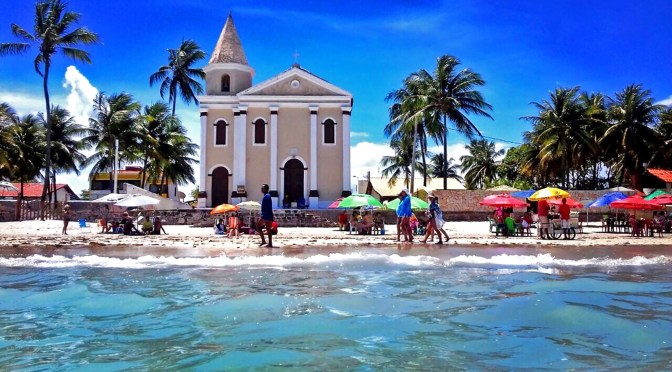
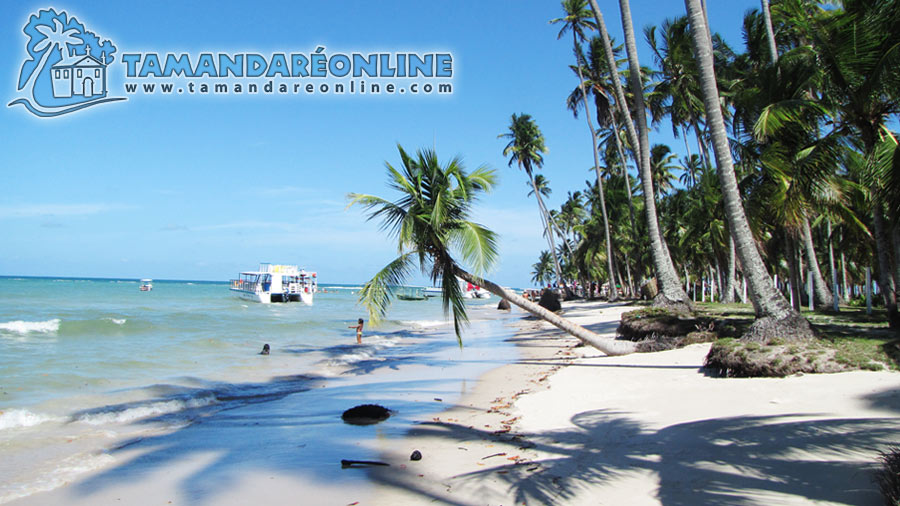
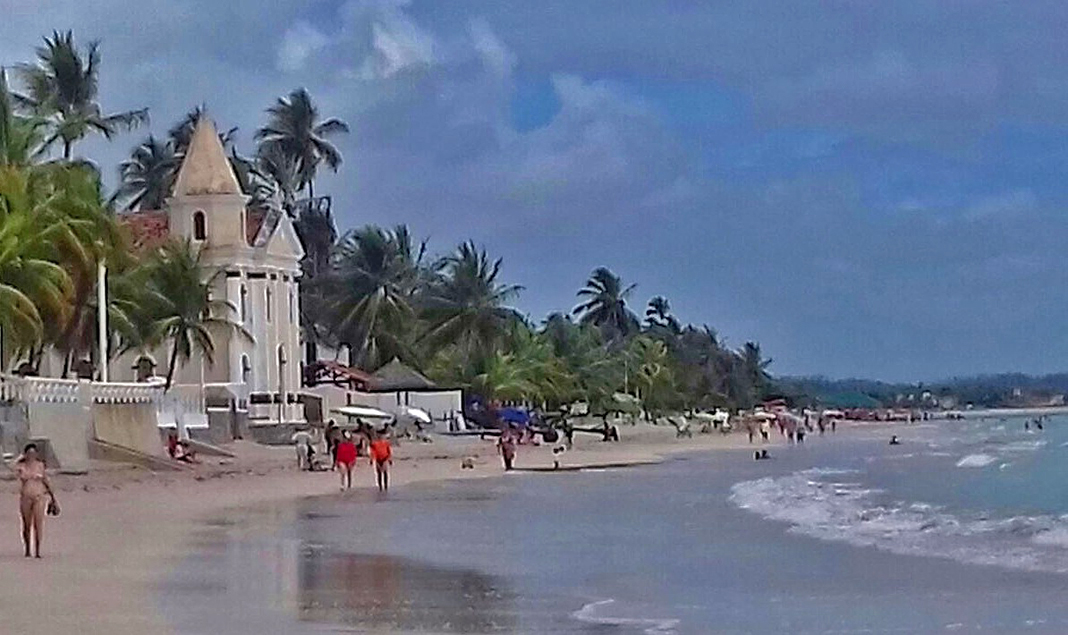
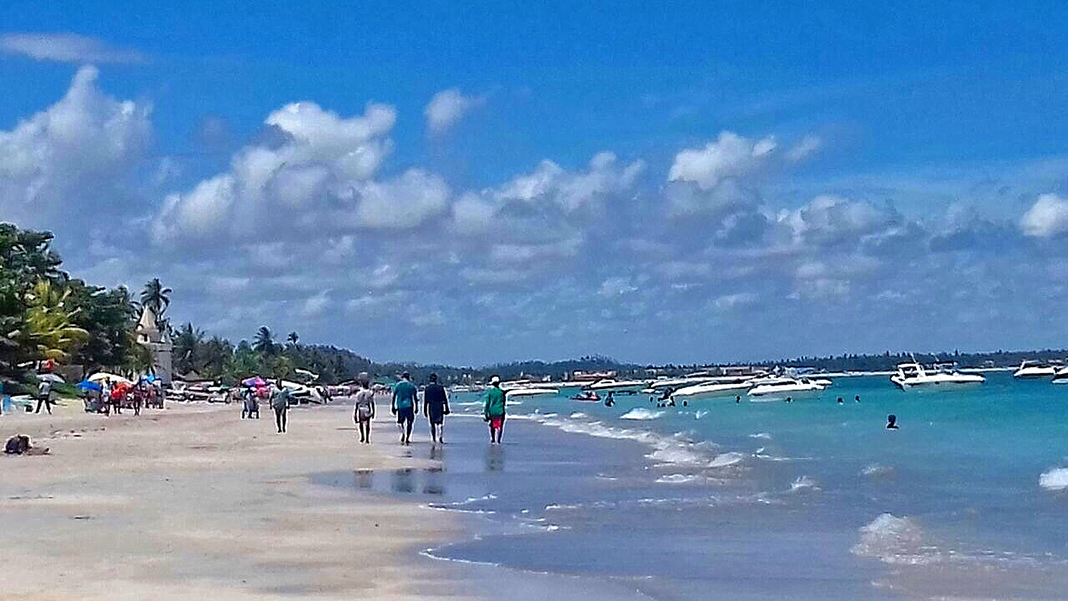
Tuas praias são maravilhosas, com águas cristalinas e poucas ondas tão próprias para o lazer. As lindas lanchas saem das marinas e deslizam sobre as águas levando alegria aos seus passageiros que sentem o frescor do vento passando pelo seu corpo.
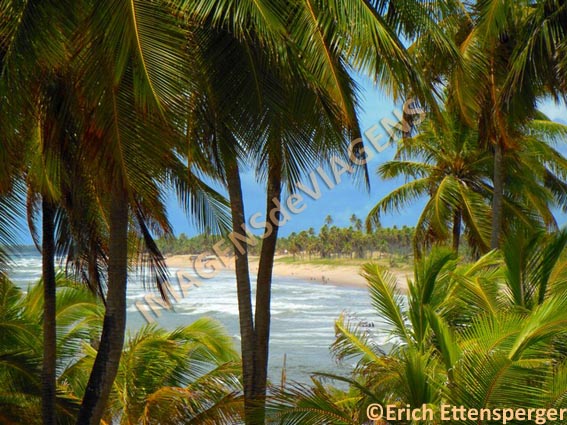
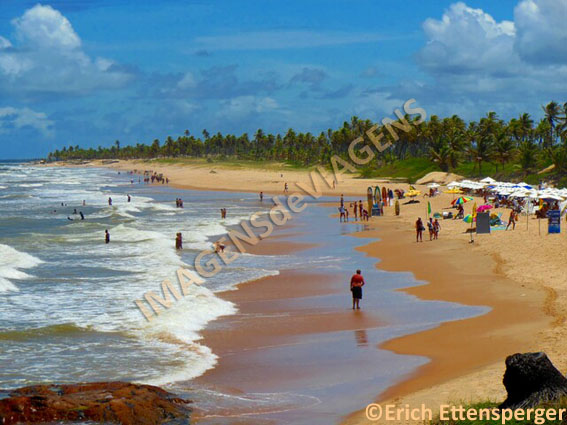
Praia de Tamandaré/Strand Praia de Tamandaré/Tamandaré BeachPraia de Tamandaré/Strand Praia de Tamandaré/Tamandaré Beach
Tuas areias brancas e finas permitem caminhadas e corridas até a praia de Carneiros*2,
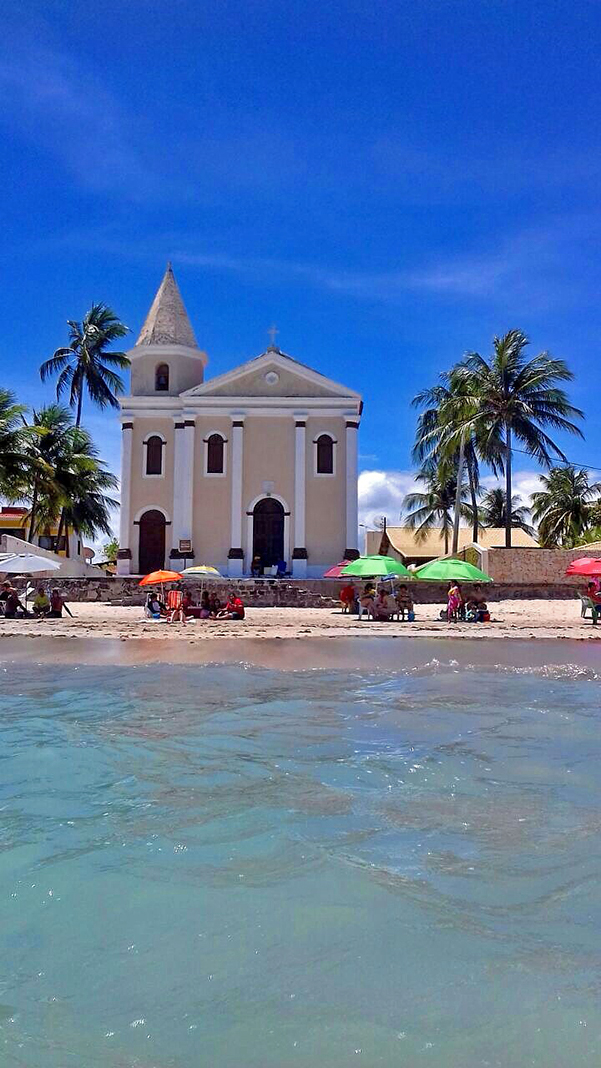
tua vizinha, cujo percurso apresenta linda paisagem com residências, coqueiros e a Capela de São Pedro com seu alegre, criativo e perseverante pároco que diariamente às 05:00hs da manhã benze e unge com água benta os ¨atletas¨ em plena praia.
Igreja de São Pedro/ St. Peter-Kirche/St. Peter ChurchPraia de Tamandaré/Strand Praia de Tamandaré/Tamandaré Beach
O Luau às sextas feiras onde as mais de 500 pessoas se reúnem em plena areia da praia para, ao som das ondas, cantarem e ouvirem as palavras de conforto, perseverança e de esperança em uma vida melhor, em um país melhor bem administrado e sem injustiças, proferidas pelo Padre Arlindo, que encerra citando a oração à Santa Rita: ¨Nada te perturbe. Nada te amedronte. Tudo passa, só Deus não muda. A paciência tudo alcança. A quem tem Deus, nada falta. Só Deus basta! Amém¨.
Da esquerda para a direita/Von links nach rechts/From left to the right: Ana Tenório, Alba Cristina, Aldo Lourenço, Ademilton Tenório, Gracia Cardoso, Alan Henrique e Sheyla .Praia de Tamandaré/Strand Praia de Tamandaré/Tamandaré Beach
Ah! Tamandaré. Tu descansa o nosso corpo e revigora nossa alma. Tu nos faz retornar ao nosso lar esperançosos e com mais energia para enfrentar as tribulações da vida.
Ano que vem, voltaremos para te ver novamente.
Até breve
Por do sol/Sonnenuntergang/sunset
*1 – O município praiano de Tamandaré encontra-se a 110 km de Recife e está localizado no litoral sul do estado.
Localização de Tamandaré e Carneiros/Location of Tamandaré and Carneiros.Fonte/source: Google Map
*2 – A praia de Carneiros está localizada a 5 km de Tamandaré, é considerada como uma das praias mais belas da costa pernambucana.
Observação: se você quiser continuar “viajando” com o nosso blog, clique no botão “seguir” localizado no canto inferior direito dessa página. Você receberá um email com um link para confirmar a assinatura desse blog (não paga nada). Quando clicar no link, você será direcionado para uma página em inglês (essa página explica o procedimento no caso de você desejar um dia parar de seguir o blog). A partir daí, você já está “seguindo” o blog.
SOMMER IN TAMANDARÉ
Tenorio und Gracia auf Tour, neue und schöne Orte entdeckend/enório and Gracia strolling around, discovering new and beautiful places.
Text: Ademilton Tenorio Albuquerque und Fotos: Gracia Cardoso
Oh! Tamandaré * 1.
Du beherbergst Urlauber wie deine eigenen Söhne.
Deine Strände sind wunderschön mit kristallklarem Wasser und leichten Wellen, einfach ideal. Die schönen Boote verlassen die Yachthäfen und gleiten zur Freude seiner Passagiere über das Wasser und lassen sie den erfrischenden Wind auf ihren Körpern fühlen.
Praia de Tamandaré/Strand Praia de Tamandaré/Tamandaré BeachPraia de Tamandaré/Strand Praia de Tamandaré/Tamandaré Beach
Dein feiner weißer Sand lädt zu einem Spazierengang zum Nachbarstrand Carneiros*2
ein mit seiner sehr schönen Landschaft, Häusern, Palmen und der Kapelle St. Peter mit seinem fröhlichen, kreativen und ausdauerndem Pfarrer, der täglich um 05:00 morgens die Athleten am Strand mit Weihwasser segnet und salbt.
Igreja de São Pedro/ St. Peter-Kirche/St. Peter ChurchPraia de Tamandaré/Strand Praia de Tamandaré/Tamandaré Beach
Bei der Andacht am Luau (Vollmond), immer freitags, versammeln sich stets mehr als 500 Menschen am Strand und singen zusammen begleitet vom Geräusch der Wellen; sie hören die Worte des Trostes, der Ausdauer und der Hoffnung auf ein besseres Leben in einem gut organisiertem Land ohne Ungerechtigkeit; sie hören Pater Arlindo zu mit seiner Berufung auf das Gebet an Santa Rita am Ende: „nichts kann Sie stören, nichts kann Sie schrecken, alles ist vergänglich, Geduld erreicht alles, wer Gott hat, dem fehlt es an nichts. Gott allein genügt! Amen“.
Da esquerda para a direita/Von links nach rechts/From left to the right: Ana Tenório, Alba Cristina, Aldo Lourenço, Ademilton Tenório, Gracia Cardoso, Alan Henrique e Sheyla .Praia de Tamandaré/Strand Praia de Tamandaré/Tamandaré Beach
Oh! Tamandaré. Du gibst unserem Körper Ruhe und belebst die Seele mit neuer Energie. Wir kehren zurück zu unserem Haus voller Hoffnung und Zuversicht, um uns den Schwierigkeiten des Lebens erneut zu stellen.
Im nächsten Jahr werden wir zurückkehren, um Dich Tandaré wieder zu sehen.
Bis bald !
Por do sol/Sonnenuntergang/sunset
* 1 – Die Strandgemeinde Tamandaré ist 110 km von Recife entfernt und liegt an der südlichen Küste des Bundeslandes Pernambuco.
Localização de Tamandaré e Carneiros/Location of Tamandaré and Carneiros.Fonte/source: Google Map
* 2 – Der Strand Carneiros 5 km von Tamandaré gelegen gilt als einer der schönsten Strände der Küste Pernambucos.
Hinweis: Falls Sie unseren „Reisen“ auf dem Blog folgen wollen, dann klicken Sie unten rechts einfach auf „Weiter”, Sie werden dann zukünftig automatisch informiert.
SUMMER IN TAMANDARÉ
Tenorio und Gracia auf Tour, neue und schöne Orte entdeckend/enório and Gracia strolling around, discovering new and beautiful places.
Text: Ademilton Tenorio Albuquerque and Photos: Gracia Cardoso
Oh! Tamandaré *1.
You are accommodating holidaymakers like your own kids.
Your beaches are beautiful with crystal clear water and light waves, just ideal. The beautiful boats leave the marina ports and glide over the water to the delight of their passengers and let them feel the refreshing wind on their bodies.
Praia de Tamandaré/Strand Praia de Tamandaré/Tamandaré BeachPraia de Tamandaré/Strand Praia de Tamandaré/Tamandaré Beach
Your fine white sand invites to a walk to the neighboring beach of Carneiros*2
with its beautiful landscape, houses, palm trees and the Chapel of St. Peter with its cheerful, creative and persevering priest, who daily at 05:00 AM blesses and ants the athletes with „Holy“ water at the beach.
Igreja de São Pedro/ St. Peter-Kirche/St. Peter ChurchPraia de Tamandaré/Strand Praia de Tamandaré/Tamandaré Beach
Always on Fridays during full moon more than 500 people gather at the beach and sing along with the sound of the waves; they hear the words of consolation, perseverance and hope of a better life in a well-organized country without injustice; they listen to Father Arlindo with his appeal to the pray to Santa Rita at the end: “nothing can disturb you, nothing can frighten you, everything is ephemeral, patience reaches all who have God, there is nothing lacking in it. God alone is enough! Amen”.
Da esquerda para a direita/Von links nach rechts/From left to the right: Ana Tenório, Alba Cristina, Aldo Lourenço, Ademilton Tenório, Gracia Cardoso, Alan Henrique e Sheyla .Praia de Tamandaré/Strand Praia de Tamandaré/Tamandaré Beach
Oh! Tamandaré. You rest our body and energize the soul with new energy. We return to our houses full of hope and confidence to re-face the difficulties of life.
Next year we will return to see You Tandaré again.
Bye for now!
Por do sol/Sonnenuntergang/sunset
*1 – The beach town of Tamandaré is 110 km from Recife and is located on the southern coast of the federal state of Pernambuco.
Localização de Tamandaré e Carneiros/Location of Tamandaré and Carneiros.Fonte/source: Google Map
*2 – The beach Praia de Carneiros is located 5 km from Tamandaré and is one of the most beautiful beaches on the coast of Pernambuco.
Note: If you want to follow our “travel” on the blog, simply click on “Continue” in the lower right corner, you will be informed automatically in the future.
Desde criança, quando eu escutava falar de carnaval, somente tinha conhecimento sobre as comemorações de Momo no Brasil, com as grandes celebrações em Salvador, Recife, Olinda, Ouro Preto e claro, no Rio de Janeiro e São Paulo com os desfiles das escolas de samba, principalmente na terra carioca, que atrai milhares de turistas de todo o mundo.
Atualmente, além disso, há também a moda dos blocos de carnaval que animam diversos bairros em várias cidades do Brasil. Foi uma surpresa para mim conhecer um pouco do interessante carnaval na Alemanha. Agora Erich, alemão da gema, vai explicar um pouco como é o carnaval na Alemanha.
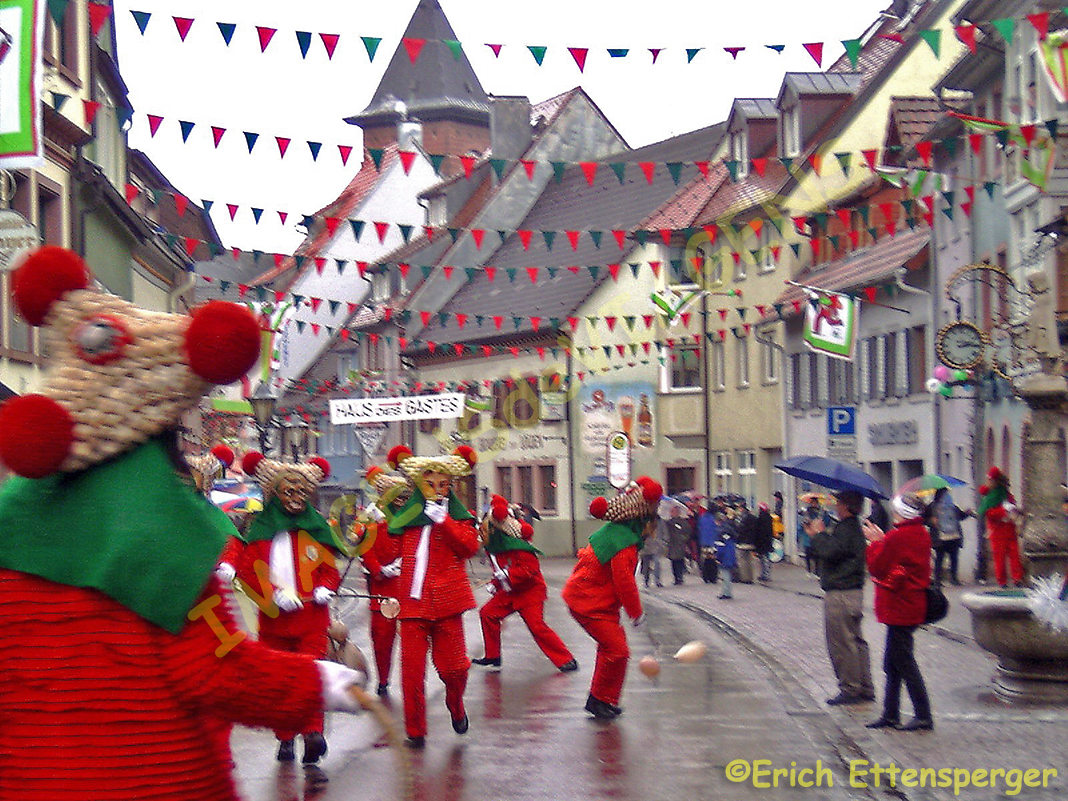
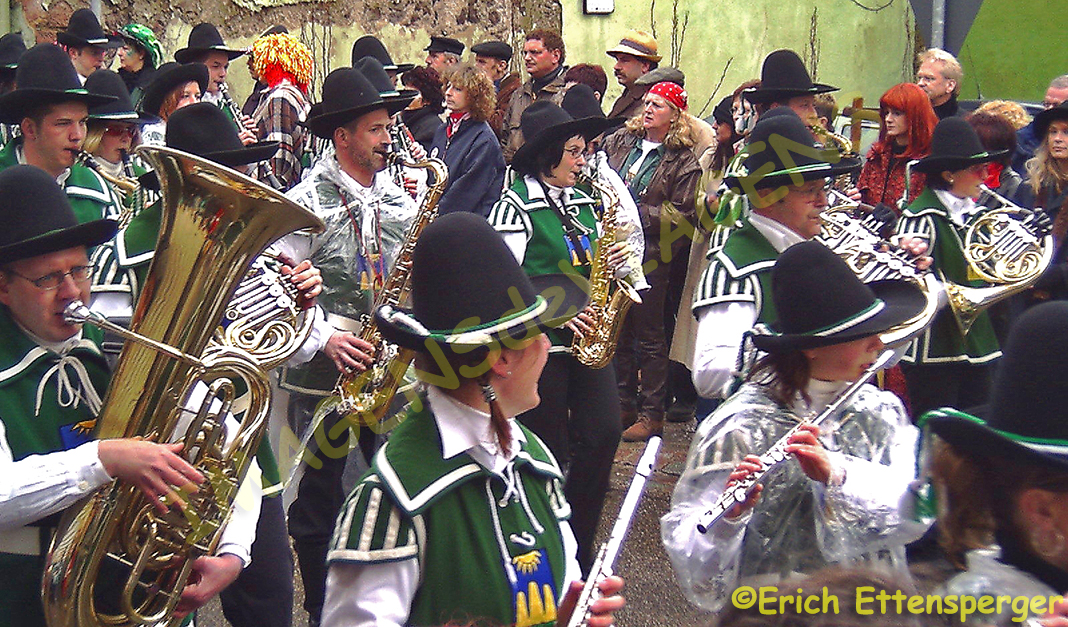
Animação de Carnaval em Elzach / Fastnactstreiben in Elzach / Carnival action in Elzach
O carnaval, também chamado Fastnacht ou Fasching é chamado na Alemanha também como a quinta temporada. Todos os anos em 11.11. exatamente às 11h11 acontece oficialmente a abertura do carnaval. Hoje em dia é um fator econômico considerável como, por exemplo, também no Rio de Janeiro.
Os verdadeiros carnavais de rua da Alemanha, com a sua agitação colorida e com foliões provenientes de todo o mundo começa na quinta-feira. Este ano meu filho Stefano viajou de Viena para Colônia para participar desse evento!
Em Friburgo, o desfile no do centro histórico / In Freiburg schlängelt sich der Umzug durch die historische Altstadt / In Fribourg the parade winds through the historic center
Existe um costume na quinta-feira de carnaval, também chamada Weiberfastnacht (carnaval das mulheres) nas cidades da Renânia, que as mulheres cortam as gravatas dos homens que encontrarem nas ruas, nos escritórios, nos trens… depois de cortarem, elas os compensam com um beijo fraternal, é uma forma de dizer que elas estão no comando da festa. Essa tradição simbólica existe desde 1824.
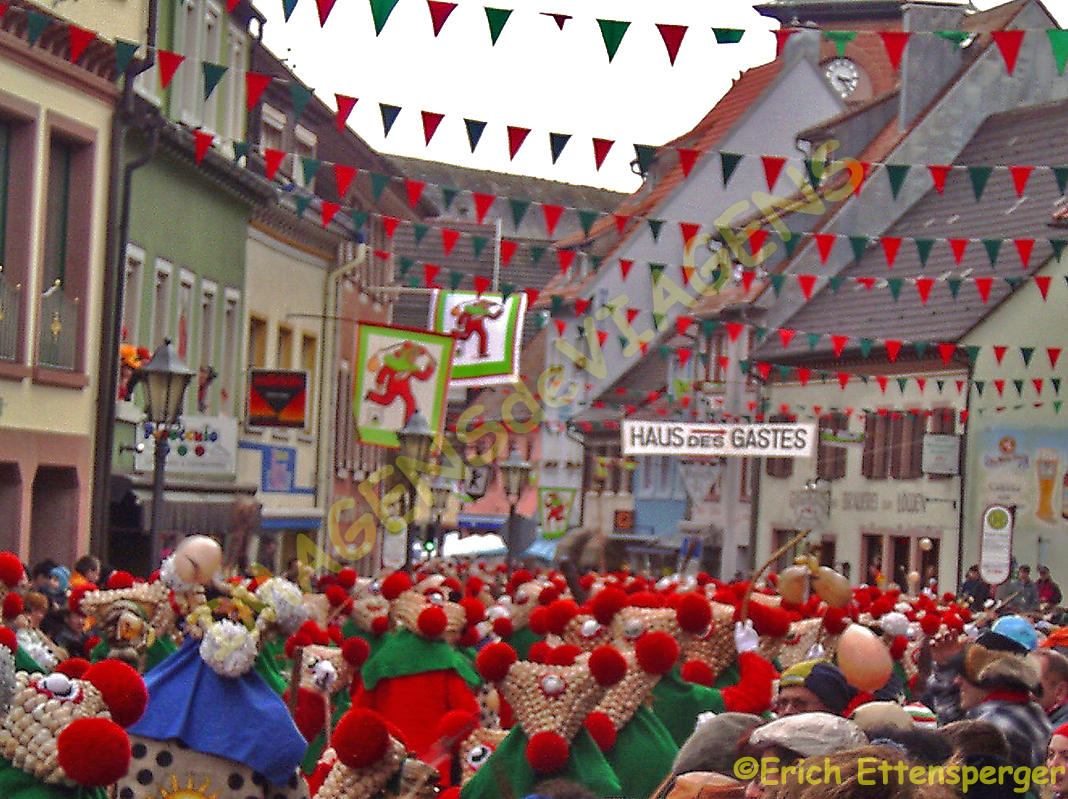
As ruas decoradas conferem um toque especial aos desfiles / Dekorierte Strassen verleihen den Umzügen einen speziellen Flair / Decorated streets give the parades a special flair
Na Alemanha, como em muitas outras partes do mundo, as pessoas gostam de se fantasiar, usarem perucas coloridas e/ou máscaras e divertir-se.
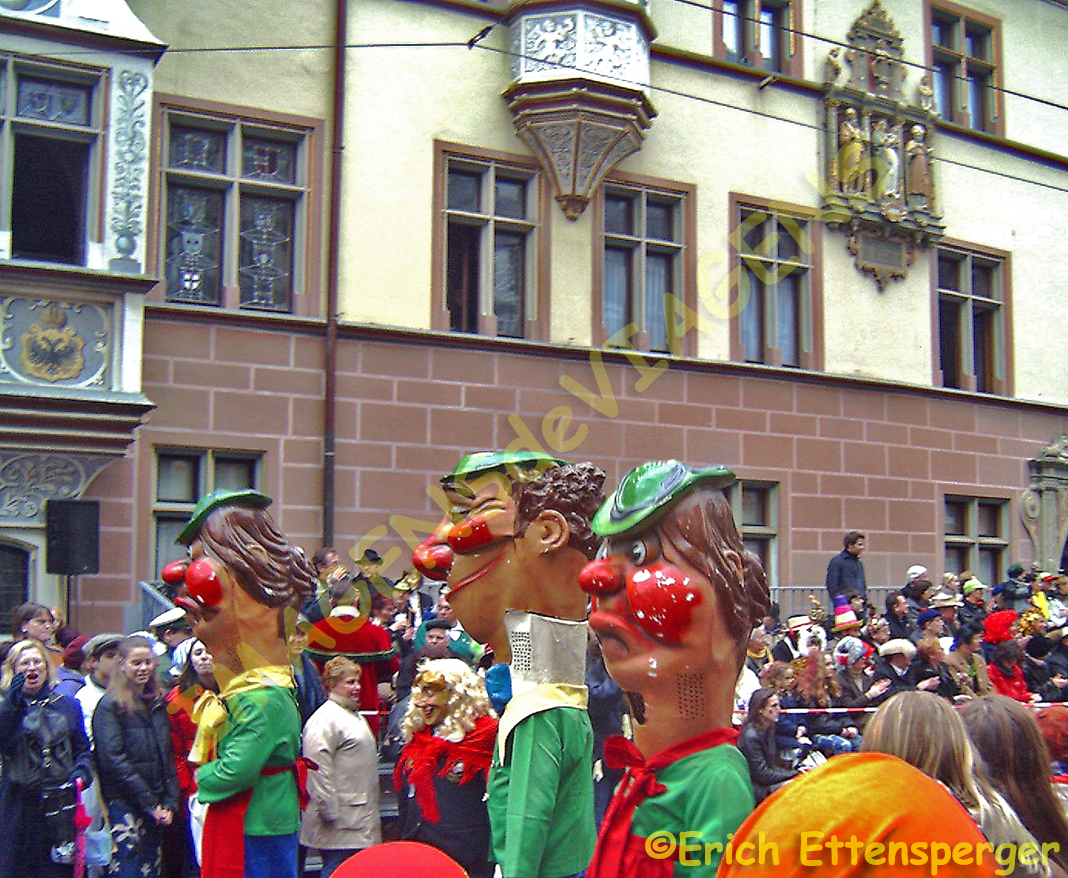
Como espectador, você pode sempre cair nas garras dessas figuras / Als Zuschauer kann man jederzeit in die Fänge dieser Gestalten geraten / As a spectator one can get into the catches of these figures at any time
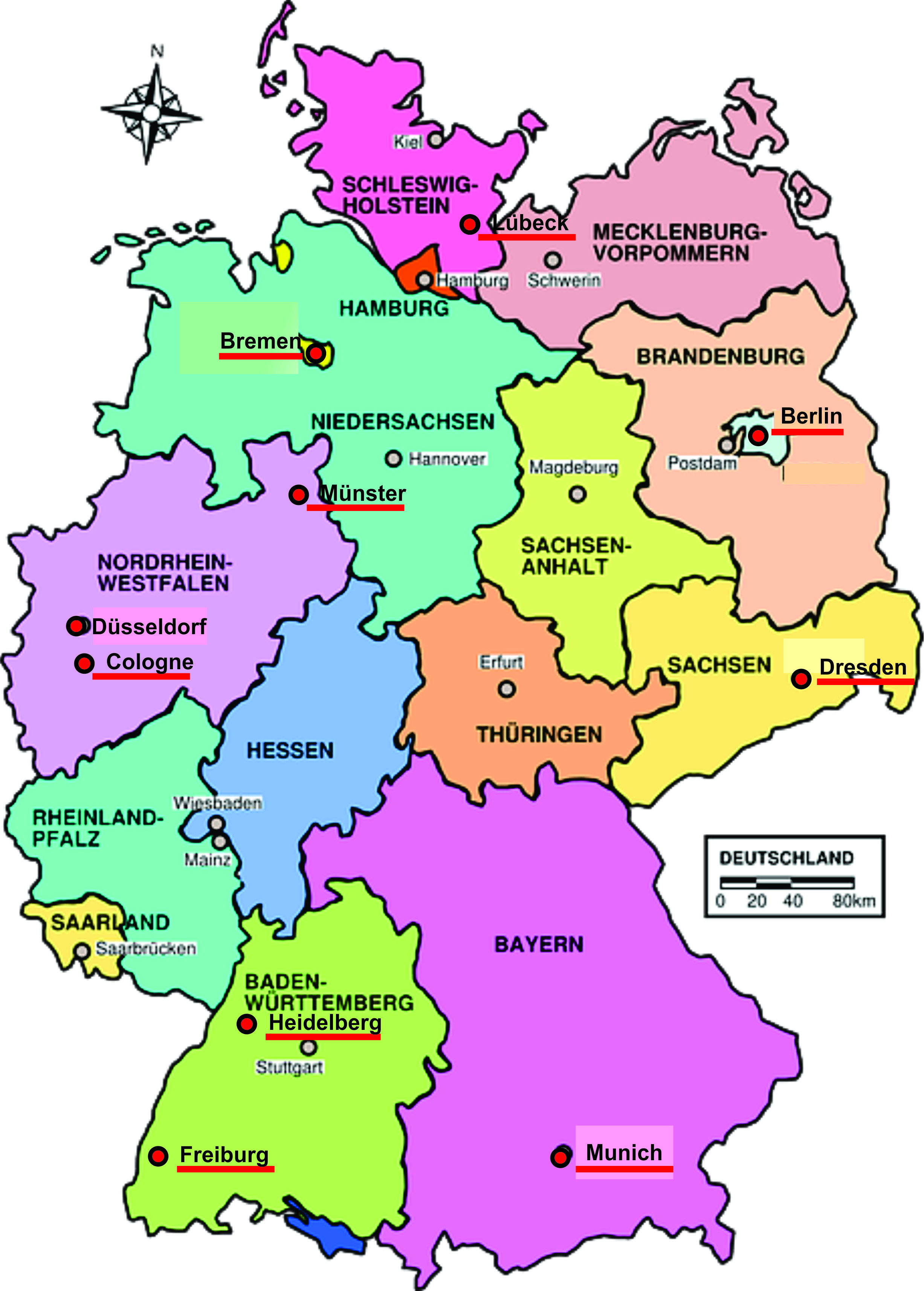
O carnaval, claro, não é apenas celebrado em Colónia, Düsseldorf e Mainz, o chamado Carnaval da Renânia, mas também no sudoeste da Alemanha, Swabia, Baden e partes do Nordeste e da Suíça Central, a chamada Fastnacht Swabian-Alemannic.
Grandes paradas na segunda-feira de Carnaval ocorrem em todas as cidades consideradas grandes polos carnavalescos da Alemanha.
Muitos grupos de música tradicional da região participam dos desfiles / Viele traditionelle Musikgruppen aus der Region nehmen an den Umzügen teil / Many traditional music groups from the region participate in the parades
Em Mainz o desfile é o destaque do carnaval, cuja principal característica, é a tendência de se ridicularizar a política. O que você não deve dizer durante o ano, é dito durante o carnaval. Os carros alegóricos são testemunhas da criatividade e garantem o bom humor durante os desfiles.
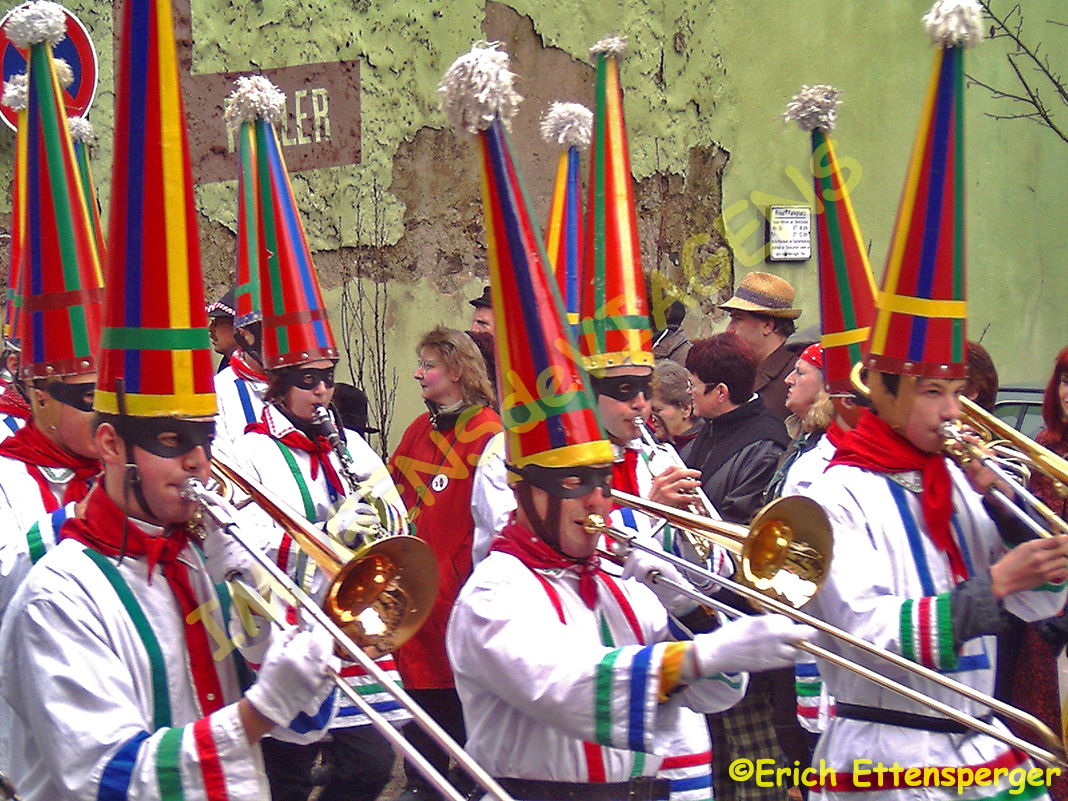
O Fastnacht Swabian-Alemannic não tem nenhuma semelhança com o carnaval moderno de Rhineland, a não ser o fato das pessoas se fantasiarem. Os trajes e máscaras nessa área são incrivelmente extraordinários.
Talvez Pai e filho / Vielleicht Vater und Sohn / May be father and sonNenhum comentário/ Kein Kommentar / No comment
A única coisa comum nessas duas regiões é o uso de fantasias. Na Rheinland cada ano há sempre inovações, no Fastnacht Swabian-Alemannic, o carnaval é baseado nas antigas tradições que são preservadas, as fantasias e máscaras são passadas de pais para filhos e então para os netos.
Criança com a bexiga de porco / Auch der Nachwuchs ist schon dabei mit Schweinsblase / Even the young’s are here with pig’s bladder
Contrário à região da Rhineland, nessa área, não se apresenta uma fantasia nova todo ano – é o oposto! As máscaras são feitas de madeira e são herdadas. Para esse fim, um costume tradicional é combinado, de forma que as pessoas não podem participar dos desfiles de carnaval sem as belas fantasias. Com elas, com os sons e movimentos, as bruxas, os diabos, os críticos e os bobos criam um „real „ cenário de horror bem-intencionado.
Um espetáculo de máscaras, fantasias, música e muita tradição / Ein Spektakel von Masken, Kostümen, Musik und viel Tradition / A spectacle of masks, costumes, music and a lot of tradition
O tema geral do carnaval, contudo, é sempre e em toda parte: alegria para todos e tristeza para ninguém!
Em algum lugar, contudo, a mais bela e colorida estação do ano está terminada. Em muitos lugares as bonecas de palha são queimadas e assim, é tempo de se iniciar o jejum da Quaresma, durante 6 semanas, até chegar a Páscoa.
No final, algumas palavras sobre a origem do carnaval: as formas diferentes de carnaval se originam nas tradições pré-históricas da Idade Média.
As máscaras, as pessoas fantasiadas, o ridículo, as críticas às autoridades, a dança, a música, a eliminação de barreiras sociais, a alegria, o excesso nas comidas e bebidas e a expulsão do inverno pré-cristão é o que caracteriza a celebração do carnaval na Alemanha. É o momento de liberação, de comer e beber tudo que se tem direito antes que o jejum sem fim comece!
Desejo a todos uma grande quinta temporada onde quer que esteja e envio um feliz “Kölle Alaaf” de Colônia!
Com a máscara conhecida como „Schuttig“ em Elzach / Mit der bekannten Narrengestalt des „Schuttig“ in Elzach / With the well-known fool’s shape of the Schuttig in Elzach
Observação: se você quiser continuar “viajando” com o nosso blog, clique no botão “seguir” localizado no canto inferior direito dessa página. Você receberá um email com um link para confirmar a assinatura desse blog (não paga nada). Quando clicar no link, você será direcionado para uma página em inglês (essa página explica o procedimento no caso de você desejar um dia parar de seguir o blog). A partir daí, você já está “seguindo” o blog.
KARNEVAL IN DEUTSCHLAND
Als Kind, wenn die Rede von Karneval war, kannte ich nur die Festivitäten diesbezüglich in Brasilien wie z.B. in Salvador, Recife, Olinda, Ouro Preto und natürlich in Rio de Janeiro und Sao Paulo mit ihren Paraden der Samba-Schulen, die vor allem in Rio Tausende von Touristen aus der ganzen Welt alljährlich anziehen.
Derzeit entwickeln sich zusätzlich zahlreiche Karnevals-Blöcke, die in vielen Stadtteilen in vielen Städten Brasiliens für Animation sorgen.
Es war eine Überraschung für mich, vieles über den interessanten Karneval in Deutschland kennenlernen zu können. Erich wird nun versuchen, ein wenig den Karneval in Deutschland zu erklären.
Animação de Carnaval em Elzach / Fastnactstreiben in Elzach / Carnival action in Elzach
Der Karneval, auch Fastnacht oder Fasching genannt wird in Deutschland als die fünfte Jahreszeit bezeichnet. Alljährlich am 11.11. genau um 11.11 Uhr wird überall die Karnevalssession offiziell eröffnet. Heutzutage ein beachtlicher Wirtschaftsfaktor wie z.B. auch in Rio de Janeiro.
Em Friburgo, o desfile no do centro histórico / In Freiburg schlängelt sich der Umzug durch die historische Altstadt / In Fribourg the parade winds through the historic center
Die wirkliche Straβenfasent mit ihrem bunte Treiben auf Straßen und Plätzen mit den vielen verrückten Jecken, die aus der ganzen Welt anreisen, um einmal dieses Spektakel live miterleben zu dürfen, beginnt allerdings erst am Donnerstag vor dem Aschermittwoch.
As ruas decoradas conferem um toque especial aos desfiles / Dekorierte Strassen verleihen den Umzügen einen speziellen Flair / Decorated streets give the parades a special flair
Darunter dieses Jahr auch wieder mein Sohn Stefano extra aus Wien nach Köln anreisend!
Es kann passieren, dass Ihnen als Mann am Fastnachtsdonnerstag, auch Weiberfastnacht genannt, in den rheinischen Karnevalshochburgen wie z.B. Köln ihre Krawatte abgeschnitten wird, sie aber sofort durch einen freundschaftlichen Kuss entschädigt werden. Diese Tradition geht zurück auf das Jahr 1824.
Die Menschen lieben es, sich zu verkleiden, bunte Perücken oder Masken anzuziehen und sich lustig zu schminken.
Cores e música de carnaval / Farbenpracht und Fastnacht Musik / Color splendor and carnival music
Karneval gibt es aber natürlich nicht nur in Köln, Düsseldorf und Mainz, rheinischer Karneval genannt, auch im Südwesten Deutschlands wie im Schwabenland, Baden und Teilen der Nordost– und Zentralschweiz wird ordentlich gefeiert – die schwäbisch-alemannische Fastnacht.
Groβe Rosenmontagsumzüge finden in allen Karnevals-Hochburgen statt. In Mainz ist er der Höhepunkt des Karnevals. Charakteristisch hier der Hang zur Verspottung der Politik. Hier wird all das ausgesprochen, was man sich das ganze Jahr so verkneift. Die Motivwagen zeugen von inspirierender Kreativität und sorgen für gute Stimmung während der Umzüge.
Die schwäbisch-alemannische Fastnacht hat bis auf das Verkleiden keine Ähnlichkeit mit dem modernen rheinischen Karneval. Dabei sind jedoch die Kostüme, Häs und Masken unglaublich außergewöhnlich.
Anders als im Rheinland geht es hier nicht darum, jedes Jahr etwas Neues zu präsentieren – ganz im Gegenteil! Die Masken hier sind zumeist aus Holz gefertigt und werden über Generationen hinweg vererbt.
Talvez Pai e filho / Vielleicht Vater und Sohn / May be father and sonNenhum comentário/ Kein Kommentar / No comment
Dazu wird eine traditionelle Tracht kombiniert, so dass man bei den Umzügen vor lauter schöner Kostüme gar nicht aus dem Staunen herauskommt. Bei diesen traditionsreichen Verkleidungen, ihren Lauten und Bewegungen schaffen es die Hexen, Teufel, Geißenmeckerer und Narros es sogar, uns einen richtigen, aber immer gutgemeinten Schrecken einzujagen.
Criança com a bexiga de porco / Auch der Nachwuchs ist schon dabei mit Schweinsblase / Even the young’s are here with pig’s bladder
Das allgemeine Fasnet-Motto jedoch lautet überall und immer: Jedem zur Freud und niemandem zum Leid!
Um espetáculo de máscaras, fantasias, música e muita tradição / Ein Spektakel von Masken, Kostümen, Musik und viel Tradition / A spectacle of masks, costumes, music and a lot of tradition
Irgendwann ist aber auch diese schönste und kunterbunte Jahreszeit vorbei. Vielerorts werden dann Strohpuppen verbrannt und läuten somit die 6wöchige Fastenzeit bis Ostern ein.
Zum Schluβ noch ein paar Worte zum Ursprung des Karnevals: Die regional oftmals sehr unterschiedlichen Ausdrucksformen des Karnevals zeigen nach wie vor viele Charakteristika der mittelalterlichen Vorfastenbräuche wie: Maskerade, Rollentausch, Spottlust verbunden mit närrischer Kritik gegen die Obrigkeit, Tanz, Musik, Überwindung gesellschaftlicher Distanzen, Frohgemut, Ausgelassenheit in Essen und Trinken bis hin zur vorchristlichen Wintervertreibung. „Einfach noch einmal richtig essen und trinken bevor die entbehrungsreiche Fastenzeit beginnt!!“.
Wir wünschen nun euch allen eine tolle fünfte Jahreszeit wo auch immer ihr seid und senden ein fröhliches „Kölle Alaaf“ aus Köln!
Com a máscara conhecida como „Schuttig“ em Elzach / Mit der bekannten Narrengestalt des „Schuttig“ in Elzach / With the well-known fool’s shape of the Schuttig in Elzach
Hinweis: Falls Sie unseren “Reisen” auf dem Blog folgen wollen, dann klicken Sie unten rechts einfach auf “Weiter”, Sie werden dann zukünftig automatisch informiert.
CARNIVAL IN GERMANY
As a child, when the speech was of carnival I only knew the festivities in Brazil such as in Salvador, Recife, Olinda, Ouro Preto and of course in Rio de Janeiro and Sao Paulo with their parades of Samba schools, which attract thousands of tourists from all over the world every year, especially in Rio.
At the moment there are numerous carnival blocks active in many city districts allover Brazil presenting their animation.
It was a surprise for me to get to know a lot about the interesting carnival in Germany. Erich will now try to explain a little the carnival in Germany.
Animação de Carnaval em Elzach / Fastnactstreiben in Elzach / Carnival action in Elzach
The carnival, also called Fastnacht or Fasching is called in Germany as the fifth season. Every year on 11.11. exactly at 11.11 AM the carnival session is officially opened. Nowadays it is a considerable economic fator like e.g. in Rio de Janeiro.
Em Friburgo, o desfile no do centro histórico / In Freiburg schlängelt sich der Umzug durch die historische Altstadt / In Fribourg the parade winds through the historic center
The real street carnival with its colorful hustle and bustle on the streets and squares with the crazy fools coming from all over the world to witness this spectacle in live will start on the Thursday before Ash Wednesday. This year also my son Stefano went again from Vienna to Cologne!
As ruas decoradas conferem um toque especial aos desfiles / Dekorierte Strassen verleihen den Umzügen einen speziellen Flair / Decorated streets give the parades a special flair
It can happen to you as a man on the fastnacht-Thursday, also called Weiberfastnacht (carnival of women), in the rhenish carnival strongholds such as Cologne, that your tie is cut off by women, but this is compensated immediately by a friendly kiss. This symbolic tradition goes back to the year 1824.
People love to dress up, wear colorful wigs or masks and make fun of themselves.
Como espectador, você pode sempre cair nas garras dessas figuras / Als Zuschauer kann man jederzeit in die Fänge dieser Gestalten geraten / As a spectator one can get into the catches of these figures at any time
Carnival of course is not only celebrated in Cologne, Düsseldorf and Mainz, the so-called Rhineland Carnival, but also in the south-west of Germany, in Swabia, Baden and parts of Northeast and Central Switzerland, the so-called Swabian-Alemannic Fastnacht.
Large Rose Monday parades take place in all carnival strongholds. In Mainz the parade is the highlight of the carnival. Characteristic here is the tendency to ridicule politics. This is the expression of all that you have to curtail to say during the year. The motive cars bear witness to inspiring creativity and ensure a good mood during the parades.
The Swabian-Alemannic Fastnacht has no similarity with the modern Rhineland carnival apart from the dressing up. But the costumes and masks are incredibly extraordinary.
Talvez Pai e filho / Vielleicht Vater und Sohn / May be father and sonNenhum comentário/ Kein Kommentar / No comment
Contrary to the Rhineland it is not about presenting something new every year – it is quite the opposite! The masks here are usually made of wood and are inherited for generations.
Criança com a bexiga de porco / Auch der Nachwuchs ist schon dabei mit Schweinsblase / Even the young’s are here with pig’s bladder
To this end a traditional costume is combined so that one can not get out of the wonders of the parades with their beautiful costumes. With these traditional costumes, their sounds and movements, the witches, devils, goats complainers and fools even create a real but always well-intentioned horror.
Um espetáculo de máscaras, fantasias, música e muita tradição / Ein Spektakel von Masken, Kostümen, Musik und viel Tradition / A spectacle of masks, costumes, music and a lot of tradition
The general theme of the Fasnet, however, is always and everywhere: to each one to the joy and to no one to the sorrow!
At some point, however, this most beautiful and colorful season is over. In many places then straw dolls are burnt and thus ring the 6-week fasting time until Easter.
In the end a few words about the origins of the carnival: the often different forms of the carnival are still characteristic of the prehistoric traditions of the Middle Ages. Masquerade, roll exchange, ridicule, narrative criticism against the authorities, dance, music, overcoming social distances, cheerfulness, exuberance in food and drink and the pre-Christian winter expulsion. “Just eat and drink once again before the the unendless long fasting time begins !!”.
We wish you all a great fifth season wherever you are and send a happy “Kölle Alaaf” from Cologne!
Com a máscara conhecida como „Schuttig“ em Elzach / Mit der bekannten Narrengestalt des „Schuttig“ in Elzach / With the well-known fool’s shape of the Schuttig in Elzach
Note: If you want to follow our “Travels” on the blog, simply click on “Continue” in the lower right corner, you will be then automatically informed in the future.
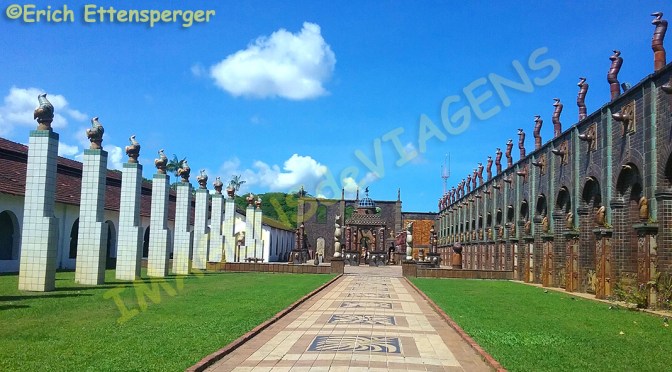
Quando a gente lembra desse lugar, imediatamente nos recordamos da explosão da bomba atômica durante a Segunda Guerra Mundial nessa localidade. Porém, além da visita ao Memorial da Paz de Nagasaki, nós tivemos a oportunidade de visitar outros lugares interessantes localizados no entorno da cidade.
Percorremos de ônibus 65 km a nordeste da cidade de Nagasaki e
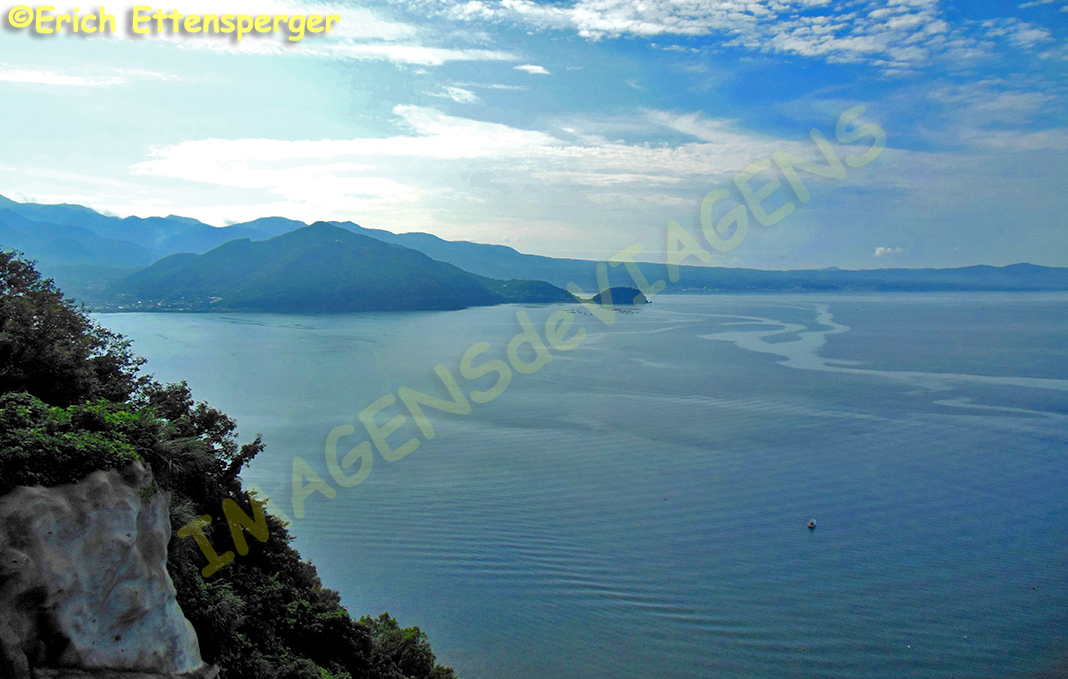
passamos na cênica Baía de Ariake na direção das montanhas da península de Shimabara com o objetivo de visitarmos o Castelo de Shimabara, localizado no centro da antiga cidade de mesmo nome.
Baía de Ariake / Ariake Bucht / Ariake BayLocation of Shimabara. Source: http://www.weather-forecast.com/locations/ShimabaraCastelo de Shimabara / BurgShimabara / Castle ShimabaraRecepção no castelo / Empfang bei der Burg / Reception at the castle
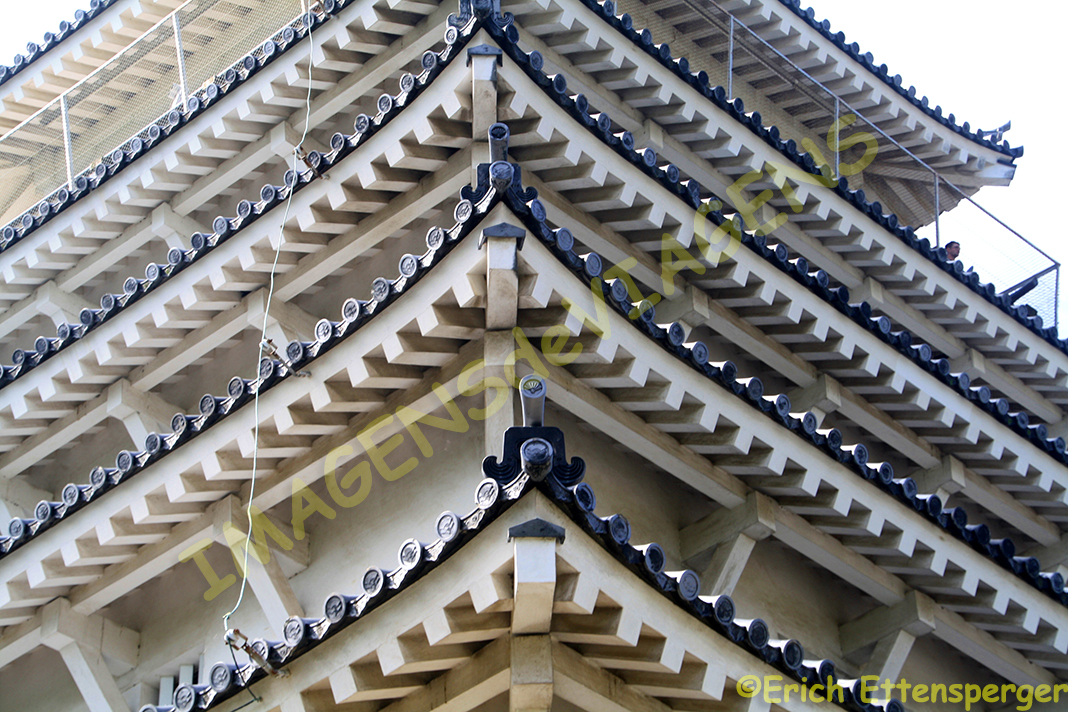
Essa construção é um exemplo superlativo da clássica arquitetura de castelos conhecido como estilo de planícies. A construção do Castelo de Shimabara foi iniciada em 1618 e durou 6 anos para ser concluída.
A beleza do castelo / Die Schönheit der Burg / The beauty of the castleDetalhe construtivo do castelo / Detail Konstruktion / Construction detail
O castelo é atualmente usado como um museu histórico que enfoca a Batalha de Shimabara de 1637. O acervo é constituído de coleção de espadas, armaduras e artefatos culturais, sendo que as exposições enfocam o início do Cristianismo no Japão.
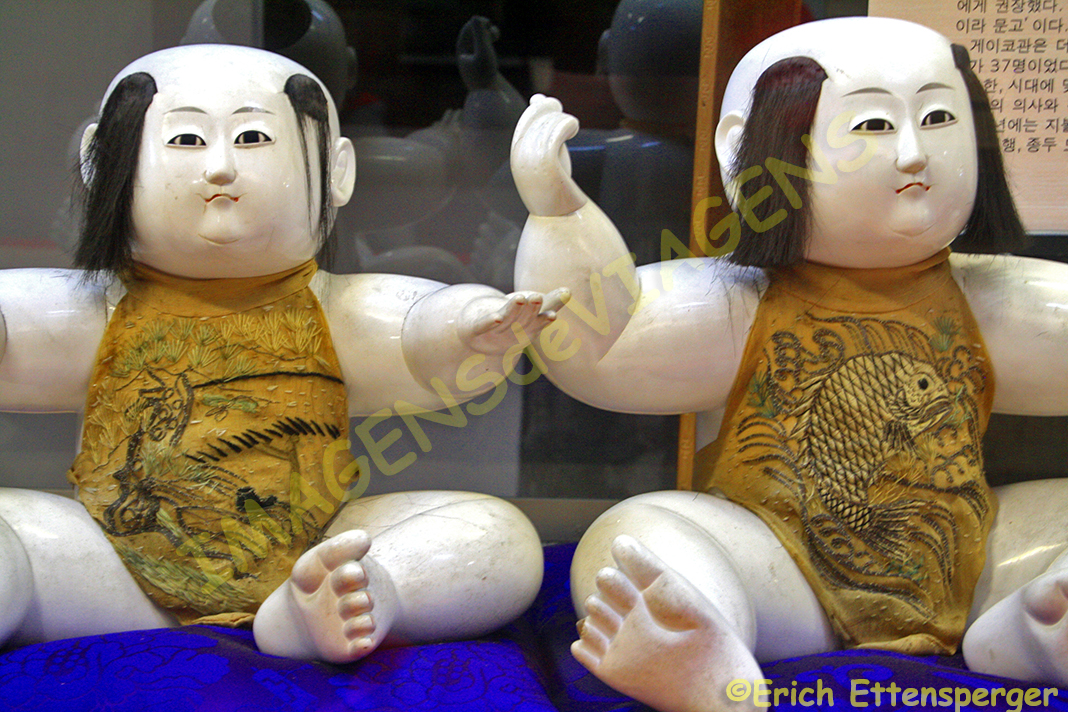
Armadura de samurai / Samurai-Rüstung / Samurai armorBonecas antigas / antike Puppen / Old dolls
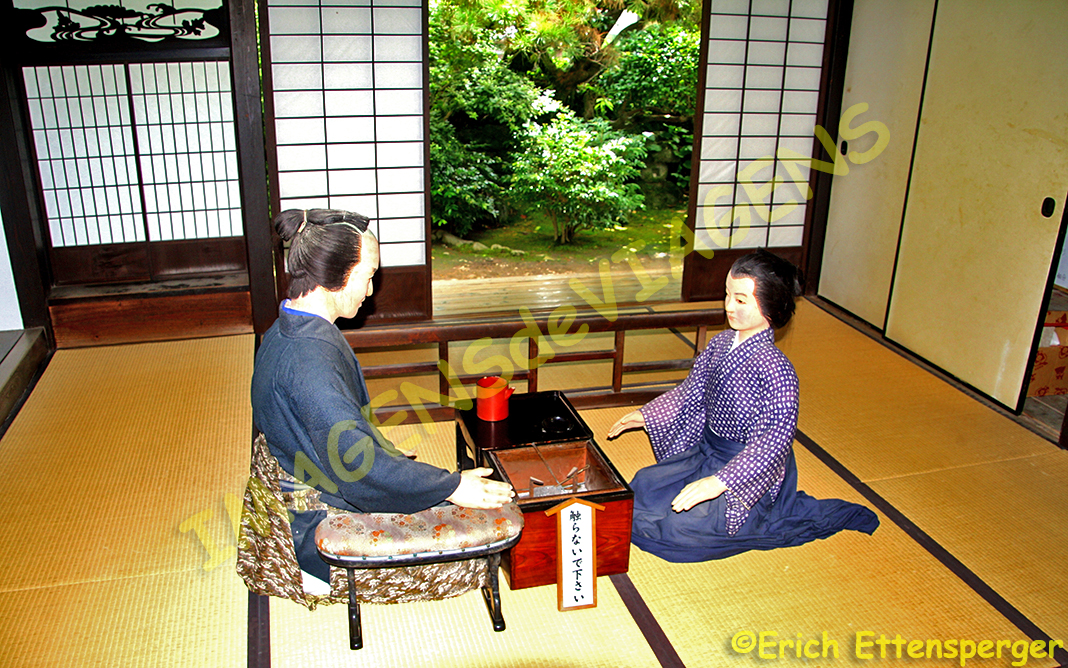
Uma caminhada nas ruas de paralelepípedos de Shimabara é uma oportunidade para aprender mais sobre a área histórica e visitar a tradicional “aldeia samurai”, que apresenta um pouco da forma de viver dos samurais do Japão.
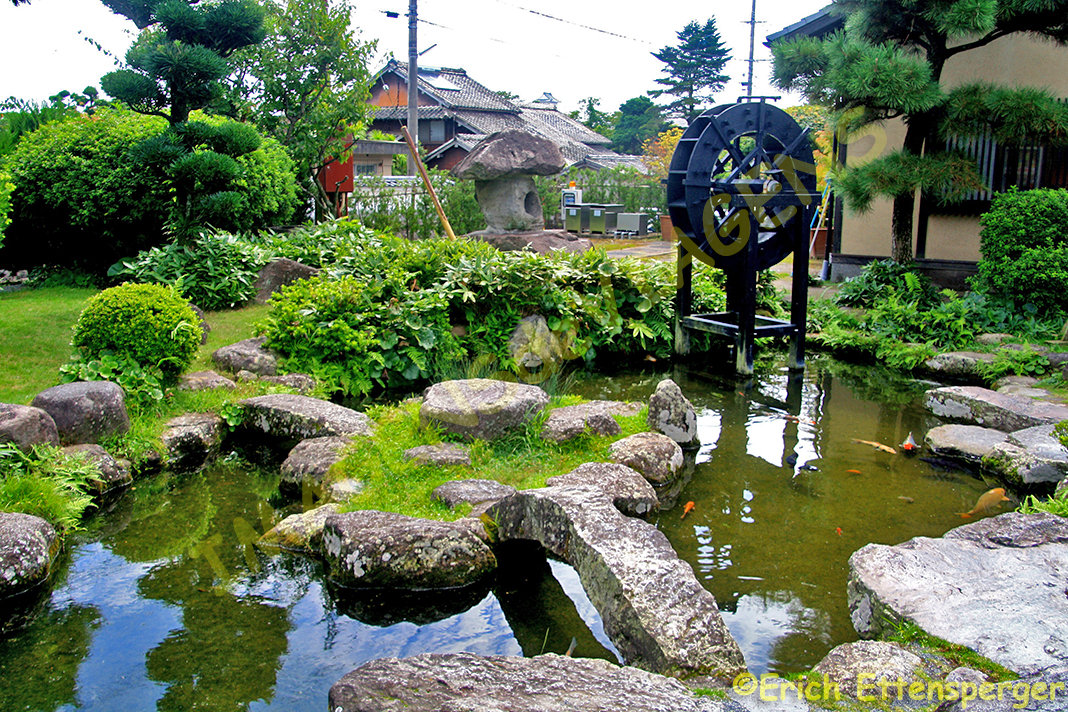
Jardim japonês / Japanischer Garten / Japanese garden
Peixe coi / Coi Fisch / Coi fishAldeia do Samurai / Samurai Dorf / Samurai village
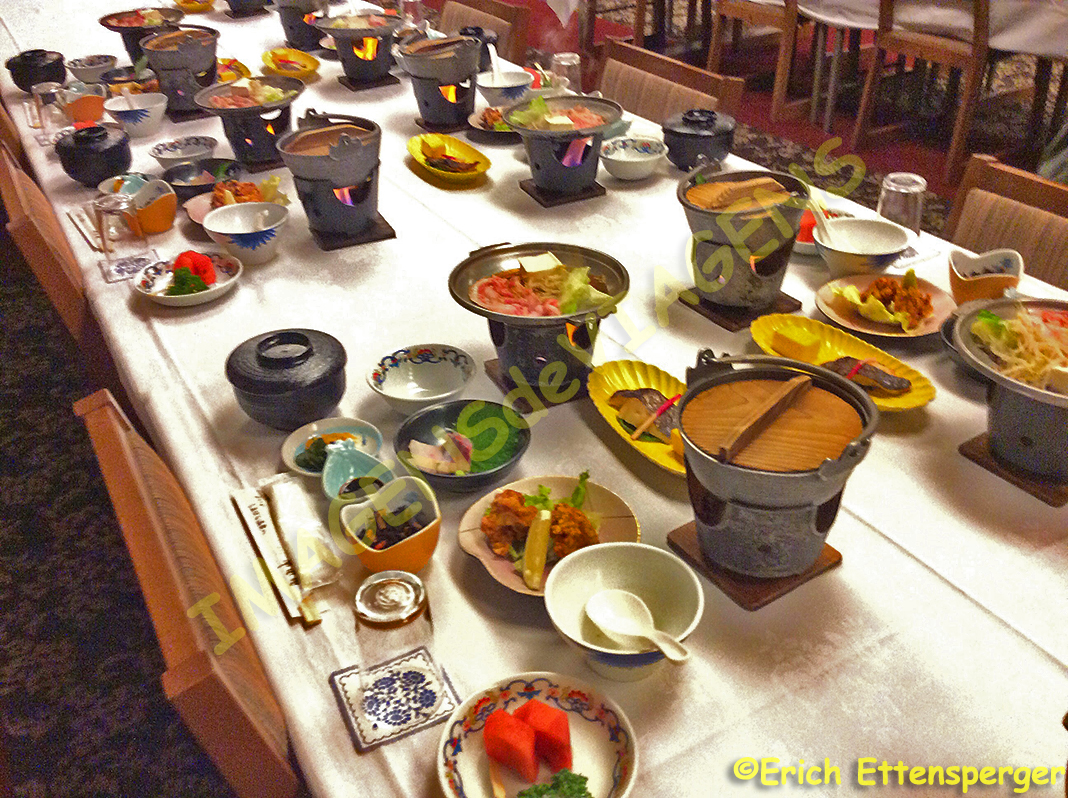
No dia de nossa visita, nós nos deliciamos com um belo e exótico almoço em um restaurante local.
Mesa posta para os vistante / Mittagstisch wartend / Table ready for lunch
Nosso tour nos levou até Mizunashi Honjin.Esta pequena cidade sofreu graves consequências da erupção do vulcão Mt. Fugen em 1991.
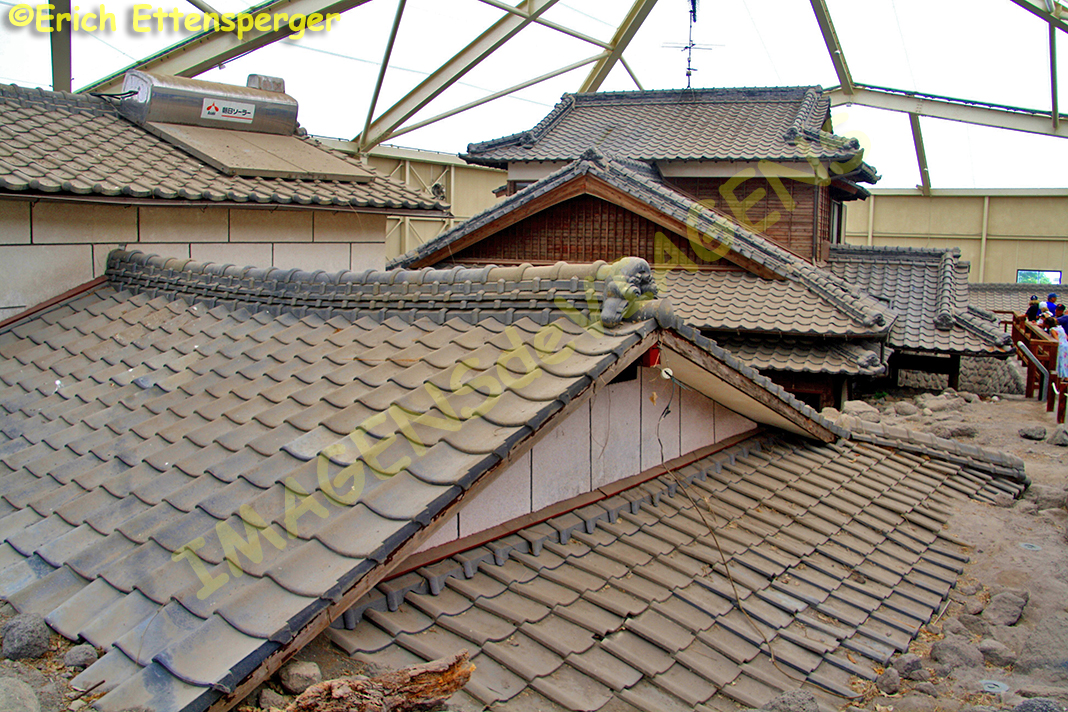
Alguns telhados permanecem visíveis acima das cinzas e detritos e a área é agora um memorial onde a devastação do vulcão é preservada.
Telhado de casas soterradas pelas cinzas do vulcão / Dächer von Häusern mit Asche vom Vulkan begraben / Roofs of houses buried by the ashes of the volcano
Durante nosso tour pudemos aproveitar a paisagem pitoresca e também tivemos momentos divertidos com nossa guia. どうもありがとう „Arigatō“…nós agradecemos…!!!
Observação: se você quiser continuar “viajando” com o nosso blog, clique no botão “seguir” localizado no canto inferior direito dessa página. Você receberá um email com um link para confirmar a assinatura desse blog (não paga nada). Quando clicar no link, você será direcionado para uma página em inglês (essa página explica o procedimento no caso de você desejar um dia parar de seguir o blog). A partir daí, você já está “seguindo” o blog.
EIN HAUCH VON JAPAN
Nagasaki ist eine Provinz von Japan auf der Insel Kyushu im südwestlichen Teil des Landes gelegen und dessen Hauptstadt ist Nagasaki.
Hört man den Namen dieses Ortes erinnert man sich unweigerlich an die Explosion der Atombombe während des Zweiten Weltkriegs. Doch neben dem Besuch des Nagasaki Peace Memorial Denkmales hatten wir die Möglichkeit weitere interessante Orte in der Nähe zu besuchen.
Mit dem Bus fuhren wir 65 km in nordöstliche Richtung von Nagasaki
vorbei an der malerischen Ariake Bucht zur bergigen Halbinsel Shimabara.
Baía de Ariake / Ariake Bucht / Ariake BayLocation of Shimabara. Source: http://www.weather-forecast.com/locations/ShimabaraCastelo de Shimabara / BurgShimabara / Castle ShimabaraRecepção no castelo / Empfang bei der Burg / Reception at the castle
Shimabara Castle befindet sich im Zentrum dieser historischen Stadt und ist ein hervorragendes Beispiel für das klassische japanische Burg-Design als Flatland-Stil (Flachland-Stil) bekannt. Der Bau der Burg Shimabara wurde im Jahre 1618 eingeleitet und es dauerte sechs Jahre, um sie zu vollenden.
Vista da Shimabara / Blick auf Shimabara / View of ShimabaraA beleza do castelo / Die Schönheit der Burg / The beauty of the castleDetalhe construtivo do castelo / Detail Konstruktion / Construction detail
Das Schloss dient heute als historisches Museum basierend auf die Schlacht von Shimabara 1637. Die Exponate konzentrieren sich auf das frühe Christentum in Japan sowie eine Sammlung von Schwertern, Rüstungen und kulturellen Artefakten.
Armadura de samurai / Samurai-Rüstung / Samurai armorBonecas antigas / antike Puppen / Old dolls
Ein Spaziergang durch die bezaubernde Altstadt von Shimabara mit seinem Kopfsteinpflaster bietet die Gelegenheit, mehr über die Geschichte des Ortes zu erfahren, und ein Besuch in einem traditionellen “Samurai-Dorf” gewährt einen Einblick in die Lebensweise dieser japanischen Kriegerklasse.
Jardim japonês / Japanischer Garten / Japanese gardenPeixe coi / Coi Fisch / Coi fishAldeia do Samurai / Samurai Dorf / Samurai village
Während dieses Tages genossen wir auch in einem lokalen Restaurant ein wundervolles, typisches, delikates und gleichzeitig exotisch anmutendes japanisches Mittagessen.
Mesa posta para os vistante / Mittagstisch wartend / Table ready for lunch
Unsere Tour führte uns dann weiter nach Mizunashi Honjin. Dieses kleine Dorf wurde von der Asche des Ausbruches des Vulkanes Mt. Fugen 1991 begraben. Ein paar Dächer blieben über der Asche und den Trümmern sichtbar, und das Ganze ist heute eine Gedenkstätte, welche diese ganze schreckliche Verwüstung durch den Vulkan widerspiegelt.
Telhado de casas soterradas pelas cinzas do vulcão / Dächer von Häusern mit Asche vom Vulkan begraben / Roofs of houses buried by the ashes of the volcano
Während der ganzen Tour heute mit dem Bus durften wir malerische Landschaften und einen sehr unterhaltsamen, informativen und sehr freundlichen Tourguide genieβen. ど う も あ り が と う “Arigatō”…Vielen Dank hierfür…!!!
Hinweis: Falls Sie unseren “Reisen” auf dem Blog folgen wollen, dann klicken Sie unten rechts einfach auf “Weiter”, Sie werden dann zukünftig automatisch informiert.
A TASTE OF JAPAN
Nagasaki is a province of Japan located on the island of Kyushu in the southwestern part of the country, whose capital is Nagasaki.
When hearing the name of this place we immediately remember the explosion of the atomic bomb during World War II in that locality. However, in addition to the visit to the Nagasaki Peace Memorial, we had the opportunity to visit other interesting places located around the city.
By bus we traveled 65 km northeast of Nagasaki
passing scenic Ariake Bay en route to the mountainous Shimabara Peninsula.
Baía de Ariake / Ariake Bucht / Ariake BayLocation of Shimabara. Source: http://www.weather-forecast.com/locations/ShimabaraVista da Shimabara / Blick auf Shimabara / View of ShimabaraCastelo de Shimabara / BurgShimabara / Castle ShimabaraRecepção no castelo / Empfang bei der Burg / Reception at the castle
Shimabara Castle is situated in the center of this historic old town, and is a superlative example of the classic Japanese castle design known as the Flatland-Style. The construction of Shimabara Castle was initiated in 1618 and it took six years to complete it.
A beleza do castelo / Die Schönheit der Burg / The beauty of the castleDetalhe construtivo do castelo / Detail Konstruktion / Construction detail
The castle is now used as a historical museum centering on the 1637 Battle of Shimabara. Exhibits focus on early Christianity in Japan as well as a collection of swords, armor and cultural artifacts.
Armadura de samurai / Samurai-Rüstung / Samurai armorBonecas antigas / antike Puppen / Old dolls
A walking tour through the charming cobblestone streets of Shimabara is an opportunity to learn more about the historic area, and a visit to a traditional “samurai village” offers a glimpse into the ways of the Japan’s warrior class.
Jardim japonês / Japanischer Garten / Japanese gardenPeixe coi / Coi Fisch / Coi fishAldeia do Samurai / Samurai Dorf / Samurai village
During this day we enjoyed at a local restaurant a wonderful delicous and exotic looking Japanese lunch.
Mesa posta para os vistante / Mittagstisch wartend / Table ready for lunch
Our tour brought us then to Mizunashi Honjin. This small village was buried by ash during an eruption of Mt. Fugen in 1991. A few roofs remain visible above the ash and debris, and the area is now a memorial site where the volcano’s devastation is preserved.
Telhado de casas soterradas pelas cinzas do vulcão / Dächer von Häusern mit Asche vom Vulkan begraben / Roofs of houses buried by the ashes of the volcano
During the all tour today by bus we enjoyed the picturesque landscapes and a very entertaining and informative friendly tourguide. どうもありがとう „Arigatō“…many Thanks for this…!!!
Note: If you want to follow our “Travels” on the blog, simply click on “Continue” in the lower right corner, you will be then automatically informed in the future.
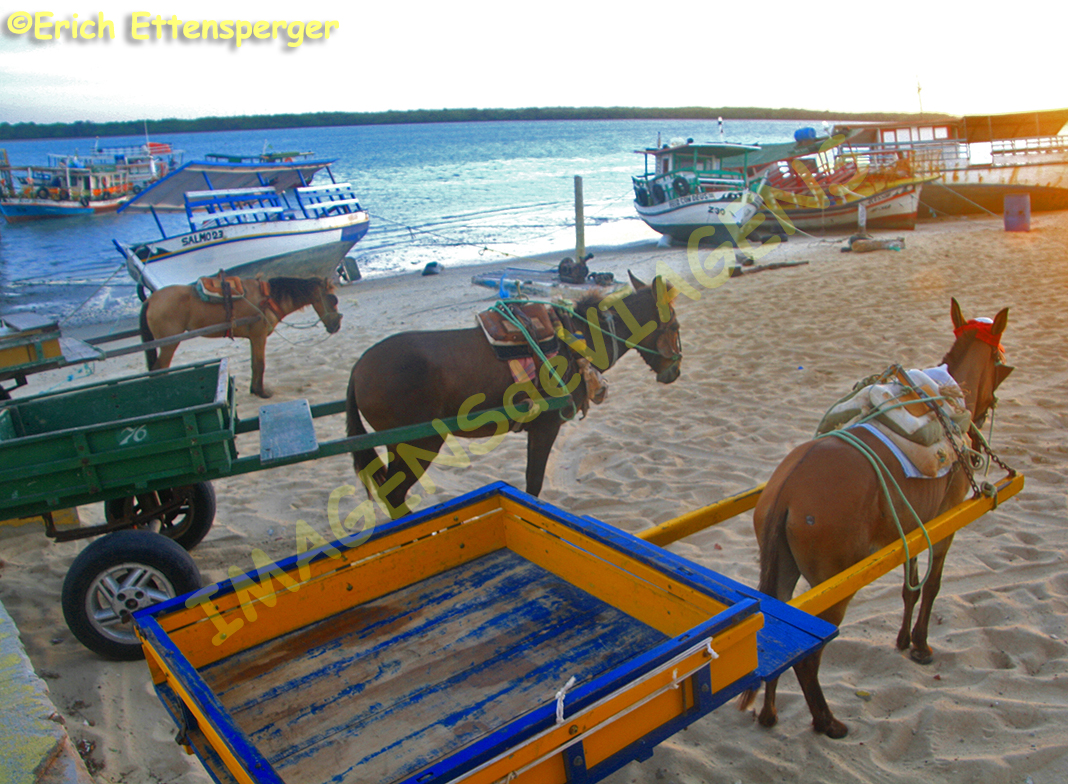
Galinhos – sol, sal, dunas, muito vento e um pôr do sol espetacular!
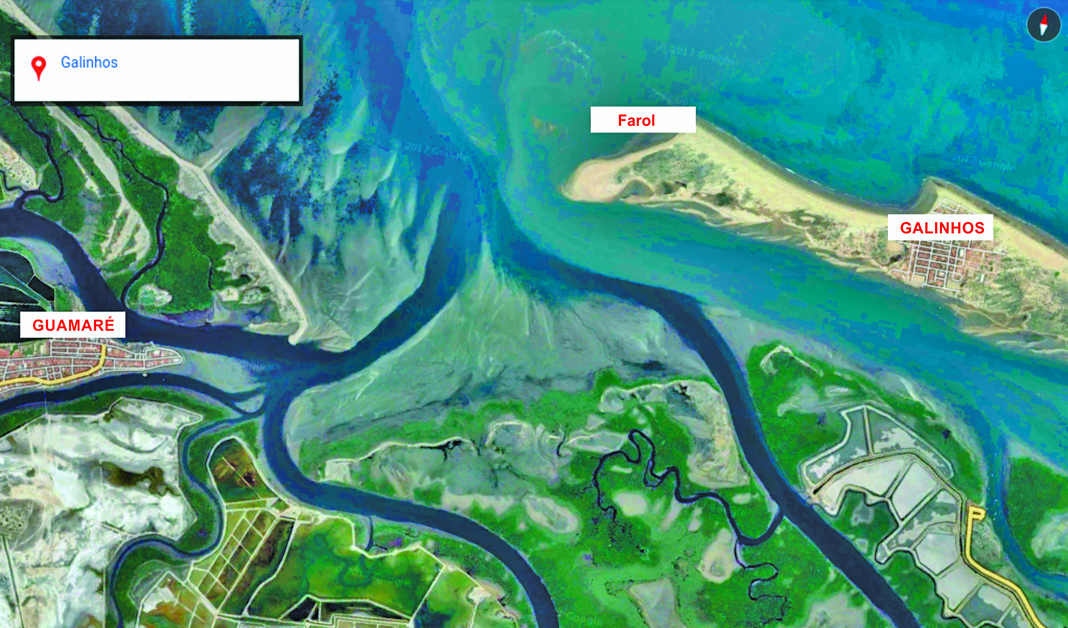
Erich e eu, consideramos Galinhos como uma das mais belas localidades do Rio Grande do Norte. O município está localizado em uma península e você consegue chegar por terra de buggy ou outro tipo de carro com tração 4 x 4, quando a maré está baixa. A maioria das pessoas chega de barco.
Source: Google Earth
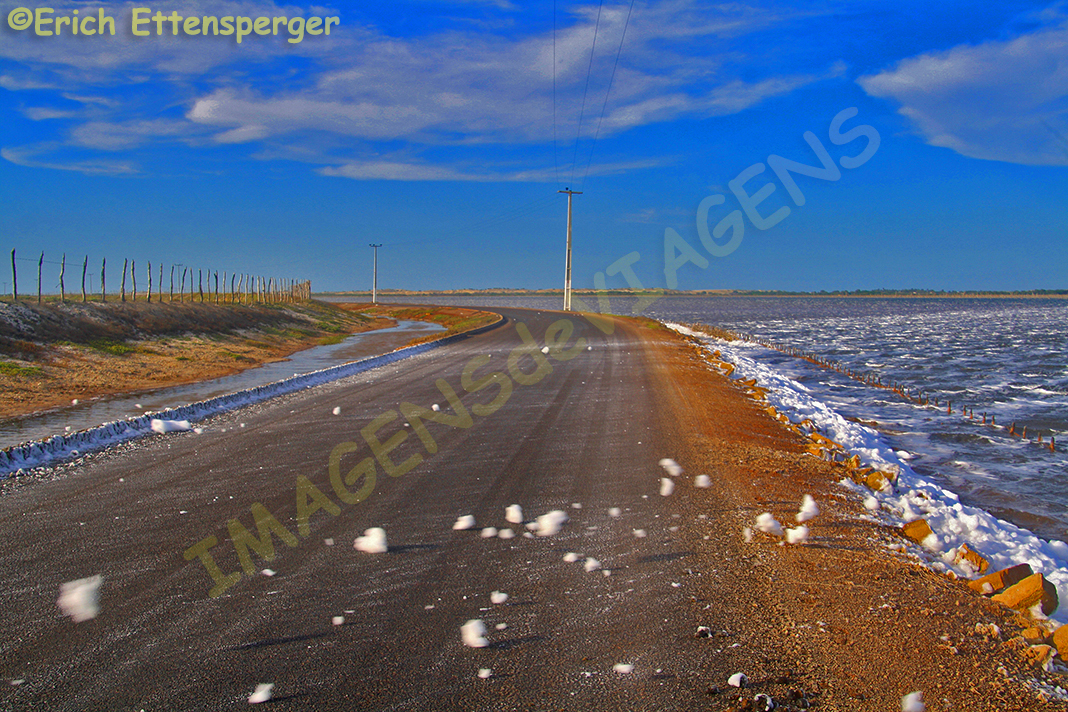
A localidade está distante de Natal cerca de 170 km. O acesso é feito pela BR-406. Após passar a cidade de Jandaíra, depois 17 km, você entra à direita e percorre mais 5 km até chegar a Pratagil, onde você vai deixar seu carro. No percurso para o estacionamento, percorremos uma estrada estreita, ladeada por viveiros de camarões e por tanques de salinas, que contém tanto sal, que “flocos” voam e parecem até com neve, muito interessante!
Sal e vento…como neve / Salz und Wind…wie Schnee / Salt and wind…like snow
Quando chegar no estacionamento, fique atento(a): há pessoas que lhe abordam e se dizem seguranças informais do lugar e pedem uma “colaboração”, eles reforçam que seu carro vai ter 24 horas de vigilância. Você não é obrigado(a) a pagar nada, pois o estacionamento é vigiado por funcionários, pagos, pela Prefeitura de Galinhos.
Estaciomento / Parkplatz /Parking
Outra dica: há barcos da prefeitura que fazem o translado de Pratagil a Galinhos e Galos. É gratuito. Existem barcos onde você paga R$ 3,00 por pessoa e há os barcos privados, que podem lhe cobrar em torno de R$ 20,00 pelo serviço, fique atento(a). O percurso entre Pratagil e Galinhos é de cerca de 10 minutos. Quando você entra no barco já começa a se deliciar com a paisagem composta pelo rio, pelo mangue e pela tranquilidade do lugar. É o momento de você relaxar e deixar suas preocupações para trás.
Ancoradouro de Pratagil/Bootanlegestelle Pratagil/Anchorage of Pratagil
Chegamos no ancoradouro de Galinhos e já avistamos a nossa pousada, por isso, não foi preciso tomar uma carroça, há muitas esperando os visitantes. É um meio de transporte bem “exótico” para quem chega ao lugar. Quando visitamos Galinhos pela primeira vez, muitos anos atrás, a cidade ainda não tinha calçamento, as ruas eram de areia. Atualmente, parte da cidade é calçada.
O táxi de Galinhos…/ Taxi in GalinhosLugar de pescadores e casas simples/Einfache Häuser der Fischer/Place of fishermen and simple houses
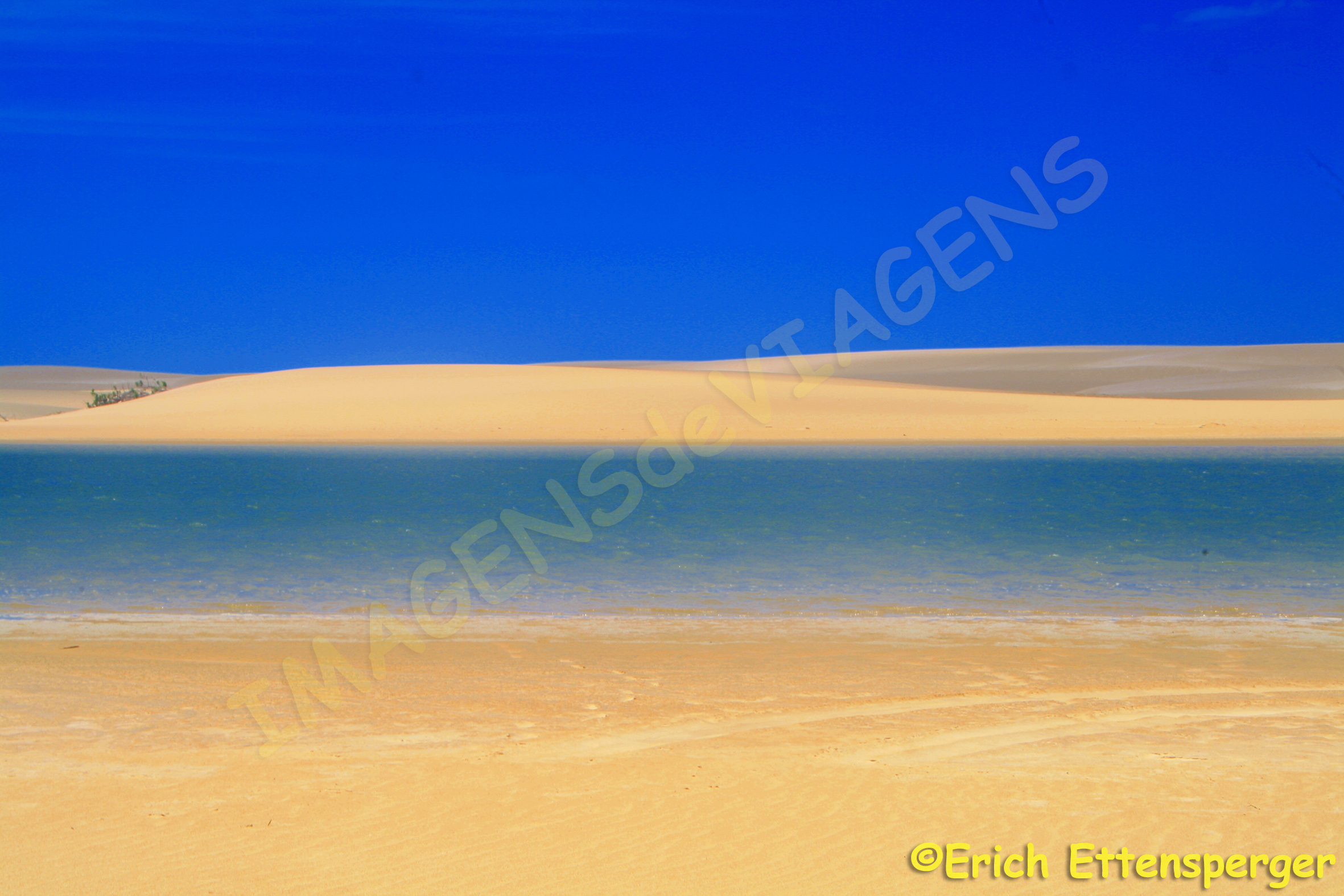
Galinhos é caracterizado por possuir grande beleza natural, pois de um lado da península está o rio Aratuá, e do outro o Oceano Atlântico. Há rio, mar, mangue, dunas, salinas, céu azul, tudo isso compõe uma pintura especial que é o cenário de Galinhos.
Os principais passeios disponíveis para o visitante são o de barco, o de canoa pelo manguezal, o de buggy, o de carroça para ver o pôr do sol no Farol.
Buggy tourBuggies
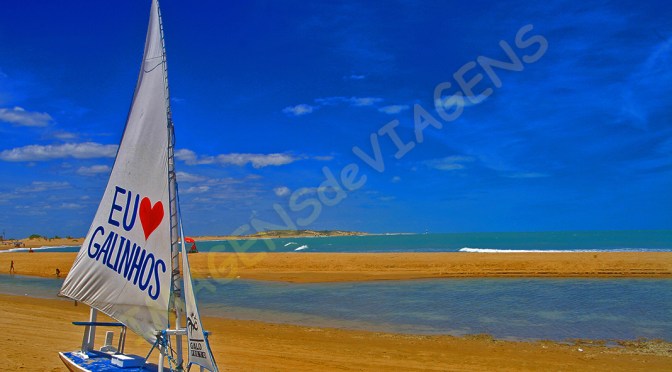
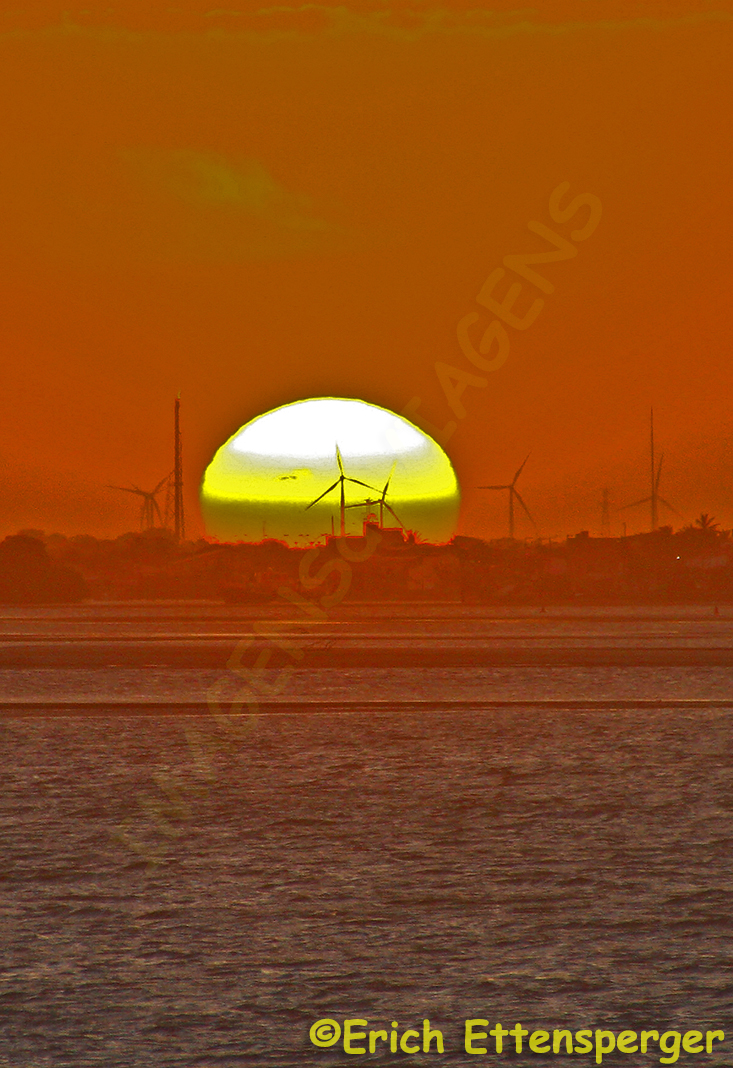
E por falar em pôr do sol, o de Galinhos é espetacular, o céu se veste de diversas cores e nuances, parece até um quadro impressionista, que coisa linda! Galinhos também é um paraíso para a prática de kitesurf…a presença dos ventos é constante.
Sol e vento / Sonne und Wind / Sun and wind
As principais belezas avistadas durante o passeio de barco e no de buggy são as seguintes: praias, a Duna do André, Mangue de Galos, Praia e Duna do Capim, encontro do rio Aratuá com o Guamaré, Farol de Galinhos, Ilha das Cobras, dentre outros cenários belos.
Dunas, céu e água / Dünen, der Himmel und Wasser / Dunes, the sky and waterO farol de Galinhos/Leuchtturm von Galinhos/The lighthouse of Galinhos
Nos passeios você também observa os equipamentos que produzem energia eólica instalados nas dunas. De acordo com Erich “por um lado ficamos impressionados com o tamanho dos aero geradores, pelos seus benefícios por produzir uma energia limpa e também ficamos amedrontados, pois eles parecem uma ameaça da modernidade que surge em um paraíso natural, elas são como Golias”, da história bíblica.
Energia eólica, dunas e rio / Windenergie, Dünen und der Fluβ / Windenergie, dunes and the riverOs Golias da energia eólica / Die Goliathe der Windenergie / The Goliaths of windenergy
Galinhos é definitivamente um destino para quem busca tranquilidade, paz. Não é um destino para baladas. Quando saímos à noite, vimos pessoas conversando nas calçadas, crianças brincando nas ruas e isso nos fez sentir uma profunda sensação de felicidade, de saber que ainda existem lugares assim. Que Galinhos continue assim: simples e belo!
Dicas de hospedagem: Galinhos e Galos tem muitas opções de pousadas. Nós conhecemos e gostamos de: Pousada Oásis, Bresil Aventure, Made In Aqui e Amagali.
Dicas de alimentação: Pizzaria A Cantina, restaurantes das pousadas mencionadas acima.
Passeio de buggy: Associação dos Bugueiros de Galinhos – Ronaldo – (84)991848938
Observação: se você quiser continuar “viajando” com o nosso blog, clique no botão “seguir” localizado no canto inferior direito dessa página. Você receberá um email com um link para confirmar a assinatura desse blog (não paga nada). Quando clicar no link, você será direcionado para uma página em inglês (essa página explica o procedimento no caso de você desejar um dia parar de seguir o blog). A partir daí, você já está “seguindo” o blog.
Galinhos – Sonne, Salz, Sanddünen, viel Wind und spektakuläre Sonnenuntergänge!
Erich und ich betrachten Galinhos als einen der schönsten Orte von Rio Grande do Norte. Die Gemeinde liegt auf einer Halbinsel und Sie können sie mit Buggy oder anderen Autos mit 4×4 Allradgetriebe erreichen, wenn Ebbe ist. Die meisten Leute kommen per Schiff an.
Source: Google Earth
Es sind etwa 170 km von Natal aus. Die Anreise erfolgt über die BR-406. 17 km nach der Stadt Jandaíra biegen sie nach rechts ab und nach weiteren 5 km erreichen sie Pratagil, wo Sie Ihr Auto parken. Auf dem Weg zum Parkplatz fuhren wir eine schmale Straße entlang, flankiert von Garnelenteichen und Salztanks, die so viel Salz enthalten, so daβ durch den Wind “Flocken” von Salz wie Schnee umherfliegen, sehr interessant!
Sal e vento…como neve / Salz und Wind…wie Schnee / Salt and wind…like snow
Wenn Sie schlieβlich auf dem Parkplatz sind, werden Personen auf Sie zukommen und gegen ein Entgelt die Bewachung ihres Fahrzeuges anbieten, ZAHLEN sie nichts, da der Parkplatz durch bezahlte Mitarbeiter der Präfektur bewacht wird.
Estaciomento / Parkplatz /Parking
Ein weiterer Tipp: Es gibt Boote der Gemeinde, die die Überfahrt von Pratagil nach Galinhos und Galos machen. Dies ist kostenlos! Es gibt aber auch Boote, wo Sie 3 R$ pro Person bezahlen und aber auch private Boote, die 20 R$ für ihren Service berechnen wollen, also aufgepasst! Die Überfahrt von Pratagil nach Galinhos dauert etwa 10 Minuten. Die Landschaft des Flusses begeistert sofort, die Mangroven und die Stille. Es ist Zeit, sich zu entspannen und den Alltag hinter sich lassen.
Ancoradouro de Pratagil/Bootanlegestelle Pratagil/Anchorage of Pratagil
Schon vom Boot aus sahen wir unsere Unterkunft, wir mussten also keine „carroça“ nehmen, dieses wahrlich exotische Transportmittel. Als wir vor vielen Jahren zum ersten Mal in Galinhos waren, waren alle Straβen einfach nur Sand, heute sind Teile gepflastert und verfügen über Gehwege.
O táxi de Galinhos…/ Taxi in GalinhosLugar de pescadores e casas simples/Einfache Häuser der Fischer/Place of fishermen and simple houses
Galinhos begeistert durch seine natürliche Schönheit, auf der einen Seite der Halbinsel durch den Fluss Aratuá und auf der anderen mit dem Atlantischen Ozean. Der Fluss, das Meer, die Mangroven, Dünen, Salinen und der blaue Himmel, all diese speziellen Farben kreieren das Szenario Galinhos.
Die wichtigsten Touren für Besucher sind: eine Bootsfahrt, mit dem Kanu in die Mangroven, mit dem Buggy in die Dünen und mit einem „carroça“ zum Sonnenuntergang am Leuchtturm.
Buggy tourBuggies
Apropos Sonnenuntergang, dieser ist auf Galinhos spektakulär, er scheint den Himmel in verschiedene Farben und Nuancen zu kleiden, es ist wie ein impressionistisches Gemälde, einfach wunderschön!
Sol e vento / Sonne und Wind / Sun and wind
Galinhos ist auch ein Paradies für Kite-Surfen…der erforderliche Wind hierfür ist konstant vorhanden.
Während der Bootsfahrt oder Buggy-Tour sehen Sie u.a.: verschiedene Strände, die André Düne, die Mangroven bei Galos, den Strand der Düne Capim, den Zusammenfluss der Flüsse Aratuá und Guamaré, den Leuchtturm von Galinhos und die Schlangeninsel.
Dunas, céu e água / Dünen, der Himmel und Wasser / Dunes, the sky and waterO farol de Galinhos/Leuchtturm von Galinhos/The lighthouse of Galinhos
Bei den Touren beachte man auch die Installationen des gewaltigen Windparkes in den Dünen. Einerseits waren wir von der Größe der Wind-Generatoren sehr beeindruckt, diese ihre Leistungen für die Produktion sauberer Energie, andererseits empfanden wir auch eine gewisse Angst wie „eine neue Bedrohung der Moderne“, die inmitten eines Naturparadieses entsteht, wir fühlten uns wie „David gegen Goliath”, diese biblische Geschichte.
Energia eólica, dunas e rio / Windenergie, Dünen und der Fluβ / Windenergie, dunes and the riverOs Golias da energia eólica / Die Goliathe der Windenergie / The Goliaths of windenergy
Galinhos ist definitiv ein Ziel für diejenigen, die Ruhe und Frieden suchen. Es ist nicht ein Ziel für Nachtleben. Als wir abends umherspazierten sahen wir Menschen auf den Gehwegen sitzend sich unterhaltend, wir sahen Kinder in den Straßen spielend und wir empfanden eine Art Glücksgefühl, wohlwissend, daβ es immer noch Orte wie diesen gibt: Galinhos…einfach und schön!
Galinhos und Galos verfügen über viele Unterkunftsmöglichkeiten. Wir kennen und mögen: Oasis Inn, Bresil Aventure, Made In Aqui und Amagali.
Tipps für Essen und Trinken: Die Pizzeria Cantina und die Restaurants in den oben erwähnten Hotels.
Hinweis: Falls Sie unseren “Reisen” auf dem Blog folgen wollen, dann klicken Sie unten rechts einfach auf “Weiter”, Sie werden dann zukünftig automatisch informiert.
Galinhos – sun, salt, sand dunes, lots of wind and spectacular sunsets!
Erich and myself consider Galinhos to be one of the most beautiful places in Rio Grande do Norte. The community is located on a peninsula and you can reach it by buggy or other cars with 4×4 all-wheel drive whilst low tide. Most people arrive by boat.
Source: Google Earth
Galinhos is about 170 km from Natal. The journey takes place via the BR-406. 17 km after the town of Jandaíra you turn right and after another 5 km you reach Pratagil where you park your car. On the way to the parking lot we went along a narrow road, flanked by shrimp pies and salt tanks, which contain so much salt, so that through the wind “flocks” of salt like snow flew around, very interesting!
Sal e vento…como neve / Salz und Wind…wie Schnee / Salt and wind…like snow
When you are finally in the parking lot, people will come to you offering to guard your vehicle, DO NOT PAY anything as the parking lot is guarded by the staff of the local community.
Estaciomento / Parkplatz /Parking
Another tip: There are boats from the municipality, which make the crossing from Pratagil to Galinhos and Galos. This is free! But there are also boats where you pay 3 R $ per person and also private boats who want to charge 20 R $ for their service, so watch out!
Ancoradouro de Pratagil/Bootanlegestelle Pratagil/Anchorage of Pratagil
The crossing from Pratagil to Galinhos takes about 10 minutes. The landscape of the river inspires immediately, the mangroves and the silence. It is time to relax and leave your everyday life behind.
Already from the boat we saw our accommodation, so we had to take no “carroça”, this truly exotic mean of transport. When we first arrived in Galinhos many years ago all streets were just sand, nowadays parts are paved and have sidewalks.
O táxi de Galinhos…/ Taxi in GalinhosLugar de pescadores e casas simples/Einfache Häuser der Fischer/Place of fishermen and simple houses
Galinhos inspires by its natural beauty, on one side of the peninsula by the river Aratuá and on the other by the Atlantic Ocean. The river, the sea, the mangroves, dunes, salt flats and the blue sky, all these special colors create the Galinhos scenario.
The main tours for visitors are: a boat trip, canoeing into the mangroves, with the buggy in the dunes and with a “carroça” to the sunset at the lighthouse.
Buggy tourBuggies
Speaking of sunset, this is spectacular on Galinhos, the sunset seems to dress the sky in different colors and nuances, it is like an impressionist painting, just beautiful!
Sol e vento / Sonne und Wind / Sun and wind
Galinhos is also a paradise for kite surfing … the necessary wind for this is constantly present.
During the boat trip or buggy tour, you will see: various beaches, the André dune, the mangroves at Galos, the beach of the dune Capim, the confluence of the Aratuá and Guamaré rivers, the Galinhos lighthouse and the snake island.
Dunas, céu e água / Dünen, der Himmel und Wasser / Dunes, the sky and waterO farol de Galinhos/Leuchtturm von Galinhos/The lighthouse of Galinhos
During the tours you also will notice the installation of the huge wind farm in the dunes. On the one hand we were very impressed by the size of the wind generators, their achievements for the production of clean energy. On the other hand we also felt a certain fear like “a new threat of modernism” that emerges in the middle of a natural paradise, it is like “David against Goliath”, this biblical story.
Energia eólica, dunas e rio / Windenergie, Dünen und der Fluβ / Windenergie, dunes and the riverOs Golias da energia eólica / Die Goliathe der Windenergie / The Goliaths of windenergy
Galinhos is definitely a destination for those seeking peace and quiet. It’s not a destination for nightlife. When we walked around at night we saw people sitting on the sidewalks talking, we saw children playing in the streets and we felt a kind of happiness knowing that there are still places like this one: Galinhos…simple and beautiful!
Galinhos and Galos have many accommodation facilities. We know and like: Oasis Inn, Bresil Aventure, Made In Aqui and Amagali.
Tips for eating and drinking: The Pizzeria Cantina and the restaurants in the hotels mentioned above.
Buggy Tours: Association of Buggy Drivers in Galinhos – Ronaldo – (84) 991 848 938
Note: If you want to follow our “Travels” on the blog, simply click on “Continue” in the lower right corner, you will be then automatically informed in the future.
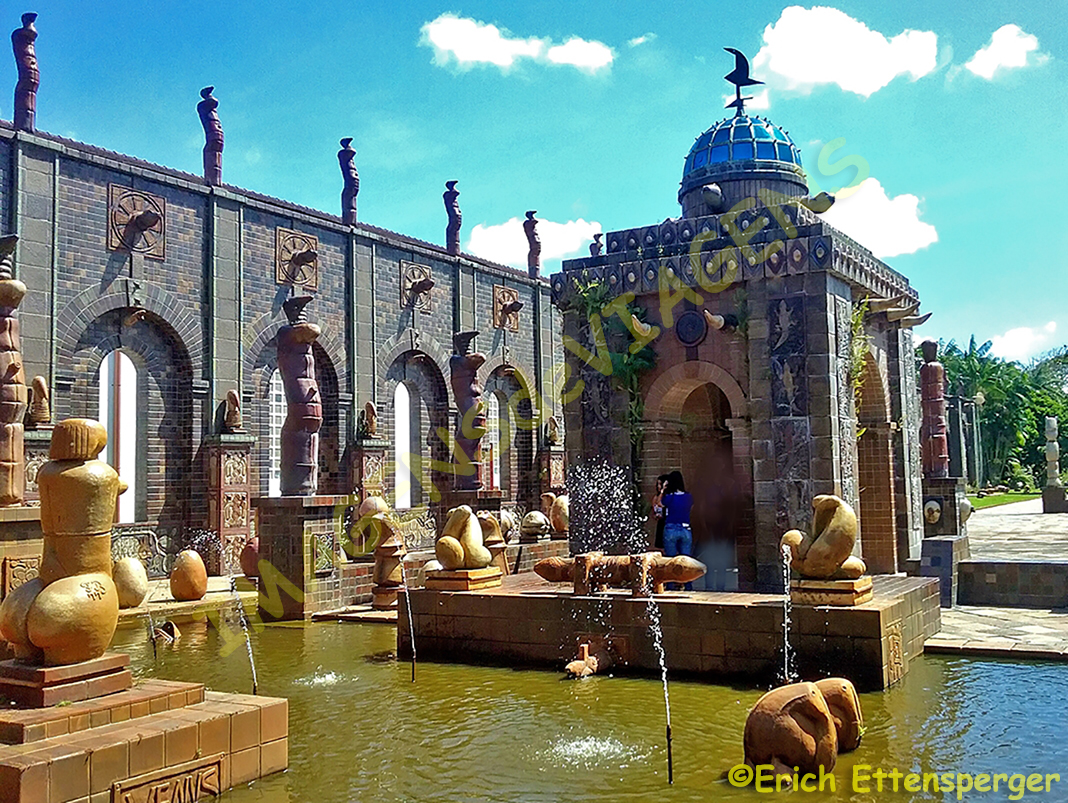
A Ilha de Páscoa e seus misteriosos guardiões de pedra
Fotos: Marjorie Madruga
Para quem gosta de ler e conhecer lugares exóticos e longínquos, a Ilha de Páscoa ou Rapa Nui (nome indígena) é um desses lugares. Ela está situada cerca de 3700 km da costa do Chile, 4200 km do Taiti, com uma área de 16,628 hectares, dos quais 7000 hectares é Patrimônio Mundial.
Map of location of Easter Island from Google.
O Parque Nacional de Rapa Nui cobre 40% da área da ilha, cuja capital é Hanga Roa, aliás, a única cidade da ilha. São três os principais vulcões de Rapa Nui, sendo que o Rano Raraku é o que forneceu toda a pedra necessária para construir as estátuas. A Ilha Rapa Nui é o lugar mais remoto da América do Sul que é habitado.
Source of this map: http://www.easterislandquest.com/map.htmVista de Hanga Roa / Blick aufHanga Roa / View of Hanga RoaCemitério da ilha / Friedhof auf der Insel / Cemetery on the island
Primeiro, vamos entender um pouco sobre a história do lugar. Essa ilha foi vista pela primeira vez em um Domingo de Páscoa, em 1722, pelo almirante holandês Jacop Roggeveen. Segundo especialistas, os primeiros habitantes da ilha eram oriundos do povo que chegou a Fiji em 1000 a.C. aproximadamente. Os descendentes desses povos chegaram a Ilha de Páscoa por volta de 380 D.C, quando estabeleceram uma tradição de escultura monumental. O mais impressionante é que o que foi produzido lá, foi criado livre de influências externas. Foi entre os séculos X e XVI que essa sociedade construiu santuários e ergueu as colossais figuras de pedra, os moais.
O moai e a lua / Die Moai und der Mond / The moai and the moon
Antes de contarmos sobre as famosas estátuas, é bom que o leitor entenda os seguintes termos: ahu (são plataformas funerárias de pedra, localizados à beira-mar, o maior é o de Vina Pu, na costa sul da ilha) e moai (é nome dado às esculturas de pedra).
Os moais estão espalhados pela ilha, foram descobertos em torno de 900 estátuas, com dimensões variadas, tem moai de 1 metro de altura e outros que ultrapassam os nove metros. Algumas estátuas estão dispostas perto dos ahus, outras estão próximas a uma pedreira em Rano Raraku, o local é conhecido pelo nome de Fábrica dos Moais. Em se tratando dos ahus, cerca de 300 dessas plataformas foram encontradas por lá, a maioria está destruída pela ação dos homens, animais e pelas intempéries. Os principais ahus: Vaihu, Akahanga, Heki’i, Raai, Te Peu e Vinapu. Além das estátuas, você também pode observar restos de assentamentos humanos, áreas de cultivo e cerimonias.Há também outros sítios arqueológicos em forma de cavernas, com arte rupestre.
Voltando a comentar sobre os moais, quando a gente olha para as estátuas e vê aquelas figuras masculinas imensas, com grandes lóbulos auriculares, algumas com corpos decorados, ficamos pensando com que propósito elas foram construídas. Por que a maioria estão de costas para o mar, olhando fixamente para as casas e para os campos? Existem muitas teorias a respeito dessas estátuas, algumas dizem até que elas foram construídas para servirem de para-raios…
Para você ter uma ideia, veja abaixo uma lista com as principais atrações dessa ilha que atrai tantos visitantes:
Vulcão Rano Raraku – conhecido como o passeio à Fábrica de Moais
Vulcão Rano Kao / Vulkan Rano Kao / Volcano Rano KaoMoai do local conhecido como Fábrica de Moais / Moai an einem Ort bekannt als Moais Fabrik / Moai at the place known as Moais Factory
Ahu Mohai –a maioria está destruída pela ação dos homens, animais e pelas intempéries. Os principais: Vaihu, Akahanga, Heki’i, Raai, Te Peu y Vinapu. Além das estátuas, você também pode observar restos de assentamentos humanos, áreas de cultivo e cerimonias
Ahu Tongariki – área restaurada com a plataforma onde estão juntos 15 moais
Complejo Tahai-Ko Te Riku – sítio arqueológico onde é possível ver restos de assentamento humano, além de moais
Ahu Huri a Urenga – área com uma única estátua que está voltada para o nascer do sol
Ahu Akivi – esse sítio conta com 7 estátuas voltadas para poente
Ahu Ature Huki – sítio arqueológico situado na praia de Anakena
Ahu Nau Nau – sítio localizado na praia de Anakena, os moais dessa área são tatuados e usam vestimentas
Moais na praia de Anakena / Moais am Strand Anakena / Moais at the beach Anakena
Playa Ovahe – praia ideal para praticar mergulho e nudismo.
Orongo – uma vila de natureza cerimonial. A visita é interessante devido à sua localização e arquitetura.
A Ilha de Páscoa oferece várias opções de passeios: fazer trilha de bicicleta, a pé, a cavalo, ir à praia, apreciar as belas paisagens das ilhas, passeio de barco com mergulho, dentre outros. A gastronomia da ilha atrai quem gosta de peixes, tem um atum grelhado, ceviche.Se você quiser relatos detalhados sobre visitas à ilha, recomendamos que visitem o blog Revivendo viagens e o blog A Mochila e o Mundo.
por do sol na ilha / Sonnenuntergang auf der Insel / Sunset on the islandAltar nas proximidades de PAPA TATAKU POKI / Altar in der Nähe von PAPA Tataku POKI / Altar nearby PAPA TATAKU POKI
Como chegar lá? Há voos saindo de Santiago e tem a duração de 5 horas e 35 minutos, custa em torno de US$ 1.300,00. Mas, se você ficar de olho, quem sabe consegue comprar o bilhete aéreo quando a LATAM fizer uma promoção…
Se quiser conhecer mais sobre a Ilha de Páscoa, visite os sites seguintes: Portal Rapa Nui e o da UNESCO.
Gostaríamos de agradecer a amiga Marjorie Madruga por ter nos fornecido as belas fotografias que ilustram esse post.
Marjorie Madruga e os Moais / Marjorie Madruga und Moais / Marjorie Madruga and MoaisAs belas cores da Ilha de Páscoa / Schöne Farben auf der Osterinsel / Beautiful colors on Easter Island
Observação: se você quiser continuar “viajando” com o nosso blog, clique no botão “seguir” localizado no canto inferior direito dessa página. Você receberá um email com um link para confirmar a assinatura desse blog (não paga nada). Quando clicar no link, você será direcionado para uma página em inglês (essa página explica o procedimento no caso de você desejar um dia parar de seguir o blog). A partir daí, você já está “seguindo” o blog.
Die Osterinsel und seine geheimnisvollen steinernen Wächter
Fotos: Marjorie Madruga
Wer gerne über exotische und weit entfernte Orte lesen und lernen möchte für den ist die Osterinsel oder auch Rapa Nui, von den Einheimischen so genannt, einer dieser Orte. Sie ist etwa 3700 km von der Küste Chiles, 4200 km von Tahiti entfernt mit einer Fläche von 16,628 Hektar, wovon 7000 Hektar Weltkulturerbe sind.
Map of location of Easter Island from Google.
Der Nationalpark Rapa Nui umfasst 40% der Inselfläche mit der Hauptstadt Hanga Roa, die einzige Stadt auf der Insel. Es gibt drei Hauptvulkane auf Rapa Nui wobei es der Rano Raraku ist, der all das Gestein liefert, das für den Bau der Statuen benötigt wird. Die Osterinsel ist der am weitesten von Südamerika entfernte und gleichsam bewohnte Ort.
Source of this map: http://www.easterislandquest.com/map.htmVista de Hanga Roa / Blick aufHanga Roa / View of Hanga RoaCemitério da ilha / Friedhof auf der Insel / Cemetery on the island
Lassen Sie uns zunächst ein wenig die Geschichte dieses Ortes verstehen lernen. Diese Insel wurde zum ersten Mal im Jahre 1722 vom niederländische Admiral Roggeveen Jacop gesichtet und zwar am Ostersonntag. Nach Einschätzung von Experten kamen die ersten Bewohner der Insel etwa 1000 vor Christus von den Fidschi-Inseln. Die Nachkommen dieser Menschen kamen rund 380 nach Christus auf die Osterinsel und etablierten diese Tradition der monumentalen Skulpturen. Auffällig ist, dass das, was dort produziert wurde, frei von jeglichen äußeren Einflüssen war. Zwischen dem 10. Und 16. Jahrhundert erschuf diese Gesellschaft Schreine und errichtete diese kolossalen Steinfiguren, die Moai.
O moai e a lua / Die Moai und der Mond / The moai and the moon
Bevor wir über die berühmten Statuen sprechen, ist es gut, folgenden Begriffe zu verstehen: ahu (sind Steingrab Plattformen am Meer gelegen, die größte ist die Vina Pu an der Südküste der Insel) und Moai (Name für die Steinskulpturen).
Die Moais sind rund um die Insel verstreut, es wurden um die 900 Statuen entdeckt mit unterschiedlichen Abmessungen. Es gibt Moais mit nur 1 Meter Höhe und andere mit mehr als neun Metern. Einige Statuen befinden sich in der Nähe von „ahus“, andere sind in der Nähe eines Steinbruchs bei Rano Raraku, ein Ort bekannt als Fabrik der Moais. Im Falle der ahus wurden dort etwa 300 dieser Stein-Plattformen gefunden, die meisten waren jedoch durch die Einwirkung von Menschen, Tieren und dem Wetter zerstört. Die wichtigsten ahus: Vaihu, Akahanga, Heki’i, Raai, Peu und Vinapu Te. Neben den Statuen können Sie auch die Reste menschlicher Siedlungen, Acker- und Zeremonienflächen begutachten. Weitere archäologische Stätten existieren in Form von Höhlen mit Felsmalereien. Beim Betrachten dieser riesigen männlichen Figuren, manche dekoriert, mit den groβen Ohrläppchen fragt man sich unweigerlich zu welchem Zweck sie konstruiert wurden. Warum sind sie mit dem Rücken zum Meer mit diesem starren Blick auf die Häuser und Felder? Es gibt viele Theorien über diese Statuen, manche besagen sogar, daβ sie gebaut wurden, um als Blitzableiter zu dienen.
Hier nun eine Liste der wichtigsten Attraktionen dieser Insel, die so viele Besucher magisch anzieht:
Rano Raraku – bekannt als der Ausflug zur Moai-Fabrik
Vulcão Rano Kao / Vulkan Rano Kao / Volcano Rano KaoMoai do local conhecido como Fábrica de Moais / Moai an einem Ort bekannt als Moais Fabrik / Moai at the place known as Moais Factory
Ahu Mohai – gröβtenteils durch Mensch, Tier und dem Wetter zerstört. Die Haupt Ahus: Vaihu, Akahanga, Heki’i, Raai, Te Peu y Vinapu. Neben den Statuen können auch Reste menschlicher Ansiedlungen, Anbauflächen und Zeremonienstätten begutachtet werden.
Ahu Tongariki – restaurierte Plattform zusammen mit 15 Moais
Complejo Tahai-Ko Te Riku – archäologische Stätte mit Überresten menschlicher Siedlung sowie Moai
Ahu Huri a Urenga – Bereich mit einer einzigen Statue dem Sonnenaufgang zugewandt
Ahu Akivi – 7 Statuen nach Westen ausgerichtet
Ahu Ature Huki – archäologische Stätte am Strand von Anakena gelegen
Ahu Nau Nau – auch direkt am Strand von Anakena gelegen, die Moais tätowiert und tragen Kleider
Moais na praia de Anakena / Moais am Strand Anakena / Moais at the beach Anakena
Playa Ovahe – idealer Strand zum Tauchen und Nudismus
Orongo – ein Dorf von zeremoniellen Natur. Der Besuch ist interessant wegen seiner Lage und Architektur
Die Osterinsel bietet verschiedenste Aktivitäten: Radtouren, wandern, reiten, am Strand spazieren, genießen Sie die schöne Landschaften der Inseln, Bootstouren mit schnorcheln usw. Die Küche der Insel zieht diejenigen an, die Fisch mögen, einen gegrillten Thunfisch z.B. oder
por do sol na ilha / Sonnenuntergang auf der Insel / Sunset on the islandAltar nas proximidades de PAPA TATAKU POKI / Altar in der Nähe von PAPA Tataku POKI / Altar nearby PAPA TATAKU POKI
Wie kommt man hin? Es gibt Flüge von Santiago mit einer Dauer von 5 Stunden und 35 Minuten und Kosten von etwa 1.300 US $ . Aber Sie können das Ganze ja ganz einfach im Auge behalten und warten auf eine Werbungsaktion der LATAM.
Falls Sie mehr über die Osterinsel erfahren möchten, besuchen Sie einfach die folgenden Websites: Portal Rapa Nuiund die der UNESCO.
Wir möchten an dieser Stelle unserer Freundin Marjorie Madruga danken für die schönen Fotografien, die diesen Beitrag illustrieren.
Marjorie Madruga e os Moais / Marjorie Madruga und Moais / Marjorie Madruga and MoaisAs belas cores da Ilha de Páscoa / Schöne Farben auf der Osterinsel / Beautiful colors on Easter Island
Hinweis: Falls Sie unseren “Reisen” auf dem Blog folgen wollen, dann klicken Sie unten rechts einfach auf “Weiter”, Sie werden dann zukünftig automatisch informiert.
The Easter Island and its mysterious stone guardians
Photos: Marjorie Madruga
If you would like to read and learn about exotic and distant places, the Easter Island, also called Rapa Nui by the locals, is one of these places. It is about 3700 km from the coast of Chile, 4200 km from Tahiti with an area of 16,628 hectares, of which 7000 hectares are world heritage sites.
Map of location of Easter Island from Google.
The National Park Rapa Nui covers 40% of the island with the capital Hanga Roa, the only town on the island. There are three main volcanoes on Rapa Nui, the Rano Raraku is the one which supplied all the rocks needed for the construction of the statues. The Easter Island is the most remote and inhabited place from South America.
Source of this map: http://www.easterislandquest.com/map.htmVista de Hanga Roa / Blick aufHanga Roa / View of Hanga RoaCemitério da ilha / Friedhof auf der Insel / Cemetery on the island
Let us look onto the history of this place. This island was first seen in 1722 by the Dutch Admiral Roggeveen Jacop on the Easter Sunday. According to experts the first inhabitants of the island came from the Fiji Islands about 1000 B.C. The descendants of these people came to the Easter Island around 380 A.D. and established this tradition of monumental sculptures. It is striking that what was produced there was free from any external influences. Between the 10th and 16th centuries this society created shrines and built these colossal stone figures, the Moais.
O moai e a lua / Die Moai und der Mond / The moai and the moon
Before talking about the famous statues, it is good to understand the following terms: ahu (are stone grave platforms located close to the sea, the largest is the Vina Pu on the south coast of the island) and Moai (name for the stone sculpture).
The Moais are scattered around the island, around 900 statues have been discovered with different dimensions. There are Moais with only one meter height and others with more than nine meters. Some statues are located near “ahus”, others are near a quarry close to Rano Raraku, a place known as the Moais factory. In the case of the ahus, about 300 of these stone platforms were found there, but most were destroyed by the effects of humans, animals and the weather. The most important ahus: Vaihu, Akahanga, Heki’i, Raai, Peu and Vinapu Te. In addition to the statues you can also examine the remains of human settlements, cultivation and ceremonial areas. Other archaeological sites exist in form of caves with Rock paintings. Looking at these huge male figures, some decorated and with the big earlobes, you inevitably ask youself what purpose they were designed for. Why do most of them have their backs to the sea, staring at the houses and the fields? There are many theories about these statues, some even say they were built to serve as lightning rod.
Here is a list of the main attractions on the island, which attracts so many visitors magically:
Rano Raraku – known as the Moai factory
Vulcão Rano Kao / Vulkan Rano Kao / Volcano Rano KaoMoai do local conhecido como Fábrica de Moais / Moai an einem Ort bekannt als Moais Fabrik / Moai at the place known as Moais Factory
Ahu Mohai – largely destroyed by humans, animals and the weather. The main ahus: Vaihu, Akahanga, Heki’i, Raai, Te Peu y Vinapu. In addition to the statues the remains of human settlements, cultivation areas and ceremonial services can also be examined.
Ahu Tongariki – restored platform together with 15 Moais
Complejo Tahai-Ko Te Riku – archaeological site with remains of human settlement as well as Moais
Ahu Huri a Urenga – area with a single statue facing the sunrise
Ahu Akivi – 7 statues aligned to the west
Ahu Ature Huki – archaeological site located at the beach of Anakena
Ahu Nau Nau – also located directly at the beach of Anakena with Moais tattooed and wearing clothes
Moais na praia de Anakena / Moais am Strand Anakena / Moais at the beach Anakena
Playa Ovahe – beach for diving and nudism
Orongo – a village of ceremonial nature. The visit is interesting because of its location and architecture
The island offers a variety of activities: cycling, hiking, horseback riding, walking alongside the beach, enjoying the beautiful landscapes of the islands, boat trips with snorkeling, etc. The island’s cuisine attracts those who like fish, for example grilled tuna or Ceviche. For detailed reports about the island we recommend visiting the Blog Revivendo Viagens and the Blog A Mochila e o Mundo.
por do sol na ilha / Sonnenuntergang auf der Insel / Sunset on the islandAltar nas proximidades de PAPA TATAKU POKI / Altar in der Nähe von PAPA Tataku POKI / Altar nearby PAPA TATAKU POKI
How to get there? There are flights from Santiago with a duration of 5 hours and 35 minutes and costs around US $ 1,300.00. But you can keep an eye on the whole thing and just wait for a LATAM advertising campaign.
If you would like to know more about the Island simply visit the following websites: Portal Rapa Nui and the UNESCO website.
We would like to thank our friend Marjorie Madruga for the beautiful photographs that illustrate this article.
Marjorie Madruga e os Moais / Marjorie Madruga und Moais / Marjorie Madruga and MoaisAs belas cores da Ilha de Páscoa / Schöne Farben auf der Osterinsel / Beautiful colors on Easter Island
Note: If you want to follow our “Journeys” on the blog, simply click on “Continue” in the lower right corner, you will be automatically informed in the future.
Texto e fotos: João Paulo Canário, advogado, apaixonado por viajar, aspirante a mochileiro.Gosta de conhecer novos lugares e novas culturas. Está sempre pensando na próxima viagem.
Gramado é uma cidade mágica e fica ainda mais encantadora na época do Natal, onde a cidade respira o clima natalino, enchendo-se de enfeites, luzes, cores e espetáculos.
Cheguei em Gramado no auge das comemorações de Natal de 2016, tudo estava muito enfeitado e organizado, a temperatura estava agradável, variando entre 18 e 25ºC, esfriando mais à noite. As hortênsias já tinham desabrochado, dando um verdadeiro show a parte com a beleza de suas flores.
Hortensias
Saindo de Porto Alegre, optei por pegar a famosa Rota Romântica, que é uma estrada alternativa para Gramado conhecida pela beleza das paisagens. Essa rota interliga as cidades de São Leopoldo e São Francisco de Paula. Ao chegar em Nova Petrópolis pela BR-116, é só pegar a RS-235 direto até chegar em Gramado.
A estrada até Gramado é ótima, repleta de cenários maravilhosos. É possível ver muita vegetação, muitas araucárias, também muitas construções de estilo europeu. O caminho possui algumas curvas, mas nada que cause preocupação demasiada. Peguei a estrada bem cedo para aproveitar logo o primeiro dia em Gramado. A viagem durou cerca de 2h30min, mas isso vai depender de vários fatores, como a velocidade do carro, condições da estrada e etc.
É válido complementar que há a obrigatoriedade no pagamento de pedágio antes de entrar em Gramado, portanto é importante estar precavido nesse sentido para quem está de carro próprio ou alugado.
Fiquei encantado logo na entrada da cidade, onde fui recepcionado por um mar de hortênsias nos dois lados da pista, além do pórtico que é uma das paradas interessantes para tirar fotos. Lembrando que Gramado possui dois pórticos, vale a pena conhecer os dois.
Entrada da cidade / Stadteingang / City entrance
Gramado é repleta de hortênsias, elas estão presentes em todas as partes, chegando a formar verdadeiros tapetes azuis em vários trechos, principalmente na entrada da cidade, onde encantam aqueles que nela chegam. Vale muito a pena ir a Gramado nessa época do ano, não só pela magia do Natal Luz, mas também pela beleza das hortênsias.
Mas os encantos de Gramado não param aí, a cidade é repleta de belezas naturais, ela é bastante arborizada, com lagos belíssimos, como é o caso do Lago Negro;também possui lindas praças, além de possuir muitas atrações interessantes, como a igreja Matriz São Pedro, a fábrica de Cristais (onde é possível fazer compras de peças de cristais, além de poder assistir a uma pequena demonstração gratuita da fabricação das peças); também fábricas de chocolate; Mini Mundo (um espaço com várias réplicas de cidades e monumentos em formatos bem menores que os originais); Snowland (um parque temático de neve onde é possível esquiar além de praticar outras modalidades de esportes, como a patinação no gelo).
Lago Negro / lleiner See Lago Negro / the lake Lago NegroIgreja Matriz São Pedro Apóstolo / Kirche / ChurchPista de sky na Snowland / Skipiste in Snowland / Snowland Ski Area
O Lago Negro é um espaço público dentro da cidade onde é possível fazer caminhadas ao ar livre, encontros com a família ou amigos e passeios com pedalinhos no lago (não gratuito). O lugar é deslumbrante, o lago é rodeado por árvores e por flores, principalmente hortênsias. É um excelente espaço para estar em contato com a natureza. Recomendo demais.
A praça das etnias fica bastante enfeitada durante o Natal, com muitas luzes, cores e objetos de arte. Recomendo a visita principalmente à noite, para ver as luzes do Natal, mas de dia a visita também é interessante. Existe um espaço na praça onde é possível comprar biscoitos artesanais, cucas de vários sabores, etc., fabricados no próprio local. Muito bom.
Perto da praça das etnias está localizada a Rua Torta, uma rua muito charmosa, bastante florida, construída em formato sinuoso, no mesmo estilo da Lombard street, localizada na cidade americana de San Francisco, na Califórnia. É uma das atrações turísticas de Gramado.
Rua Torta/Straße Torta/Street Torta
Além da Rua Torta, existe também a Rua Coberta, com muitos restaurantes e muitas lojas. É uma rua muito agradável, localizada em frente ao Palácio dos Festivais. À noite, essa rua recebe um charme a mais, seu teto fica todo iluminado, com uma decoração linda.
Rua Coberta / Straße Coberta / Street Coberta
Na época do Natal, a Rua Coberta recebe várias atrações musicais em todos os dias do evento Natal Luz, além do famoso show de acendimento das luzes da cidade, que acontece no Palácio dos Festivais.
O show de acendimento da cidade é um programa imperdível para quem está em Gramado na época do Natal. É o momento em que as luzes da cidade são acendidas, precedido por uma encenação de uma história de Natal muito encantadora. O espetáculo é gratuito e é para todas as idades. Vale muito a pena, não deixe de assistir. Vá pelo menos um dia da visita ao Natal Luz de Gramado.
A beleza das luzes / Schönheit der Lichter / The beauty of the lights
Além do show de acendimento da cidade, os espetáculos: Eu sou Maria; o Grande desfile de Natal e o Natal pelo Mundo também fazem parte da grade de programações do Natal Luz em Gramado. Porém tais espetáculos não são gratuitos.
Iluminação noturna / nächtliche Beleuchtung / Night illumination
Recomendo que ao programar a viagem para o Natal em Gramado, realize a compra dos ingressos de forma bastante antecipada, pois eles se esgotam com facilidade. Eu assisti aos dois primeiros espetáculos (Eu sou Maria e o Grande desfile de Natal), e testemunhei várias pessoas que deixaram de assistir aos shows por falta de senhas. A prevenção nesse caso é ideal.
Fiquei encantado com o espetáculo: Eu sou Maria. É um musical realizado com uma superprodução, que conta a história de Maria, mãe de Jesus. A emoção aflora a cada cena que se passa, é de tirar o fôlego. As palavras jamais terão o condão de descrever a beleza do espetáculo de forma digna, só assistindo mesmo para se encantar. Recomendo demais.
O Grande desfile de Natal também é um espetáculo encantador. É uma encenação recheada de muita música, personagens, carros decorados, que contam uma história de Natal. Recomendo, principalmente para quem está com crianças.
São essas algumas das razões pelas quais eu sou encantado por Gramado, principalmente pelo Natal Luz. Claro que Gramado possui diversos outros atrativos, porém tentei, de forma sucinta, especificar os principais pontos que eu mais curti na cidade. Tenho certeza que Gramado encanta a todos que nela passam.
Observação: se você quiser continuar “viajando” com o nosso blog, clique no botão “seguir” localizado no canto inferior direito dessa página. Você receberá um email com um link para confirmar a assinatura desse blog (não paga nada). Quando clicar no link, você será direcionado para uma página em inglês (essa página explica o procedimento no caso de você desejar um dia parar de seguir o blog). A partir daí, você já está “seguindo” o blog.
Weihnachten in Gramado
João Paulo
Text und Fotos: João Paulo Canário, Anwalt, liebt es zu reisen, möchte gern ein Backpacker sein. Ihm gefällt es, neue Orte und Kulturen kennen zu lernen. Er denkt immer schon an die nächste Reise.
GRAMADO ist eine Schönheit in den Bergen der SERRA GAUCHA auf 830 Metern Höhe gelegen in der bekannten Hortensienregion und ist 76 km von Porto Alegre entfernt.
Gramado ist v.a. berühmt wegen seines einzigartigen Weihnachtsspektakels „Natal Luz“ („die Lichter Weihnachtens“), aber auch wegen seines in ganz Südamerika bekannten alljährlich stattfindenden Filmfestivals.
Das Städtchen mit seinen etwa 30.000 Einwohnern besticht auch durch seine Architektur, Ordnung, Sauberkeit und Gastronomie. Von Gramado aus lassen sich eindrucksvolle Ausflüge in die nähere Umgebung mit spektakulären Landschaften und Wasserfällen unternehmen, auch das Städtchen Canela lohnt einen Besuch.
Hinweis: Falls Sie unseren “Reisen” auf dem Blog folgen wollen, dann klicken Sie unten rechts einfach auf “Weiter”, Sie werden dann zukünftig automatis
HortensiasLago Negro / lleiner See Lago Negro / the lake Lago NegroA beleza das luzes / Schönheit der Lichter / The beauty of the lightsEntrada da cidade / Stadteingang / City entranceIgreja Matriz São Pedro Apóstolo / Kirche / ChurchPista de sky na Snowland / Skipiste in Snowland / Snowland Ski AreaIluminação noturna / nächtliche Beleuchtung / Night illuminationRua Torta/Straße Torta/Street TortaRua Coberta / Straße Coberta / Street Coberta
Christmas in Gramado
João Paulo
Text and photos: João Paulo Canário, lawyer, likes to travel, would like to be a backpacker. He likes to get to know new places and cultures. He always thinks about the next trip.
GRAMADO is a beauty in the mountains of the SERRA GAUCHA at an altitude of 830 meters located in the famous hydrangea region, 76 km from Porto Alegre.
Gramado is very famous for its unique Christmas “Natal Luz” (“the lights of Christmas”) festival, but also because of its annual film festival which is very well known all over South America.
The town with its 30,000 inhabitants is also characterized by its architecture, order, cleanliness and gastronomy. From Gramado you can take impressive excursions to the surrounding area with spectacular landscapes and waterfalls, the town of Canela is also worth a visit.
Note: If you want to follow our “Travels” on the blog, simply click on “Continue” in the lower right corner, you will be then automatically informed in the future.
HortensiasLago Negro / lleiner See Lago Negro / the lake Lago NegroA beleza das luzes / Schönheit der Lichter / The beauty of the lightsEntrada da cidade / Stadteingang / City entranceIgreja Matriz São Pedro Apóstolo / Kirche / ChurchIluminação noturna / nächtliche Beleuchtung / Night illuminationRua Torta/Straße Torta/Street TortaRua Coberta / Straße Coberta / Street Coberta
Nós quisemos visitar, pelo menos, os pontos turísticos de Taipei. Nós chegamos de navio, no porto de Keelung e de ônibus fomos para o centro administrativo de Taiwan, localizado cerca de 30 km de distância.
A metrópole com aproximadamente 2.7 milhões de habitantes tem um sistema de metro muito bom, mas, mesmo assim, as ruas são cheias de automóveis e motocicletas.
motoneta/motorroller/motor scooter
Você vai encontrar impressionantes templos, santuários, complexos de palácios, monumentos, parques e museus, além de edifícios modernos e fascinantes mercados noturnos, uma mistura charmosa, um sabor exótico.
O Templo de Confúcio de Qu Fu, Shantung, é um dos maiores e mais antigos dos templos chineses que homenageia esse filosofo. Localizado no local original da residência de Confúcio, ele cresceu ao longo de cerca de 2000 anos para se tornar magnífico. O local reverenda Confúcio, um dos grandes filosofos e professores de todos os tempos.
É impressionante a simplicidade desse templo quando comparado com tantos outros exageradamente decorados.
Templo de Confúcio/ Konfuzius Tempel/Confucius temple
O esplendor das cores, a decoração, os odores, e a agitação das pessoas ao redor do templo Longshan são muito impressionantes. É uma visita obrigatória para quem visita Taipei. Eu, particularmente, gostei muito do telhado com dragões coloridos. A fachada colorida do templo é espetacular.
Lugar famoso para cultos/ populärer Gebetsort /famous worship placeTemplo do esplendor/ Tempelpracht/temple splendorDetalhe decorativo com um dragão/Drachendekoration/dragon decoration
Muito próximo, em seguida, um dos muitos mercados noturnos, que é muito frequentado por nativos nos finais de semana.
O National Martyrs’ Shrine é enorme memorial de guerra. Durante o dia, a mudança da cerimônia de guarda é realizada a cada hora.
Mudança da guarda/ Wachablösung/changing of guard
Nas proximidades, visitamos o imponente Grand Hotel, de aspecto colossal, construído em estilo chinês, com vista para a cidade, onde se o arranha-céu Taipei 101, considerado o prédio mais alto do mundo em 2007, com uma altura de 508 metros.
Grande Hotel/Grand HotelVista do rio e da cidade/Blick auf Fluss und Stadt view of river and cityVista de Taipé 101/Blick auf das Taipeh 101 view of the Taipei 101
O Chiang Kai-Shek Memorial Hall é um lugar muito espaçoso no meio da cidade. A parte central desse complexo é a praça Liberty Square que assemelha-se com a concepção espacial do Memorial Lincoln em Washington.
Chiang Kai-Shek Memorial HallPraça da Liberdade/Liberty Square
A fim de experimentar e explorar toda a beleza de Taiwan, certamente teremos de planejar mais tempo para uma próxima visita … vale a pena!
Observação: se você quiser continuar “viajando” com o nosso blog, clique no botão “seguir” localizado no canto inferior direito dessa página. Você receberá um email com um link para confirmar a assinatura desse blog (não paga nada). Quando clicar no link, você será direcionado para uma página em inglês (essa página explica o procedimento no caso de você desejar um dia parar de seguir o blog). A partir daí, você já está “seguindo” o blog.
Taiwan – berührt Ihr Herz
Auf unserer Asienreise 2014 ergab sich für uns die Gelegenheit, auch der Insel Taiwan einen sehr kurzen Besuch abstatten zu können.
Wir wollten v.a. die Sehenwürdigkeiten von Taipeh kennenlernen, also machten wir uns vom Hafen Keelung aus per Bus auf den Weg in den etwa 30 km entfernten Verwaltungssitz Taiwans.
Die Metrople mit etwa 2,7 Millionen Einwohnern verfügt über ein sehr gutes Metro-System, dennoch sind die Straßen verstopft und voll mit Autos und Motorrollern in allen Varianten.
motoneta/motorroller/motor scooter
Man findet eindrucksvolle Tempel, Schreine, Palastanlagen, Monumente, Parks und Museen, moderne Gebäude und faszinierende Nachtmärkte, ein bezaubernder Mix, ein exotisches Flair.
Der Konfuzius Tempel wurde seinem Original in Qufu, Shantung in China nachempfunden. Der Tempel verehrt Konfuzius als einen der großen Philosophen und Lehrer aller Zeiten.
Auffallend die Schlichtheit dieses Tempels im Kontrast zu so vielen anderen überbordend intensiv dekorierten Tempeln.
Templo de Confúcio/ Konfuzius Tempel/Confucius temple
Im Gegensatz hierzu erschlägt einen fast die Farbenpracht, Dekoration, die Gerüche, Ausstattung und der Trubel der Menschen in und um den Longshan Tempel. Ein Muss für jeden Taipeh-Besucher. Mir gefiel besonders der Blick auf das Dach mit den farbenprächtigen Drachenverzierungen.
Lugar famoso para cultos/ populärer Gebetsort /famous worship placeTemplo do esplendor/ Tempelpracht/temple splendorDetalhe decorativo com um dragão/Drachendekoration/dragon decoration
Ganz in der Nähe dann einer der vielen sehenswerten Nachtmärkte, die alle an den Wochenenden auch sehr stark von den Einheimischen frequentiert werden.
Beim National Martyrs’ Shrine handelt es sich um eine riesige Anlage, ein Kriegerdenkmal. Tagsüber wird zur vollen Stunde eine Wachablösung zelebriert. Beeindruckend die farbenprächtige Außenfassade des Schreins.
Mudança da guarda/ Wachablösung/changing of guard
Ganz in der Nähe besuchten wir das imposante, kolossal wirkende und ganz im chinesischen Stil gehaltene Grand Hotel, von wo aus sich ein Blick auf die Stadt mit seinem markantem ehemals höchsten Wolkenkratzer der Welt eröffnet. Das Taipeh 101 mit 508 Metern Höhe.
Grande Hotel/Grand HotelVista do rio e da cidade/Blick auf Fluss und Stadt/ view of river and cityVista de Taipé 101/Blick auf das Taipeh 101 view of the Taipei 101
Die Chiang Kai Shek Memorial Hall befindet sich auf einem sehr weitläufigen Platz und Komplex in der Mitte der Stadt. Den Mittelpunkt hierbei bildet eine dem Lincoln Memorial in Washington nachempfundene Halle die den früheren Präsidenten sitzend aus weißem Marmor verewigt.
Chiang Kai-Shek Memorial HallPraça da Liberdade/der Liberty Platz/Liberty Square
Um die ganze Schönheit Taiwans zu erfahren und zu erforschen würden wir bei einem nächsten Besuch sicherlich mehr Zeit einplanen…es lohnt sich !!!
Hinweis: Falls Sie unseren “Reisen” auf dem Blog folgen wollen, dann klicken Sie unten rechts einfach auf “Weiter”, Sie werden dann zukünftig automatisch informiert.
Taiwan – touch your heart
On our Asia trip in 2014 we had the opportunity for a short visit of the island of Taiwan.
We wanted to know at least the sights of Taipei, so we headed from Keelung harbor by bus to the administrative center of Taiwan about 30 km away.
The metropolis with about 2.7 million inhabitants has a very good metro system, yet the streets are clogged and full of cars and motor scooters in all variations.
motoneta/motorroller/motor scooter
You will find impressive temples, shrines, palace complexes, monuments, parks and museums, modern buildings and fascinating night markets, a charming mix, an exotic flair.
The Confucius Temple follows its original in Qufu, Shantung in China. The temple reveres Confucius as one of the great philosophers and teachers of all times.
Impressing is the simplicity of this temple in contrast to so many other overbrowthfully decorated temples.
Templo de Confúcio/ Konfuzius Tempel/Confucius temple
The color splendor, decoration, the odors, decor and the hustle and bustle of the people in and around the Longshan temple are very impressive. It is a must for every Taipei visitor. I especially liked the view of the roof with the colorful dragon decorations.
Lugar famoso para cultos/ populärer Gebetsort /famous worship placeTemplo do esplendor/ Tempelpracht/temple splendorDetalhe decorativo com um dragão/Drachendekoration/dragon decoration
Very close then one of the many night markets, which are also very frequented by the locals at the weekends.
The National Martyrs’ Shrine is a huge facility, a war memorial. During the day the changing of the guard ceremony is held at each full hour. Impressive the colorful exterior facade of the shrine.
Mudança da guarda/ Wachablösung/changing of guard
Nearby we visited the imposing, colossal-looking Grand Hotel, which was built in the Chinese style with a view of the city, with its striking former world’s (2007) tallest skyscraper. The Taipei 101 with a height of 508 meters.
Grande Hotel/Grand HotelVista do rio e da cidade/Blick auf Fluss und Stadt/ view of river and cityVista de Taipé 101/Blick auf das Taipeh 101 view of the Taipei 101
The Chiang Kai-Shek Memorial Hall is located on a very spacious square and complex in the middle of the city. The centerpiece of this is a hall, which is modeled after the Lincoln Memorial in Washington, which immortalizes the former president sitting formed in white marble.
Chiang Kai-Shek Memorial HallPraça da Liberdade/Liberty-Platz/Liberty Square
In order to experience and explore all the beauty of Taiwan we would certainly have to plan more time for a next visit … it is worth it!
Note: If you want to follow our “Travels” on the blog, simply click on “Continue” in the lower right corner, you will be then automatically informed in the future.
A Alemanha é um país que possui muitas belezas naturais, um rico patrimônio cultural constituído por importantes monumentos, cidades medievais e cidades com edifícios com arquitetura de vanguarda (exemplo a Casa de Concerto de Hamburgo – Elbphilharmonie Konzerthaus), edificações oriundas de diversos períodos da história, além de um grande acervo de obras de artes distribuídas em muitos interessantes museus e centros culturais.
A Alemanha é também um país onde ocorrem importantes e famosos eventos, como por exemplo, a Feira de Livros de Frankfurt e Leipzig, a Feira Internacional de Turismo, em Berlim, o Salão do Automóvel de Frankfurt – IAA, muitos festivais de vinhos (de âmbito local e regional) e claro, a Oktoberfest, que inspirou eventos semelhantes em diversas partes do mundo. Por ser o país de origem de Erich, sempre visitamos a Alemanha e por isso, tivemos o prazer de conhecer muitas de suas belas cidades.
Com base nessas considerações, elaboramos uma lista com 10 cidades alemães que vale a pena visitar, pois são interessantíssimas! Veja abaixo quais são e o porquê de terem sido eleitas para nossa relação.
Berlim: a cidade atrai turistas do mundo todo devido seus monumentos históricos, por ter implantado projetos urbanísticos muito interessantes, por ter uma vida noturna muito agitada, por ser um centro de efervescência cultural e artística, dentre outros. Desde a reunificação alemã em 1990, Berlim tornou-se um ponto de parada obrigatório para quem aprecia arte e modernidade. Berlim deve certamente ser incluída entre as principais cidades onde ocorrem grandes inovações na Europa (muitas start-ups estão instaladas lá).
Berlim/Berlin
Colônia: é uma das cidades mais antigas da Alemanha e tornou-se mundialmente famosa devido a sua Catedral, um dos exemplos mais representativos da arquitetura gótica. Colônia é um relevante centro eclesiástico e é sede de muitas editoras, canais de rádio e televisão. A cidade é famosa também devido seu animado carnaval. Berlim e Düsseldorf disputam nas atrações e animação.
Colônia/Köln/Cologne
Düsseldorf: tornou-se cidade em 1288, é a capital da Renânia do Norte-Vestefália. É um dos centros culturais e industriais mais importantes do vale do Reno, é considerada a capital da moda da Alemanha. Düsseldorf é uma cidade sofisticada. Dusseldorf é uma cidade moderna que tem um centro histórico com o “maior bar do mundo”. A cidade implantou o projeto de renovação urbana na área portuária conhecida como “MedienHafen”, onde renomados arquitetos (Frank O. Gehry, David Chipperfield, Joe Coenen, Steven Holl and Claude Vasconi) elaboraram projetos arquitetônicos espetaculares.
Dusseldorf
Bremen: é outra cidade especial da Alemanha, seu centro histórico possui preciosidades como as edificações da Prefeitura e pela bonita Catedral. É uma cidade antiga, suas origens remontam a época de Carlos Magno, foi cidade sede da Liga Hanseática. Quem leu o conto “Os quatro músicos de Bremen”, dos irmãos Grimm vai gostar de visitar a cidade. O famoso bairro “Schnoor” é uma das atrações de Bremen.
Bremen
Freiburg: é o portão sul de entrada para se visitar a Floresta Negra. É uma cidade universitária com um centro histórico interessante e uma Catedral grandiosa. A cidade data de 1120 e é um centro cultural, além de ser bem movimentada devido à realização de muitos eventos. Possui paisagens deslumbrantes. Freiburg é considerada a cidade na esquina dos três países: França, Suíça e Alemanha.
Friburgo/Freiburg
Münster: é uma cidade que data do século IX e que integrou a Liga Hanseática e é caracterizada pelos seus belos prédios históricos, muitos deles foram reconstruídos depois da Segunda Guerra. O centro histórico de Münster com todas as suas arcadas é belo, com edifícios oriundos de diversas épocas. Münster e o Capital de bicicletas in Alemanha.
Munster
Lübeck: cidade de Thomas Mann, foi o núcleo urbano mais importante da bacia do Báltico durante a Idade Média. Lübeck é caracterizada por possuir muitos edifícios de tijolos vermelhos oriundos da época gótica, conhecidos como estilo “Backsteingotik”. Muitas edificações foram reconstruídas após a Segunda Guerra. Lübeck foi cidade sede da Liga Hanseática. A cidade é famosa pelo seu Marzipã, uma delícia alemã.
Lübeck
Munique:uma das cidades mais vibrantes da Alemanha, é a capital da Baviera. Munique atrai milhares de turistas anualmente que a procuram para conhecer seus belos edifícios, museus, lojas, dentre outros. A cidade é famosa mundialmente devido à realização da Oktoberfest. Vale a pena visitar em Munique os famosos Beergardens (jardins da cerveja), onde se destacam os do Jardim Inglês (English Garden) e o conhecidíssimo „Hofbräuhaus“.
Munique/ München/ Munich
Heidelberg: é uma das cidades mais bonitas da Alemanha, com sua antiga ponte sobre o Rio Neckar, com nove arcos e com o majestoso Castelo localizado no alto. Heidelberg é uma cidade universitária, sede da primeira universidade da Alemanha e acima de tudo, é uma cidade romântica. É um centro cultural agitado.
Heidelberg
Dresden: uma das cidades mais fascinantes na Alemanha, foi quase completamente destruída durante a Segunda Guerra Mundial, tem uma bela cidade antiga, com muitas atrações que foram reconstruídas meticulosamente. Dresden também é ideal para passeios no rio Elba nas proximidades da área conhecida como “Suíça Saxônica”.
Dresden
A Alemanha é realmente um destino fascinante. Além dessas 10 cidades mencionadas acima, existe um grande número de outras cidades atraentes e emocionantes. Desse modo, em síntese, podemos dizer que essa lista indefinidamente renovável. Elabore sua própria lista de suas cidades favoritas na Alemanha e conte para gente!
Observação: se você quiser continuar “viajando” com o nosso blog, clique no botão “seguir” localizado no canto inferior direito dessa página. Você receberá um email com um link para confirmar a assinatura desse blog (não paga nada). Quando clicar no link, você será direcionado para uma página em inglês (essa página explica o procedimento no caso de você desejar um dia parar de seguir o blog). A partir daí, você já está “seguindo” o blog.
10 BESUCHENSWERTE STÄDTE IN DEUTSCHLAND
Deutschland ist ein Land mit vielen Naturschönheiten, einem reichen kulturellen Erbe bestehend aus wichtigen Monumenten, mittelalterlichen Städten und mit Gebäuden der Avantgarde-Architektur (z.B. Hamburg und die Elbphilharmonie), Gebäude aus verschiedenen Epochen der Geschichte sowie große Sammlungen von Kunstwerken in vielen interessanten Museen und Kulturzentren.
Deutschland ist auch ein Land, in dem wichtige und bekannte Events und Messen stattfinden wie z.B. die Buchmesse in Frankfurt, die ITB in Berlin, die jährliche IAA, viele Weinfeste und unzählige Feste lokalen und regionalen Charakters und natürlich, das Oktoberfest, das in verschiedenen Teilen der Welt zu einem ähnlichen Ereigniss inspirierte. Mit Deutschland als das Herkunftsland von Erich besuchen wir es immer wieder und so haben wir das regelmäßige Vergnügen, in den Genuss vieler seiner schönen Städte zu kommen. Auf der Grundlage dieser Besuche stellten wir nun die folgende Liste von 10 besuchenswerten Städten in Deutschland zusammen.
Berlin: Die Stadt zieht Touristen aus der ganzen Welt wegen seiner historischen Monumente an, sie fasziniert durch sehr interessante und innovative urbane Projekte, sie offeriert ein extrem reges Nachtleben, sie widerspiegelt ein sprudelndes Zentrum kulturellen und künstlerischen Schaffens unter v.a. mehr. Seit der deutschen Wiedervereinigung im Jahr 1990 entwickelte sich Berlin zu einer Art Pflichtstopp für all diejenigen, die die Kunst und die die Moderne zu schätzen wissen. Berlin muß durchaus zu den führende Start-up-Metropolen Europas gezählt werden.
Berlim/Berlin
Köln: es ist eine der ältesten Städte in Deutschland und wurde weltberühmt wegen seiner Kathedrale, eines der repräsentativsten Beispiele der gotischen Architektur. Köln ist ein wichtiges kirchliches Zentrum und ist auch die Heimat vieler Verlage, Rundfunk- und Fernsehkanäle. Die Stadt ist berühmt für seinen Karneval und steht in fast allen Dingen in permanenter erbitterter Konkurrenz zur sehr nahen Nachbarstadt Düsseldorf.
Colônia/Köln/Cologne
Düsseldorf: eine Stadt, die im Jahre 1288 gegründet wurde, es ist die Hauptstadt von Nordrhein-Westfalen. Es ist eines der wichtigsten kulturellen und industriellen Zentren des Rheintales und es gilt als die Modehauptstadt Deutschlands. Düsseldorf ist eine moderne Stadt, die über ein historische Zentrum mit der sogenannten „längsten Theke der Welt“ verfügt und sehr innovativen Stadterneuerungsprojekte. Nicht verpassen „der Medienhafen“.
Düsseldorf
Bremen: eine weitere besondere Stadt in Deutschland, das historische Zentrum offeriert mit den Gebäuden des Rathauses und der wunderschönen Kathedrale wahre Schätze der Architektur. Es ist eine sehr alte Stadt, die mit ihren Anfängen bis zur Zeit Karls des Großen zurückgeht. Jeder, der die Geschichte „Die Bremer Stadtmusikanten“ der Brüder Grimm gelesen hat, wird es genießen, die Stadt besuchen. Berühmt das Viertel “Schnoor”. Bremen war wichtiger Bestandteil der historischen Hanse.
Bremen
Freiburg:im Süden bekannt als das Eingangstor zum Schwarzwald. Es ist eine sehr alte bekannte Universitätsstadt mit einem attraktiven historischen Zentrum und einem berühmten Münster. Die Stadt stammt aus dem Jahr 1120 und ist ein kulturelles Zentrum, geschäftig auch mit vielen Veranstaltungen. Es ist eingebettet in atemberaubende Landschaften mit vielen Ausflugsmöglichkeiten. Freiburg – eine Stadt im Drei-Länder-Eck Deutschland, Frankreich und der Schweiz.
Friburgo/Freiburg
Münster: es ist eine Stadt aus dem neunten Jahrhundert und als Mitglied der Hanse sind viele seiner schönen historischen Gebäude charakteristisch für die Stadt, viele von ihnen wurden nach dem Zweiten Weltkrieg wieder aufgebaut. Das historische Zentrum von Münster mit seinen Arkaden ist wunderschön, Gebäude aus verschiedenen Epochen. Münster gilt als die Fahrrad-Hauptstadt in Deutschland.
Munster
Lübeck: Stadt des Thomas Mann, es war im Mittelalter das wichtigste städtische Zentrum des Ostseebeckens, Lübeck ist gekennzeichnet durch seine unzähligen bekannten roten Backsteinbauten aus der sogenannten “Backsteingotik” kommend. Viele Gebäude wurden nach dem Zweiten Weltkrieg neu aufgebaut. Lübeck war ein wichtiger Sitz der Hanse. Lübeck ist weltberühmt für sein Marzipan.
Lübeck
München: einer der pulsierendsten Städte in Deutschland, sie ist die Hauptstadt von Bayern. München zieht jedes Jahr Millionen von Touristen an, die all seine schönen berühmten Sehenswürdigkeiten, Museen, Parks, Plätze und Geschäfte besuchen wollen. Die Stadt ist weltweit berühmt für das Oktoberfest auf der „Wiesn“. Besuchen Sie auch die berühmte Biergärten im „Englischen Garten“ und das „Hofbräuhaus”.
Munique/ München/ Munich
Heidelberg: eine der schönsten Städte in Deutschland, mit seiner historischen Brücke über den Neckar mit seinen neun Brückenarkaden und dem majestätischen Schloss hoch darüber. Romantik pur. Heidelberg ist eine Universitätsstadt, Sitz der ersten Universität Deutschlands. Es ist ein sehr geschäftiges Kulturzentrum.
Heidelberg
Dresden: eine der faszinierendsten Städte in Deutschland, wurde fast vollständig im Zweiten Weltkrieg zerstört, es hat eine sehr schöne Altstadt mit vielen Sehenswürdigkeiten, die alle akribisch wiederaufgebaut wurden. Dresden ist auch ideal für Ausflüge auf der Elbe in die nahegelegene „Sächsische Schweiz“.
Dresden
Deutschland ist wirklich ein immer wieder faszinierendes Reiseziel, neben den oben aufgeführten 10 Städten existieren unendlich viele weitere attraktive und hochinteressante Gemeinden und Städte in Deutschland. Also, um es zusammenzufassen, diese Liste ist beliebig verlängerbar. Nennen Sie uns Ihre Favoriten…!!
Hinweis: Falls Sie unseren “Reisen” auf dem Blog folgen wollen, dann klicken Sie unten rechts einfach auf “Weiter”, Sie werden dann zukünftig automatisch informiert.
10 CITIES WORTH VISITING IN GERMANY
Germany is a country with many natural beauties, a rich cultural heritage consisting of important monuments, medieval cities and buildings of avant-garde architecture (eg Hamburg and the Elbphilharmonie), buildings from different eras of history as well as large collections of works of art in many interesting museums and Cultural centers.
Germany is also a country where important and well-known events and fairs take place, such as „The Frankfurt Book Fair“, the „ITB“ in Berlin, the annual „IAA“, many wine festivals and countless festivals of local and regional character and, of course, the Oktoberfest, which inspired a similar event in different parts of the world. With Germany as Erich’s country of origin, we visit it again and again and so we have the regular pleasure to come to enjoy many of its beautiful cities. On the basis of these visits we now assembled the following list of 10 worth to visit cities in Germany.
Berlin: the city attracts tourists from all over the world because of its historical monuments. It fascinates with very interesting and innovative urban projects, it offers an extremely lively nightlife, it reflects a bubbling center of cultural and artistic creativity among many other things. Since the German reunification in 1990 Berlin has developed into a kind of duty stop for those who appreciate art and modernity. Berlin is nowadays one of the leading start-up cities in Europe.
Berlim/Berlin
Cologne: it is one of the oldest cities in Germany and is world famous for its cathedral, one of the most representative examples of Gothic architecture. Cologne is an important church center and is also the home of many publishers, radio and television channels. The city is famous for its carnival and stands in almost all things in permanent fierce competition with the very close neighbor city Düsseldorf.
Colônia/Köln/Cologne
Düsseldorf:a city that was founded in 1288 is the capital of North Rhine-Westphalia. It is one of the most important cultural and industrial centers of the Rhine Valley and it is considered as the fashion capital of Germany. Düsseldorf is a modern city that has a historical center with the so-called “longest bar in the world” and very innovative urban renewal projects. Do not miss to visit the “Media Harbor”.
Dusseldorf
Bremen: another special city in Germany, the historical center offers the treasures of architecture with the buildings of the town hall and the beautiful cathedral. It is a very old town. Its origin dates back until the time of Charlemagne. Everyone who has read the fairy tale of “The Bremer Stadtmusikanten” by the Brothers Grimm will enjoy visiting the city. Very famous is also the “Schnoor” district. Bremen was an important part of the historical Hanseatic League.
Bremen
Freiburg:known in the south as the entrance gate to the Black Forest. It is a very old well-known university town with an attractive historical center and a famous cathedral. The city dates from 1120 and is a cultural center, busy also with many events. It is embedded in breathtaking landscapes with many excursion possibilities. Freiburg – a city in the three-country-corner of Germany, France and Switzerland.
Friburgo/Freiburg
Münster: it is a city from the ninth century and was a member of the Hanseatic League. Many of its beautiful characteristic historic buildings were rebuilt after the Second World War. The historic center of Münster with its arcades is beautiful, full with buildings from different eras. Münster is considered the bicycle capital in Germany.
Munster
Lübeck: the City of Thomas Mann, it was the most important urban center of the Baltic Sea basin in the Middle Ages, Lübeck is characterized by its countless well-known red brick buildings from the so-called “Backsteingotics”. Many buildings were rebuilt after the Second World War. Lübeck was an important seat of the Hanseatic League. Lübeck is also world famous for its marzipan.
Lübeck
Munich:one of the most vibrant cities in Germany, it is the capital of Bavaria. Munich attracts millions of tourists each year to visit all its beautiful sights, museums, parks, squares and shops. The city is famous all over the world for the Oktoberfest on the “Wiesn”. You can also visit the famous beer gardens in the “Englischer Garten” and of course the “Hofbräuhaus”.
Munique/ München/ Munich
Heidelberg: one of the most beautiful cities in Germany, with its historic bridge over the Neckar with its nine bridge arcades and the majestic castle high above. Pure romance. Heidelberg is a very old university town, seat of the first university in Germany. It is a very busy cultural center.
Heidelberg
Dresden: one of the most fascinating cities in Germany, it was almost completely destroyed in the Second World War, it has a very beautiful old town with many sights, all meticulously rebuilt. Dresden is also ideal for trips on the river Elbe to the nearby “Saxon Switzerland”.
Dresden
Germany is really a fascinating destination. In addition to the 10 cities listed above there are infinitely many other attractive and highly interesting communities and cities in Germany. So, to sum it up, this list is arbitrarily extendable. Tell us about your favorites…!!
Note: If you want to follow our “Travels” on the blog, simply click on “Continue” in the lower right corner, you will be then automatically informed in the future.
O Brasil é um país de grandes dimensões, com grandes contrastes e rico em cultura e paisagens. São muitas as cidades interessantes desse país continental. O Blog Imagens e Viagens elaborou uma lista de 10 cidades que vale a pena a visita devido a razões diversas. São as seguintes:
Gramado: cidade localizada na Serra Gaúcha, atrai milhares de visitantes devido, principalmente, o evento chamado “Natal Luz” quando a cidade é decorada com motivos natalinos e se enche de luz e cores. Por que vale a visita? Para conhecer a belíssima decoração natalina e aproveitar os eventos especiais dessa época do ano, além apreciar uma bela cidade.
Gramado
Ouro Preto: cidade localizada em Minas Gerais desempenhou papel relevante na corrida do ouro brasileira. A cidade possui um conjunto arquitetônico e artístico espetaculares representantes do Barroco Mineiro. Por que vale a pena conhecer? Para mergulhar na história do Brasil.
Ouro Preto
Rio de Janeiro: é a cidade brasileira mais conhecida no exterior, é famosa pela sua paisagem natural, que atraia milhares de turistas todo ano. É Patrimônio da Humanidade da UNESCO como “Patrimônio Cultural Urbano”. Por que vale a pena conhecer? Para apreciar paisagens espetaculares de vários pontos da cidade.
Rio de Janeiro
Florianópolis: localizada na região sul do Brasil, colonizada por portugueses oriundos da Ilha dos Açores, a cidade é rica em belezas naturais Por que vale a pena visitar? Para conhecer belas praias e apreciar paisagens especiais.
Florianópolis
Brasília: cidade idealizada por Juscelino Kubitschek, planejada por Lúcio Costa (autor do projeto urbanístico do Plano Piloto) e com projetos arquitetônicos de autoria de Oscar Niemeyer, Brasília é a capital do Brasil. Por que vale a pena visitar? Para conhecer a capital do Brasil e conhecer de perto a obra de Niemeyer e Lúcio Costa.
Brasília
Blumenau: cidade localizada em Santa Catarina, é símbolo da imigração alemã no Brasil. Por que conhecer Blumenau? Para conhecer as influências dos imigrantes alemães na cultura brasileira e participara da Oktoberfest, a maior festa da cultura alemã na América do Sul.
Blumenau
Paraty: localizada no estado do Rio de Janeiro, era o local onde o ouro e pedras preciosas, oriundos das Minas Gerais, era embarcado para o Rio de Janeiro e de lá, para Lisboa. Possui um casario arquitetônico que representa a arquitetura daquela época. Por que vale a pena conhecer? Para conhecer uma cidade com um conjunto arquitetônico valioso e apreciar paisagens naturais com grande beleza.
Paraty
Belém: localizada na região norte do Brasil, é o portão de entrada para a região amazônica. Por que vale a pena conhecer Belém? Para mergulhar nos cheiros, sabores, crendices e belezas da Amazônia Brasileira.
Belém
Olinda: com seus casarões, igrejas e ladeiras contém tesouros arquitetônicos como a Igreja e Convento Franciscano de Nossa Senhora das Neves. Essa cidade é famosa também por ter um Carnaval bem animado, atraindo turistas de todo o mundo. Por que vale a pena conhecer Olinda? Para conhecer mais sobre a colonização portuguesa no Brasil e saborear as iguarias nordestinas, como comer tapioca no Alto da Sé.
Olinda
Curitiba: cidade pioneira em projetos ecológicos no Brasil, sempre à frente com os cuidados com o meio ambiente, foi criada com influências dos imigrantes alemães, poloneses, italianos. É conhecida como a “cidade verde” do Brasil. Por que vale a pena conhecer Curitiba? Para conhecer mais sobre as influências dos imigrantes na formação das cidades brasileiras e conhecer uma cidade que está sempre a frente nas inovações que favorecem o meio ambiente, além de ser um exemplo da experiência brasileira na área urbanística.
Curitiba
Para conhecer mais sobre as belezas brasileiras, clique aqui.
Observação: se você quiser continuar “viajando” com o nosso blog, clique no botão “seguir” localizado no canto inferior direito dessa página. Você receberá um email com um link para confirmar a assinatura desse blog (não paga nada). Quando clicar no link, você será direcionado para uma página em inglês (essa página explica o procedimento no caso de você desejar um dia parar de seguir o blog). A partir daí, você já está “seguindo” o blog.
10 BESUCHENSWERTE BRASILIANISCHE STÄDTE
Brasilien ist ein riesiges Land mit gewaltigen Kontrasten und reich an Kultur und Landschaften. Es gibt viele interessante Städte dieses einem Kontinent gleichenden Landes. Unser Blog „travel and images“ hat eine Liste von 10 Städten vorbereitet, die einen Besuch aus verschiedenen Gründen lohnenswert macht. Es sind dies:
Gramado: Stadt in der Serra Gaucha, sie zieht Tausende von Besuchern vor allem wegen des Festivals “Weihnachtslicht” an, wenn die Stadt mit Weihnachtsmotiven dekoriert ist und in weihnachtlichen Licht und Farben erstrahlt. Warum lohnt der Besuch? Um die fantastische Weihnachtsdekoration und die besonderen Events dieser Zeit des Jahres zu genießen und auch die schöne Stadt selbst.
Gramado
Ouro Preto: die Stadt in Minas Gerais spielte eine wichtige Rolle während des brasilianischen Goldrausches. Die Stadt offeriert ein spektakuläres architektonisches und künstlerisches Ensemble des „Barock Mineiro“. Warum ein Besuch? Um tiefer in die Geschichte Brasiliens einzutauchen.
Ouro Preto
Rio de Janeiro: ist die bekannteste brasilianische Stadt im Ausland, sie ist berühmt für seine landschaftliche Lage, die jedes Jahr Millionen von Touristen anzieht. Sie ist ein UNESCO-Weltkulturerbe. Warum ein Besuch? Um in den Genuss der spektakulären Landschaften an verschiedenen Punkten der Stadt zu kommen.
Rio de Janeiro
Florianopolis: im Süden Brasiliens gelegen, von den Portugiesen von den Azoreninseln kommend kolonisiert, ist die Stadt reich an natürlicher Schönheit. Warum ein Besuch? Um die wunderschönen Stränden zu genießen und ganz besondere Landschaften.
Florianópolis
Brasilia: die idealisierte Stadt von Juscelino Kubitschek, geplant von Lúcio Costa (Autor des Pilot-Planes dieses Stadtprojektes) und den architektonische Entwürfen des Oscar Niemeyer, Brasilia ist die Hauptstadt von Brasilien. Warum ein Besuch? Um die Hauptstadt von Brasilien kennenzulernen und die Werke von Niemeyer und Lucio Costa.
Brasília
Blumenau: Stadt in Santa Catarina gelegen, ist sie ein Symbol der deutschen Einwanderung in Brasilien. Warum ein Besuch in Blumenau? Um die Einflüsse der deutschen Einwanderer bezüglich der brasilianischen Kultur kennenzulernen und an der Wies´n, dem Oktoberfest, der größten Party deutscher Kultur in Südamerika teilzunehmen.
Blumenau
Paraty: im Bundesstaat Rio de Janeiro, war der Ort, von wo Gold und Edelsteinen von Minas Gerais kommend weiter nach Rio de Janeiro verschifft wurden und von dort dann weiter nach Lissabon. Es verfügt über historische Altstadt, welche die Architektur jener Epoche widerspiegelt. Warum ein Besuch? Um eine Stadt mit ihrem wertvollen architektonischen Ensemble und ihre angrenzenden Naturlandschaften von sehr großer Schönheit genießen zu können.
Paraty
Belém: im Norden von Brasilien, ist das Tor zur Amazonas-Region. Warum ein Besuch in Belem? Um einzutauchen in die Gerüche, Aromen, Farben, religiösen Bräuche und den Schönheiten des brasilianischen Amazonas.
Belém
Olinda: enthält mit seinen Villen, Kirchen und Hügeln architektonische Schätze wie z.B. die Kirche und das Franziskanerkloster „de Nossa Senhora das Neves“. Die Stadt ist auch berühmt für seinen sehr lebendigen Karneval, ein Anziehungspunkt für Touristen aus der ganzen Welt. Warum Olinda besuchen? Um mehr über die portugiesische Kolonisation in Brasilien kennenzulernen und die nordöstlichen Spezialitäten wie „Tapioka“ oben im „Alto da Sé“ zu genießen.
Olinda
Curitiba: Stadt mit Pioniercharakter bezüglich ökologischen Projekten in Brasilien, immer einen Schritt voraus mit Sorge um die Umwelt, mit Einflüssen deutscher, polnischer und italienischen Einwanderern gegründet. Die Stadt ist als die “grüne Stadt” in Brasilien bekannt. Warum ein Besuch in Curitiba? Um mehr über die Einflüsse von Immigranten hinsichtlich der Gründung brasilianischer Städte kennenzulernen und um eine Stadt zu erfahren, die immer nach Innovationen strebt und hierbei immer die Umwelt begünstigt. Curitiba ist ein sehr gutes Beispiel für brasilianische Erfahrung im Bereich urbaner Stadtentwicklung.
Curitiba
Um mehr über brasilianische Attraktionen zu erfahren, klick hier.
Hinweis: Falls Sie unseren “Reisen” auf dem Blog folgen wollen, dann klicken Sie unten rechts einfach auf “Weiter”, Sie werden dann zukünftig automatisch informiert.
10 SPECIAL CITIES IN BRAZIL
Brazil is a huge country with huge contrasts and rich in culture and landscapes. There are many interesting cities of this continent-like country. Our “travel and images” blog has prepared a list of 10 cities that make a visit worthwhile for a variety of reasons. These are:
Gramado: town in the Serra Gaucha, attracts thousands of visitors mainly because of the “Christmas light” festival when the city is decorated with Christmas motifs and shines in Christmas lights and colors. Why is the visit worthwhile? To enjoy the fantastic Christmas decoration and the special events during this time of the year and also the beautiful city itself.
Gramado
Ouro Preto: the city in Minas Gerais played an important role during the Brazilian gold rush. The city offers a spectacular architectural and artistic ensemble of the “Baroque Mineiro”. Why visit? To dive deeper into the history of Brazil.
Ouro Preto
Rio de Janeiro: the most famous Brazilian city abroad is famous for its scenic location which attracts millions of tourists every year. It is a UNESCO World Heritage site. Why visit? To enjoy the spectacular landscapes at different points of the city.
Rio de Janeiro
Florianopolis: located in the south of Brazil, colonized by the Portuguese from the Azores islands, the city is rich in natural beauty. Why visit? To enjoy the beautiful beaches and very special landscapes.
Florianópolis
Brasilia: the idealized city of Juscelino Kubitschek, designed by Lúcio Costa (author of the pilot plan of this city project) and the architectural designs of Oscar Niemeyer, Brasilia is the capital of Brazil. Why visit? To get to know the capital of Brazil and the works of Niemeyer and Lucio Costa.
Brasília
Blumenau: located in Santa Catarina it is a symbol of German immigration in Brazil. Why visit Blumenau? To get to know the influences of the German immigrants with regard to the Brazilian culture and to participate in the Wies’n, the Oktoberfest, the largest party of German culture in South America.
Blumenau
Paraty: in the state of Rio de Janeiro was the place where gold and precious stones from Minas Gerais were shipped to Rio de Janeiro, and from there then to Lisbon. It has a historic old town, which reflects the architecture of that epoch. Why visit? To be able to enjoy a city with its valuable architectural ensemble and its adjacent natural landscapes of very great beauty.
Paraty
Belém: in the north of Brazil it is the gateway to the Amazon region. Why visit Belem? To dive into the smells, aromas, colors, religious customs and the beauties of the Brazilian Amazon.
Belém
Olinda: with its villas, churches and hills, architectural treasures such as the The church and the Franciscan monastery of „Nossa Senhora das Neves”. The city is also famous for its very lively carnival, an attraction for tourists from all over the world. Why visit Olinda? To learn more about the Portuguese colonization in Brazil and enjoy the northeastern specialties like “Tapioka” at the “Alto da Sé”.
Olinda
Curitiba: a pioneering town in ecological projects in Brazil, always one step ahead with concern for the environment, with the influence of German, Polish and Italian immigrants. The city is known as the “green city” in Brazil. Why visit Curitiba? To learn more about the influence of immigrants about the founding of Brazilian cities and to learn about a city that always strives for innovation and always favors the environment. Curitiba is a very good example of Brazilian experience in urban development.
Curitiba
To learn more about Brazilian attractions, click here.
Note: If you want to follow our “Travels” on the blog, simply click on “Continue” in the lower right corner, you will be then automatically informed in the future.
Quando chega no final do ano, depois que a celebração do Natal passou, é comum, quando encontramos amigos, a seguinte pergunta: onde você vai passar a entrada no Ano Novo? As festas chamadas de Réveillon atraem milhares de pessoas que querem estar juntas e prestigiar a chegada do Novo Ano.
As festas mais famosas acontecem nas grandes metrópoles do mundo e dentre as mais belas ressaltamos: Nova Iorque, na Times Square, nas pontes sobre o Rio Tâmisa, em Londres, em Tóquio, no cruzamento Shibuya, em Abu Dhabi, capital dos Emirados Árabes, em Paris, na Avenida dos Champs Elysées, em Berlim, em frente ao Portão de Brademburgo, em Sydney, na Austrália, em Hong Kong, em frente aos arranha-céus, nas margens da baía que banha a cidade e no Rio de Janeiro, na praia de Copacabana.
Existem outras muitas festas espalhadas pelo mundo, mas, essas são as mais conhecidas. O melhor desses eventos é que eles são gratuitos, você só precisa estar lá e aproveitar o momento. De forma geral, o que atraia nesses megaeventos são os shows pirotécnicos, que são espetaculares e apresentações musicais com artistas famosos, além de acontecerem em lugares especiais, cênicos.
Nós tomamos conhecimento dessas festas espetaculares através de reportagens da televisão e inclusive, vemos imagens da chegada do Ano Novo em várias partes do mundo antes da virada do ano por aqui devido os fusos horários. Se, teoricamente, partíssemos de Samoa e voássemos na direção oeste, nós poderíamos apreciar muitos desses shows pirotécnicos e celebrar a entrada no Novo Ano muitas vezes em, por exemplo: Samoa, Fiji, Nova Zelândia, Tonga, Sydney, Papua Nova Guiné, Tóquio, China, Sudeste Asiático, Etiópia, Europa … América, mas, como eu disse, “teoricamente”! Pois, seria complicado organizar os voos, além de caro. É mais fácil fazer isso através das webcams e do Youtube.
As festas de Réveillon no Brasil, por ser um país com uma longa faixa litorânea, são realizadas, principalmente nas praias, onde também acontecem, antes da meia-noite, manifestações de religiões de origem africana, como a Umbanda e Candomblé, quando as pessoas dançam e fazem oferendas às entidades, principalmente, à Rainha do Mar, Iemanjá, que segundo a tradição, gosta de perfume e flores, que são atiradas no mar. É comum que se use roupas na cor branca nessa noite, que representa a paz, tão almejada por todos!
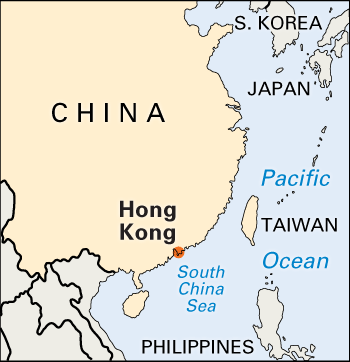
Além da grandiosa festa de Réveillon na Praia de Copacabana, outras cidades brasileiras realizam grandes festas populares: Fortaleza (Praia de Iracema), Recife (na faixa da praia que se estende de Boa Viagem ao Pina), Salvador (na Praça Cairu, ao lado do Mercado Modelo, as margens da Baía de Todos os Santos), Florianópolis (na ponte Hercílio Luz), São Paulo (Avenida Paulista), dentre outras. De forma geral, todas as capitais nordestinas realizam suas festas à beira-mar, que são organizadas pelas prefeituras dessas cidades e que contam com o apoio da iniciativa privada, considerando-se a grave crise econômica que estamos vivendo.
A Praia de Ponta Negra e a Ponte Newton Navarro serão palcos para as queimas de fogos em Natal, que atrai milhares de natalenses e turistas.
Natal, Rio Grande do Norte, Brasil/Brasilien/Brazil
São muitas as opções para se esperar 2017 em uma grande festa, em lugares bem especiais, porém, não interessa onde você vai estar, a melhor Festa de Réveillon, é a que vamos estar com as pessoas que amamos ou até mesmo sozinho(a), mas, com o coração cheio de amor e esperança, torcendo e acreditando que tudo será melhor no Ano Novo que está chegando! Feliz 2017, que o Novo Ano traga a paz e o amor, tão necessários para esses tempos difíceis que atravessamos!
DIE SILVESTER FESTIVALS: Wo und Wie?
Immer nach Weihnachten am Ende des Jahres stellt sich die Frage, wenn wir Freunde und Bekannte treffen, wo und wie man denn in das neue Jahr hineinfeiert. Die Silvester Festivals bringen alljährlich immer Tausende von Menschen zusammen, um die Ankunft des neuen Jahres zu zelebrieren.
Die bekanntesten Silvester-Parties finden in den großen Metropolen unserer Welt statt, um nur einige hier zu erwähnen wie: New York am Times Square, die Brücken und das Riesenrad an der Themse in London, in Tokio die Shibuya Kreuzung, Abu Dhabi, Hauptstadt der Vereinigten Arabischen Emirate, Sydney und seine Brücke in Australien, Hong Kong, Paris mit Champs Elysées , Berlin und sein Brandenburger Tor und natürlich auch Rio de Janeiro mit dem Copacabana Beach.
Das Schöne an diesen Veranstaltungen ist, dass sie frei zugänglich sind, man muss nur anwesend sein und einfach den Moment zu genießen. In der Regel sind es die grandiosen Feuerwerke, die Musikshows mit bekannten Künstlern und das malerische Umfeld, die solche Mega-Events zu Magneten für Menschenmassen werden lassen.
Viele dieser Feuerwerksinszenierungen kennen wir dann schon von den Nachrichten im Fernsehen, da das Neue Jahr aufgrund der Zeitzonen an vielen Orten dieses Planeten schon begonnen hat, bevor es dann schließlich bei uns in Brasilien ankommt. Würden wir theoretisch am 31. Dezember von Samoa aus immer westwärts durch die verschiedenen Zeitzonen fliegen dann könnten wir theoretisch in den Genuß vieler dieser Mega-Feuerwerke kommen und viele Male das neue Jahr feiern: Samoa, Fidschi, Neuseeland, Tonga, Sydney, Papa-Neuguinea, Tokio, China, South-East-Asia, Äthiopien, Europa…Amerikas, aber wie gesagt, das ist nur „theoretisch“ so…!! Das mit Flügen zu bewerkstelligen wäre kompliziert und auch sehr kostspielig. Aber dafür ist es einfacher dies mit webcams zu tun, siehe Youtube „sven oswald“ und „zeitzonen“.
Viele Silvester-Parties in Brasilien, ein Land mit 7.000 km Küste, finden an den Stränden statt, vor Mitternacht oft mit Manifestationen religiösen afrikanischen Ursprungs, wie Umbanda und Candomblé, wenn dann die Leute tanzen und kleine Gaben wie Parfüm und Blumen in erster Linie für die Königin des Meeres, Iemanjá, traditionsgemäß in das Meer werfen. Es ist üblich, weiße Kleidung in dieser Nacht zu tragen, was Frieden symbolisiert, von allen doch so sehr gewünscht!
Neben der großen Silvesterparty am Strand der Copacabana, veranstalten viele brasilianische Städte große Festivals am Strand: Fortaleza (Praia de Iracema), Recife (Strandbereich Boa Viagem/Pina), Salvador (Nähe Mercado Modelo), Florianópolis (Hercilio Luz Brücke), Sao Paulo (Avenida Paulista).
Generell finden in allen nordöstlichen Metropolen die Parties am Meer statt, sie werden von den Kommunen organisiert sind und haben die Unterstützung des privaten Sektors angesichts der schweren, wirtschaftlichen Krise, die wir momentan durchlaufen.
Der Strand in Ponta Negra und die Brücke Newton Navarro sind die Bühnen für die Feuerwerke in Natal, die Tausende von Touristen und Einheimische anziehen.
Natal, Rio Grande do Norte, Brasil/Brasilien/Brazil
Es gibt viele Möglichkeiten einer großen Party an ganz besonderen Orten teilzunehmen, um das Jahr 2017 zu erwarten, jedoch unabhängig davon, die beste Silvesterparty ist, dort zu sein mit den Menschen, die wir lieben oder auch alleine, aber mit dem Herzen voller Liebe und der Hoffnung, dass alles im neuen Jahr besser sein möge! Möge 2017 Frieden und Liebe bringen, so sehr notwendig für diese schwierigen Zeiten, die wir gerade durchleben!
THE NEW YEAR´S EVE: Where and How?
Always after Christmas at the end of the year, the question arises when we meet friends and acquaintances, where and how to celebrate the new year. Every year the New Year’s Eve festivals bring thousands of people together to celebrate the arrival of the New Year.
The most famous New Year’s Eve parties take place in the great metropolises of our world, to name but a few: New York Times Square, the Bridges and the Big Wheel on the Thames in London, Tokyo at the Shibuya Crossing, Abu Dhabi in United Arab Emirates, Sydney and its bridge in Australia, Hong Kong, Paris with Champs Elysées , Berlin and its Brandenburg Gate and, of course, Rio de Janeiro with famous Copacabana Beach.
The beauty of these events is that they are freely accessible, you just have to be present and simply enjoy the moment. As a rule it is the grandiose fireworks, the music shows with famous artists and the picturesque surroundings that make such mega-events into magnets for human masses.
We already know many of these fireworks productions from the news on TV since the New Year has already begun in many parts of this planet because of the time zones, before finally arriving in Brazil. If we would theoretically fly westward through various time zones from Samoa on December 31, then we could theoretically enjoy many of these mega-fireworks and celebrate the New Year many times: Samoa, Fiji, New Zealand, Tonga, Sydney, Papa- New Guinea, Tokyo, China, South-East Asia, Ethiopia, Europe … America, but as I said, this is only “theoretically” so … !! To deal this with flights would be complicated and also very expensive. But it is easier to do this with webcams, see Youtube ” and “time zones”.
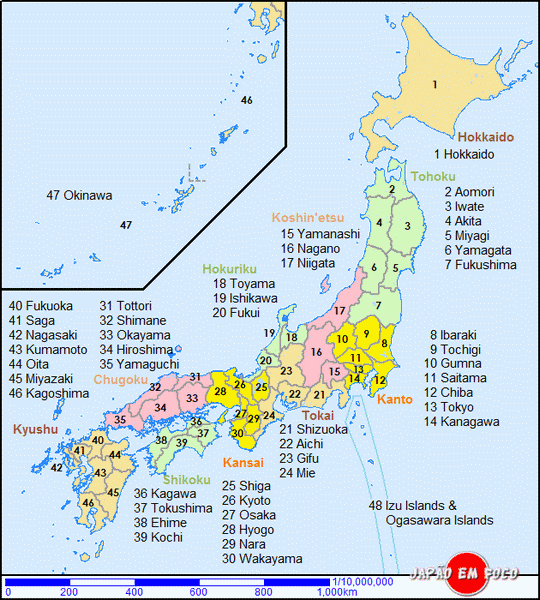
Many New Year’s Eve parties in Brazil, a country with 7,000 km of coastline, take place on the beaches, before midnight often with manifestations of religious African origin, such as Umbanda and Candomblé. When then people dance they dedicate small gifts like perfume and flowers to the queen of the sea, Iemanjá, throwing them traditionally into the sea. It is custom to wear white clothes that night, symbolizing peace which is so much desired by everyone nowadays!
In addition to the large New Year’s Eve party on Copacabana Beach, many Brazilian cities organize large festivals on the beach: Fortaleza (Praia de Iracema), Recife (Boa Viagem / Pina beach area), Salvador (near Mercado Modelo), Florianópolis (Hercílio Luz Bridge), Sao Paulo (Paulista Avenue).
As a general rule, the seaside parties take place in all the northeastern cities, they are organized by the municipalities and have the support of the private sector in the face of the serious economic crisis that we are currently experiencing.
The beach at Ponta Negra and the bridge Newton Navarro are the stages for the fireworks in Natal, which attract thousands of tourists and locals.
Natal, Rio Grande do Norte, Brasil/Brasilien/Brazil
There are many opportunities for a great party to attend very special places to expect the year 2017, however regardless of the best New Year’s Eve party, to be there with the people we love or even alone, but with the heart full of love and the hope that everything in the new year may be better! May 2017 bring peace and love, so very necessary for these difficult times we are going through!
Apresentar lugares visitados ao redor do mundo e proporcionar um intercâmbio de informações com nossos visitantes./Display places visited around the world and provide an exchange of information with our visitors./Weltweit besuchte Orte vorstellen und einen Informationsaustausch mit unseren Besuchern anregen.