A região do Douro, também conhecida como Vale do Douro, é uma impressionante região vinícola no norte de Portugal. Estende-se ao longo do rio Douro e é caracterizada pela sua paisagem deslumbrante, rica tradição vitivinícola e vinhas históricas.
O Vale do Douro é famoso pelas suas vinhas em socalcos íngremes, que foram tradicionalmente projetados para cultivar uvas para a produção do vinho do Porto. A região também é renomada pelos seus vinhos tintos, feitos a partir de variedades de uvas locais como Touriga Nacional, Tinta Roriz e Touriga Franca. A produção de vinho na região do Douro combina técnicas de ponta com experiência centenária, refletindo as condições climáticas e solos únicos da área.
Além das vinhas, o Vale do Douro também oferece aldeias pitorescas, quintas históricas e uma variedade de atividades para entusiastas do vinho e turistas.
Graças ao contacto de um amigo, conseguimos organizar um passeio a partir do Porto, incluindo um cruzeiro no Douro e almoço numa quinta, o que pagamos separado. Contato: Sr. Antônio – Tel.: 351 932 280 202
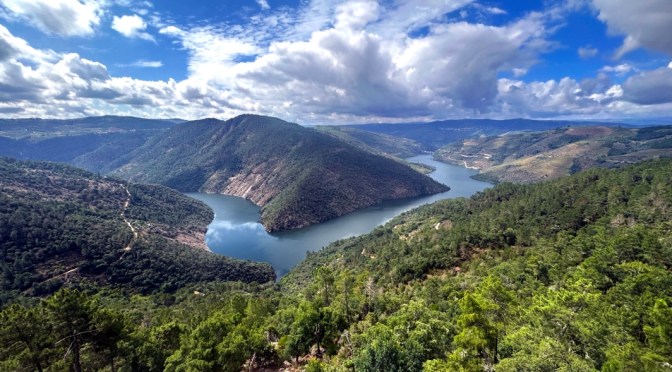
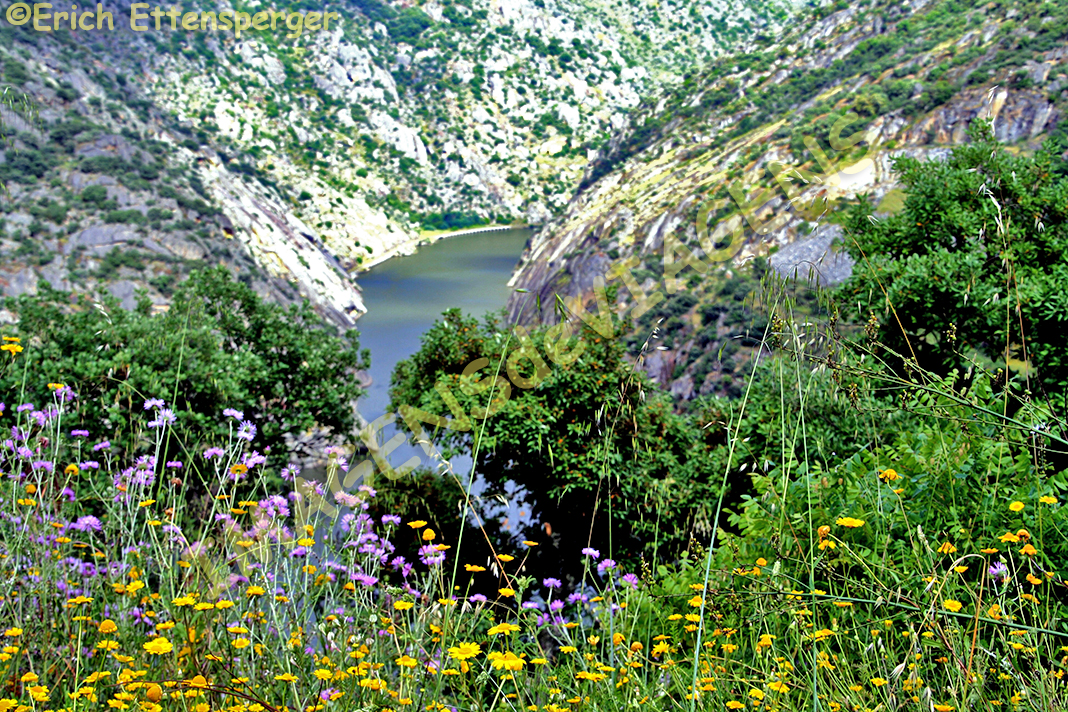
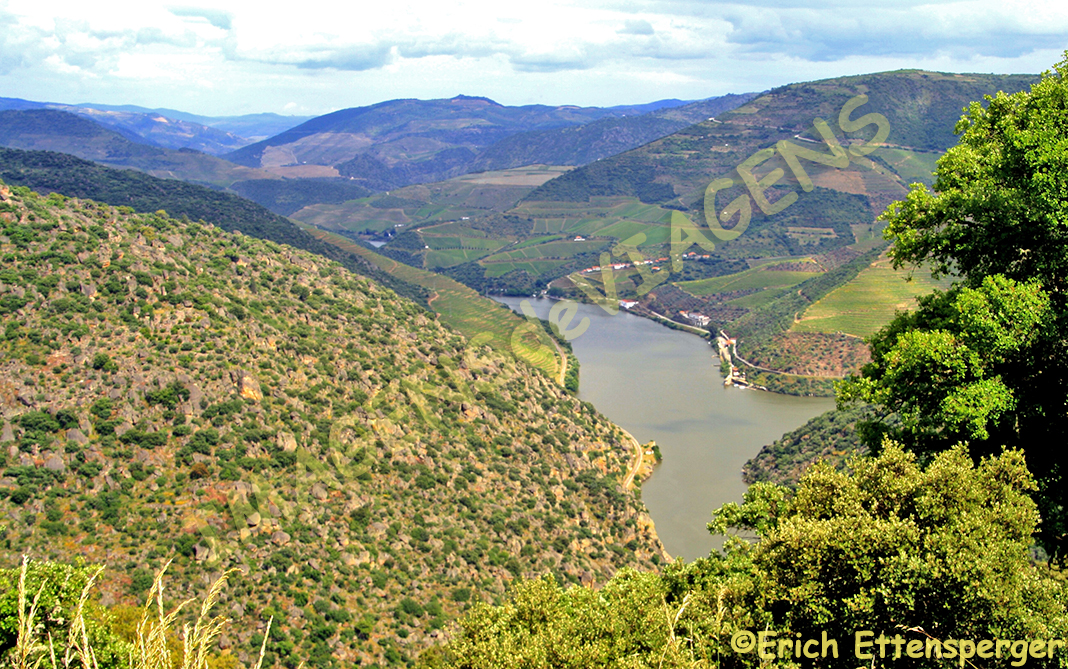
Saímos de Porto as 9 horas da manhã e inicialmente visitamos o Mirante do Ujo, um dos muitos mirantes (ou miradouros) localizados na Concelho de Alijó, na região do Alto Douro Vinhateiro. Desse ponto se avista o vale e a represa do rio Tua. Desse lugar, seguimos com o propósito de realizar o passeio de barco que parte do Pinhão. Aliás, um lindo passeio pelo Rio Douro onde se aprecia os vinhedos e a paisagem repousante. Após esse passeio fomos almoçar no Restaurante Terraçu´s com vista deslumbrante para o Vale do Douro.
As fotos a seguir podem lhe dar impressões sobre este dia muito divertido.
Region Douro – Paradies für Weinliebhaber
Die Region Douro, auch bekannt als Douro-Tal, ist eine beeindruckende Weinregion im Norden Portugals. Sie erstreckt sich entlang des Flusses Douro und zeichnet sich durch ihre atemberaubende Landschaft, ihre reiche Weinbautradition und ihre historischen Weinberge aus. Das Douro-Tal ist berühmt für seine steilen Terrassenweinberge, die auf traditionelle Weise angelegt wurden, um den Anbau von Trauben für die Herstellung von Portwein zu ermöglichen. Die Region ist auch für ihre Rotweine bekannt, die aus lokalen Rebsorten wie Touriga Nacional, Tinta Roriz und Touriga Franca hergestellt werden. Die Weinherstellung in der Region Douro kombiniert modernste Techniken mit jahrhundertealter Erfahrung und spiegelt die einzigartigen klimatischen Bedingungen und Böden der Region wider. Neben den Weinbergen bietet das Douro-Tal auch malerische Dörfer, historische Quintas (Weingüter) und eine Vielzahl von Aktivitäten für Weinliebhaber und Touristen.
Dank des Kontakts eines Freundes konnten wir eine maßgeschneiderte Tour ab Porto organisieren, inklusive einer Bootsfahrt auf dem Douro und Mittagessen auf einem Weingut, beides nicht teil des Preises für den Ausflug. Kontakt: Herr Antônio – Tel.: 351 932 280 202
Wir verließen Porto um 9 Uhr morgens und besuchten zunächst den Mirante do Ujo, einen der vielen Aussichtspunkte in der Gemeinde Alijó in der Region Alto Douro Vinhateiro. Von hier aus können Sie das Tal und den Staudamm des Tua-Flusses sehen. Von hier aus machten wir eine Bootsfahrt, Ausgangspunkt Pinhão. Eine wunderschöne Spazierfahrt auf dem Fluss Douro, bei dem Sie die Weinberge und die erholsame Landschaft genießen können. Nach dieser Tour genossen wir ein Mittagessen in Terraçu’s Restaurant mit atemberaubendem Blick auf das Douro-Tal.
Die folgenden Fotos möchten Ihnen Eindrücke von diesem sehr unterhaltsamen Tag vermitteln.
Douro region – paradise for wine lovers
The Douro region, also known as the Douro Valley, is an impressive wine region in northern Portugal. It stretches along the Douro River and is characterized by its breathtaking landscape, rich winemaking tradition, and historic vineyards. The Douro Valley is famous for its steep terraced vineyards, which were traditionally designed to cultivate grapes for the production of Port wine. The region is also renowned for its red wines, made from local grape varieties such as Touriga Nacional, Tinta Roriz, and Touriga Franca. Winemaking in the Douro region combines state-of-the-art techniques with centuries-old expertise, reflecting the unique climatic conditions and soils of the area. In addition to the vineyards, the Douro Valley also offers picturesque villages, historic quintas (wine estates), and a variety of activities for wine enthusiasts and tourists.
Thanks to a friend’s contact, we were able to organize a tailor-made tour from Porto, including a cruise on the Douro and lunch at a winery, both of which were not included in the price of the excursion. Contact: Mr. Antônio – Tel.: 351 932 280 202
We left Porto at 9 AM and first visited the Mirante do Ujo, one of the many viewpoints in the municipality of Alijó in the Alto Douro Vinhateiro region. From here you can see the valley and dam of the Tua River. From there we took a boat trip, starting point Pinhão. A beautiful cruise on the Douro River enjoying the vineyards and relaxing countryside. After this tour we enjoyed lunch at Terraçu’s Restaurant with breathtaking views of the Douro Valley.
The following photos can give you impressions of this very interesting day.
O mundo definitivamente tem lugares espetaculares e deslumbrantes. Nesse post resolvemos elencar 12 lugares que consideramos especiais na América do Sul.
As razões que nos levaram a destacar esses locais estão diretamente relacionados com sua beleza, importância histórica para a história do lugar e até mesmo para a humanidade, como é o caso de Machu Picchu. Uma outra razão é a relevância no que diz respeito a evolução geológica da terra, como o Monte Roraima e o Parque Nacional Torres del Paine, por exemplo. Também consideramos a importância ambiental do lugar.
Os 12 Lugares Especiais na América do Sul escolhidos pelo Blog Imagens e Viagens são os seguintes:
Observação: se você quiser continuar “viajando” com o nosso blog, clique no botão “seguir” localizado no canto inferior direito dessa página. Você também pode “viajar” pelo Brasil conhecendo nosso livro impresso 66 x Brasil e sua versão digital 66 Belezas do Brasil.
12 ganz spezielle Orte in Südamerika
Die Welt offeriert definitiv spektakuläre und atemberaubende Orte. In diesem Beitrag haben wir beschlossen, 12 Orte aufzulisten, die wir in Südamerika als ganz besonders betrachten.
Die Gründe, die uns veranlassten, diese Orte hervorzuheben, hängen direkt mit ihrer Schönheit, ihrer historischen Bedeutung für die Geschichte des Ortes und sogar für die Menschheit zusammen, wie dies z.B. bei Machu Picchu der Fall ist.
Ein weiterer Grund ist die Relevanz für die geologische Entwicklung des Landes, wie zum Beispiel der Monte Roraima und der Nationalpark Torres del Paine. Wir berücksichtigen auch die ökologische Bedeutung des Ortes.
Unsere 12 besonderen Orte in Südamerika, die vom Bilder- und Reiseblog ausgewählt wurden, sind wie folgt:
Hinweis: Falls Sie unserem Blog folgen wollen, dann klicken Sie unten rechts einfach auf “Weiter”, Sie werden dann zukünftig automatisch informiert. Sie können auch durch Brasilien reisen und unser Buch 66 SEHENSWÜRDIGKEITEN IN BRASILIEN kennenlernen und 66 x Brazil – A Mosaic of Beauties.
12 very special places in South America
The world definitely offers spectacular and breathtaking places. In this post, we’ve decided to list 12 places that we consider to be very special in South America.
The reasons that led us to highlight these places are directly related to their beauty, their historical importance for the history of the place and even for humanity, as is the case with Machu Picchu, for example.
Another reason is the relevance for the geological development of the country, such as the Monte Roraima and the Torres del Paine National Park. We also take into account the ecological importance of the place.
Our 12 special places in South America selected by the picture and travel blog are as follows:
Note: If you want to follow our “Travels” on the blog, simply click on “Seguir” in the lower right corner, you will be then automatically informed in the future. You can continue traveling with us with our book Brazil´s 66 Beautiful Sites and 66 x Brazil – A Mosaic of Beauties.
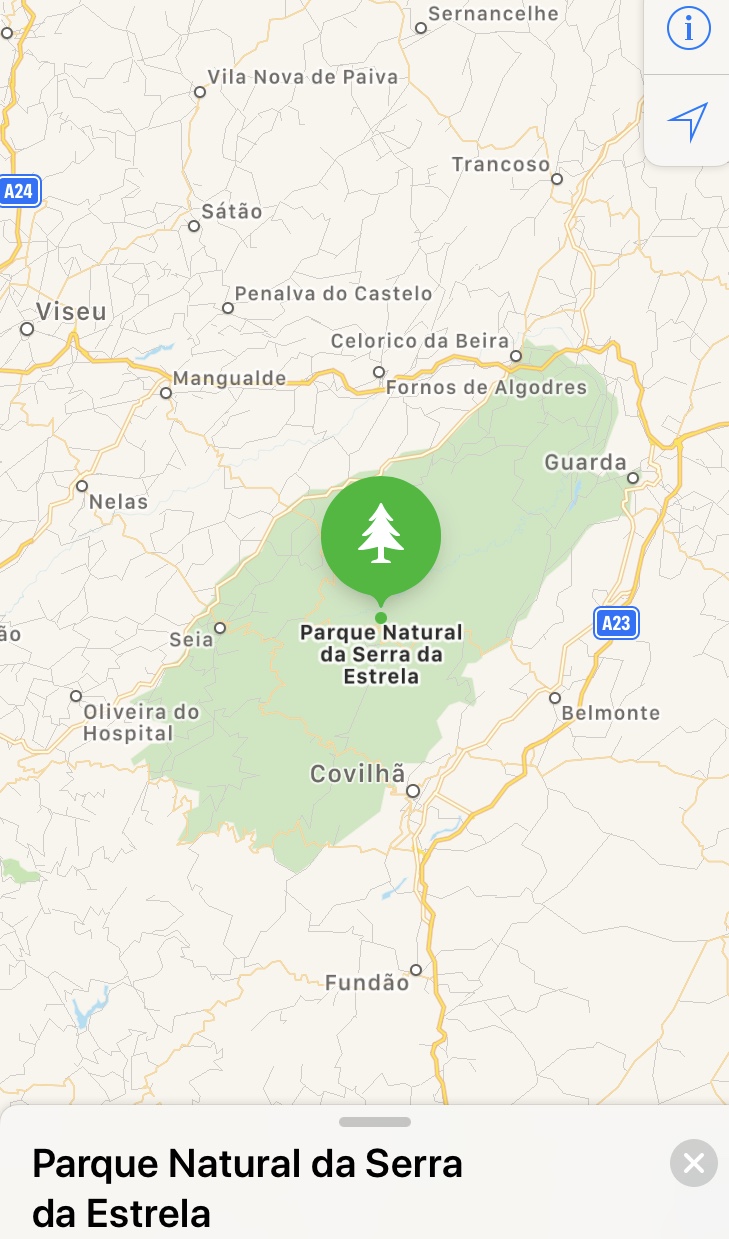
Portugal é definitivamente um país com uma variedade de atrações turísticas que recebe anualmente milhões de visitantes atraídos pela sua beleza natural, pela sua história, gastronomia, dentre outros. Erich e eu também fomos atraídos pelas terras portuguesas e ficamos encantados pelos belos cenários do Parque Natural da Serra da Estrela, considerada por muitos, a mais bela serra portuguesa.
Fonte/Quelle/Source: Google Maps.
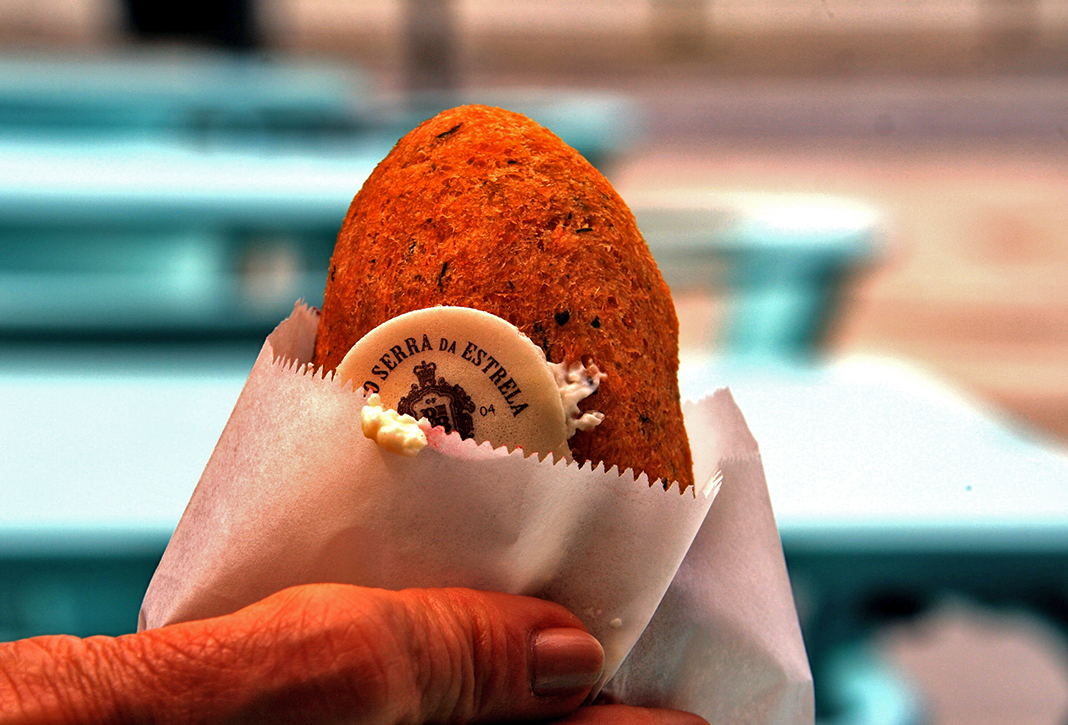
Por incrível que pareça ser, a Serra da Estrela é mais famosa pelo seu queijo delicioso (com casquinha dura por fora e cremoso por dentro)
do que pelas paisagens cinematográficas que atraem os visitantes para curtirem a neve no inverno e as lagoas, praias fluviais,
trilhas e cachoeiras no verão. Na primavera, então nem se fala, a serra se cobre com um manto de flores!
Depois de alguns dias na incrível cidade de Porto, nos deslocamos, de ônibus, para Covilhã, cidade escolhida para ser nossa base para visitar a Serra da Estrela, distante aproximadamente, 250 km (em torno de 3 horas e meia), com muitas ladeiras e recantos onde é possível apreciar a paisagem verdejante dos arredores.
Após uma viagem tranquila chegamos na pacata Covilhã. Preferimos não alugar carro lá e por isso, resolvemos percorrer nosso roteiro, de táxi (pagamos 100 euros).
Em um dia, subimos a Serra da Estrela apreciando a beleza natural e chegamos até a Torre, com 1993 metros de altitude.
O percurso é pontilhado por pequenas aldeias. No caminho visitamos duas atrações imperdíveis: o Poço do Inferno, que é uma cachoeira que finaliza em um lago de águas límpidas
e o Covão d´Ametade, que é a nascente do rio Zêzere.
Em seguida visitamos, Manteigas, de onde se tem belas vistas da serra
e que possui um centro bem charmoso. Depois de Manteigas, visitamos Sabugueiro, com belas vistas na subida de acesso à cidade.
Por onde você anda, é possível encontrar restaurantes simples com comida deliciosa.
Por isso, optamos por não alugar carro e poder parar aqui e acolá para saborear as delicias do lugar (enchidos típicos da região, o famoso queijo, além de outras comidinhas) e tomar uma taça de vinho…
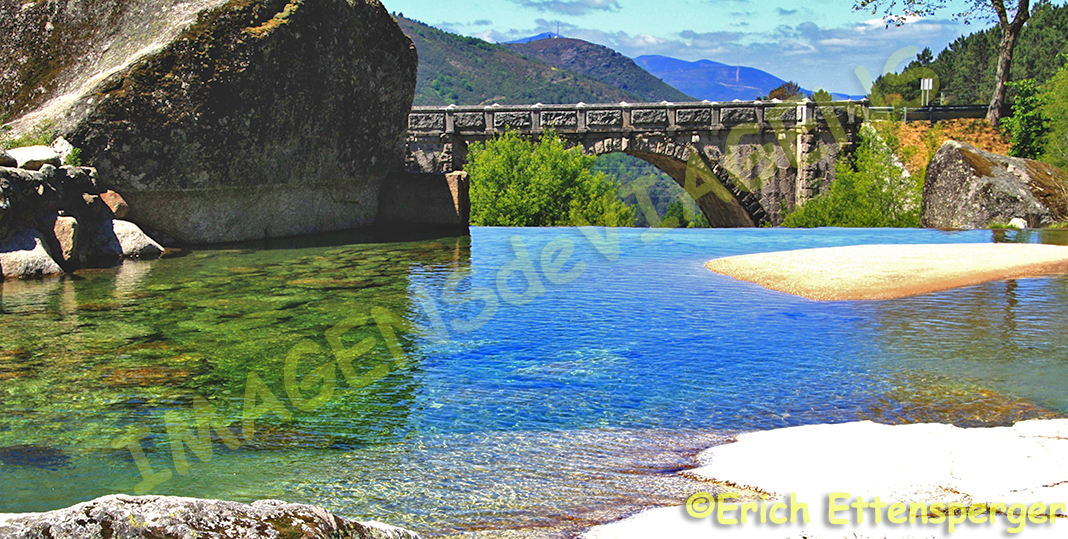
No caminho, visitamos a praia fluvial de Loriga,
Ponte da praia fluvial de Loriga, pertencente ao Concelho de Seia, do distrito de Guarda/Brücke des Flussstrandes von Loriga, gehört zur Gemeinde von Seia, des Bezirks von Guarda/Bridge of the fluvial beach of Loriga, belonging to the Municipality of Seia, of the district of Guarda.
Continuando nosso roteiro, visitamos Belmonte, famosa por ser a cidade onde nasceu o famoso navegador português Pedro Álvares Cabral. Eu, como brasileira, fiz questão de conhecer a terra do descobridor do Brasil.
Nesse mesmo dia, incluímos no nosso roteiro, a aldeia histórica de Piodão, localizada em outra serra, nas proximidades, a Serra do Açôr, considerada em Portugal como “Imóvel de Interesse Público”.
Fonte/Quelle/Source: Google Earth
Essa pequena vila caracteriza-se por possuir um conjunto urbano constituído de edificações construídas com a pedra xisto,
de cor escura, que tornam o lugar realmente especial e muito, muito charmoso com suas ruas íngremes e tortuosos. Se você for viajar para àquela área, vale a visita!
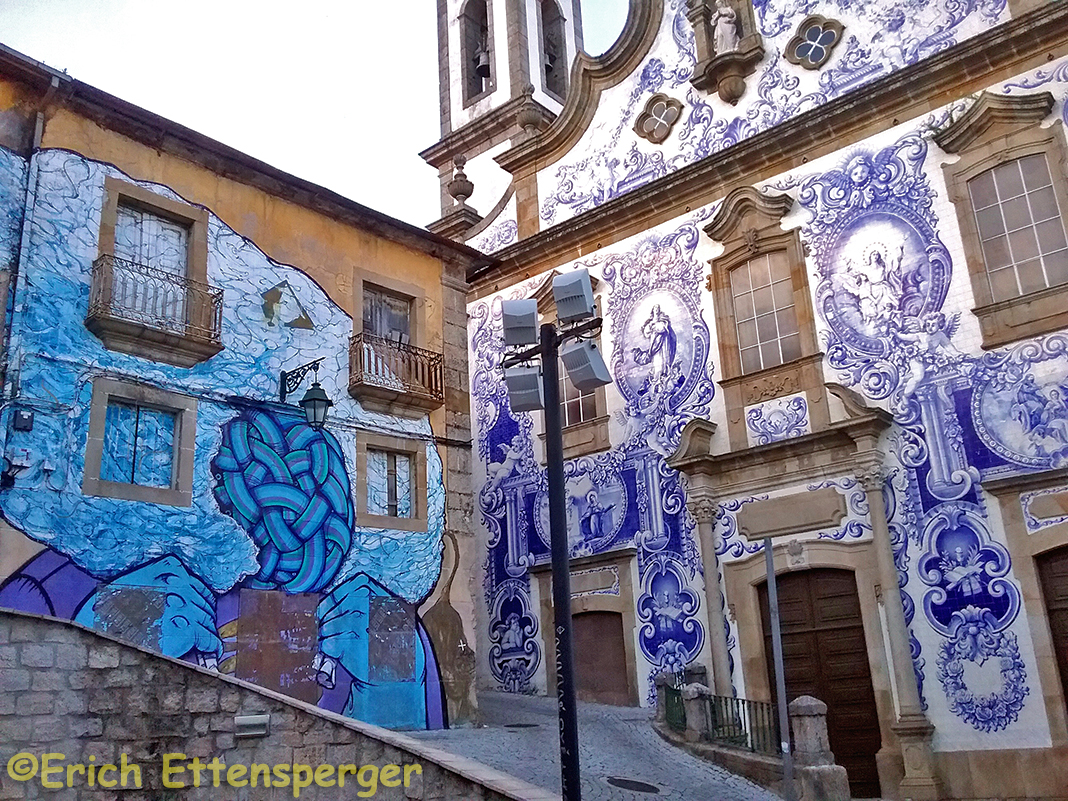
O nosso roteiro foi realmente espetacular porque a região é encantadora e tem realmente muitas belezas para se apreciar. No final desse dia, retornamos à Covilhã felizes por ter apreciado tantas paisagens inesquecíveis e fomos celebrar o passeio em um restaurante simples, mas como comida muito especial e preço modesto: a Taberna A Laranjinha. De Covilhã, guardamos a lembrança desse restaurante e da bela igreja de Santa Maria, toda revestida com azulejos.
Da Serra da Estrela, guardamos a lembrança de ter visto paisagens espetaculares de grande beleza e quietude!
Observação: se você quiser continuar “viajando” com o nosso blog, clique no botão “seguir” localizado no canto inferior direito dessa página. Você também pode “viajar” pelo Brasil conhecendo nosso livro impresso 66 Brasil e sua versão digital 66 Belezas do Brasil.
SERRA DA ESTRELA – SPEKTAKULÄRE LANDSCHAFTEN
Portugal ist auf jeden Fall ein Land mit einer Vielzahl von touristischen Attraktionen, die jährlich Millionen von Besuchern anziehen, ein Land überzeugend durch seine natürliche Schönheit, seine Geschichte, Gastronomie unter anderem.
Erich und ich waren auch von diesen portugiesischen Landschaften angesogen worden und wurden von dem wunderschönen Bergszenario des Naturparks Serra da Estrela belohnt, von vielen als die schönste portugiesische Berglandschaft betrachtet.
Fonte/Quelle/Source: Google Maps.
Erstaunlich, die Serra da Estrela ist berühmt für seinen köstlichen Käse (mit hartem Rand außen und innen wunderbar cremig),
für seine kinohaften Landschaften, welche die Besucher im Winter wegen des Schnees anziehen und im Sommer wegen der Flussstrände,
den Seeen, den Wanderwegen und Wasserfällen.
Ganz zu schweigen vom Frühling, wenn dann die Berge mit einem unglaublichen farbigen Blumenmantel überzogen sind!
Nach ein paar Tagen in der wunderschönen Stadt Porto fuhren wir mit einem Bus nach Covilha, die Stadt von uns als Basis für den Besuch der Serra da Estrela ausgewählt, etwa 250 km (ca. 3 Stunden) von Porto entfernt, mit vielen Anstiegen und Kurven.
Nach einer ruhigen Reise kamen wir in Covilhã an. Wir bevorzugten es, dort kein Auto zu mieten, sondern ein Taxi für unsere Route zu nehmen, wofür wir 100 Euro zahlten, dafür aber die gesamte Route genieβen konnten.
An einem Tag fuhren wir die Serra da Estrela hinauf, genossen die natürliche Schönheit und erreichten den Turm auf dem Gipfel auf 1993 Metern Höhe.
Die Route ist mit kleinen Dörfern übersät. Auf dem Weg besuchen wir zwei sehenswerte Attraktionen: Poço do Inferno, ein Wasserfall, der in einem sehr klaren See endet
und Covão d’Ammetade, die Quelle des Flusses Zêzere.
Dann besuchen wir Manteigas mit einem wunderschönen Blick auf die Berge hat und das auch über ein sehr charmantes Ortszentrum verfügt.
Nach Manteigas besuchten wir Sabugueiro mit schönen Aussichten auf den Weg in die Stadt. Wo immer Sie unterwegs sind, überall finden Sie einfache Restaurants mit leckerem Essen mit typischen Würsten der Region, dem berühmten Käse und natürlich einem Glas Wein.
Auf dem Weg besuchten wir den Fluvialstrand von Loriga.
Ponte da praia fluvial de Loriga, pertencente ao Concelho de Seia, do distrito de Guarda/Brücke des Flussstrandes von Loriga, gehört zur Gemeinde von Seia, des Bezirks von Guarda/Bridge of the fluvial beach of Loriga, belonging to the Municipality of Seia, of the district of Guarda.
In Fortsetzung unserer Reiseroute besuchten wir Belmonte, berühmt als die Stadt, in der der berühmte portugiesische Seefahrer Pedro Álvares Cabral geboren wurde. Für mich als Brasilianerin war es wichtig, die Heimat des Entdeckers Brasiliens kennenzulernen.
Am gleichen Tag besuchten wir das historische Dorf Piodão , das auf einem anderen Berg ganz in der Nähe liegt, der Serra do Açôr, das in Portugal als “Eigentum des öffentlichem Interesses” gilt.
Fonte/Quelle/Source: Google Earth
Diese kleine Stadt zeichnet sich durch einen urbanen Komplex aus, der aus Gebäuden besteht gebaut mit dunklem Schieferstein, die somit dem Ort mit seinen steilen und gewundenen Gassen einen ganz besonderen Charme verleiht.
Wenn Sie in dieser Gegend unterwegs sein sollten, dieser Ort ist unbedingt einen Besuch wert!
Unsere Rundreise war wirklich spektakulär, weil die Region sehr viele Schönheiten offeriert. Am Ende dieses Tages kehrten wir nach Covilhã zurück, glücklich, so viele unvergessliche Landschaften genossen zu haben, und wir feierten unseren Ausflug in einem einfachen Restaurant, aber mit ganz besonderem Essen und angenehmen Preis: die Taverne Taberna A Laranjinha.
Bezüglich Covilhã erinnern wir uns an dieses Restaurant und die wunderschöne Kirche Santa Maria mit all ihren blauen Fliesen.
Von der Serra da Estrela behalten wir die Erinnerung daran, spektakuläre Landschaften von großer Schönheit und Stille gesehen zu haben!
Hinweis: Falls Sie unserem Blog folgen wollen, dann klicken Sie unten rechts einfach auf “Weiter”, Sie werden dann zukünftig automatisch informiert. Sie können auch durch Brasilien reisen und unser Buch 66 SEHENSWÜRDIGKEITEN IN BRASILIEN kennenlernen.
SERRA DA ESTRELA – SPECTACULAR LANDSCAPES
Portugal is definitely a country with a multitude of tourist attractions that brings millions of visitors each year, it is a country convincing by its natural beauty, its history and gastronomy among others.
Erich and I were also drawn to these Portuguese landscapes and were rewarded by the beautiful mountain scenery of the Serra da Estrela Natural Park, regarded by many people as the most beautiful Portuguese mountain landscape.
Fonte/Quelle/Source: Google Maps.
Amazing, the Serra da Estrela is famous for its delicious cheeses (with a hard edge outside and inside wonderfully creamy),
for its cinema-like landscapes, which attract visitors in the winter for the snow and in summer for river beaches,
the lakes, the trails, river beaches and waterfalls.
Not to mention spring, when the mountains are covered with an incredible colored flower coat!
After a few days in the beautiful city of Porto we went by bus to Covilha, the city chosen by us as the base for the visit to the Serra da Estrela, about 250 km (about 3 hours) from Porto, with many ascents and bends.
After a quiet journey we arrived in Covilhã. We preferred not to rent a car there, but to take a taxi for our route for which we paid 100 euros, but could so enjoy the whole route.
One day we drove up the Serra da Estrela, enjoying the natural beauty and reaching on the top the tower at an altitude of 1993 meters.
The route is dotted with small villages. On the way we visit two interesting attractions: Poço do Inferno, a waterfall that ends in a very clear lake
and Covão d’Ammetade, the source of the river Zêzere.
Then we visit Manteigas with a beautiful view of the mountains and also offering a very charming town center.
After Manteigas we visited Sabugueiro with beautiful views on the way to the city. Wherever you go everywhere you will find simple restaurants serving delicious food with typical local sausages, the famous cheeses and, of course, a glass of wine…
On the way, we visited the fluvial beach of Loriga.
Ponte da praia fluvial de Loriga, pertencente ao Concelho de Seia, do distrito de Guarda/Brücke des Flussstrandes von Loriga, gehört zur Gemeinde von Seia, des Bezirks von Guarda/Bridge of the fluvial beach of Loriga, belonging to the Municipality of Seia, of the district of Guarda.
Continuing our itinerary we visited Belmonte, famous as the city where the famous Portuguese sailor Pedro Álvares Cabral was born. For me as a Brazilian, it was important to get to know the home of the discoverer of Brazil.
On the same day, we visited the historic village of Piodão, which is very close to another mountain, the Serra do Açôr, which in Portugal is considered a “property of public interest”.
Fonte/Quelle/Source: Google Earth
This small town is characterized by an urban complex made up of buildings built with dark slate stone, giving the place a special charm with its steep and winding streets.
If you are traveling in this area, this place is definitely worth a visit!
Our tour was really spectacular because the region offers many beauties. At the end of the day we returned to Covilhã, happy to have enjoyed so many unforgettable landscapes, and we celebrated our trip in a simple restaurant but with very special food and pleasant price: the Tavern Taberna A Laranjinha.
Regarding Covilhã we remember this restaurant and the beautiful church of Santa Maria with all its blue tiles.
From the Serra da Estrela we keep the memory of having seen spectacular landscapes of great beauty and silence!
Note: If you want to follow our “Travels” on the blog, simply click on “Seguir” in the lower right corner, you will be then automatically informed in the future. You can continue traveling with us with our book Brazil´s 66 Beautiful Sites.
Nesse post, trato sobre o Vale do Douro, uma das paisagens mais espetaculares que Erich e eu já vimos nas nossas andanças pelo mundo.
Se você planejar uma viagem à cidade de Porto, recomendo que inclua no seu roteiro o Vale do Douro. Trata-se de uma região denominada “Alto Douro Vinhateiro”considerada Patrimônio da Humanidade pela UNESCO.
Há passeios de um dia a essa região, tipo “bate-volta”, saindo do Porto. Porém, o melhor, em minha opinião, é alugar um carro e descobrir a região devagar, parando onde você achar conveniente, pois a área é pontilhada por muitos vilarejos charmosos.
As estradas são estreitas e ladeadas pelo verde da vegetação e pelo colorido das flores que são abundantes na primavera (viajamos no final de maio), começo da alta estação turística.
Chegamos na região através da cidade de Vila Real e a partir daí começamos a apreciar paisagens deslumbrantes.
O grande cenário é constituído pelo vale formado pelas montanhas, que abrigam muitas quintas e pequenas cidades. Algumas dessas quintas também recebem hóspedes, para quem busca um cenário de paz e beleza, é um destino recomendado.
Se você alugar um carro, fique atento (a) quando estiver conduzindo o veículo, as estradas são estreitas, com muitas curvas. Há mirantes de onde se descortina vistas espetaculares. Há um sobe e desce contínuo. Pinhão e Peso da Régua são cidades recomendadas para se hospedar. É de lá que saem os passeios de barco pelo Rio Douro.
O passeio principal nessa região é o que inclui visita à quinta, com degustação de vinho, passeio de barco e almoço. Pode se fazer o passeio de meio ou um dia completo que custa em torno de 40 a 80 euros por pessoa. A região é propícia para quem busca tranquilidade, bons vinhos e comidas deliciosas. Os portugueses do norte de Portugal são simpáticos e recebem muito bem os turistas.
Se quiser conhecer mais sobre o Vale do Douro, clique aqui.
Observação: se você quiser continuar “viajando” com o nosso blog, clique no botão “seguir” localizado no canto inferior direito dessa página.
VALE DO DOURO – BLUMEN UND WEIN
Portugal ist ein Touristenziel mit großartigen Möglichkeiten für angenehme Ausflüge.
Das Land offeriert fünf touristische Regionen auf dem Kontinent: der Norden, das Zentrum, Lissabon, Alentejo und Algarve.
In diesem Beitrag beschäftige ich mich mit dem Douro-Tal, einer der spektakulärsten Landschaften, die Erich und ich auf unseren Reisen rund um die Welt gesehen haben.
Falls Sie eine Reise in die Stadt Porto planen, dann empfehle ich Ihnen, das Vale do Douro -Tal unbedingt in Ihre Reiseroute mitaufzunehmen. Es ist die Region namens “Alto Douro Vinhateiro”, von der UNESCO zum Weltkulturerbe erklärt.
Es gibt Tagesausflüge in diese Region von Porto ausgehend. Aber meiner Meinung nach ist es das Beste, ein Auto zu mieten und diese Landschaft in aller Ruhe zu erkunden, um dort anzuhalten wo Sie es wollen, dieser Gegend mit den vielen bezaubernden Dörfern.
Die Straßen sind schmal und flankiert vom Grün der Vegetation und all den bunten Blumen, die im Frühling so reichlich vorhanden sind, wir sind Ende Mai gereist zu Beginn der Hochsaison.
Wir erreichten diese Region via die Stadt Vila Real und fortan begannen wir diese atemberaubenden Landschaften zu genieβen.
Das groβartige Szenario setzt sich aus dem Tal, den Bergen, den vielen Bauernhöfen und kleinen Dörfern zusammen. Einige dieser Farmen beherbergen auch Gäste, für diejenigen, die eine Atmosphäre von Frieden, Ruhe und Schönheit suchen, ist es ein wirklich empfehlenswertes Ziel.
Falls Sie ein Auto mieten, bleiben Sie aufmerksam beim Fahren, die Straßen sind eng und mit vielen Kurven. Unterwegs gibt es immer wieder Rastmöglichkeiten mit spektakulären Aussichten. Die Fahrt führt ständig bergauf und bergab. Pinhão und Peso da Régua sind empfehlenswerte kleine Städtchen. Von dort starten dann auch die Ausflugsschiffe auf dem Fluss Douro.
Die Haupttour in dieser Regio beinhaltet den Besuch eines Bauernhofes/Winzers mit Weinproben, Bootsfahrten und Mittagessen. Sie können einen Halbtages- oder Ganztagesausflug buchen, was dann etwa 40 bis 80 Euro pro Person kostet. Diese Regio ist ideal für diejenigen, die Ruhe, gute Weine und leckeres Essen suchen. Die Portugiesen hier im Norden des Landes sind auβerdem sehr freundlich und empfangen die Touristen sehr herzlich.
Wenn Sie mehr über das Vale do Douro erfahren möchten, klicken Sie hier.
Hinweis: Falls Sie unseren “Seguir” auf dem Blog folgen wollen, dann klicken Sie unten rechts einfach auf “Weiter”, Sie werden dann zukünftig automatisch informiert.
VALE DO DOURO – FLOWERS AND WINE
Portugal is a tourist destination with great opportunities for pleasant trips.
The country offers five tourist regions in the continent: the north, the center, Lisbon, Alentejo and Algarve.
In this article I will talk about the Douro Valley, one of the most spectacular landscapes Erich and I have seen on our travels around the world.
If you are planning a trip to the city of Porto I recommend to you to take the Vale do Douro into your travel route. It is the region called “Alto Douro Vinhateiro“, declared a UNESCO World Heritage Site.
There are one day trips going out into this region from Porto. But in my opinion it is best to rent a car and explore this countryside in peace, to stop where you want, in this area with so many charming villages.
The streets are narrow and flanked by the greenery of the vegetation and all the colorful flowers that are so abundant in spring, we have traveled in late May at the beginning of the high season.
We reached in this region via the city of Vila Real and from then on we began to enjoy these breathtaking landscapes.
The great scenario is composed of the valley, the mountains, the many farms and small villages. Some of these farms also accommodate guests, this is for those seeking for an atmosphere of peace, tranquility and beauty, it is a truly recommended destination.
If you rent a car stay attentive while driving as the roads are narrow and with lots of curves. On the way around there are always resting places with spectacular views. The trip is going constantly uphill and downhill. Pinhão and Peso da Régua are recommended small towns. From there the excursion boats on the River Douro start.
The main tour in this region includes a visit to a farm / winery with some wine tasting, boat trip and lunch. You can book a half-day or full-day excursion which costs of about 40 to 80 € per person. This region is ideal for those seeking for rest, good wines and delicious food.
The Portuguese people here in the north of the country are also very friendly and welcome the tourists very warmly.
If you want to know more about Vale do Douro, click here.
Note: If you want to follow our “Travels” on the blog, simply click on “Seguir” in the lower right corner, you will be then automatically informed in the future.
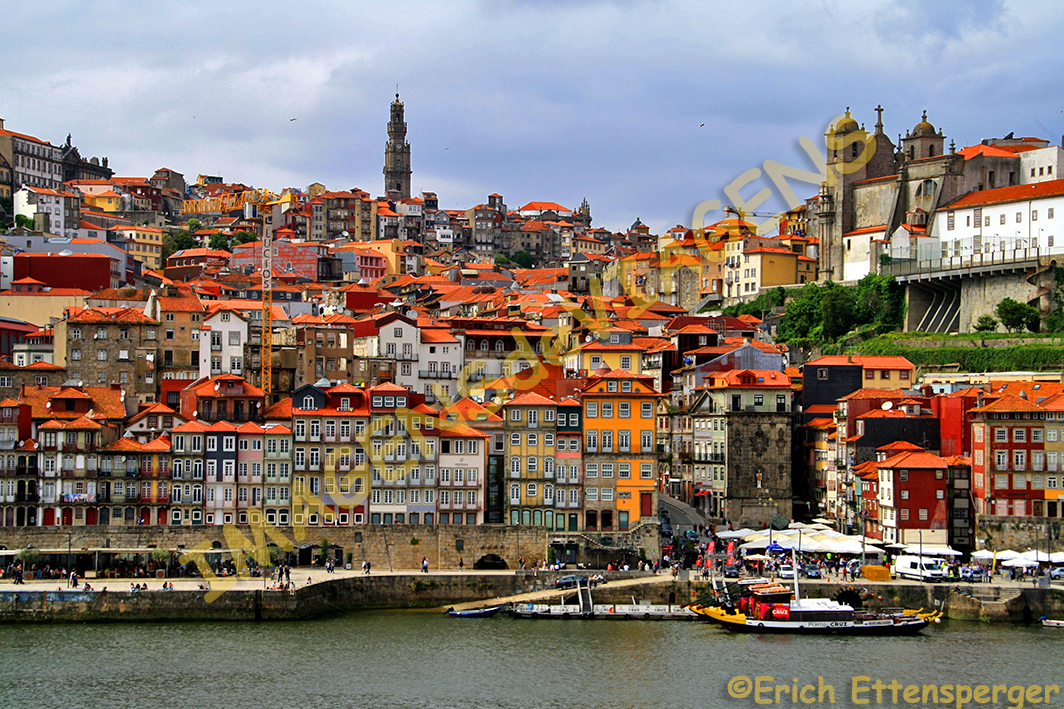
A primeira imagem que sempre veio a minha mente quando pensava em Porto, era a vista da Ponte Luís I (une Porto à Vila Nova de Gaia) com o rio Douro e os antigos sobrados coloridos com roupas penduradas nas sacadas. Esse é o cenário mais famoso de Porto fotografado por milhões de turistas que a visitam anualmente. Além disso, Porto, a segunda cidade de Portugal, é conhecida também por ser o lugar de origem do delicioso vinho do Porto. Ela possui aproximadamente 300 000 habitantes e o berço do Infante D. Henrique, o Navegador, principal promotor dos descobrimentos marítimos portugueses. O centro histórico de Porto integra a lista do Patrimônio Mundial da Humanidade da UNESCO.
Chegamos a Porto numa manhã ensolarada, guardamos a bagagem em um hotel muito bem localizado na Praça da Batalha e fomos fazer o passeio no ônibus turístico Hop on Hop off. Falando nesse tipo de transporte, aproveito para sugerir o uso desse tipo de ônibus no primeiro dia, pois é uma forma de nos orientarmos e também se ter uma visão geral da cidade. Aliás, essa é uma dica que pode ser usada em outras cidades.
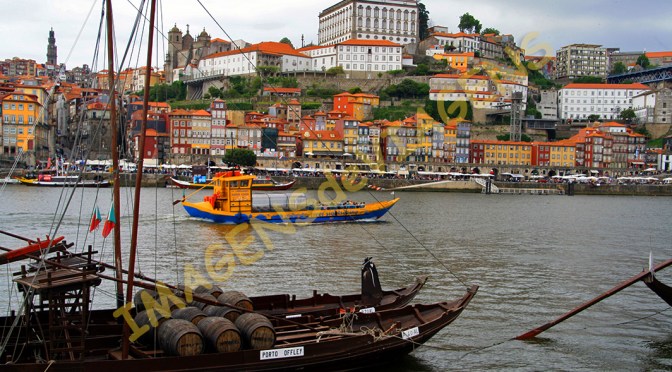
A cidade é constituída pela parte alta e pela baixa. É nessa área onde está localizado o Cais da Ribeira com a famosíssima Praça da Ribeira, cartão postal do Porto, local com muitos bares e restaurantes. O Cais da Ribeira em Porto está para a Torre Eiffel em Paris. A melhor vista do Cais da Ribeira se tem do outro lado da ponte, na cidade de Vila Nova de Gaia. Nessa cidade, na parte conhecida como Ribeira de Gaia, há um agradável calçadão atrativo para caminhadas, há venda de artesanato e também se encontra o acesso ao teleférico de Gaia. Aliás, recomendo a todos que visitarem Porto, usar esse teleférico, pois a vista é linda! Nesse lado da ponte, em Gaia, existem muitas caves, local onde o vinho do Porto envelhece e é comercializado. É possível fazer belas fotos com os barcos rabelos, hoje usados para promover caves, que transportavam o vinho das quintas onde era produzido no Alto do Douro até as caves de Gaia.
Depois de passear por essa área, o visitante pode voltar caminhando, pela parte superior da ponte Luís I e a partir daí subir para a Cidade Alta usando o funicular, que se localiza do lado esquerdo, no final dessa caminhada.
Porto é uma cidade que tem belas igrejas, dentre elas, a Igreja de São Francisco, com seu altar em talha dourada. As igrejas de Santa Catarina e Santo Idelfonso tem as fachadas revestidas de azulejos, são exemplares arquitetônicos de grande beleza. A Sé Catedral com seu altar de prata e o claustro gótico é imponente e suntuosa.
São muitos os atrativos para se visitar em Porto. Além do conjunto arquitetônico monumental do seu centro histórico, destacam-se alguns atrativos especiais como a livraria Lello com seu interior ”Art Nouveau” magnífico. O Café Majestic atrai muitos visitantes pela sua beleza. Outro prédio que vale a visita é o Palácio da Bolsa, também muito interessante, o Salão Árabe desse prédio é espetacular. A estação ferroviária de São Bento tem um conjunto de azulejos belíssimos. A Torre dos Clérigos é visita obrigatória para quem está na cidade.
O bom mesmo, é sair da parte alta e caminhar lentamente em direção ao Cais da Ribeira, apreciando o casario antigo com seus belos azulejos.
Porto também tem uma nova área de negócios, é uma área com construções novas e merece destaque para a Fundação Serralves com o Museu de Arte Contemporânea e a Casa da Música.
Se você gosta de festas juninas, vale pena conhecer as celebrações em homenagem a São João, padroeiro de Porto, a noite entre os dias 24 e 25 junho é muito animada, a festa não tem hora para começar e nem terminar, é uma das maiores festas da Europa!
Além de ser uma cidade muito interessante, Porto tem pessoas simpáticas, clima agradável na primavera, começo do verão, boa gastronomia (a maioria dos restaurantes abrem suas portas as 19:30, fecham cedo e recomendo fazer reserva no período de alta estação turística) e também pode servir de base para visitar outros atrativos nas redondezas como as cidades de Guimarães, Aveiro, por exemplo. Há tours de um dia para visitar a região vinícola do Douro, mas isso é assunto para outro post.
Porto, definitivamente é uma cidade que recomendo visitar, vou voltar!
Vista noturna da Ponte Luis I e do Mosteiro da Serra do Pilar, no alto, do lado direito/Blick auf die Brücke Luis I und das Kloster Serra Pilar/Night view onto Bridge Luis I and Monastery of Serra do PilarVista de Porto a partir de Vila Nova de GaiaBlick auf Porto von Vila Nova de Gaia/View onto Porto from Vila Nova de GaiaFachada da Igreja de Santa Catarina com seus belos azulejos azuis/Fassade der Kirche St. Catherine mit seinen schönen blauen Fliesen/Facade of the Church St. Catherine with its beautiful blue tilesVista de Porto, a partir do Cais de Gaia com um antigo barco “rabelo” no primeiro plano/Blick auf Porto vom Kai „Cais de Gaia“ mit dem alten Boot “Rabelo” im Vordergrund/View of Porto, from the Cais de Gaia with the old boat “Rabelo” in the foregroundPonte Luis I e o Mosteiro da Serra do Pilar/Brücke Luis I und das Kloster von Serra do Pilar/Bridge Luis I and the Monastery of Serra do PilarO belo interior do Café Majestic/Das schöne Innere des Café Majestic/The beautiful interior of the Café MajesticO conjunto arquitetônico do centro histórico de Porto/Das architektonische Ensemble des historischen Zentrums von Porto/The architectural ensemble of the historic center of PortoO magnífico interior da Livraria Lello/Das prächtige Interieur von Lello/The magnificent interior of Lello bookshop
PORTO – DIE KÖNIGIN IM NORDEN PORTUGALS
Wenn ich an Porto denke, erscheinen mir immer sofort der Blick auf die Luis-Brücke mit dem Douro Fluss und die alten bunten Häuser mit Wäsche auf den Balkonen hängend. Dies ist das berühmte Szenario von Porto fotografiert von Millionen von Touristen, die es jedes Jahr besuchen. Porto, die zweitgrößte Stadt Portugals ist darüber hinaus berühmt als der Ursprungsort des köstlichen Portweines. Es hat etwa 300.000 Einwohner und es ist der Geburtsort von Prinz Heinrich, Seefahrer und wichtigster Förderer der portugiesischen maritimen Entdeckungen. Das historische Zentrum von Porto ist Bestandteil der Liste des UNESCO-Welterbes.
Wir kamen an einem sonnigen Morgen in Porto an, wir ließen unser Gepäck in einem sehr gut gelegenem Hotel in Batalha und wir unternahmen sofort eine erste Tour in einem „Hop on Hop off“ Bus. Dies verschafft uns immer einen ersten Überblick und dient als erste Orientierung in einer neuen, uns noch fremden Stadt.
Die Stadt besteht aus der Ober- und Unterstadt. Dort ist auch das Kai Cais da Ribeira mit dem berühmten Platz Praça da Ribeira, die Postkartenansicht von Porto mit vielen Bars und Restaurants. Die Cais da Ribeira in Porto ist wie der Eiffelturm in Paris. Die beste Sicht auf die Cais da Ribeira hat man von der Brücke in der gegenüberliegenden Stadt Vila Nova de Gaia. In dieser Gemeinde, teilweise bekannt als Ribeira de Gaia, lädt eine schöne Promenade zum Bummeln ein, es wird Kunsthandwerk feilgeboten und hier befindet sich auch der Zugang zur Seilbahn Gaia, sehr empfehlenswert mit toller Aussicht! Auf dieser Seite der Brücke, in Gaia, gibt es viele Weinkeller, in denen der Wein gelagert und vermarktet wird. Sie können hier schöne Fotos mit den Rabelo Booten machen, heute zu Werbezwecken verwendet, ehemals dazu genutzt, um den Wein von den Winzereien in Douro Alto zu den Gaia Weinkellern zu transportieren.
Vom Ende der Seilbahn oben oder auf der anderen Seite des Flusses gleich neben der Brücke mit der Zahnradbahn erreichen Sie wieder bequem die Oberstadt.
Porto ist eine Stadt mit schönen Kirchen, darunter z.B. die Kirche St. Francis mit seinem vergoldeten Altar. Die Kirchen Santa Catarina und Santo Idelfonso zeigen fantastisch veredelte Fliesenfassaden, architektonische Beispiele von großer Schönheit. Der Dom mit seinem silbernen Altar und dem gotischen Kreuzgang ist imposant und opulent.
Es gibt viele Sehenswürdigkeiten in Porto. Neben dem monumentalen architektonischen Komplex des historischen Zentrums, gibt es einige besondere Attraktionen wie z.B. die Lello Buchhandlung, innen verziert im Stile des “Art Nouveau”. Auch das Café Majestic ist wegen seiner Schönheit ein Publikumsmagnet. Weiterhin besuchenswert ist der Palacio da Bolsa und der „Salão Árabe“ (die arabische Halle), spektakulär! Der Bahnhof von São Bento besticht durch schöne Wandfliesen, der Turm Torre dos Clérigos ist wegen seiner Aussicht ein Muss für jeden Besuch.
Lohnenswert ist ein Spaziergang von der Oberstadt in Richtung Cais da Ribeira, um die alten Häuser mit ihren schönen Fliesen genießen zu können.
Porto verfügt über ein neues Business Area mit neuen Gebäuden, bemerkenswert die der Serralves Stiftung, dem Museum für zeitgenössische Kunst und das Haus der Musik.
Falls Sie Juni-Festivals mögen, dann lohnen sich die Feierlichkeiten zu Ehren von São João , dem Schutzpatron von Porto, das immer in der Nacht vom 24. auf den 25. Juni stattfindet, eines der grössten und lebhaftesten Feste in ganz Europa!
Porto gefällt durch seine freundlichen Menschen, das schöne Wetter im Frühling, Frühsommer, sein gutes Essen und die Weine (die meisten Restaurants öffnen ihre Türen 19:30 Uhr und schließen früh, in der Hochsaison Tischreservierung empfehlenswert). Porto kann auch als Basis für Ausflüge dienen, um andere Attraktionen in der Regio zu besuchen wie z.B. die Städte Guimaraes oder Aveiro. Es gibt auch Eintagestouren in die sehr lohnenswerte Weinregion Douro, aber das ist Thema für einen anderen Blog-Beitrag.
Was bleibt, Porto ist definitiv eine Stadt, die einen Besuch sehr sehr lohnt! Ich werde wiederkommen!
Vista noturna da Ponte Luis I e do Mosteiro da Serra do Pilar, no alto, do lado direito/Blick auf die Brücke Luis I und das Kloster Serra Pilar/Night view onto Bridge Luis I and Monastery of Serra do PilarVista de Porto a partir de Vila Nova de GaiaBlick auf Porto von Vila Nova de Gaia/View onto Porto from Vila Nova de GaiaFachada da Igreja de Santa Catarina com seus belos azulejos azuis/Fassade der Kirche St. Catherine mit seinen schönen blauen Fliesen/Facade of the Church St. Catherine with its beautiful blue tilesVista de Porto, a partir do Cais de Gaia com um antigo barco “rabelo” no primeiro plano/Blick auf Porto vom Kai „Cais de Gaia“ mit dem alten Boot “Rabelo” im Vordergrund/View of Porto, from the Cais de Gaia with the old boat “Rabelo” in the foregroundPonte Luis I e o Mosteiro da Serra do Pilar/Brücke Luis I und das Kloster von Serra do Pilar/Bridge Luis I and the Monastery of Serra do PilarO belo interior do Café Majestic/Das schöne Innere des Café Majestic/The beautiful interior of the Café MajesticO conjunto arquitetônico do centro histórico de Porto/Das architektonische Ensemble des historischen Zentrums von Porto/The architectural ensemble of the historic center of PortoO magnífico interior da Livraria Lello/Das prächtige Interieur von Lello/The magnificent interior of Lello bookshop
PORTO – THE QUEEN IN THE NORTH OF PORTUGAL
When I think of Porto always appear immediately the view onto the Luis Bridge with the Douro river and the old colorful houses with laundry hanging on balconies. This is the famous scenario of Porto photographed by millions of tourists who visit it every year. Porto, the second largest city of Portugal is also famous as the origin of the delicious port wine. It has about 300,000 inhabitants and it is the birthplace of Prince Henry, sailor and most important patron of the Portuguese maritime discoveries. The historic center of Porto is part of the list of the UNESCO World Heritage.
We arrived on a sunny morning in Porto, we left our luggage in a very well located hotel in Batalha and we immediately undertook a first tour on a “hop on hop off” bus. This gives us always a first overview and serves as a first orientation in a new and for us so far unknown City.
The town consists of the upper and lower town. There is also the pier Cais da Ribeira with the square Praça da Ribeira, the postcard view of Porto with many bars and restaurants. The Cais da Ribeira in Porto is like the Eiffel Tower in Paris. The best view onto the Cais da Ribeira you have from the bridge from the opposite town of Vila Nova de Gaia, often just called Ribeira de Gaia. There the beautiful promenade alongside the river invides for strolling around, handy-crafts are offered for sale and here is also the access to the Gaia cable car, highly recommended with great views! On this side of the bridge, in Gaia, there are many wine cellars where the wine is stored and marketed. Here you can take beautiful photos with the Rabelo boats, used for advertising purposes today, formerly used for the transport of wine from the wineries in Douro Alto to the Gaia winecellars.
From the end of the cable car on the top or from the other side of the river next to the bridge on the cog railway the upper town of Porto can be reached easily again.
Porto is a city with beautiful churches as e.g. the church Igreja de São Francisco with its gilded altar. The churches of Santa Catarina and Santo Idelfonso show fantastic coated tile facades, architectural examples of great beauty. The cathedral with its silver altar and the gothic cloister is impressive and opulent.
There are many attractions in Porto. Beside the monumental architectural complex of the historic center there are some special attractions such as the Lello bookshop, the interior decorated in the style of “Art Nouveau”. Also the Café Majestic is a prime attraction for its beauty. Furthermore the Palacio da Bolsa is worth a visit and the “Salão Árabe” (Arabic Hall), spectacular! The train station of São Bento has beautiful wall tiles, the Clérigos Tower is a must to visit because of its view.
Worthfile is a walk from the upper town downwards to the piers Cais da Ribeira to enjoy the old houses with their beautiful tiles.
Porto also has a new business area with new buildings, remarkable that ones of the Serralves Foundation, the Museum of Contemporary Art and the House of Music.
If you like the June festivals, then visit the celebrations in honor of São João, the patron saint of Porto, it takes places always in the night of 24th of June and is considered as one of the largest and liveliest festivals throughout Europe!
Porto stands out by its friendly people, the beautiful weather in the spring, early summer, very good food and wine (most restaurants open their doors 19:30, they close early, so table reservation in high season recommended). Porto can also serve as a base for excursions to visit other attractions in the region such as the cities of Guimaraes or Aveiro. There are also offered one-day tours to the very interesting Douro Wine Region, but this is subject for another blog post.
What remains, Porto is definitely a city that is very very much worth a visit! I will come back!
Vista noturna da Ponte Luis I e do Mosteiro da Serra do Pilar, no alto, do lado direito/Blick auf die Brücke Luis I und das Kloster Serra Pilar/Night view onto Bridge Luis I and Monastery of Serra do PilarVista de Porto a partir de Vila Nova de GaiaBlick auf Porto von Vila Nova de Gaia/View onto Porto from Vila Nova de GaiaFachada da Igreja de Santa Catarina com seus belos azulejos azuis/Fassade der Kirche St. Catherine mit seinen schönen blauen Fliesen/Facade of the Church St. Catherine with its beautiful blue tilesVista de Porto, a partir do Cais de Gaia com um antigo barco “rabelo” no primeiro plano/Blick auf Porto vom Kai „Cais de Gaia“ mit dem alten Boot “Rabelo” im Vordergrund/View of Porto, from the Cais de Gaia with the old boat “Rabelo” in the foregroundPonte Luis I e o Mosteiro da Serra do Pilar/Brücke Luis I und das Kloster von Serra do Pilar/Bridge Luis I and the Monastery of Serra do PilarO belo interior do Café Majestic/Das schöne Innere des Café Majestic/The beautiful interior of the Café MajesticO conjunto arquitetônico do centro histórico de Porto/Das architektonische Ensemble des historischen Zentrums von Porto/The architectural ensemble of the historic center of PortoO magnífico interior da Livraria Lello/Das prächtige Interieur von Lello/The magnificent interior of Lello bookshop
Apresentar lugares visitados ao redor do mundo e proporcionar um intercâmbio de informações com nossos visitantes./Display places visited around the world and provide an exchange of information with our visitors./Weltweit besuchte Orte vorstellen und einen Informationsaustausch mit unseren Besuchern anregen.


























 imagenseviagens.com.br/travelandimages.com