Vila Galé Touros – Nossa experiência durante a pandemia

A infecção causada pelo Corona vírus foi considerada pandemia em 11 de março de 2020. Nesse dia, Erich e encontrávamos em Morro de São Paulo, Bahia. Voltamos dessa viagem no dia 15 do mesmo mês e a partir daí permanecemos em casa, saindo apenas em situações especiais. Nesse intervalo de tempo, demos prioridade a usar serviços de delivery e compras pela Internet. Saímos de casa poucas vezes. Por isso, no início do mês de outubro, quando observamos que a situação da pandemia estava um pouco controlada e quando sentimos que mentalmente e emocionalmente precisávamos refrescar a cabeça, resolvemos passar um final de semana no resort Vila Galé Touros, localizado no Rio Grande do Norte.

Depois de avaliarmos os prós e os contra de uma viagem durante a pandemia, resolvemos “encarar” a situação para mudarmos de ambiente. Foi uma viagem curta que fizemos com nosso próprio veículo. Fizemos as malas e partimos com muito álcool em gel e a 70% e máscaras, muitas máscaras.

O hotel está distante em torno de 80 km de Natal e somente aceita hóspedes com reserva a partir de 3 pernoites. Fomos na quinta-feira à tarde e retornamos no domingo, realizamos a reserva através do Booking.com.

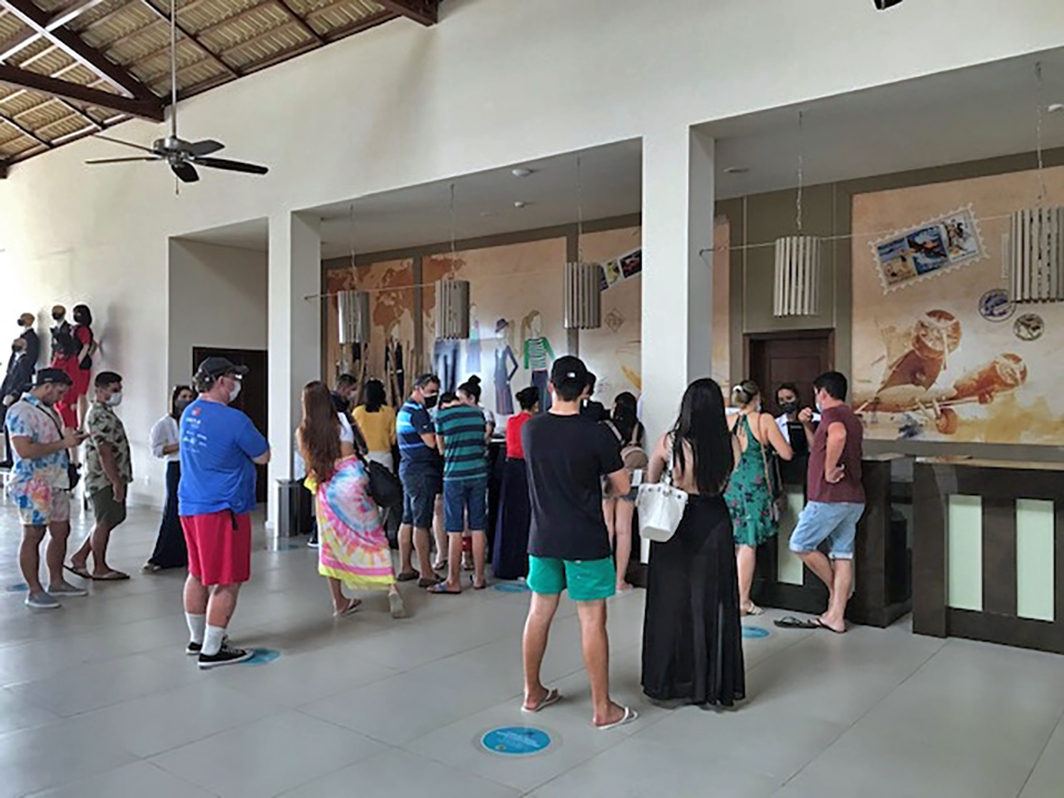
Fiz o check in pelo site do hotel e observei que as informações estão escritas em português de Portugal. Portanto, na lista da documentação solicitada do hospede estão B.I., que inicialmente não sabia o que era, depois de pesquisar descobri que é “bilhete de identidade” e cartão de cidadão, documento de identificação de cidadãos portugueses. Além disso, a arquitetura do site obriga a você voltar mês a mês até chegar ao ano do seu nascimento, o que eu achei bem desconfortável, considerando-se que nasci há muitos e muitos anos atrás… Enfim, fiz o check-in online na esperança de não perder muito tempo quando chegássemos ao hotel. Chegamos pontualmente às 15 horas, horário determinado para início do procedimento. Chegaram junto conosco muitas pessoas, ônibus de turismo com grupos. Ficamos numa fila com algumas pessoas que não respeitavam o distanciamento social.

Precisamos preencher ainda informações para o check in porque o site não havia nos solicitado nosso endereço.

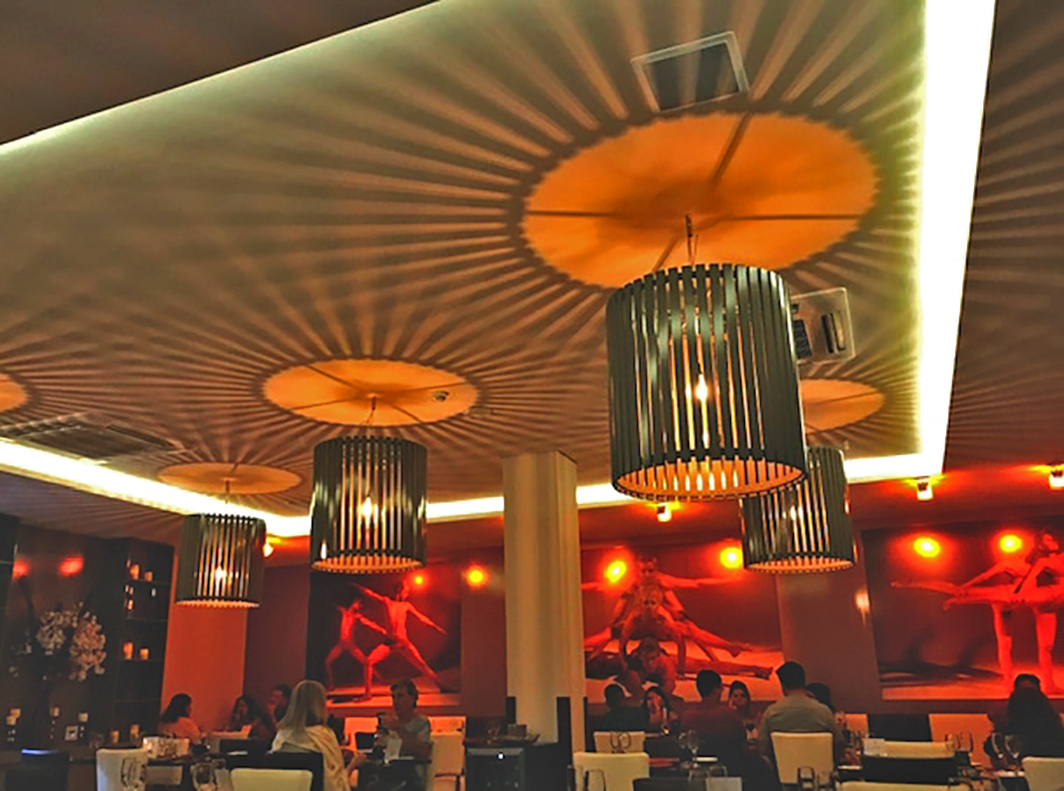
Depois de realizado o procedimento, nos encaminhamos para outro balcão de atendimento onde reservamos o jantar no restaurante “Inevitável”, que uma amiga tinha nos informado ser muito bom. Nesse ponto, vale ressaltar que a cada três pernoites você pode reservar um jantar em um dos restaurantes exclusivos, que além do “Inevitável”, existem o “Potiguar” e o “Massa fina”. Quase não conseguimos reservar, pois o mesmo estava quase lotado. Nossa experiência no jantar foi boa, mas, os garçons nos atendiam muito apressados, tive a impressão de que eles queriam que a gente terminasse logo, para desocuparmos a mesa rapidamente.

Depois de reservado o restaurante especial, nos dirigimos para a saída do prédio onde funcionários com carrinhos elétricos esperavam os hóspedes para levar a bagagem para os apartamentos.

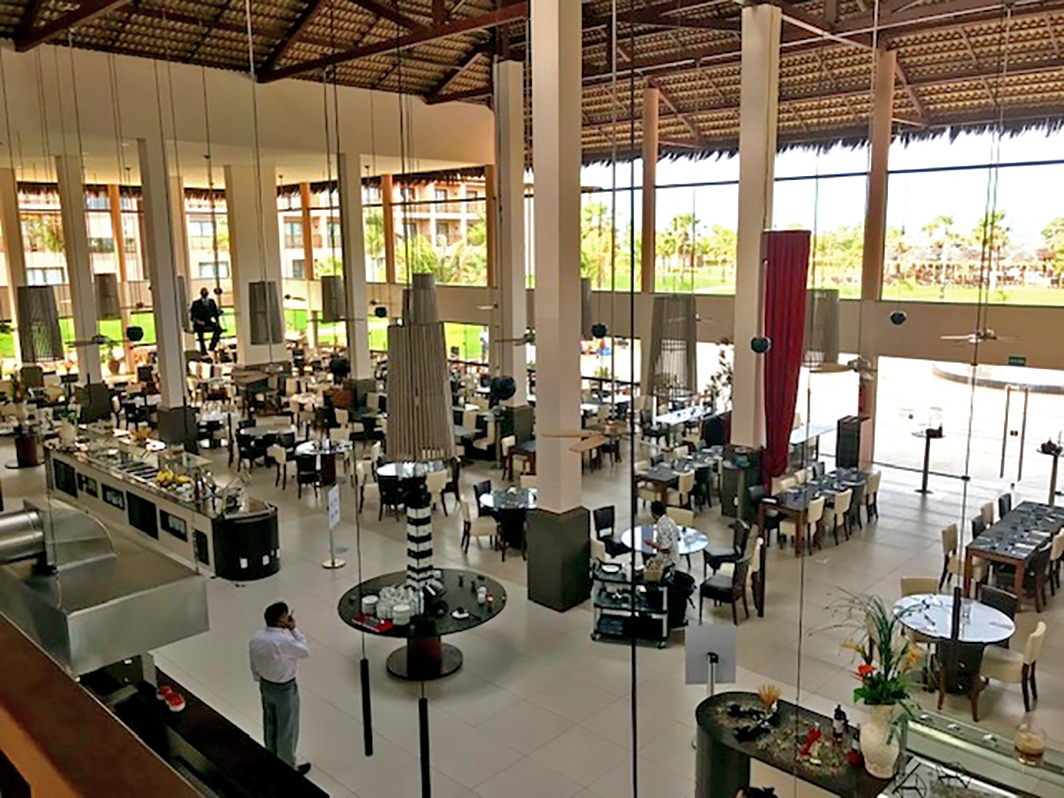
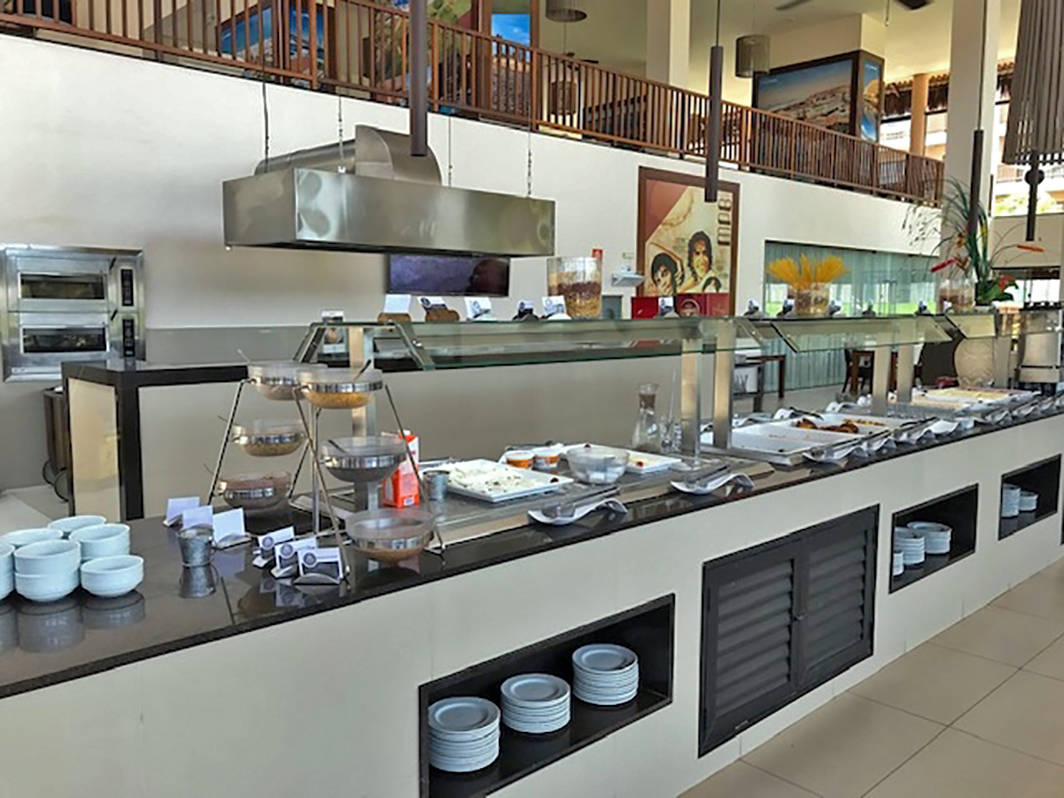
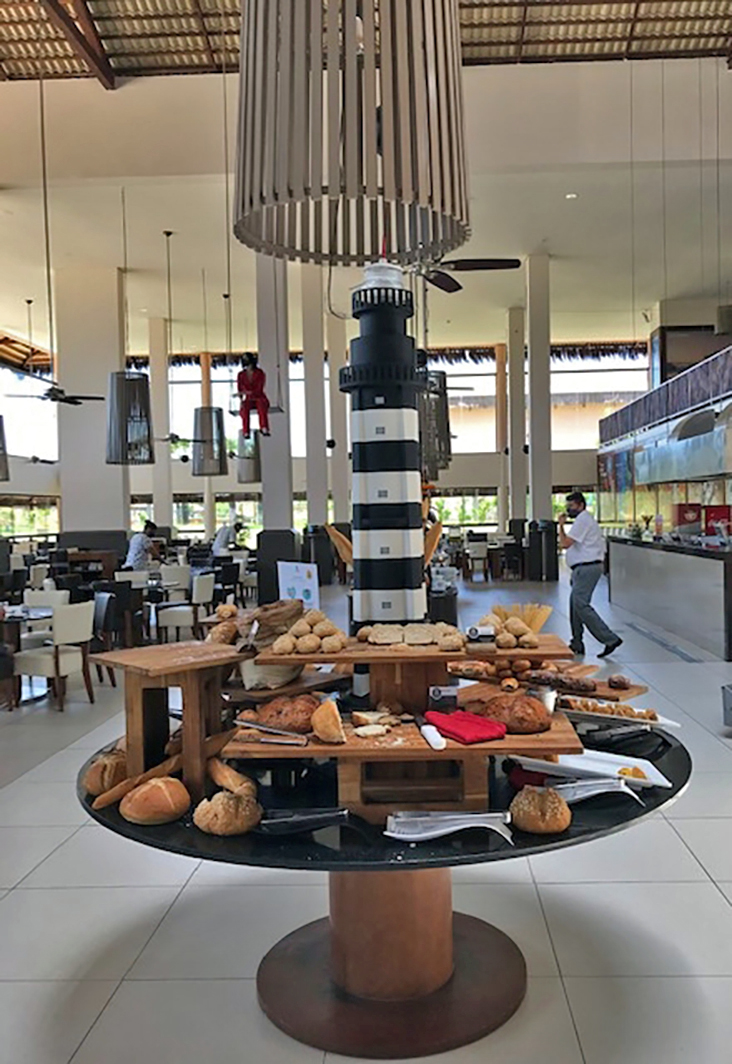
O restaurante principal é amplo e bem ventilado e as mesas têm um bom distanciamento. Por segurança, sempre limpava a mesa com meu álcool a 70% antes de ocupá-la. Mas, vi algumas vezes os funcionários limpando.

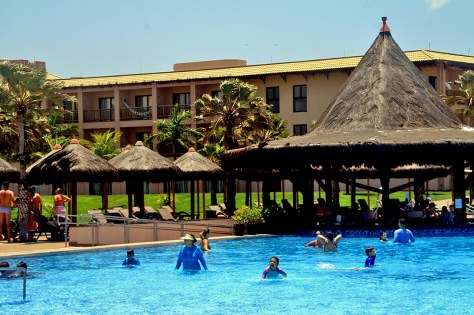
Para quem já frequentou um resort, as características são similares (veja aqui nosso post sobre se hospedar em resorts. São hotéis planejados para grandes quantidades de pessoas, com boas instalações físicas, grandes piscinas, animação e música alta quase o tempo todo, além de opções variadas de entretenimento. No caso do Vila Galé Touros, há duas belas piscinas,

uma com bar molhado e muita animação e outra menor, mais tranquila. Há uma área com um parquinho para a criançada e uma trilha ecológica.

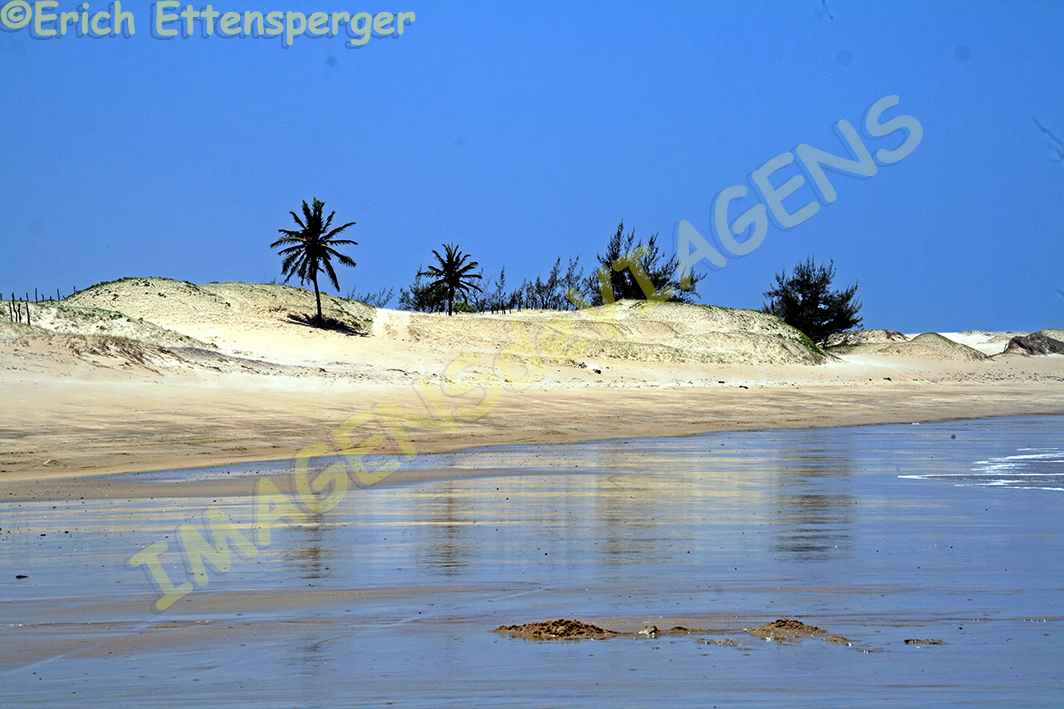
A praia em frente ao hotel oferece a opção de belas caminhadas quando a maré está baixa.

 Há um detalhe que deve ser observado: se você não gosta de lugares com muito vento, é bom escolher uma época do ano quando os ventos não sopram tão fortes. Geralmente os ventos mais fortes ocorrem entre agosto e novembro.

Os apartamentos são distribuídos por blocos, são seis no total. Os blocos A1 a A3 são mais afastados, separados dos blocos B por um lago artificial com carpas. Eles são mais indicados para quem quer mais tranquilidades. Os apartamentos térreos são voltados mais para famílias.

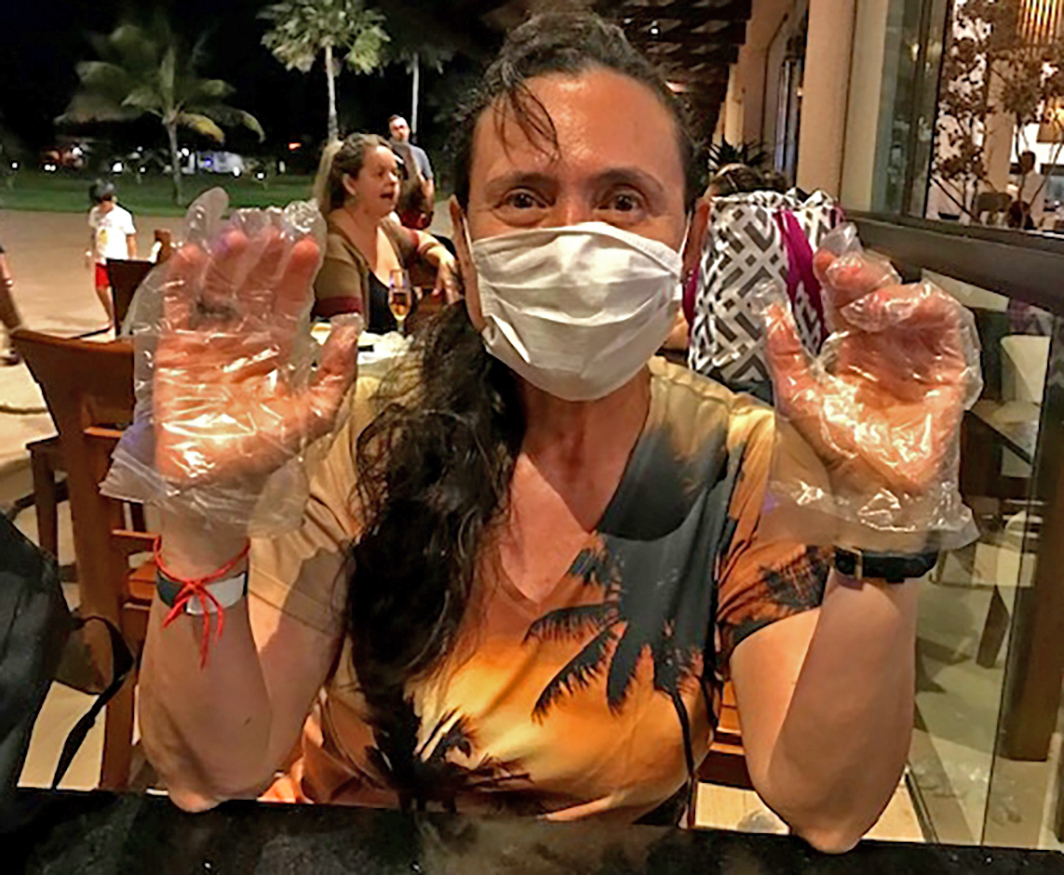
O hotel tem capacidade para aproximadamente 1200 hospedes, mas, devido a pandemia está operando com metade desse número. Todos os hóspedes devem circular com máscaras e usar luvas para se servir dos buffets (há o do restaurante principal que funciona para todas a refeições)

e do restaurante que oferece petiscos, aliás, esse último com pouca variedade.

Nos hospedamos em um apartamento standard (padrão), aliás, com um ótimo dimensionamento, televisão grande e móveis bonitos e de qualidade. Consideramos a estrutura física do resort muito boa.

O hotel possui um spa (pagamento separado) e para usar a academia de ginástica você precisa agendar um horário. Há baby-sitters para cuidar de crianças, caso seja solicitado o serviço.

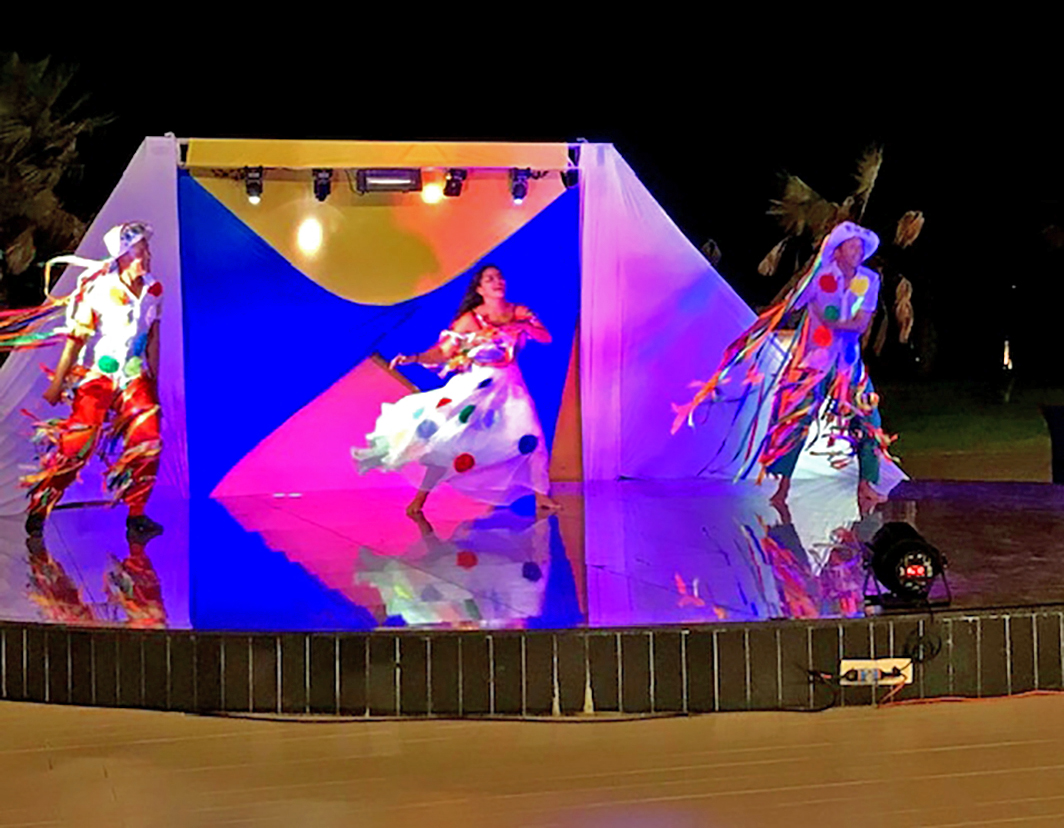
Em termos de entretenimento, na primeira noite houve um show folclórico, nas duas noites seguintes uma feirinha de artesanato com artesãos de Touros, houve shows de dança e música também.  

Com exceção da telefonista do call center do hotel (que liguei para obter informações de onde fazer o check in) e de uma atendente que trabalha na portaria do hotel, todos os outros funcionários nos trataram de forma simpática e prestativa.

O procedimento do check out foi rápido, apenas entregamos os dois cartões “chave” e os dois cartões para obtenção das toalhas da piscina. Como saímos as 11:45, o recepcionista ainda perguntou se queríamos almoçar lá, apesar o check out ocorrer as 12 horas, mas, preferimos voltar logo para casa.

Para quem gosta do clima de resorts, o Vila Galé Touros é um hotel novo, acho que não tem três anos de vida é uma boa opção de hospedagem.

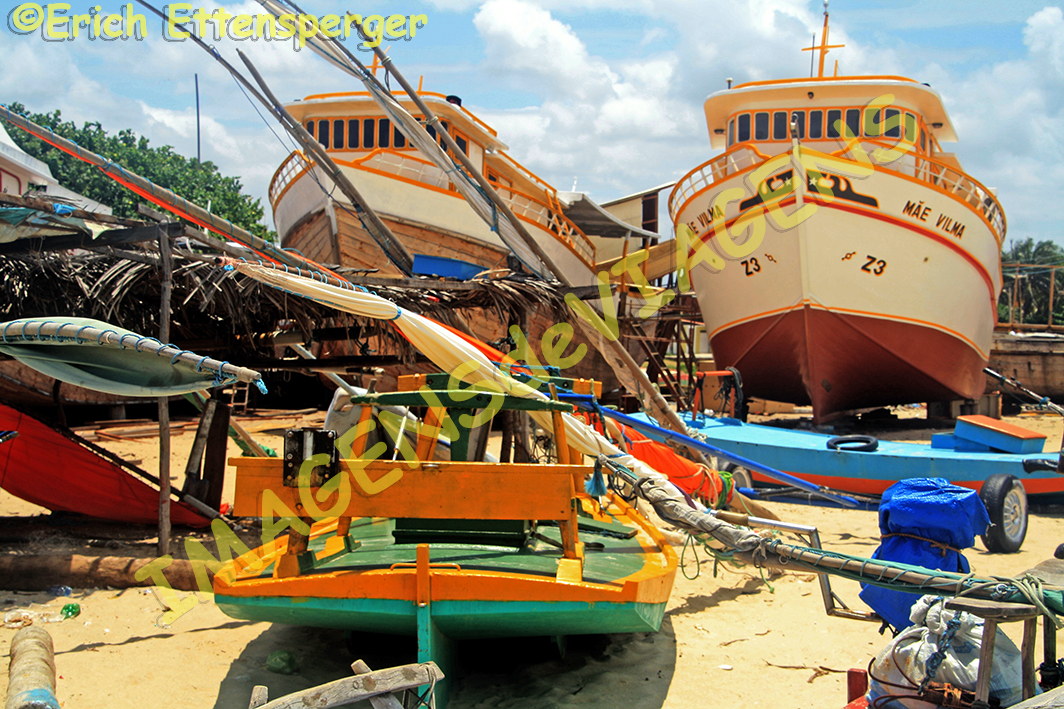
Ele está distante apenas 5 km da cidade de Touros. Existem alguns atrativos nas proximidades: a orla da praia principal de Touros, com um estaleiro de barcos,

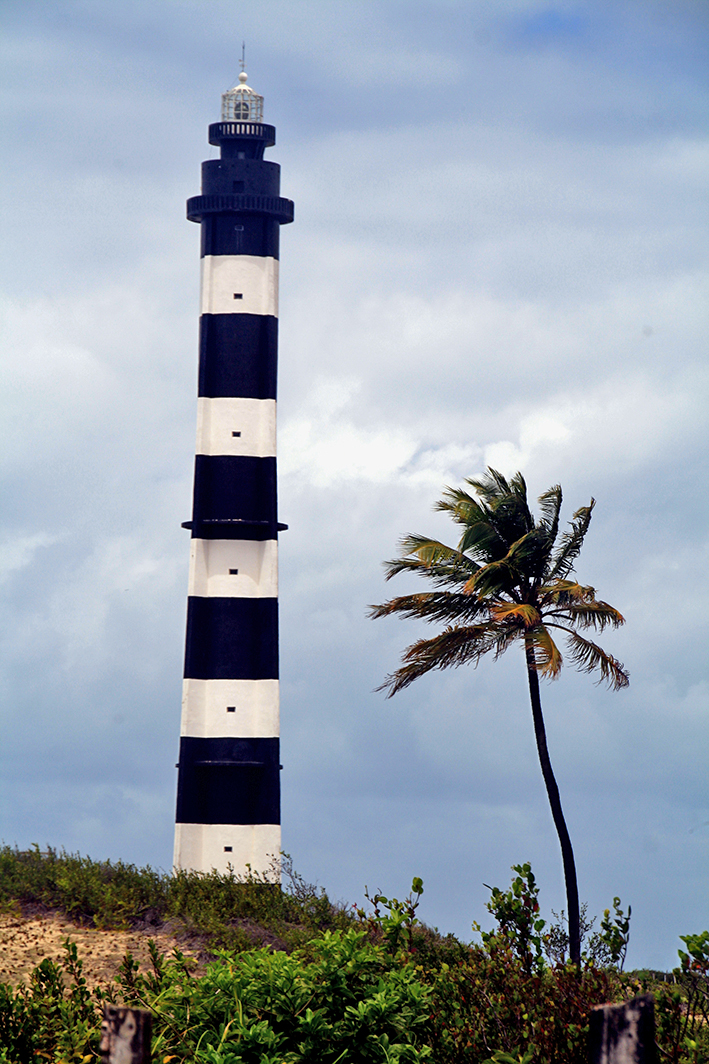
o farol do Calcanhar está localizado em torno de 13 km do hotel,

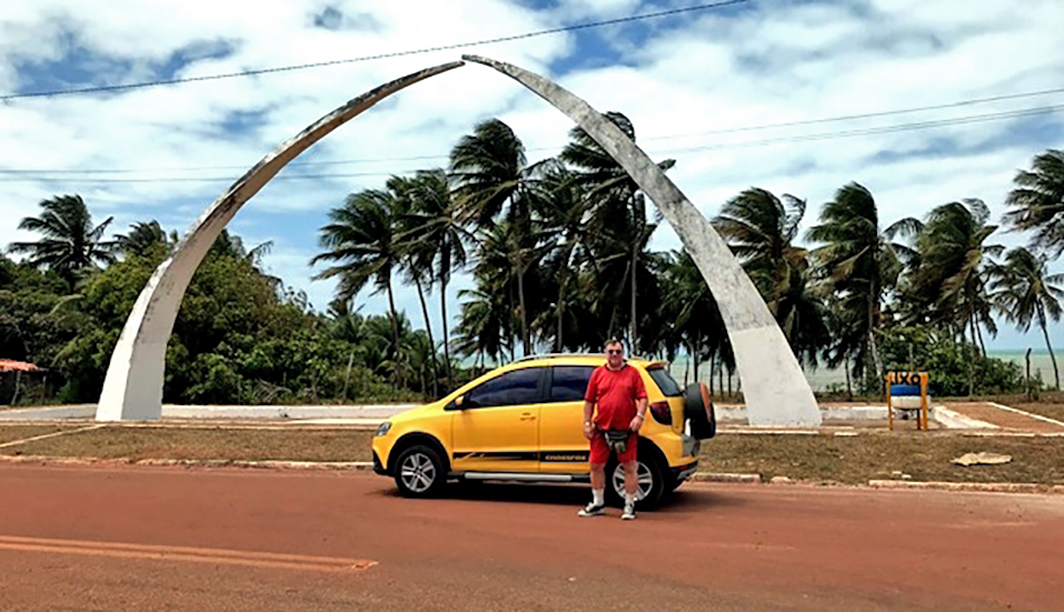
o km 0 da BR-101

e a famosa praia de São Miguel do Gostoso está localizada em torno de 32 km do hotel. Se você estiver de carro pode conhecer também outras praias localizadas nas proximidades como a praia de Perobas situada a 4 km, aproximadamente do hotel. E a de Rio do Fogo localizada a 6,4 km. O acesso a essas praias é feito através de estrada de terra.

No hotel existe a possibilidade de se comprar passeios, como city tour em Natal, passeio aos parrachos de Maracajaú, dentre outros.

Observação: se você quiser continuar “viajando” com o nosso blog, clique no botão “seguir” localizado no canto inferior direito dessa página. Você também pode “viajar”pelo Brasil conhecendo nosso  livro impresso  66 x Brasil e sua versão digital 66 Belezas do Brasil.

Nachdem wir nun viel, viel Zeit zuhause verbracht haben, nicht gereist sind, was wir so sehr lieben, nicht in Restaurants gegangen sind, nicht ausgegangen sind, beschlossen wir, ein Wochenende in Touros im Vila Galé Touros Resort zu verbringen … nur 80 km von unserem Haus entfernt, also ein “Tapetenwechsel” unter Convid-Bedingungen.

Anbei nun einige visuelle Eindrücke über dieses sehr entspannte Wochenende…!!!

Hinweis: Falls Sie unserem  Blog folgen wollen, dann klicken Sie unten rechts einfach auf “Weiter”, Sie werden dann zukünftig automatisch informiert. Sie können auch durch Brasilien reisen und unser Buch 66 SEHENSWÜRDIGKEITEN IN BRASILIEN  kennenlernen und 66 x Brazil – A Mosaic of Beauties.

Now, having spent a lot of time at home, not traveling what we love so much, not going to restaurants, not going out, we decided to spend a weekend in Touros at the Vila Galé Touros Resort … only 80 km away from our house, so a “change of scenery” under convid conditions.

Here now some visual impressions of this very relaxed weekend for you…!!!

Note: If you want to follow our “Travels” on the blog, simply click on “Seguir” in the lower right corner, you will be then automatically informed in the future. You can continue traveling with us with our book Brazil´s 66 Beautiful Sites and 66 x Brazil – A Mosaic of Beauties.  

Bari, a simpática cidade italiana/Bari – die freundliche italienische Stadt/Bari – the friendly Italian city

Bari foi a cidade onde embarcamos para realizar uma viagem de cruzeiro, que aliás, foi bem cheia de surpresas, mas, isso é assunto para outro post.

A cidade é capital da região da Puglia, na Itália e está localizada em torno de 430 km de Roma. Você pode chegar em Bari de trem, como nós fizemos, ou de avião. A cidade tem aproximadamente 350 mil habitantes.

Romanos, bárbaros, bizantinos, sarracenos, muitos povos dominaram Bari e essa é uma das razões para que a cidade tenha muito a contar sobre sua história.

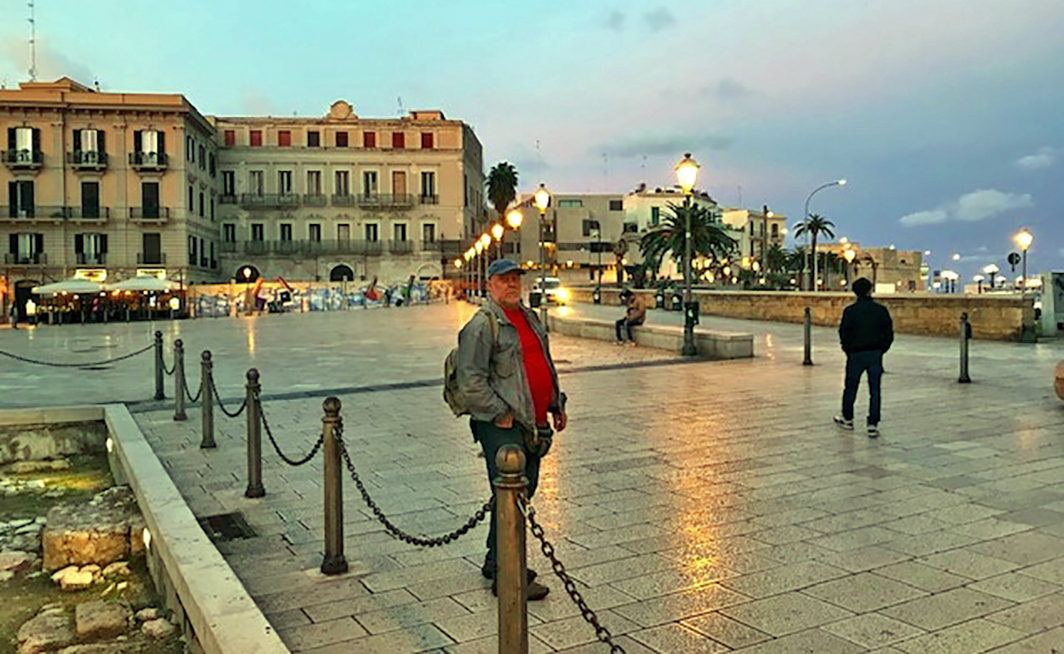
Bari possui um centro histórico pequeno, é limpa e muito agradável para se passear a pé.


Ela é uma cidade litorânea e caminhar pelo calçadão da praia é uma opção de passeio agradável.

O Castelo Svevo se destaca na paisagem, teve a função de prisão, iluminado à noite confere um ar especial àquela área da cidade.

O porto de Bari é uma atração interessante, passear por lá, tomar um sorvete em um dia quente, é uma sugestão para uma tarde agradável. A Piazza Mercantile era o centro da cidade na época medieval. O coração da cidade é a Praça Ferrarese,

onde há construções históricas, bares e restaurantes, para quem chega em Bari, esse é um dos primeiros locais a ser visitado. A sugestão é beber um bom vinho nessa praça e permanecer apreciando o movimento animado das pessoas.

Outra opção de passeio em Bari é caminhar pela rua de pedestre chamada Via Sparano da Bari. O Corso Vittorio Emanuele divide o núcleo urbano em duas partes: Bari Nova e Bari Antiga.

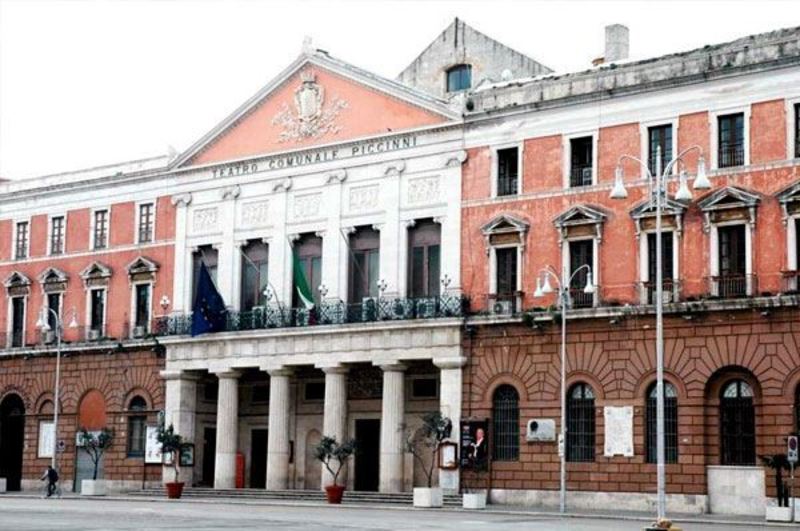
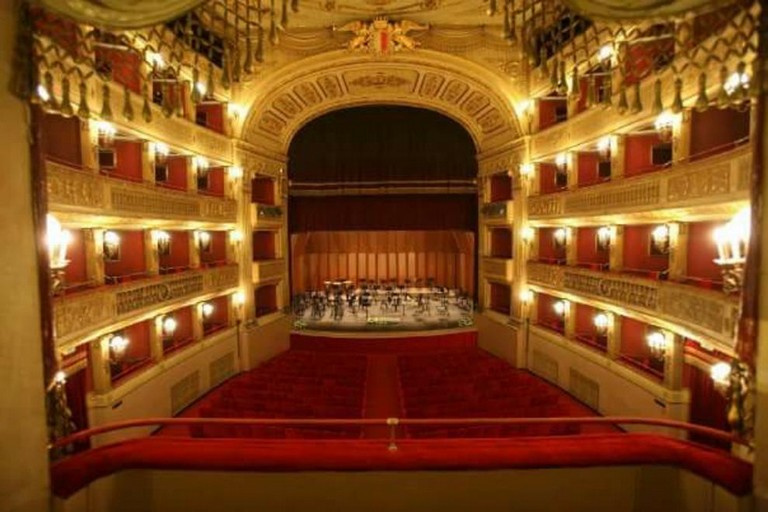
Alguns prédios merecem destaque em Bari, além do Castelo Svevo, com suas altas muralhas, vale destacar também os Teatros Piccini,

Fonte/Quelle/Source: https://izi.travel/pt/b40a-teatro-comunale-niccolo-piccinni/it

Fonte/Quelle/Source: https://www.bariviva.it/notizie/piu-teatro-per-i-giovani-anche-a-bari-spettacoli-a-soli-5-euro-per-gli-studenti/

Petruzzelli e o Margherita.

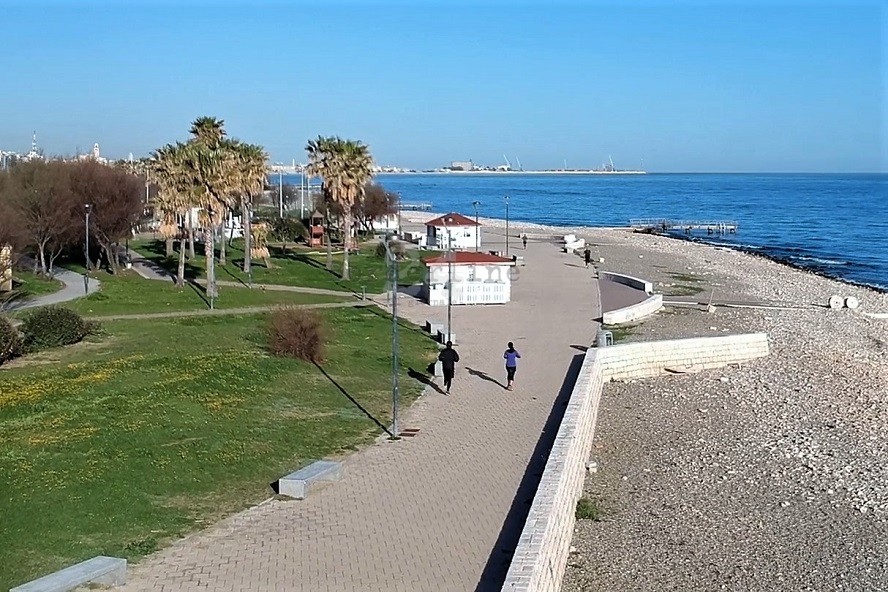
As três praias principais de Bari são: Torre Quetta,

Fonte/Quelle/Source: https://www.borderline24.com/2020/02/04/bari-bando-torre-quetta-comune-cerca-un-gestore-unestate/

Orla de Bari Nuova e Pane e Pomodoro,

Fonte/Quelle/Source: https://quotidianodibari.it/ecco-quali-sono-i-problemi-eterni-di-pane-e-pomodoro/

sendo que a última é a mais recomendada para quem quer banhar-se no mar, porém, é a que fica mais lotada no verão. A Orla de Bari Nuova é uma praia para você apreciar o entardecer. Para quem quer praticar kitesurf ou windsurf, a Torre Quetta é a mais procurada.

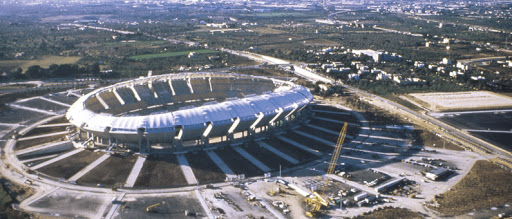
O estádio de futebol San Nicola é uma visita para quem aprecia futebol, vale a pena a apreciar a arquitetura do edifício, alguns dizem que parece com uma astronave!

Fonte/Quelle/Source: http://buromilan.com/project/stadio-san-nicola-bari-italia/

Para quem gosta de visitar igrejas, a mais visitada de Bari é a Basílica di San Nicola

Fonte/Quelle/Source: https://www.turismo.it/italia/poi/basilica-di-san-nicola/scheda/bari/

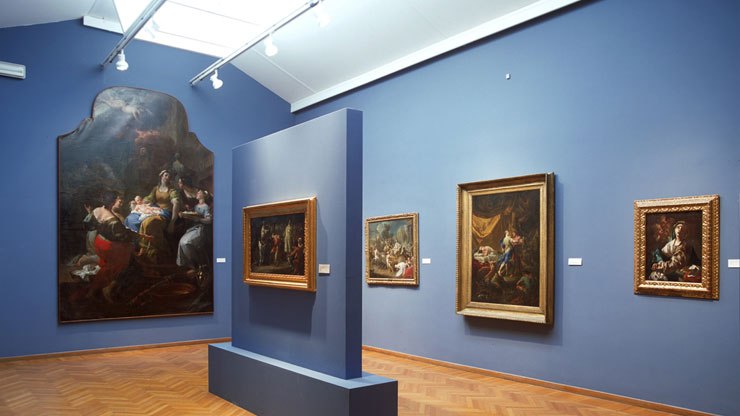
e não a Catedral de San Sabino. Para os amantes de arte, recomendamos a visita a Pinacoteca Metropolitana de Bari, onde é possível ter um panorama da produção artística da região.

Fonte/Quelle/Source: http://worldtourisminfo.com/italy/1658-Pinakothek-the-province-of-Bari-photo-description-Pinacoteca-provinciale-di-Bari.html

Fonte/Quelle/Source: https://www.isolatedtraveller.com/pinacoteca-metropolitana-di-bari/

Bari pode servir de cidade base de onde você pode fazer passeios à Alberobello, Polignano a Mare, Ostuni, Metropoli, todas cidades localizadas nas margens do Mar Adriático. É de Bari de onde parte o trem para a bela Matera (veja post aqui sobre esse destino especial). Nós realizamos um bate-volta de Bari à Ostuni (trem) e Alberobello (taxi).

Enfim, Bari é uma agradável cidade para você caminhar,

passear e apreciar a deliciosa culinária italiana!

Observação: se você quiser continuar “viajando” com o nosso blog, clique no botão “seguir” localizado no canto inferior direito dessa página. Você também pode “viajar”pelo Brasil conhecendo nosso  livro impresso  66 x Brasil e sua versão digital 66 Belezas do Brasil.

Bari – die freundliche italienische Stadt

Bari war die Stadt, in der wir uns auf eine Kreuzfahrt begaben, die übrigens voller Überraschungen war, aber das ist das Thema für einen anderen Beitrag.

Die Stadt ist die Hauptstadt der Region Apulien in Italien und liegt etwa 430 km von Rom entfernt. Sie können Bari wie wir mit dem Zug oder mit dem Flugzeug erreichen. Die Stadt hat ungefähr 350.000 Einwohner.

Römer, Barbaren, Byzantiner, Sarazenen, viele Völker dominierten Bari und dies ist einer der Gründe, warum die Stadt viel über ihre Geschichte zu erzählen hat.

Bari hat ein kleines historisches Zentrum, es ist sauber und sehr angenehm zum Spazierengehen.

Es ist eine Küstenstadt und ein Spaziergang entlang der Strandpromenade ist eine angenehme Option.

Svevo Castle sticht in der Landschaft hervor, hatte die Funktion eines Gefängnisses, das nachts beleuchtet ist und somit dem Stadtteil eine besondere Atmosphäre verleiht.

Der Hafen von Bari ist eine interessante Attraktion. Ein Spaziergang dort, ein Eis an einem heißen Tag, ist ein Vorschlag für einen angenehmen Nachmittag. Die Piazza Mercantile war im Mittelalter das Zentrum der Stadt. Das Herz der Stadt ist der Ferrarese-Platz,

wo es historische Gebäude, Bars und Restaurants gibt.

Für diejenigen, die in Bari ankommen, ist dies einer der ersten Orte, die besucht werden sollten. Der Vorschlag ist, auf diesem Platz guten Wein zu trinken und weiterhin die lebhafte Bewegung der Menschen zu genießen.

Eine weitere Touroption in Bari ist ein Spaziergang entlang der Fußgängerzone Via Sparano da Bari. Der Corso Vittorio Emanuele teilt den städtischen Kern in zwei Teile: Bari Nova und Bari Antiga.

Einige Gebäude in Bari sind bemerkenswert, neben der Burg Svevo mit ihren hohen Mauern sind auch die Theater Piccini,

Fonte/Quelle/Source: https://izi.travel/pt/b40a-teatro-comunale-niccolo-piccinni/it

Fonte/Quelle/Source: https://www.bariviva.it/notizie/piu-teatro-per-i-giovani-anche-a-bari-spettacoli-a-soli-5-euro-per-gli-studenti/

Petruzzelli und Margherita zu erwähnen.

Die drei Hauptstrände von Bari sind: Torre Quetta,

Fonte/Quelle/Source: https://www.borderline24.com/2020/02/04/bari-bando-torre-quetta-comune-cerca-un-gestore-unestate/

Orla de Bari Nuova und Pane und Pomodoro,

Fonte/Quelle/Source: https://quotidianodibari.it/ecco-quali-sono-i-problemi-eterni-di-pane-e-pomodoro/

wobei letzterer am meisten für diejenigen empfohlen wird, die im Meer baden möchten. Im Sommer ist er jedoch am überfülltesten.

Die Orla de Bari Nuova ist ein Strand, an dem Sie den Sonnenuntergang genießen können. Für diejenigen, die Kitesurfen oder Windsurfen üben möchten, ist Torre Quetta am gefragtesten.

Das San Nicola Fußballstadion ist ein Besuch für diejenigen, die gerne Fußball spielen und sehen. Es lohnt sich, die Architektur des Gebäudes zu betrachten. Einige sagen, es sieht aus wie ein Raumschiff!

Fonte/Quelle/Source: http://buromilan.com/project/stadio-san-nicola-bari-italia/

Für diejenigen, die gerne Kirchen besuchen, ist die Basilica di San Nicola

Fonte/Quelle/Source: https://www.turismo.it/italia/poi/basilica-di-san-nicola/scheda/bari/

und nicht die Kathedrale von San Sabino die meistbesuchte in Bari.

Für Kunstliebhaber empfehlen wir den Besuch der Pinacoteca Metropolitana de Bari, wo Sie sich einen Überblick über die künstlerische Produktion der Region verschaffen können.

Fonte/Quelle/Source: http://worldtourisminfo.com/italy/1658-Pinakothek-the-province-of-Bari-photo-description-Pinacoteca-provinciale-di-Bari.html

Fonte/Quelle/Source: https://www.isolatedtraveller.com/pinacoteca-metropolitana-di-bari/

Bari kann als Basisstadt dienen, von wo aus Sie Ausflüge nach Alberobello, Polignano a Mare, Ostuni, Metropoli und allen Städten am Ufer der Adria unternehmen können.

Es ist von Bari, wo der Zug zum schönen Matera fährt (siehe Beitrag hier über dieses besondere Ziel).

Wir machten eine Rundreise von Bari nach Ostuni (Zug) und Alberobello (Taxi).

Wie auch immer, Bari ist eine angenehme Stadt, in der Sie spazieren gehen können

und die köstliche italienische Küche genießen können!

Hinweis: Falls Sie unserem  Blog folgen wollen, dann klicken Sie unten rechts einfach auf “Weiter”, Sie werden dann zukünftig automatisch informiert. Sie können auch durch Brasilien reisen und unser Buch 66 SEHENSWÜRDIGKEITEN IN BRASILIEN  kennenlernen und 66 x Brazil – A Mosaic of Beauties.

Bari – the friendly Italian city

Bari was the city where we went on a cruise that, by the way, was full of surprises, but that’s the topic for another post.

The city is the capital of the Apulia region in Italy and is about 430 km from Rome. You can reach Bari, like us, by train or plane. The city has about 350,000 inhabitants.

Romans, Barbarians, Byzantines, Saracens, many peoples dominated Bari and this is one of the reasons why the city has a lot to tell about its history.

Bari has a small historical center, it is clean and very pleasant to walk around.

It’s a seaside town and strolling along the boardwalk is a pleasant option.

Svevo Castle stands out in the landscape, had the function of a prison, which is illuminated at night and thus gives the district a special atmosphere.

The port of Bari is an interesting attraction. A walk there, an ice cream on a hot day, is a suggestion for a pleasant afternoon. The Piazza Mercantile was the center of the city in the Middle Ages. The heart of the city is Ferrarese Square,

where there are historical buildings, bars and restaurants.

For those arriving in Bari, this is one of the first places to visit. The suggestion is to have good wine in this square and keep enjoying the lively movement of the people.

Another tour option in Bari is to stroll along the pedestrianized Via Sparano da Bari. Corso Vittorio Emanuele divides the urban core into two parts: Bari Nova and Bari Antiga.

Some buildings in Bari are noteworthy, in addition to the Svevo Castle with its high walls, the Piccini,

Fonte/Quelle/Source: https://izi.travel/pt/b40a-teatro-comunale-niccolo-piccinni/it

Fonte/Quelle/Source: https://www.bariviva.it/notizie/piu-teatro-per-i-giovani-anche-a-bari-spettacoli-a-soli-5-euro-per-gli-studenti/

Petruzzelli and Margherita theaters are also worth mentioning.

The three main beaches of Bari are: Torre Quetta,

Fonte/Quelle/Source: https://www.borderline24.com/2020/02/04/bari-bando-torre-quetta-comune-cerca-un-gestore-unestate/

Orla de Bari Nuova and Pane and Pomodoro,

Fonte/Quelle/Source: https://quotidianodibari.it/ecco-quali-sono-i-problemi-eterni-di-pane-e-pomodoro/

the latter being the most recommended for those who want to swim in the sea. However, it is most crowded in summer.

Orla de Bari Nuova is a beach where you can enjoy the sunset. For those who want to practice kitesurfing or windsurfing, Torre Quetta is the most in demand.

The San Nicola Football Stadium is a visit for those who love to play and watch football. It’s worth looking at the architecture of the building. Some say it looks like a spaceship!

Fonte/Quelle/Source: http://buromilan.com/project/stadio-san-nicola-bari-italia/

For those who love to visit churches, the Basilica di San Nicola,

Fonte/Quelle/Source: https://www.turismo.it/italia/poi/basilica-di-san-nicola/scheda/bari/

rather than the Cathedral of San Sabino, is the most visited in Bari.

For art lovers, we recommend a visit to the Pinacoteca Metropolitana de Bari, where you can get an overview of the artistic production of the region.

Fonte/Quelle/Source: http://worldtourisminfo.com/italy/1658-Pinakothek-the-province-of-Bari-photo-description-Pinacoteca-provinciale-di-Bari.html

Fonte/Quelle/Source: https://www.isolatedtraveller.com/pinacoteca-metropolitana-di-bari/

Bari can serve as a base town from where you can make trips to Alberobello, Polignano a Mare, Ostuni, Metropoli and all the towns on the Adriatic coast.

It is from Bari that the train goes to beautiful Matera (see post here about this particular destination).

We made a round trip from Bari to Ostuni (train) and Alberobello (taxi).

Anyway, Bari is a pleasant city to walk around

and enjoy the delicious Italian cuisine!

Note: If you want to follow our “Travels” on the blog, simply click on “Seguir” in the lower right corner, you will be then automatically informed in the future. You can continue traveling with us with our book Brazil´s 66 Beautiful Sites and 66 x Brazil – A Mosaic of Beauties.  


Cânion do Xingó, preciosidade nordestina/Der Xingó-Canyon, eine Kostbarkeit im Nordosten/The Xingó Canyon, a treasure in the northeast

Quando estávamos elaborando nosso livro 66 x Brasil realizamos muitas viagens para captar imagens para essa publicação. Dentre os lugares que visitamos e recomendamos o passeio é a visita ao Cânion do Xingó.

Esse cânion está localizado na cidade de Canindé de São Francisco distante em torno de 200 km de Aracaju.

Fonte/Quelle/Source: Google Maps

Primeiro, vale ressaltar que esse cânion surgiu devido ao represamento das águas do Rio São Francisco para a construção da Usina Hidrelétrica de Xingó em 1994, situada entre os estados de Alagoas e Sergipe.

O ponto de partida para se realizar o passeio para visitar esse cânion sai do Karranca’s Bar e Restaurante localizado nas margens do rio São Francisco, localizado na cidade de Canindé do São Francisco, no estado do Sergipe. Há muitos barcos e catamarãs ancorados nas proximidades que realizam esse tour. O restaurante tem uma boa estrutura.

Carranca

O passeio dura em torno de três horas, uma hora navegando, outra hora de parada para banho e outra hora para voltar.

Depois de uma meia hora de navegação a partir do ponto de embarque já é possível apreciar a paisagem com atrativos mais interessantes como o Morro dos Macacos, a Pedra do Gavião, dentre outros.

Na parte mais bela do percurso existe a opção de trocar de barco, usar um barco pequeno e navegar por pequena rota entre os paredões de pedra. É quando você consegue chegar bem perto da Gruta do Talhado. Na época custava em torno de R$ 10,00 (dez reais).

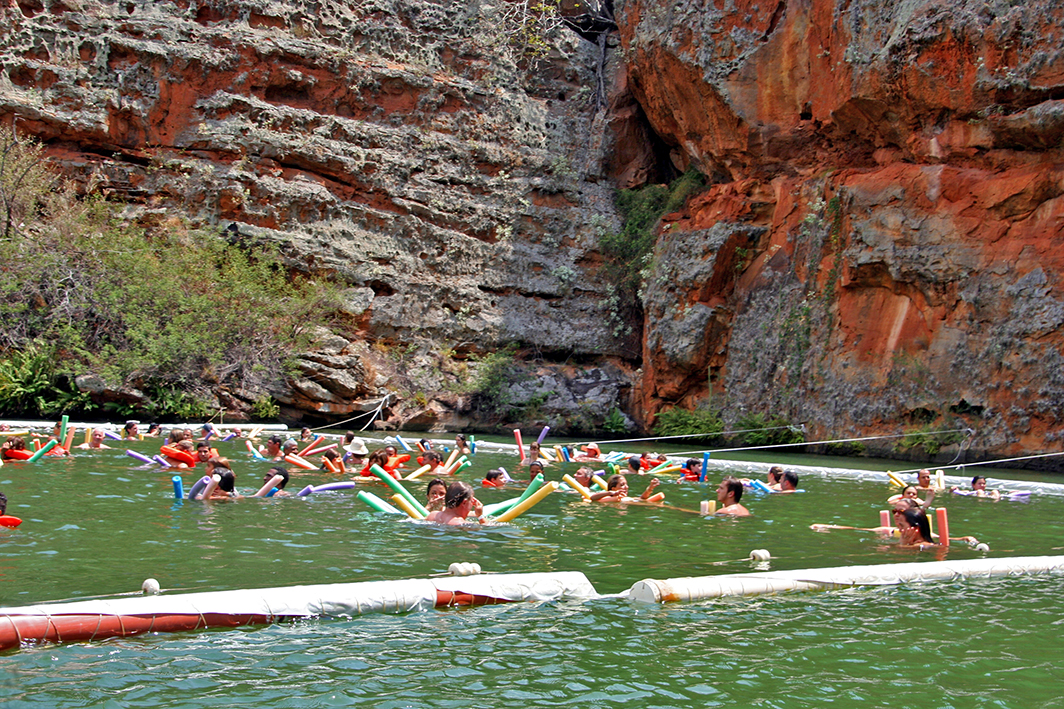
Há também uma parada para banho numa parte protegida do rio (tem uma rede que delimita a área para banho) e quase todos que estavam no barco mergulharam nas águas quentes para se refrescarem.

O cenário é realmente esplendoroso! Algumas cenas da novela da rede Globo chamada Cordel Encantado foi foram filmadas nessa área.

Um aspecto que deve ser destacado é que há música alta no barco, tem muita gente e tem também um guia falante que vai explicando o percurso. Essas características estavam presentes antes da pandemia, atualmente acredito que os organizadores diminuíram o número de passageiros nos barcos.

A realização desse passeio é recomendada para quem gosta de apreciar belos cenários brasileiros. Pernoitamos em Canindé de São Francisco, não recomendamos fazer um bate-volta saindo de Aracaju. Se você for visitar essa região vale a pena também conhecer Piranhas, que está localizada a apenas 20 km de Canindé de São Francisco.

Observação: se você quiser continuar “viajando” com o nosso blog, clique no botão “seguir” localizado no canto inferior direito dessa página. Você também pode “viajar” pelo Brasil conhecendo nosso  livro impresso  66 x Brasil e sua versão digital 66 Belezas do Brasil.

Der Xingó-Canyon, eine Kostbarkeit im Nordosten

Als wir unser Buch 66 x Brasilien vorbereiteten, unternahmen wir viele Reisen, um Bilder für diese Veröffentlichung aufzunehmen. Unter den Orten, die wir besuchten und die wir empfehlen, befindet sich auch der Xingó-Canyon.

Diese Schlucht befindet sich bei der Stadt Canindé de São Francisco, etwa 200 km von Aracaju entfernt.

Fonte/Quelle/Source: Google Maps

Zunächst ist zu erwähnen, daβ diese Schlucht durch die Stauung des Wassers des Flusses São Francisco für den Bau des Wasserkraftwerks Xingó im Jahr 1994 zwischen den Bundesstaaten Alagoas und Sergipe entstanden ist.

Der Ausgangspunkt für die Tour zu diesem Canyon ist die Karranca’s Bar und das Restaurant am Ufer des Flusses São Francisco in der Stadt Canindé do São Francisco im Bundesstaat Sergipe. In der Nähe ankern viele Boote und Katamarane, die diese Tour durchführen. Das Restaurant offeriert eine gute Service-Struktur.

Carranca

Die Tour dauert ungefähr drei Stunden, eine Stunde Bootsfahrt, eine weitere Stunde für ein tolles Bad und eine weitere Stunde für die Rückkehr.

Nach einer halben Stunde Navigation vom Einschiffungspunkt aus ist es bereits möglich, die Landschaft mit interessanteren Attraktionen wie Morro dos Macacos und Pedra do Gavião zu genießen.

Am schönsten Teil der Route besteht die Möglichkeit, vom Schiff auf ein kleines Boot zu wechseln und eine kurze Fahrt zwischen den steilen Canyonwänden zu navigieren. Dann können Sie der Gruta do Talhado sehr nahekommen. Zu unserer Zeit kostete dies rund 10 R$ (zehn Reais).

Es existiert auch eine Haltestelle zum Baden in einem geschützten Teil des Flusses (es gibt hierzu ein Netz, das den Badebereich begrenzt) und fast jeder, der auf dem Boot war, tauchte ins warme Wasser ein, um sich abzukühlen.

Die Landschaft ist wirklich großartig! In diesem Bereich wurden einige Szenen der Globo Seifenoper namens Cordel Encantado gedreht.

Ein Aspekt, der hervorgehoben werden sollte, ist, dass es auf dem sehr vollen Schiff auch sehr laute Musik gab, aber auch einen Reiseführer mit Informationen. Ich nehme an, dass nun zu Pandemie-Zeiten die Zahl der Passagiere sich deutlich verringert hat.

Diese Tour empfehlen wir denjenigen, die diese wunderschöne brasilianische Landschaft genießen möchten. Wir übernachteten in Canindé de São Francisco, wir empfehlen nicht den Ein-Tages-Ausflug von Aracaju aus.

Falls Sie diese Region besuchen, lohnt sich auch ein Besuch in Piranhas, das nur 20 km von Canindé de São Francisco entfernt liegt.

Hinweis: Falls Sie unserem  Blog folgen wollen, dann klicken Sie unten rechts einfach auf “Weiter”, Sie werden dann zukünftig automatisch informiert. Sie können auch durch Brasilien reisen und unser Buch 66 SEHENSWÜRDIGKEITEN IN BRASILIEN  kennenlernen und 66 x Brazil – A Mosaic of Beauties.

The Xingó Canyon, a treasure in the northeast

As we were preparing our book 66 x Brazil we traveled extensively to take pictures for this publication. Among the places we visited and recommend is the Xingó Canyon.

This gorge is located near the town of Canindé de São Francisco, about 200 km from Aracaju.

Fonte/Quelle/Source: Google Maps

First of all, it should be mentioned that this gorge was created by the damming of the water of the São Francisco River for the construction of the Xingó hydropower plant in 1994 between the states of Alagoas and Sergipe.

The starting point for the tour to this canyon is Karranca’s Bar and Restaurant on the banks of the São Francisco River in the city of Canindé do São Francisco in the state of Sergipe. Many boats and catamarans that operate this tour anchor nearby. The restaurant offers a good service structure.

Carranca

The tour takes around three hours, an hour boat ride, another hour for a great swim, and another hour to return.

After half an hour of navigation from the embarkation point, it is already possible to enjoy the scenery with more interesting attractions such as Morro dos Macacos and Pedra do Gavião.

On the most beautiful part of the route, there is the option of switching from the ship to a small boat and navigating a short drive between the steep canyon walls. Then you can get very close to the Gruta do Talhado. In our time this cost around R $ 10 (ten reais).

There is also a stop for bathing in a protected part of the river (there is a net that delimits the bathing area) and almost everyone who was on the boat took a dip in the warm water to cool off.

The landscape is really great! Some scenes from the Globo soap opera called Cordel Encantado were filmed in this area.

One aspect that should be emphasized is that there was also very loud music on the very crowded ship, but also a guide with information. I assume that the number of passengers has now decreased significantly during pandemic times.

We recommend this tour to those who want to enjoy this beautiful Brazilian landscape. We stayed in Canindé de São Francisco, we don’t recommend the one day trip from Aracaju.

If you visit this region, you can also visit Piranhas, which is only 20 km from Canindé de São Francisco.

Note: If you want to follow our “Travels” on the blog, simply click on “Seguir” in the lower right corner, you will be then automatically informed in the future. You can continue traveling with us with our book Brazil´s 66 Beautiful Sites and 66 x Brazil – A Mosaic of Beauties.  


ESTAÇÕES DE UMA VIAGEM MARÍTIMA INESQUECÍVEL (PARTE 2)/STATIONEN EINER UNVERGESSLICHEN SEEREISE (TEIL 2)/STATIONS OF AN UNFORGETTABLE SEA VOYAGE (PART 2)

Do Cabo Horn a Valparaíso

Estação 1: Ushuaia / Argentina

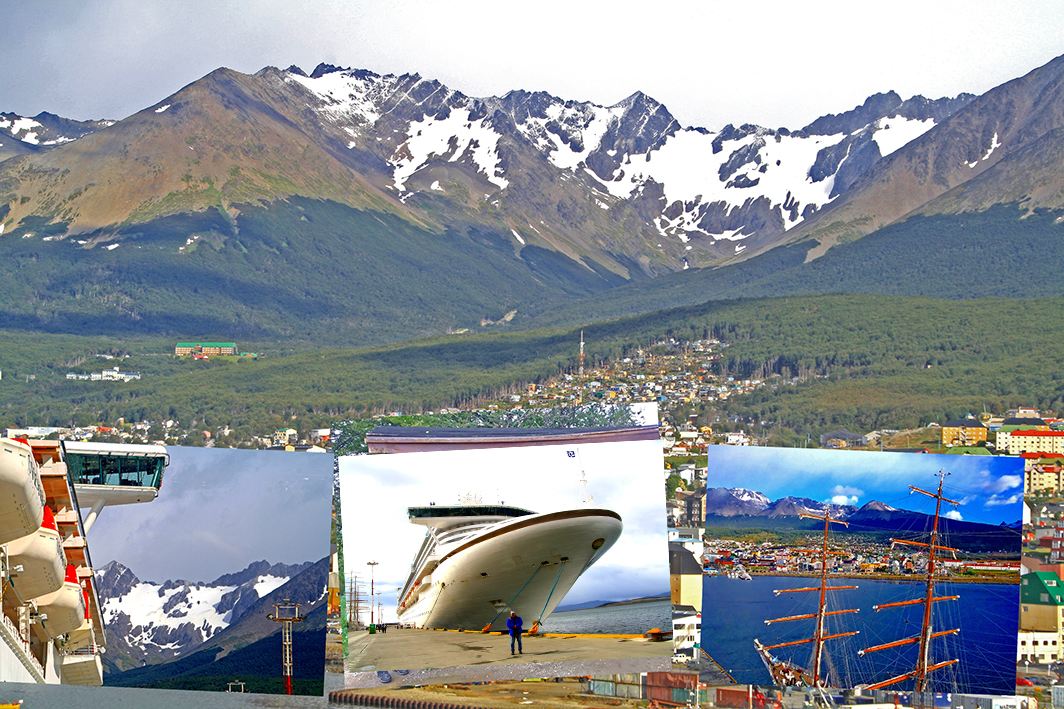
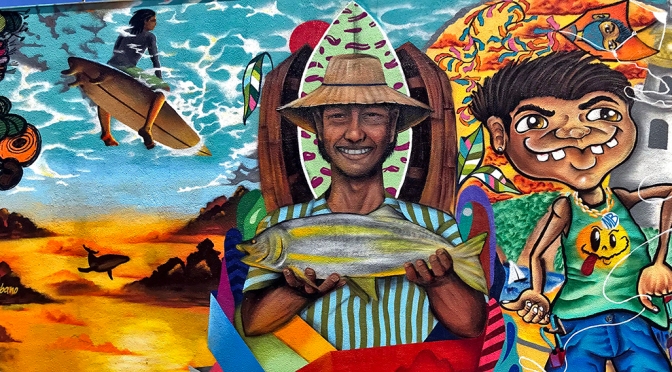
Depois da bem sucedida e inesquecível circunavegação do “Cabo Horn”, chegamos no dia seguinte a Ushuaia, a cidade mais austral de nosso planeta.

Ushuaia é também a cidade mais austral da Argentina e

Capital da província de Tierra del Fuego, na margem norte do Canal de Beagle,

a hidrovia  natural que conecta o Atlântico Sul com o Pacífico. Aqui no extremo sul da América do Sul, chegamos à conclusão de que também gostaríamos de visitar o Alasca. Ushuaia fica a 3.200 km de Buenos Aires e é considerado o último posto avançado antes da Antártica.

 Você pode encontrar mais informações sobre “Ushuaia” e Tierra del Fuego em nosso blog.

Nossa curta viagem marítima nos trouxe então para nossa próxima parada durante a noite.

Estação 2: Punta Arenas / Chile

A cidade portuária chilena de Punta Arenas está localizada no ponto mais meridional do continente sul-americano, no famoso Estreito de Magalhães, que conecta o Oceano Atlântico com o Oceano Pacífico.

Tínhamos planejado originalmente uma viagem de um dia ao mundialmente famoso Parque Nacional Torre del Paine saindo de Punta Arenas, mas o voo foi cancelado devido ao mau tempo. Por isso, fomos forçados a visitar este parque em outra viagem.

Aproveitamos o dia em Punta Arenas com passeios e visitas à  mirantes

da cidade com suas casas coloridas com  jardins frontais cheios de flores de diversas cores  e ao Estreito de Magalhães.  Você pode ler mais sobre isso aqui.

No dia seguinte, passamos pelo Glaciar Amalia, nossa parada 3 nesta parte da viagem. Esta não é uma verdadeira parada em um porto, mas uma parte da viagem chamada  “cruzeiro panorâmico”, cuja rota passa bem   próximo ao Glaciar Amalia

e depois seguimos através de belas paisagens de fiorde chileno com vista para os Andes do sul do Chile, nesse momento, o

 pôr-do-sol banhava as paisagens com uma luz de sonho, de conto de fadas, espetacular … !!!

Depois de um dia no mar com todas as comodidades de um hotel flutuante, chegamos a Puerto Montt.

Estação 4: Puerto Montt / Chile

Puerto Montt fica a 1.055 quilômetros de Santiago e tem uma população de aproximadamente 200.000 habitantes. A cidade e sua economia são baseadas principalmente no turismo e na exportação de salmão.

Puerto Montt é a porta de entrada para viagens ao Rio Petrohue e à Região dos Lagos. Você pode desfrutar de paisagens verdes exuberantes e experimentar o Lago Esmeraldo com suas águas verdes brilhantes,

em que o famoso vulcão Osorno está localizado. No parque, você pode passear e admirar cachoeiras imponentes. O vulcão Osorno é o destaque da beleza cênica e conhecido como o “Fuji da América do Sul”.

Depois do último belo dia em alto mar no Pacífico, que gostamos muito,

finalmente chegamos ao porto de Valparaíso, ficamos muito felizes com todas as impressões grandiosas e inesquecíveis desta viagem tão especial.

De Santiago do Chile, voltamos à nossa pátria em um impressionante vôo sobre os Andes.

Você pode encontrar mais informações sobre Santiago aqui.

Observação: se você quiser continuar “viajando” com o nosso blog, clique no botão “seguir” localizado no canto inferior direito dessa página. Você também pode “viajar” pelo Brasil conhecendo nosso  livro impresso  66 x Brasil e sua versão digital 66 Belezas do Brasil.

STATIONEN EINER UNVERGESSLICHEN SEEREISE (TEIL 2)

 Von Kap Horn nach Valparaiso

 Station 1: Ushuaia /Argentinien

Nach der erfolgreichen und unvergesslichen Umsegelung von „Kap Horn“ erreichten wir am nächsten Tag Ushuaia, die südlichst gelegene Stadt unseres Planeten.

Ushuaia ist auch die südlichste Stadt Argentiniens und

Hauptstadt der Provinz Feuerland am Nordufer des Beagle- Kanals,

eben diese natürliche Wasserstraβe, die den Südatlantik mit dem Pazifik verbindet.

Hier ganz im Süden Südamerikas fassten wir den Schluss, auch einmal Alaska besuchen zu wollen.

Ushuaia ist 3.200 km von Buenos Aires entfernt und gilt als letzter Vorposten vor der Antarktis.

Mehr Informationen zu „Ushuaia“ und Feuerland finden Sie in unseren Blogbeiträgen hier und hier.

Unsere kurzweilige Seereise brachte uns dann über Nacht zu unserem nächsten Haltepunkt.

Station 2: Punta Arenas /Chile

Die chilenische Hafenstadt Punta Arenas liegt am südlichsten Punkt des südamerikanischen  Festlandes an der berühmten Magellanstraβe, die den Atlantischen Ozean mit dem Pazifischen Ozean verbindet.

Ursprünglich hatten wir hier in Punta Arenas einen Tagesausflug in den weltberühmten Torre del Paine Nationalpark geplant, aber wegen des sehr schlechten Wetters wurde der Flug dorthin abgesagt. Also sahen wir uns gezwungen, diesen Park auf einer anderen Reise zu besuchen.Mehr hierzu hier.

Wir genossen den Tag in Punta Arenas mit Spaziergängen und schönen Aussichtspunkten

auf die Stadt mit ihren bunten Häusern, Vorgärten voller bunter Blumen und die Magellanstraβe. Mehr hier.

Am nächsten Tag passierten wir den Amalia Gletscher, unsere Station 3 auf diesem Teil der Reise, es handelt sich hierbei nicht um einen realen Stopp in einem Hafen, sondern um ein   Dahingleiten (szenische Kreuzfahrt), „scenic cruising“  zunächst nahe am Gletscher Amalia selbst

und dann später durch wunderschöne chilenische Fjordlandschaften mit Blick auf die Anden Südchiles, der

Sonnenuntergang selbst tauchte dann die Landschaften in ein traumhaftes, märchenhaftes Licht, spektakulär…!!!

Nach einem Tag auf See mit all den Annehmlichkeiten eines schwimmenden Hotels erreichten wir dann Puerto Montt.

Station 4: Puerto Montt /Chile

Puerto Montt ist 1.055 Kilometer von Santiago entfernt und hat eine Bevölkerung von ungefähr 200.000 Einwohnern. Die Stadt   und seine Wirtschaft basieren hauptsächlich auf Tourismus und dem Export von Lachs.

Puerto Montt ist das Tor für Ausflüge zum Rio Petrohue und den Seendistrikt. Sie können üppige grüne Landschaften genießen und den See Esmeraldo mit seinem hellen grünen Wassern erleben,

an welchen der berühmte Vulkan Osorno gelegen ist. Im Park können Sie umherwandern und imposante Wasserfälle bewundern. Der Vulkan Osorno ist das Highlight der landschaftlichen Schönheit und bekannt als der “Fuji Südamerikas.”

Mehr hier.

Nach einem letzten schönen Tag auf hoher See im Pazifik, den wir sichtlich genossen

erreichten wir schlieβlich den Hafen von Valparaiso, wir beide sehr glücklich über all die grandiosen und unvergesslichen Eindrücke dieser so speziellen Reise.

Von Santiago de Chile ging es dann in einem immer wieder beeindruckenden Flug über die Anden zurück in Richtung Heimat.

Mehr Informationen über Santiago finden Sie hier.

Hinweis: Falls Sie unserem  Blog folgen wollen, dann klicken Sie unten rechts einfach auf “Weiter”, Sie werden dann zukünftig automatisch informiert. Sie können auch durch Brasilien reisen und unser Buch 66 SEHENSWÜRDIGKEITEN IN BRASILIEN  kennenlernen und 66 x Brazil – A Mosaic of Beauties.

STATIONS OF AN UNFORGETTABLE SEA VOYAGE (PART 2)

From Cape Horn to Valparaiso

Station 1: Ushuaia / Argentina

After the successful and unforgettable circumnavigation of “Cape Horn” we reached Ushuaia, the southernmost city on our planet, the next day.

Ushuaia is also the southernmost city in Argentina and

Capital of the province of Tierra del Fuego on the north bank of the Beagle Channel,

the very natural waterway that connects the South Atlantic with the Pacific.

Here in the very south of South America, we came to the conclusion that we would also like to visit Alaska.

Ushuaia is 3,200 km from Buenos Aires and is considered the last outpost before Antarctica.

You can find more information about “Ushuaia” and Tierra del Fuego in our blog posts here and here.

Our short sea voyage then brought us to our next stop overnight.

Station 2: Punta Arenas / Chile

The Chilean port city of Punta Arenas is located at the southernmost point of the South American mainland on the famous Strait of Magellan, which connects the Atlantic Ocean with the Pacific Ocean.

We had originally planned a day trip to the world-famous Torre del Paine National Park here in Punta Arenas, but the flight there was canceled due to the very bad weather. So we were forced to visit this park on another trip.

More on this: https://imagenseviagens.com.br/?s=torre+del+paine

We enjoyed the day in Punta Arenas with walks and beautiful viewpoints

of the city with its colorful houses, front gardens full of colorful flowers and the Strait of Magellan.                                                                    More on this:                      https://imagenseviagens.com.br/2017/08/04/punta-arenas-capital-da-regiao-de-magalhaes/

The next day we passed the Amalia Glacier, our stop 3 on this part of the journey, this is not a real stop in a port, but a “scenic cruising” initially close to the Amalia glacier itself

and then later through beautiful Chilean fjord landscapes with a view of the Andes of southern Chile, the

Sunset itself then bathed the landscapes in a dreamlike, fairytale light, spectacular…!!!

After a day at sea with all the amenities of a floating hotel, we reached Puerto Montt.

Station 4: Puerto Montt / Chile

Puerto Montt is 1,055 kilometers from Santiago and has a population of approximately 200,000. The city and its economy are mainly based on tourism and the export of salmon.

Puerto Montt is the gateway for trips to the Rio Petrohue and the Lake District. You can enjoy lush green landscapes and experience Lake Esmeraldo with its bright green waters,

on which the famous Osorno volcano is located. In the park you can wander around and admire imposing waterfalls. The Osorno volcano is the highlight of the scenic beauty and known as the “Fuji of South America.”

More on this here.

After one last beautiful day on the high seas in the Pacific, which we clearly enjoyed

We finally reached the port of Valparaiso, both of us very happy about all the grandiose and unforgettable impressions of this very special trip.

From Santiago de Chile we went back to our homeland in an always impressive flight over the Andes.

You can find more information about Santiago here.

Note: If you want to follow our “Travels” on the blog, simply click on “Seguir” in the lower right corner, you will be then automatically informed in the future. You can continue traveling with us with our book Brazil´s 66 Beautiful Sites and 66 x Brazil – A Mosaic of Beauties.  
 

Rothenburg ob der Tauber

Rothenburg ob der Tauber é uma cidade alemã localizada a 144 km de Nurembergue e a 146 km de Frankfurt, com aproximadamente 11 mil habitantes.

Fonte/Quelle/Source: Google Maps

Ela está situada no cruzamento da Rota Romântica (Romantische Straße) com a Estrada dos Castelos (Burgenstrasse).

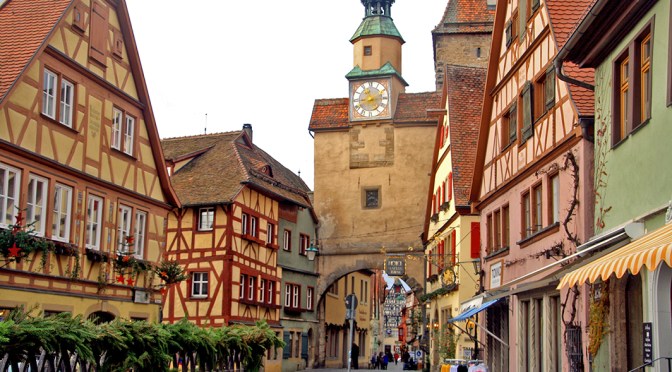
Ela é famosa por possuir um belo centro histórico,

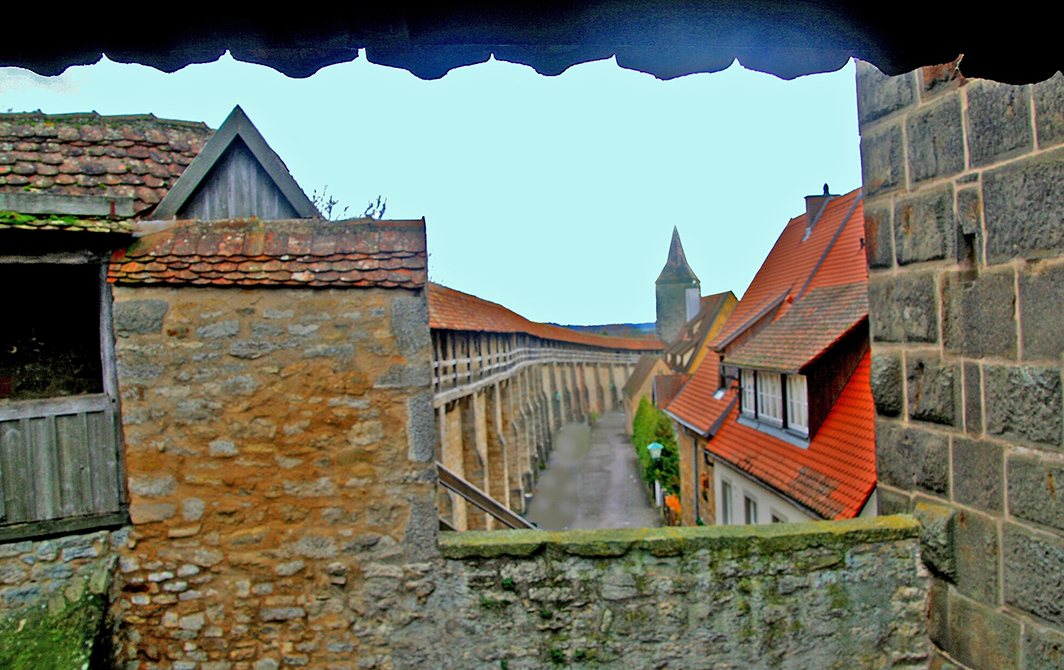
cercado por uma muralha com 42 torres.

Parte da cidade foi destruída durante a Segunda Guerra Mundial e depois reconstruída.O centro histórico de Rothenburg ob der Tauber é um bem cultural tombado pela Unesco e constitui um dos mais belos cenários medievais da Alemanha.

O coração da parte histórica é a Praça do Mercado, com a prefeitura, e as belas edificações históricas.O cartão postal da cidade é a Plönlein com a Torre Siebers.

Rothenburg ob der Tauber possui interessantes exemplos de arquitetura medieval, sendo que muitas delas são usadas como lojas, cafés e restaurantes.

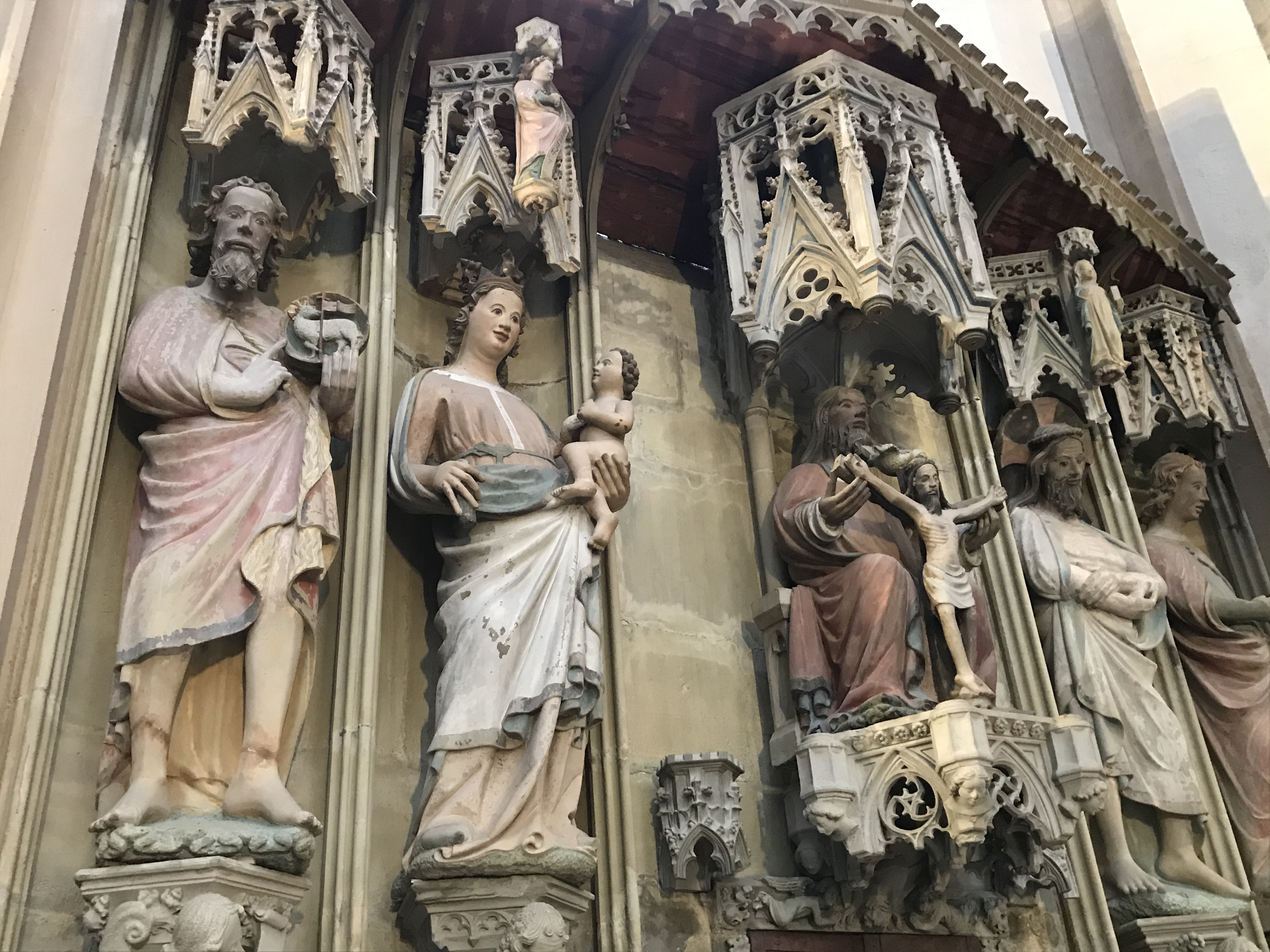
Eu, como arquiteta, fiquei encantada em conhecer o interior da igreja gótica de São Tiago (Sr. Jakobs-Kirche), cuja construção durou mais de 150 anos (1311-1484).O ponto alto dessa visita, na minha opinião consiste em apreciar o altar-mor dos Doze Apóstolos, com pinturas magníficas do século XV, do pintor Friesrich Herlin. Trata-se de uma das mais importantes obras de arte do país.

O Sagrário localizado do lado esquerdo do altar é muito bonito! Outro atrativo fascinante é Altar do Sangue de Cristo, com a Relíquia na Cruz Dourada, esculpido por Tilman Riemenschneider, entre 1499 a 1505, localizado no andar superior da igreja, que era visitada por muitos peregrinos durante a Idade Média.

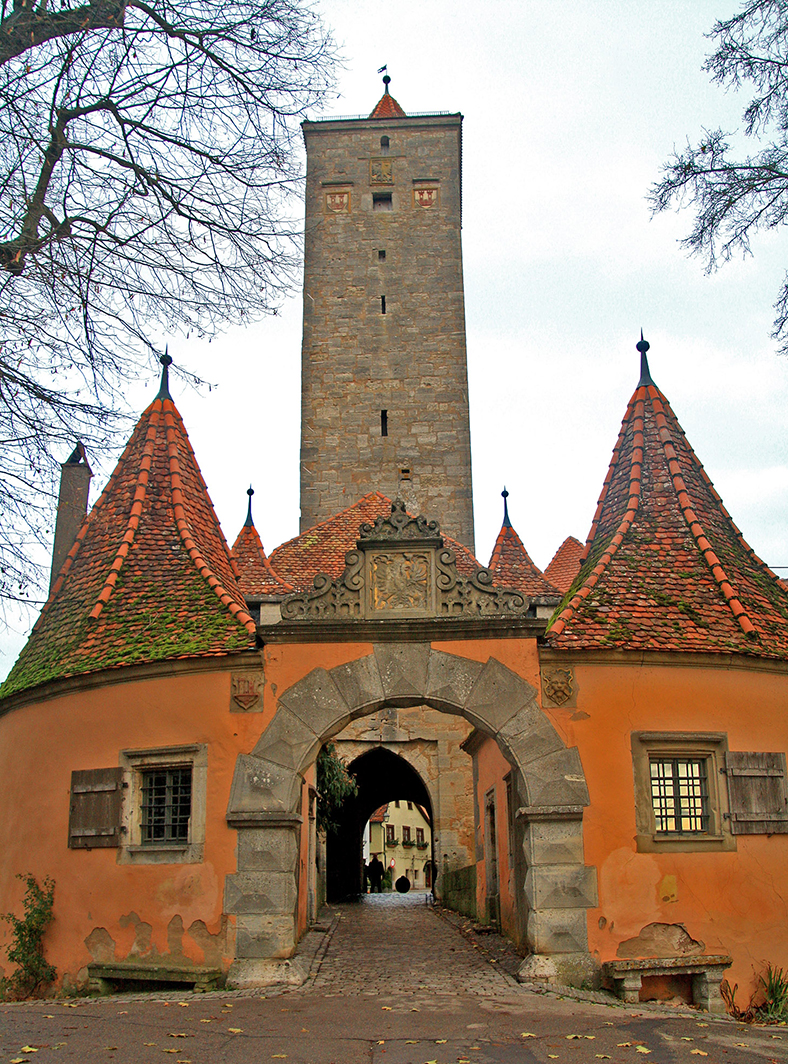
Rothenburg ob der Tauber é uma cidade para você conhecer caminhando. Numa das nossas caminhadas atravessamos a Porta do Castelo próxima à torre mais alta cidade e entramos nos jardins do castelo, cujos edifícios foram destruídos no terremoto de 1356. Visitamos essa área no outono, quando havia as folhas amareladas caídas das árvores, um cenário tão belo!

Uma experiência interessante é fazer o passeio pelas vielas sinuosas guiado pelo guarda noturno para conhecer as histórias e lendas de Rothenburg.

A cidade possui museus interessantes, como o Museu Medieval do Crime, o Museu Alemão do Natal, o Museu da Cidade Imperial, dentre outros.

A partir de Rothenburg é possível se realizar belas caminhadas pela Trilha dos Moinhos (Mühlenweg), que começa na região, além de outros passeios de bicicleta pelas ciclovias do vale do Tauber.

Fonte/Quelle/Source: https://www.rothenburg-tourismus.de/en/discover/active/hiking/#1519742618339-396a5e1b-9ad5

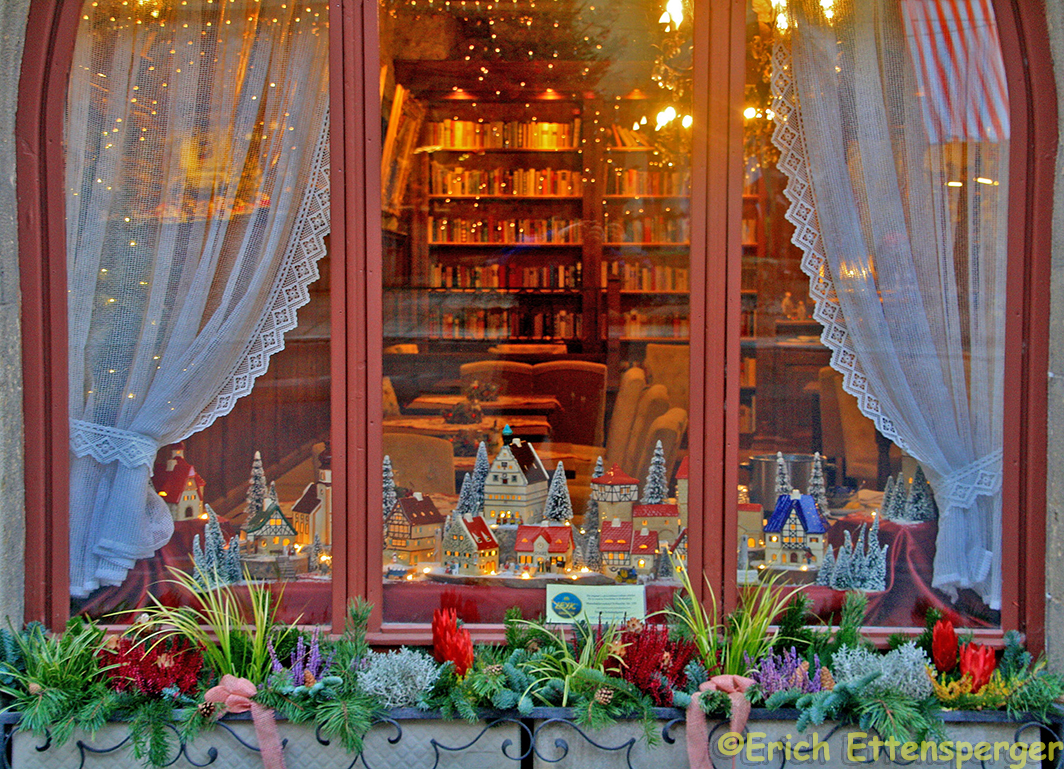
Para quem gosta de artigos natalinos, a loja Käthe Wohlfahrt é um ícone conhecida mundialmente.

Rothenburg ob der Tauber é também uma cidade onde ocorrem muitos eventos durante todo o ano, como o grande desfile que relembra a lenda do “Meistertrunk”, concertos paroquiais na Igreja de Santiago, festival de vinho, o mercado de Natal, com os seus 500 anos de tradição ( Reiterlersmarkt), apresentações teatrais a céu aberto, dentre outros.

Sugiro que planeje dois pernoites para conhecer essa bela cidade. Mais informações sobre aqui.

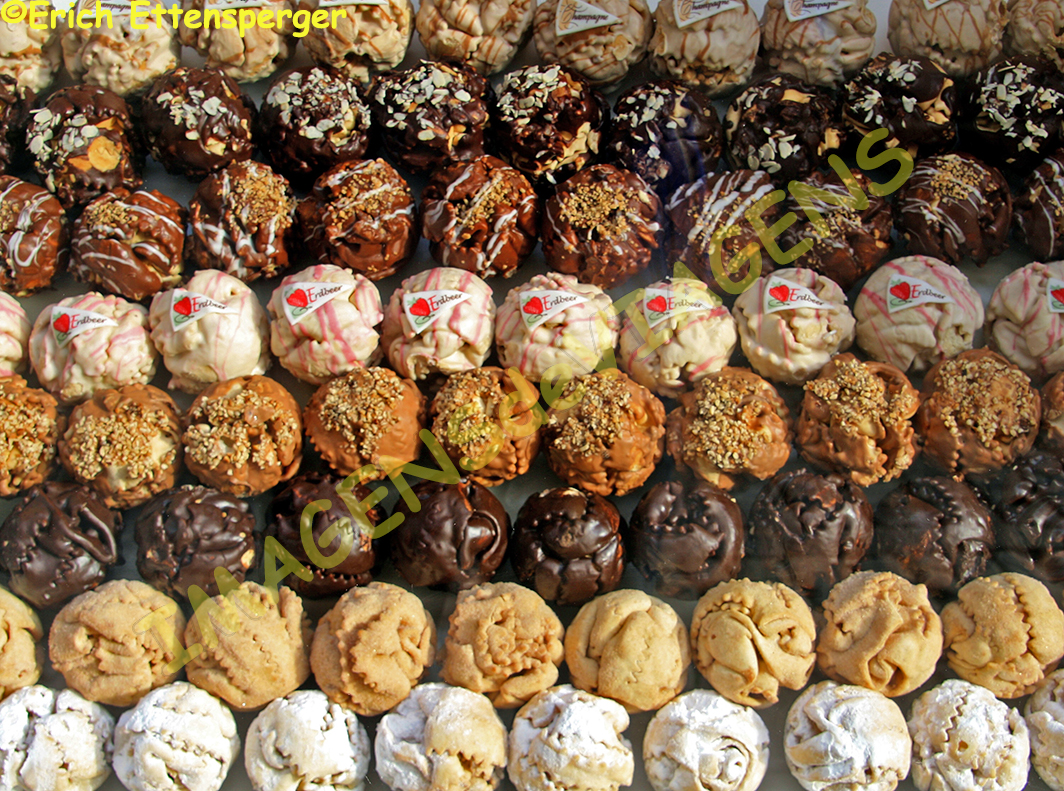
Quando você visitar Rothenburg, não esqueça de saborear as famosas Bolas de Neve (Schneebälle)…uma delícia…

Nos hospedamos no Hotel Der Reichküchenmeister, que possui também um ótimo restaurante.

Observação: se você quiser continuar “viajando” com o nosso blog, clique no botão “seguir” localizado no canto inferior direito dessa página. Você também pode “viajar” pelo Brasil conhecendo nosso  livro impresso  66 x Brasil e sua versão digital 66 Belezas do Brasil.

Rothenburg ob der Tauber

Rothenburg ob der Tauber ist eine deutsche Stadt mit rund 11.000 Einwohnern, 144 km von Nürnberg und 146 km von Frankfurt entfernt.

Fonte/Quelle/Source: Google Maps

Es liegt an der Kreuzung der Romantischen Straße mit der Burgenstraße.

Es ist berühmt für sein wunderschönes historisches Zentrum,

umgeben von einer Mauer mit 42 Türmen.

Ein Teil der Stadt wurde im Zweiten Weltkrieg zerstört und dann aber wieder aufgebaut.

Das historische Zentrum von Rothenburg ob der Tauber ist ein von der UNESCO gelistetes Kulturgut und eine der schönsten mittelalterlichen Kulissen Deutschlands.

Das Herzstück des historischen Teils ist der Marktplatz mit dem Rathaus und den wunderschönen historischen Gebäuden. Die Postkartenansicht der Stadt ist Plönlein mit dem Siebers-Turm.

In Rothenburg ob der Tauber gibt es interessante Beispiele mittelalterlicher Architektur, von denen heutzutage viele als Geschäfte, Cafés und Restaurants genutzt werden.

Als Architekt habe ich mich sehr gefreut, das Innere der gotischen Kirche São Tiago (Herr Jakobs-Kirche) zu entdecken, deren Bau mehr als 150 Jahre dauerte (1311-1484).

Höhepunkt hierbei ist meiner Meinung nach der Hauptaltar der Zwölf Apostel mit prächtigen Gemälden aus dem 15. Jahrhundert des Malers Friesrich Herlin. Es ist eines der wichtigsten Kunstwerke des Landes.

Das Sagrario auf der linken Seite des Altars ist sehr schön! Eine weitere faszinierende Attraktion ist der Altar des Blutes Christi mit dem Relikt am Goldenen Kreuz, das zwischen 1499 und 1505 von Tilman Riemenschneider entworfen wurde und sich im Obergeschoss der Kirche befindet und im Mittelalter von vielen Pilgern besucht wurde.

Rothenburg ob der Tauber ist eine Stadt für Spaziergänge. Auf einem davon durchqueren wir das nahe gelegene Porta do Castelo (Schlosstor) mit dem höchsten Stadtturm und wir betraten die Schlossgärten, deren Gebäude beim Erdbeben von 1356 zerstört wurden. Wir besuchten diesen Park im Herbst als die gelben Blätter von den Bäumen fielen, so eine sehr schöne Landschaft!

Eine interessante Erfahrung ist die Tour durch die verwinkelten Gassen der Stadt, die von der Nachtwache geführt werden, um die Geschichten und Legenden von Rothenburg kennenzulernen.

Die Stadt hat interessante Museen wie das Mittelalterliche Verbrechensmuseum, das Deutsche Weihnachtsmuseum, das Kaiserliche Stadtmuseum und andere.

Von Rothenburg aus können Sie schöne Wanderungen auf dem in der Region beginnenden Mühlenweg sowie andere Radtouren auf den Radwegen des Tauber-Tals unternehmen.

Fonte/Quelle/Source: https://www.rothenburg-tourismus.de/en/discover/active/hiking/#1519742618339-396a5e1b-9ad5

Für diejenigen, die Weihnachtsartikel mögen, ist der Käthe Wohlfahrt Store eine weltweit bekannte Ikone.

Rothenburg ob der Tauber ist auch eine Stadt, in der das ganze Jahr über viele Veranstaltungen stattfinden wie die große Parade, die an die Legende vom „Meistertrunk“ erinnert, Pfarrkonzerte in der Kirche von Santiago, das Weinfest, der Weihnachtsmarkt mit seinen 500 Veranstaltungen jahrelange Tradition (Reiterlersmarkt), unter anderem Open-Air-Theateraufführungen.

Ich schlage vor, Sie planen zwei Nächte, um diese schöne Stadt kennenzulernen. Weitere Informationen hier.

Vergessen Sie bei Ihrem Besuch in Rothenburg nicht, die berühmten Schneebälle zu probieren … eine Freude …

Wir waren im Hotel Der Reichküchenmeister, das auch ein tolles Restaurant offeriert.

Hinweis: Falls Sie unserem  Blog folgen wollen, dann klicken Sie unten rechts einfach auf “Weiter”, Sie werden dann zukünftig automatisch informiert. Sie können auch durch Brasilien reisen und unser Buch 66 SEHENSWÜRDIGKEITEN IN BRASILIEN  kennenlernen und 66 x Brazil – A Mosaic of Beauties.

Rothenburg ob der Tauber

Rothenburg ob der Tauber is a German city with around 11,000 inhabitants, 144 km from Nuremberg and 146 km from Frankfurt.

Fonte/Quelle/Source: Google Maps

It is located at the intersection of the Romantic Road and the Castle Road.

It is famous for its beautiful historic center

surrounded by a wall with 42 towers.

Part of the city was destroyed in World War II and then rebuilt.

The historical center of Rothenburg ob der Tauber is a UNESCO listed cultural asset and one of the most beautiful medieval backdrops in Germany.

The heart of the historical part is the market square with the town hall and the beautiful historical buildings. The postcard view of the city is Plönlein with the Siebers Tower.

There are interesting examples of medieval architecture in Rothenburg ob der Tauber, many of which are now used as shops, cafes and restaurants.

As an architect I was delighted to discover the interior of the Gothic church of São Tiago (Mr. Jacob’s Church), which took more than 150 years to build (1311-1484).

In my opinion the highlight is the main altar of the Twelve Apostles with magnificent paintings from the 15th century by the painter Friesrich Herlin. It is one of the most important works of art in the country.

The sagrario on the left side of the altar is very beautiful! Another fascinating attraction is the Altar of the Blood of Christ with the relic on the Golden Cross, which was designed by Tilman Riemenschneider between 1499 and 1505 and is located on the upper floor of the church and was visited by many pilgrims in the Middle Ages.

Rothenburg ob der Tauber is a city for walks. On one of them we cross the nearby Porta do Castelo (castle gate) with the highest city tower and we entered the castle gardens, the buildings of which were destroyed in the earthquake of 1356. We visited this park in autumn when the yellow leaves were falling from the trees, such a beautiful landscape!

An interesting experience is the tour through the winding streets of the city, which are led by the night watch to learn about the stories and legends of Rothenburg.

The city has interesting museums like the Medieval Crime Museum, the German Christmas Museum, the Imperial City Museum and others.

From Rothenburg you can go on beautiful hikes on the Mühlenweg that begins in the region, as well as other bike tours on the bike paths of the Tauber Valley.

Fonte/Quelle/Source: https://www.rothenburg-tourismus.de/en/discover/active/hiking/#1519742618339-396a5e1b-9ad5

For those who like Christmas items, the Käthe Wohlfahrt Store is a world-famous icon.

Rothenburg ob der Tauber is also a city in which many events take place all year round, such as the great parade that recalls the legend of the “master drink”, parish concerts in the church of Santiago, the wine festival, the Christmas market with its 500 events for years Tradition (Reiterlersmarkt), including open-air theater performances.

I suggest you plan two nights to get to know this beautiful city. Further information here.

When visiting Rothenburg, don’t forget to try the famous snowballs … a delight …

We stayed at the Hotel Der Reichküchemeister, which also has a great restaurant.

Note: If you want to follow our “Travels” on the blog, simply click on “Seguir” in the lower right corner, you will be then automatically informed in the future. You can continue traveling with us with our book Brazil´s 66 Beautiful Sites and 66 x Brazil – A Mosaic of Beauties.  


Estações de uma viagem marítima inesquecível (parte 1)/Stationen einer unvergesslichen Seereise (Teil 1 )/Stations of an unforgettable sea voyage (part 1)

 De Buenos Aires ao Cabo Horn

Estação 1: Buenos Aires

O ponto de partida de nossa viagem de 14 dias foi Buenos Aires, na Argentina, uma metrópole animada, quase europeia, que sempre vale uma visita por vários dias. Nossa jornada começou em fevereiro, ou seja, no verão no hemisfério sul e deve culminar no Atlântico sul com a circunavegação do Cabo Horn e levar ao seu final bem sucedido em Valparaíso, no Chile, no Pacífico.

Mais informações sobre Buenos Aires você encontra em nossas postagens de blog aqui.

Estação 2:  Montevideo / Uruguay

No Uruguai fizemos uma excursão de um dia muito interessante saindo de Montevidéu e indo até Punta Del Este, um dos balneários mais famosos da América do Sul.

Lá também visitamos o impressionante Museu Ralli;

durante este dia decidimos voltar ao Uruguai e assim o fizemos, leia aqui mais o nosso post.

Um dia descontraído em alto mar nos trouxe então para nossa próxima parada.

Estação 3: Puerto Madryn / Argentina

A cidade de Puerto Madryn está localizada no Golfo Nuevo em uma espécie de anfiteatro natural, onde se junta nosso destino do dia, a península de Valdés,

uma reserva natural mundialmente famosa (Patrimônio Mundial da UNESCO desde 1999) com fauna praticamente intacta. Você pode observar leões marinhos, baleias, pinguins, focas e várias espécies de pássaros.

A vegetação, por outro lado, é uma paisagem arbustiva bastante esparsa, semelhante a uma estepe. Você pode encontrar mais informações em nossa postagem do blog aqui.

A partir daqui, nosso luxuoso hotel flutuante nos levou para mais um dia no mar e mais ao sul, até chegarmos ao próximo estágio de viagem.

Estação 4: Stanley – Ilhas Falkland

Port Stanley é a capital da ilha com quase 3.000 habitantes. Visitar o local dá a impressão de que você está em uma pequena cidade do Reino Unido

com suas casas típicas, as cabines telefônicas vermelhas e até os famosos “pubs” típicos. Fizemos uma longa caminhada e pudemos observar animais selvagens e apreciar a paisagem deslumbrante com sua flora e fauna.

Você pode encontrar mais informações sobre isso na postagem do blog aqui.

No dia seguinte, devemos alcançar o clímax geográfico e emocional de nossa viagem marítima.

Estação 5: Cabo Horn e sua circunavegação

Cabo Horn, ponto mais meridional da América do Sul.

 Fonte: http://www.worldatlas.com/aatlas/infopage/capehorn.htm

Não achamos que a paisagem e o clima da nossa “Circunavegação do Cabo” sejam de uma beleza de tirar o fôlego, ao invés, é agreste, frio e com muito vento…!!!

Hoje o Cabo Horn é considerado o maior cemitério de navios do mundo. O vento forte continua o mesmo, a natureza é a mesma, mas os navios e suas modernas técnicas fizeram do Cabo Horn uma atração turística.

Você pode encontrar mais informações sobre “Cabo Horn” em nossa postagem do blog aqui. 

A parte 1 de nossa viagem marítima inesquecível “De Buenos Aires ao Cabo de Hornos” termina aqui, a Parte 2, “Do Cabo de Hornos a Valparaíso” seguirá em breve…!!!

Observação: se você quiser continuar “viajando” com o nosso blog, clique no botão “seguir” localizado no canto inferior direito dessa página. Você também pode “viajar”pelo Brasil conhecendo nosso  livro impresso  66 x Brasil e sua versão digital 66 Belezas do Brasil.

Stationen einer unvergesslichen Seereise (Teil 1)  Von Buenos Aires zum Kap Horn – Station 1: Buenos Aires

Ausgangspunkt unserer 14 tägigen Seereise war Buenos Aires in Argentinien, eine lebendige, fast europäisch anmutende Metropole, die immer einen mehrtätigen Besuch wert ist. Unsere Reise begann im Februar, also im Sommer auf der südlichen Halbkugel und sollte im Südatlantik mit der Umschiffung von Kap Horn seinen Höhepunkt finden und in Valparaiso in Chile im Pazifik zu ihrem erfolgreichen Ende führen.

Mehr Informationen über Buenos Aires finden Sie in unseren Blog-Beiträgen hier.

Station 2: Montevideo / Uruguay

In Uruguay machten wir einen sehr interessanten Tagesausflug von Montevideo bis nach Punta Del Este, einem der berühmtesten Badeorte Südamerikas.

Dort besuchten wir auch das sehr beeindruckende Ralli Museum;

An diesem Tag entschlossen wir uns, nach Uruguay zurückzukehren und so geschah es dann auch. Mehr darüber hier. 

Ein entspannter Tag dann auf hoher See brachte uns dann zu unserem nächsten Stop.

Station 3: Puerto Madryn / Argentinien

Die Stadt Puerto Madryn liegt im Golfo Nuevo in einer Art natürlichen Amphitheater, dort schlieβt sich auch unser Tagesziel, die Halbinsel Valdés an,

ein weltbekanntes Naturreservat (seit 1999 UNESCO Weltnaturerbe) mit einer weitgehend intakten Tierwelt. Man kann Seelöwen, Wale, Pinguine, Robben und diverse Vogelarten beobachten.

Die Vegetation dagegen ist eher spärlich, steppenhafte Buschlandschaft. Mehr Informationen finden Sie in unserem Blog-Beitrag hier.

Von hier aus brachte uns dann unser luxuriöses schwimmendes  Hotel mit einem weiteren Seetag weiter und weiter gen Süden bis wir unsere nächste Reiseetappe erreichen sollten.

Station 4: Stanley – Falklandinseln  

Port Stanley ist die Hauptstadt der Insel mit fast 3.000 Einwohnern.  Wenn Sie den Ort besuchen, haben Sie den Eindruck, als ob Sie sich in einem kleinen Städtchen in Großbritannien befinden

mit seinen typischen Häusern, den roten Telefonzellen und sogar auch den berühmt-typischen “Pubs”. Wir unternahmen einen ausgedehnten Spaziergang/Wanderung und konnten somit Wildtiere beobachten und die atemberaubende Landschaft mit ihrer Flora und Fauna genieβen.

Mehr Informationen hierzu finden Sie im Blogbeitrag hier. 

Am nächsten Tag sollten wir dann den geographischen und emotionalen Höhepunkt unserer Seereise erreichen.

Station 5: Kap Horn und seine Umsegelung

Kap-Horn, der südlichste Punkt von Südamerika.

 Quelle: http://www.worldatlas.com/aatlas/infopage/capehorn.htm

 Die Landschaft und das Wetter bei unserer „Kap-Umsegelung“ empfanden wir nicht als atemberaubend schön, eher als rau, kalt und sehr windig…!!!

Heute gilt Kap Horn als der größte Schiffsfriedhof der Welt. Der starke Wind ist immer noch der gleiche, die Natur ist die gleiche, aber die Schiffe und ihre moderne Techniken haben Kap Horn zu einer Touristenattraktion werden lassen.

Mehr Informationen zum „Kap Horn“ finden Sie in unserem Blogbeitrag hier. 

Hier endet Teil 1 unserer unvergesslichen Seereise „Von Buenos Aires zum Kap Horn“, Teil 2, „Vom Kap Horn nach Valparaiso“ wird in Kürze folgen…!!!

Hinweis: Falls Sie unserem  Blog folgen wollen, dann klicken Sie unten rechts einfach auf “Weiter”, Sie werden dann zukünftig automatisch informiert. Sie können auch durch Brasilien reisen und unser Buch 66 SEHENSWÜRDIGKEITEN IN BRASILIEN  kennenlernen und 66 x Brazil – A Mosaic of Beauties.

Stations of an unforgettable sea voyage (part 1) From Buenos Aires to Cape Horn – Station 1: Buenos Aires

The starting point of our 14-day voyage was Buenos Aires in Argentina, a lively, almost European-looking metropolis that is always worth a visit for several days. Our journey began in February, i.e. in summer in the southern hemisphere and should culminate in the south Atlantic with the circumnavigation of Cape Horn and lead to its successful end in Valparaiso in Chile in the Pacific.

More Informationen about Buenos Aires you find in our Blog Posts here.

Station 2: Montevideo / Uruguay

In Uruguay we did a very interesting one day excursion leaving Montevideo and going till Punta Del Este, one of the South America`s most famous seaside resorts.

There we visited also the very impressive Ralli Museum;

during this day we decided to come back to Uruguay and so we did, read here for more here our Post.

A relaxed day on the high seas then brought us to our next stop.

Station 3: Puerto Madryn / Argentina

The city of Puerto Madryn is located in the Golfo Nuevo in a kind of natural amphitheater, which is where our destination for the day, the Valdés peninsula, joins,

a world-famous nature reserve (UNESCO World Heritage Site since 1999) with largely intact fauna. You can watch sea lions, whales, penguins, seals and various species of birds.

The vegetation, on the other hand, is rather sparse, steppe-like bush landscape. You can find more information in our blog post here. 

From here our luxurious floating hotel took us for another day at sea and further south until we should reach our next travel stage.

 Station 4: Stanley – Falkland Islands

Port Stanley is the capital of the island with almost 3,000 inhabitants. Visiting the place gives the impression that you are in a small UK town

with its typical houses, the red telephone boxes and even the famous typical “pubs”. We took a long walk / hike and were able to observe wild animals and enjoy the breathtaking landscape with its flora and fauna.

You can find more information on this in the blog post here. 

The next day we should then reach the geographical and emotional climax of our sea voyage.

Station 5: Cape Horn and its circumnavigation

Cape Horn, the southernmost point of South America.

 Source: http://www.worldatlas.com/aatlas/infopage/capehorn.htm

 We did not find the landscape and the weather on our “Cape circumnavigation” to be breathtakingly beautiful, rather as rough, cold and very windy…!!!

Today Cape Horn is considered the largest ship cemetery in the world. The strong wind is still the same, the nature is the same, but the ships and their modern techniques have made Cape Horn a tourist attraction.

You can find more information about “Cape Horn” in our Blog Post here.

Part 1 of our unforgettable sea voyage “From Buenos Aires to Cape Horn” ends here, Part 2, “From Cape Horn to Valparaiso” will follow shortly…!!!

Note: If you want to follow our “Travels” on the blog, simply click on “Seguir” in the lower right corner, you will be then automatically informed in the future. You can continue traveling with us with our book Brazil´s 66 Beautiful Sites and 66 x Brazil – A Mosaic of Beauties.  
 

São Cristóvão, um passeio para quem gosta de história/São Cristóvão – ein Besuch für Geschichtsliebhaber/São Cristóvão – a visit for history lovers

Sergipe é um estado brasileiro localizado na região Nordeste. Sua capital é Aracaju. São Cristóvão é um município sergipano, com um população de aproximadamente, 85 000 habitantes, situado em torno de 24 km de Aracaju e é lá onde se encontra um dos mais belos conjuntos arquitetônicos, urbanísticos e paisagísticos do Brasil.

Trata-se de um relevante exemplar de núcleo urbano colonial criado durante o período no qual Portugal e Espanha estiveram sob a mesma coroa, entre os anos de 1580 e 1640, nos reinados de Dom Felipe II e Felipe III, durante a União Ibérica.

São Cristóvão foi fundada em 1 de janeiro de 1590, por Cristóvão de Barros e foi a primeira capital de Sergipe e é a quarta mais antiga cidade brasileira. Ela possui uma parte alta e uma baixa, está localizada à margem do rio Paramopama, afluente do rio Vaza-Barris e seu traçado urbano foi determinado pela localização de suas construções religiosas. O seu patrimônio histórico é constituído pela arquitetura colonial,

Do lado esquerdo, Sobrado da Rua da Matriz com balcão corrido,

pelas igrejas

Igreja de Nossa Senhora da Vitória. Fonte/Quelle/Source: Igreja Nossa Senhora da Vitória: http://www.eulafui.com.br/?p=3499

e museus.

Consideramos São Cristóvão um relevante atrativo cultural do Brasil e por isso, ele integra o nosso livro 66 x Brasil.

A Praça de São Francisco é a pérola desse lugar, considerada a “é um conjunto monumental excepcional e homogêneo composto por edifícios públicos e privados que representam o período de união das coroas portuguesa e espanhola” de acordo com a UNESCO. Essa praça foi desenhada seguindo o conceito de “Plaza Mayor” muito utilizado nas cidades colonizadas pela Espanha nas Américas, também chamada América Hispânica.

Fonte/Quelle/Source: http://portal.iphan.gov.br/pagina/detalhes/358/

Ela é constituída de uma área aberta circundada por antigas edificações, como a Igreja e Santa Casa de Misericórdia,

Santa Casa da Misericórdia e Igreja Santa Izabel

o Palácio Provincial,

Antigo Palácio Provincial – Museu Histórico de Sergipe

a Igreja e Convento de São Francisco,

Igreja e Convento de São Francisco

além de casas construídas em diferentes momentos históricos. Há edifícios públicos e privados. Em resumo, com base na literatura pesquisada e em observações realizadas no local, a Praça de São Francisco é um importante exemplar de um conjunto que seguiu os padrões de construção portugueses coloniais e a legislação espanhola da época. O mais importante dos edifícios dessa praça é o complexo da Igreja e o Convento de São Francisco.

Igreja e Convento de São Francisco

Essa praça é o coração da cidade de São Cristóvão, onde diversas atividades sociais e culturais são realizadas.

Visitar São Cristóvão é um passeio que pode ser feito em um dia e oferece ao turista a oportunidade de conhecer um lugar que possui a Praça de São Francisco, que é Patrimônio Mundial da Humanidade, ou seja, integra a lista dos bens culturais tombados pela Organização das Nações Unidas para a Educação, a Ciência e a Cultura – UNESCO, desde 2010. Além disso, o Instituto do Patrimônio Histórico e Artístico Nacional – IPHAN possui muitos bens tombados nessa localidade. Essa praça foi tombada desde 1967.

São Cristóvão é definitivamente uma sugestão de passeio para os que gostam de conhecer um pouco mais sobre a história do Brasil.

Observação: se você quiser continuar “viajando” com o nosso blog, clique no botão “seguir” localizado no canto inferior direito dessa página. Você também pode “viajar”pelo Brasil conhecendo nosso  livro impresso  66 x Brasil e sua versão digital 66 Belezas do Brasil.

São Cristóvão – ein Besuch für Geschichtsliebhaber

Sergipe ist ein brasilianischer Staat im Nordosten. Die Hauptstadt ist Aracaju. São Cristóvão ist eine Gemeinde in Sergipe mit ca. 85.000 Einwohnern, rund 24 km von Aracaju entfernt. Hier befindet sich einer der schönsten Architektur-, Stadt- und Landschaftskomplexe Brasiliens.

Es ist ein relevantes Beispiel für einen kolonialen, städtischen Kern, der in der Zeit geschaffen wurde als Portugal und Spanien zwischen 1580 und 1640 unter Dom Felipe II. und Felipe III. unter derselben Krone standen, der Iberischen Union.

São Cristóvão wurde am 1. Januar 1590 von Cristóvão de Barros gegründet und war die erste Hauptstadt von Sergipe und die viertälteste Stadt Brasiliens. Die Stadt ist auf einem höheren und einem tieferen Teil am Ufer des Paramopama-Flusses gelegen, einem Nebenfluss des Vaza-Barris-Flusses, und ihr städtischer Grundriss wurde durch die Lage seiner religiösen Gebäude vorgegeben.

Das historische Erbe besteht aus Kolonialarchitektur,

auf der linken Seite ein Sobrado (Haus mit Dachgeschoss) der Rua da Matriz mit typischem Balkon,

Kirchen

Igreja de Nossa Senhora da Vitória. Fonte/Quelle/Source: Igreja Nossa Senhora da Vitória: http://www.eulafui.com.br/?p=3499

und Museen.

Wir betrachten São Cristóvão als eine relevante kulturelle Attraktion in Brasilien und ist gerade deswegen Teil unseres Buches 66 x Brasilien.

Der Platz Praça de São Francisco ist die Perle dieses Ortes und gilt laut UNESCO als „außergewöhnlicher und homogener monumentaler Komplex aus öffentlichen und privaten Gebäuden, welche die Zeit der Vereinigung der portugiesischen und spanischen Kronen darstellen“.

Dieser Platz wurde nach dem Konzept der „Plaza Mayor“ entworfen, die in den Städten, welche von Spanien in Amerika kolonisiert wurden und auch als Hispanic America bezeichnet werden, weit verbreitet ist.

Fonte/Quelle/Source: http://portal.iphan.gov.br/pagina/detalhes/358/

Er besteht aus einem offenen Bereich, der von alten Gebäuden wie der Kirche und der Santa Casa de Misericórdia,

Santa Casa da Misericórdia e Igreja Santa Izabel

dem Provinzpalast,

Antigo Palácio Provincial – Museu Histórico de Sergipe

der Kirche und dem Kloster von São Francisco umgeben ist,

Igreja e Convento de São Francisco

sowie Häusern, die in verschiedenen historischen Momenten gebaut wurden.

Es gibt öffentliche und private Gebäude. Zusammenfassend ist der Praça de São Francisco, basierend auf der recherchierten Literatur und den vor Ort gemachten Beobachtungen, ein wichtiges Beispiel für ein Architektur-Set, das den portugiesischen Kolonialbaustandards und der spanischen Gesetzgebung der damaligen Zeit entsprach.

Das wichtigste Gebäude auf diesem Platz ist der Kirchenkomplex und das Kloster von São Francisco.

Igreja e Convento de São Francisco

Der Platz ist das Herz der Stadt São Cristóvão, wo verschiedene soziale und kulturelle Aktivitäten stattfinden.

Der Besuch von São Cristóvão ist eine Tour, die an einem Tag durchgeführt werden kann und dem Touristen somit die Möglichkeit bietet, einen Ort mit dem São Francisco Platz zu besuchen, der seit 2010 zum Weltkulturerbe der UNESCO gehört.

Darüber hinaus verfügt das Institut für nationales historisches und künstlerisches Erbe – IPHAN über zahlreiche Vermögenswerte, die bezüglich diesem Standort seit 1967 aufgeführt sind.

São Cristóvão ist definitiv ein Tourvorschlag für diejenigen, die etwas mehr über die Geschichte Brasiliens erfahren möchten.

Hinweis: Falls Sie unserem  Blog folgen wollen, dann klicken Sie unten rechts einfach auf “Weiter”, Sie werden dann zukünftig automatisch informiert. Sie können auch durch Brasilien reisen und unser Buch 66 SEHENSWÜRDIGKEITEN IN BRASILIEN  kennenlernen und 66 x Brazil – A Mosaic of Beauties.

São Cristóvão – a visit for history lovers

Sergipe is a Brazilian state in the northeast. The capital is Aracaju. São Cristóvão is a municipality in Sergipe with approx. 85,000 inhabitants around 24 km from Aracaju. One of the most beautiful architectural, urban and landscape complexes in Brazil is located here.

It is a relevant example of a colonial, urban core that was created when Portugal and Spain between 1580 and 1640 under Dom Felipe II and Felipe III. were under the same crown, the Iberian Union.

São Cristóvão was founded on January 1st 1590 by Cristóvão de Barros and was the first capital of Sergipe and the fourth oldest city in Brazil. The city is located on a higher and a lower part on the banks of the Paramopama River, a tributary of the Vaza Barris River, and its urban layout was determined by the location of its religious buildings.

The historical legacy consists of colonial architecture,

on the left a sobrado (house with attic) on Rua da Matriz with a typical balcony,

churches

Igreja de Nossa Senhora da Vitória. Fonte/Quelle/Source: Igreja Nossa Senhora da Vitória: http://www.eulafui.com.br/?p=3499

and museums.

We consider São Cristóvão to be a relevant cultural attraction in Brazil and that’s why it’s part of our book 66 x Brazil.

The Praça de São Francisco square is the pearl of this place and, according to UNESCO, is an “extraordinary and homogeneous monumental complex of public and private buildings that represent the time of the union of the Portuguese and Spanish crowns”.

This square was designed according to the concept of the “Plaza Mayor”, which is widespread in the cities that were colonized by Spain in America and are also known as Hispanic America.

Fonte/Quelle/Source: http://portal.iphan.gov.br/pagina/detalhes/358/

It consists of an open area surrounded by ancient buildings such as the Church and Santa Casa de Misericórdia,

Santa Casa da Misericórdia e Igreja Santa Izabel

the Provincial Palace,

Antigo Palácio Provincial – Museu Histórico de Sergipe

Church and Convent of São Francisco,

Igreja e Convento de São Francisco

as well as houses that were built at different historical moments.

There are public and private buildings. In summary, based on the researched literature and the observations made on site, the Praça de São Francisco is an important example of an architectural set that complied with the Portuguese colonial building standards and the Spanish legislation of the time.

The main building in this square is the São Francisco Church Complex and Convent.

Igreja e Convento de São Francisco

The square is the heart of the city of São Cristóvão, where various social and cultural activities take place.

The visit of São Cristóvão is a tour that can be done in one day and thus offers the tourist the opportunity to visit a place with the São Francisco Square, which has been a UNESCO World Heritage Site since 2010.

In addition, the Institute for National Historical and Artistic Heritage – IPHAN has numerous assets listed regarding this location since 1967.

São Cristóvão is definitely a tour suggestion for those who want to learn a little more about the history of Brazil.

Note: If you want to follow our “Travels” on the blog, simply click on “Seguir” in the lower right corner, you will be then automatically informed in the future. You can continue traveling with us with our book Brazil´s 66 Beautiful Sites and 66 x Brazil – A Mosaic of Beauties.  


Sentosa, a ilha da diversão de Cingapura/Sentosa – die Insel „des Spasses“ in Singapur/Sentosa – the island of “fun” in Singapore

Sentosa, a ilha da diversão de Cingapura

Cingapura é uma cidade-estado constituída por 63 ilhas, sendo que uma delas chama-se Sentosa, distante em torno de meia hora de Cingapura.

Quando chegamos a ilha,

Erich disse que Sentosa é a Disneylândia de Cingapura.

E é verdade. É lá que localiza-se o parque de diversões chamado “Universal” com muitos brinquedos, shows, piscinas com tobogãs, dentre outros. Há trilhas para serem percorridas, resorts de luxo, casas de veraneio, bares e restaurantes, além de três praias.

Visitamos a praia chamada Siloso Beach é linda!

Trata-se de uma praia artificial, com águas tranquilas, propícia para banhos de mar refrescantes.

A praia tem uma ótima infraestrutura de lazer,

além de equipamentos de diversão como uma alta torre para prática de Bungee-Jumping.

Sentosa possui muitas atrações, como o Parque das Águas, o Parque das Borboletas e o Reino dos Insetos, a Ilha dos Golfinhos, o Forte de Siloso e a Trilha Suspensa do Forte do Siloso. Além desses parques existe o Museu Madame Trussaud Cingapura, o Lago dos Sonhos, o Aquário, são tantas as atrações! Para quem mora em Cingapura e vai sempre se divertir em Sentosa, vale a pena ter a carteira de sócio, para poder usufruir de tudo com um melhor preço. A ilha é também um local para a realização de eventos sociais e culturais.

Essa ilha possui também muitas opções de hospedagens, são resorts e hotéis sensacionais! Veja aqui mais sobre eles.

Em Sentosa existe uma grande estátua de Merlion, um dos símbolos de Cingapura, trata-se da representação de uma figura que é uma cabeça de leão com corpo de peixe, ele é considerado o guardião da prosperidade.

O passeio até Sentosa é bem interessante, começando a partir do uso do teleférico,

de onde se tem uma vista bonita da ilha.

Sentosa é tão, tão interessante que, se você se gostaria de  conhecer mais sobre esse lugar de diversões de Cingapura, clique aqui para conhecer detalhes.

Se você quer passar férias em lugar para se divertir, Sentosa é definitivamente o local ideal para relaxar quando a pandemia passar!

Como chegar em Sentosa saindo da área do Marina Bay Sands Hotel: pegar o ônibus 97, depois o monorail e por último o teleférico que conduz até Sentosa.

Observação: se você quiser continuar “viajando” com o nosso blog, clique no botão “seguir” localizado no canto inferior direito dessa página. Você também pode “viajar”pelo Brasil conhecendo nosso  livro impresso  66 x Brasil e sua versão digital 66 Belezas do Brasil.

Sentosa – die Insel „des Spaβes“ in Singapur
Singapur ist ein Stadtstaat, der aus 63 Inseln besteht, von denen eine Sentosa heißt und etwa eine halbe Stunde von Singapur entfernt liegt.

Als wir auf der Insel ankamen,

sagte Erich, dass Sentosa das Disneyland von Singapur ist.

Und es ist wahr. Dort befindet sich unter anderem der Vergnügungspark „Universal“ mit vielen Spielzeugen, Shows und Schwimmbädern mit Rutschen. Es gibt Wanderwege, Luxusresorts, Sommerhäuser, Bars und Restaurants sowie drei Strände.


Wir besuchten den Strand namens Siloso Beach und er ist wunderschön!

Es ist ein künstlicher Strand mit ruhigem Wasser, der sich für erfrischende Meeresbäder eignet.


Der Strand verfügt über eine großartige Freizeitinfrastruktur

sowie über Unterhaltungsgeräte wie einen hohen Turm zur Aus-Übung des Bungy-Jumpings.

Sentosa offeriert viele Attraktionen wie den Parque das Águas, den Parque das Butterflies und das Königreich der Insekten, Ilha dos Golfinhos, Forte de Siloso und den Suspended Trail von Forte do Siloso. Neben diesen Parks gibt es das Madame Trussaud Singapore Museum, den Lake of Dreams, das Aquarium, es gibt so viele Attraktionen!
Für diejenigen, die in Singapur leben und immer Spaß in Sentosa haben wollen, lohnt es sich, eine Mitgliedskarte zu haben, um alles zu einem besseren Preis genießen zu können. Die Insel ist auch ein Ort für viele gesellschaftliche und kulturelle Veranstaltungen.


Die Insel bietet auch viele Unterkunftsmöglichkeiten, dies sind sensationelle Resorts und Hotels! Weitere Informationen finden Sie hier.


In Sentosa gibt es eine große Statue von Merlion, eines der Symbole Singapurs. Es handelt sich hierbei um die Darstellung einer Figur mit einen Löwenkopf und einem Fischkörper. Sie gilt als Hüter des Wohlstandes.


Die Fahrt nach Sentosa ist sehr interessant, angefangen mit der Seilbahn,

von wo aus Sie einen schönen Blick auf die Insel haben.

Sentosa ist wahrlich sehr interessant, falls Sie mehr über diesen Vergnügungsort in Singapur erfahren möchten, dann klicken Sie hier

Falls Sie Ihren Urlaub an einem Ort verbringen möchten, um Spaß zu haben (v.a. mit Kindern), dann ist Sentosa definitiv der ideale Ort zum Entspannen, wenn dann die Pandemie vorbei ist!

So kommen Sie vom Marina Bay Sands Hotel nach Sentosa: Nehmen Sie den Bus 97, dann die Einschienenbahn und schließlich die Seilbahn, die nach Sentosa führt.

Hinweis: Falls Sie unserem  Blog folgen wollen, dann klicken Sie unten rechts einfach auf “Weiter”, Sie werden dann zukünftig automatisch informiert. Sie können auch durch Brasilien reisen und unser Buch 66 SEHENSWÜRDIGKEITEN IN BRASILIEN  kennenlernen und 66 x Brazil – A Mosaic of Beauties.

Sentosa – the island of “fun” in Singapore

Singapore is a city-state made up of 63 islands, one of which is called Sentosa, and is located about half an hour from Singapore.


When we got to the island,

Erich said that Sentosa is Singapore’s Disneyland.

And it’s true. There you will find the amusement park “Universal” with lots of toys, shows and swimming pools with slides. There are hiking trails, luxury resorts, summer homes, bars and restaurants, and three beaches.

 We visited the beach called Siloso Beach and it is beautiful!

It is an artificial beach with calm waters that is suitable for refreshing sea baths.


The beach has a great leisure infrastructure

as well as entertainment equipment such as a high tower for practicing bungy jumping.

Sentosa offers many attractions such as the Parque das Águas, the Parque das Butterflies and the Kingdom of Insects, Ilha dos Golfinhos, Forte de Siloso and the Suspended Trail of Forte do Siloso. Besides these parks, there is the Madame Trussaud Singapore Museum, the Lake of Dreams, the Aquarium, there are so many attractions!
For those who live in Singapore and always want to have fun in Sentosa, it is worth having a membership card so that you can enjoy everything at a better price. The island is also a place for many social and cultural events.


The island also offers many accommodation options, these are sensational resorts and hotels! More information can be found here.


In Sentosa there is a large statue of Merlion, one of the symbols of Singapore. It is a representation of a figure with a lion head and a fish body. She is considered the guardian of prosperity.


The ride to Sentosa is very interesting, starting with the cable car

from where you have a nice view of the island.

Sentosa is truly interesting, if you want to find out more about this Singapore entertainment spot, click here.

If you want to spend your vacation in a place to have fun (especially with children), Sentosa is definitely the ideal place to relax when then the pandemic is over!


How to get to Sentosa from the Marina Bay Sands Hotel: Take the 97 bus, then the monorail and finally the cable car that goes to Sentosa.

Note: If you want to follow our “Travels” on the blog, simply click on “Seguir” in the lower right corner, you will be then automatically informed in the future. You can continue traveling with us with our book Brazil´s 66 Beautiful Sites and 66 x Brazil – A Mosaic of Beauties.  
Verona, uma pérola do Vêneto/Verona – eine Perle des Veneto/Verona – a pearl of the Veneto

Verona é uma cidade italiana charmosa situada a 500 km distância de Roma e 115 km de Veneza, aproximadamente, localizada na região de Veneto.

Fonte/Quelle/Source: Google Maps

Há registro da presença humana desde a pré-história. Os romanos fundaram a Colônia Augusta Verona no século I A.C. Em 49 A.C. Júlio César concede-lhe o título de município. A partir daí a cidade de desenvolveu e se embelezou a ponto de chegar a ser conhecida como a “Pequena Roma”.

Ela possui aproximadamente 260 mil habitantes e é banhada pelo sinuoso Rio Adige, o que lhe confere um charme ainda mais especial, quando se observa a cidade a partir do Museu do Teatro Romano e avista-se as pontes, as torres, as igrejas, todo o conjunto histórico urbano. Esse cenário é definitivamente fascinante.

Verona é uma cidade pequena, charmosa, pitoresca com um belo centro histórico.

O ideal é que você se hóspede na área histórica de onde é possível visitar a maioria dos atrativos a pé.

Um dos mais famosos atrativos da cidade é a Arena de Verona (Anfiteatro Romano), uma das maiores edificações construídas pelos romanos. O Festival de Ópera, que acontece nessa arena no verão, atrai milhares de pessoas.

Verona possui dois teatros (Filarmônico e Romano) com programação diversificada durante todo o ano.

O coração da cidade está localizado na Piazza Erbe, onde existe uma feira de produtos diversos, principalmente souvenires.

É nas proximidades dessa praça onde está localizada a Rua dos Capelletos com a Casa de Julieta, personagem do drama de Shakespeare (o autor se inspirou numa lenda para escrever a obra).

Fonte/Quelle/Source: http://www.euvouape.com/a-casa-de-julieta-e-seu-tumulo/

Casa dos Capelletos/Haus Capelletos/Capelletos´s House

Próximo a essa praça localiza-se também a casa de Romeo e o interessante Arco Scaligere, além da Ponte de Pedra.

O centro de Verona tem muitas lojas sofisticadas e bem interessantes, de roupas, objetos de arte, souvenires, dentre outras.

Ao lado da Piazza Erbe, com seus restaurantes e bares, encontra-se a Piazza do Signori, onde acontece o lindo Mercado de Natal, cheio de delícias e sabores.

Próxima a essa praça existe uma área com escavações arqueológicas, os Palácios Franchini e o Miniscalchi-Erizzo. Nessa área você também pode visitar a Porta Leoni, a Igreja de São Ferno de Maggiore.

Achei a cidade tão encantadora!

É muito agradável caminhar pela Piazza Bra, próxima à Arena, ao Arco de Lisboa Gavi, aos Corsos (ruas) Cavour e Porta Borsari. Há também outra bela caminhada pela área do Castelvecchio, da Ponte Scaligero,com barraquinhas de produtos típicos, visitar a Igreja de São Bernardinho e a Basílica de San Zeno Maggiore.

Uma outra parte da cidade interessante é a do antigo Teatro Romano, com seu museu (entrada custa 4,50 euros)

e de onde é possível fazer belas fotos de Verona.

Se você for visitar esse atrativo, prepare as pernas, são muitos degraus…Nessa área também é possível visitar o Castelo de São Pedro no alto(tem um bondinho se você não quiser subir a pé), as Igrejas de São Tomaso Cantuariense e dos Santos Nazaro e Celso. Há também o Palácio e Jardin Giusti, que não visitamos devido a chuvinha insistente.

Verona é uma cidade que possui muitas igrejas belas, dentre as quais destacam-se a Catedral, a Igreja de São Giovanni, de Santa Anastácia, dentre outras interessantes.

Visitamos Verona no mês de novembro, com temperatura em tosse 13 graus e uma chuvinha leve. Mas, mesmo assim, vi muitas pessoas com suas sombrinhas passeando pelas ruas. O pátio da Casa de Julieta estava cheio, mesmo chovendo.

Caso você queira escapar do turismo de massa de Veneza, Verona pode ser a cidade-base para você realizar uma excursão de um dia à Veneza. Nas proximidades de Verona você também pode visitar outros lugares interessantes como Vicenza, Padova, Lago do Garda, dentre outras.

Se você quiser conhecer somente Verona, recomendo 2 dias, caso se interesse por museus (são 10), sugiro 3 dias, pois há muito o que se ver. Se você se interessa em visitar igrejas (são 33), palácios (são 28)aprecia arquitetura, então, pode até ficar mais um pouquinho…Se quiser fazer um bate-volta à Veneza, 3 dias. Há trens diários para Veneza, passagem custa 28 euros e tem duração de 1 hora e 10 minutos a 1 hora e meia. A estação de trem de Verona chama-se Porta Nova e a de Veneza, Santa Lúcia.

Dica: recomendo reservar restaurantes. Jantamos no Ristorante Greppia, Bottica Vini e no restaurante do hotel onde nos hospedamos, o Due Torri Hotel.

Conheça mais sobre Verona aqui.

Observação: se você quiser continuar “viajando” com o nosso blog, clique no botão “seguir” localizado no canto inferior direito dessa página. Você também pode “viajar”

pelo Brasil conhecendo nosso  livro impresso 66 Brasil e sua versão digital 66 Belezas do Brasil.

Verona – eine Perle des Veneto

Verona ist eine charmante italienische Stadt in der Region Venetien, 500 km von Rom und etwa 115 km von Venedig entfernt.

Fonte/Quelle/Source: Google Maps

Seit der Vorgeschichte gibt es Aufzeichnungen über menschliche Präsenz. Die Römer gründeten im 1. Jahrhundert v. Chr. die Kolonie Augusta Verona. 49 v. Chr. Verleiht ihm Julius Cäsar den Titel einer Gemeinde. Von da an entwickelte sich die Stadt und wurde so verschönert, dass sie als “kleines Rom” bekannt wurde.

Verona hat ungefähr 260.000 Einwohner und wird von der gewundenen Etsch durchflossen, was ihr einen noch besonderen Charme verleiht, wenn Sie die Stadt vom Museum des Römischen Theaters aus betrachten, ein Blick auf das stadthistorische Ensemble mit Brücken, Türmen, Kirchen und Kathedralen. Dieses Szenario ist definitiv faszinierend.

Verona ist eine kleine, charmante, malerische Stadt mit einem wunderschönen historischen Zentrum.

Idealerweise sollten Sie als Gast im historischen Viertel untergebracht sein, von wo aus Sie die meisten Sehenswürdigkeiten zu Fuß besuchen können.

Eine der bekanntesten hiervon in der Stadt ist die Arena von Verona (römisches Amphitheater), eines der größten von den Römern erbauten Gebäude. Das Opernfestival, das im Sommer in dieser Arena stattfindet, zieht Tausende von Menschen an.

Verona hat zwei Theater (Philharmonie und Roman) mit einem abwechslungsreichen Programm das ganze Jahr über.

Das Herz der Stadt befindet sich auf der Piazza Erbe, wo es eine Messe für verschiedene Produkte gibt, hauptsächlich Souvenirs.

Ganz in der Nähe dieses Platzes, an den sich die Rua dos Capelletos anschlieβt befindet sich die Casa de Julieta, einer Figur in Shakespeares Drama Romeo und Julia (der Autor wurde von einer Legende zum Schreiben dieses Werks inspiriert).

Fonte/Quelle/Source: http://www.euvouape.com/a-casa-de-julieta-e-seu-tumulo/

Casa dos Capelletos/Haus Capelletos/Capelletos´s House

Bei diesem Platz befinden sich neben der Ponte de Pedra (Steinbrücke) auch das Haus von Romeo und der interessante Torbogen Arco Scaligere.

Das Zentrum von Verona hat viele raffinierte und interessante Geschäfte, unter anderem für Kleidung, Kunstgegenstände und Souvenirs.

Neben der Piazza Erbe mit ihren Restaurants und Bars befindet sich die Piazza do Signori, auf der der wunderschöne Weihnachtsmarkt voller Köstlichkeiten und Aromen stattfindet.

Neben diesem Platz befindet sich ein Areal mit archäologischen Ausgrabungen, den Franchini-Palästen und dem Miniscalchi-Erizzo. In diesem Viertel können Sie auch die Porta Leoni, die Kirche San Ferno de Maggiore, besuchen.

Ich finde die Stadt so charmant!

Es ist sehr angenehm, über die Piazza Bra in der Nähe der Arena, des Arco de Lisboa Gavi, den Corsos (Straßen) Cavour und der Porta Borsari zu spazieren.

Es gibt auch einen weiteren schönen Spaziergang durch das Viertel von Castelvecchio von Ponte Scaligero mit Ständen typischer Produkte, um dann die Kirche San Bernardinho und die Basilika San Zeno Maggiore zu besuchen.

Ein weiterer interessanter Teil der Stadt ist das alte römische Theater mit seinem Museum (Eintritt 4,50 Euro),

von dem aus Sie wunderschöne Fotos von Verona machen können.

Falls Sie diese Sehenswürdigkeit besuchen möchten, seien Sie sich der vielen auf Sie wartenden Stufen bewuβt!!!

In diesem Bereich können Sie auch oben die Burg Castelo de São Pedro besuchen oben (es gibt auch eine Seilbahn, falls Sie nicht zu Fuß hinaufgehen wollen), die Kirchen von São Tomaso Cantuariense und die zwei Heiligen Santos Nazaro und Celso. Es gibt dort auch den Palast und den Jardin Giusti, die wir wegen des anhaltenden Regens nicht besucht haben.

Verona ist eine Stadt mit vielen schönen Kirchen, darunter die Kathedrale, die Kirchen St. Giovanni und Santa Anastácia.

Wir besuchten Verona im November mit einer Temperatur von 13 Grad und leichtem Regen. Trotzdem sah ich viele Menschen mit ihren Regenschirmen durch die Straßen schlendern. Der Hof der Casa de Julieta war voll trotz des Regens.

Falls Sie dem Massentourismus in Venedig entfliehen möchten, dann ist Verona die ideale Basisstadt für einen Tagesausflug nach Venedig. In der Nähe von Verona können Sie auch weitere interessante Orte wie Vicenza, Padua und den Gardasee besuchen.

Falls Sie nur Verona kennenlernen möchten, empfehle ich 2 Tage, wenn Sie sich für Museen interessieren (es gibt 10), empfehle ich 3 Tage, da es viel zu sehen gibt. Wenn Sie daran interessiert sind, Kirchen zu besuchen (es gibt 33), Paläste (es gibt 28) Architektur zu schätzen wissen, dann sollten Sie sogar ein bisschen länger bleiben … Fenn Sie eine Rundreise nach Venedig machen möchten, 3 – 4 Tage.

Es gibt tägliche Züge nach Venedig, ein Ticket kostet 28 Euro und dauert 1 Stunde und 10 Minuten bis 1,5 Stunden. Der Bahnhof von Verona heißt Porta Nova und der von Venedig ist Santa Lucia.

Tipp: Ich empfehle Restaurants zu reservieren. Wir aßen im Ristorante Greppia, Bottica Vini und im Hotelrestaurant Due Torri, wo wir auch übernachteten.

Erfahren Sie mehr über Verona hier.

Hinweis: Falls Sie unserem  Blog folgen wollen, dann klicken Sie unten rechts einfach auf “Weiter”, Sie werden dann zukünftig automatisch informiert. Sie können auch durch Brasilien reisen und unser Buch 66 SEHENSWÜRDIGKEITEN IN BRASILIEN  kennenlernen und 66 x Brazil – A Mosaic of Beauties.

Verona – a pearl of the Veneto

Verona is a charming Italian city in the Veneto region, 500 km from Rome and about 115 km from Venice.

Fonte/Quelle/Source: Google Maps

There have been records of human presence since prehistory. The Romans founded in the 1st century BC The colony of Augusta Verona. 49 BC Chr. Julius Caesar gives him the title of parish. From then on, the city developed and was so embellished that it became known as “Little Rome”.

Verona has about 260,000 inhabitants and is traversed by the winding Adige, which gives it an even more special charm if you look at the city from the Museum of the Roman Theater, a view of the urban historical ensemble with bridges, towers, churches and cathedrals. This scenario is definitely fascinating.

Verona is a small, charming, picturesque city with a wonderful historical center.

Ideally, you should be staying in the historic district, from where you can visit most of the sights on foot.

One of the most famous of these in the city is the Verona Arena (Roman amphitheater), one of the largest buildings built by the Romans. The opera festival that takes place in this arena in the summer attracts thousands of people.

Verona has two theaters (Philharmonic and Roman) with a varied program all year round.

The heart of the city is in Piazza Erbe, where there is a fair for various products, mainly souvenirs.

Very close to this square, which is adjoined by Rua dos Capelletos, is the Casa de Julieta, a character in Shakespeare’s drama Romeo and Juliet (the author was inspired to write this work by a).

Fonte/Quelle/Source: http://www.euvouape.com/a-casa-de-julieta-e-seu-tumulo/

Casa dos Capelletos/Haus Capelletos/Capelletos´s House

Next to the Ponte de Pedra (stone bridge) there is also Romeo’s house and the interesting archway Arco Scaligere.

The center of Verona has many nifty and interesting shops for clothes, art objects and souvenirs, among others.

Next to the Piazza Erbe with its restaurants and bars is the Piazza do Signori, where the wonderful Christmas market full of delicacies and flavors takes place.

Next to this square is an area with archaeological excavations, the Franchini Palaces and the Miniscalchi-Erizzo. In this neighborhood you can also visit the Porta Leoni, the church of San Ferno de Maggiore.

I feel the city so charming!

It is very pleasant to stroll in Piazza Bra near the Arena, Arco de Lisboa Gavi, Corsos (streets) Cavour and Porta Borsari.

There is also another nice stroll through the Castelvecchio neighborhood of Ponte Scaligero, with stalls of typical products, to then visit the Church of San Bernardinho and the Basilica of San Zeno Maggiore.

Another interesting part of the city is the old Roman theater with its museum (entrance fee 4.50 euros),

from which you can take beautiful photos of Verona.

If you want to visit this attraction be aware of the many steps waiting for you !!!

In this area you can also visit Castelo de São Pedro above (there is also a cable car if you don’t want to go up on foot), the churches of São Tomaso Cantuariense and the two saints Santos Nazaro and Celso. There is also the palace and the Jardin Giusti, which we did not visit because of the persistent rain.

Verona is a city with many beautiful churches including the cathedral, the churches of St. Giovanni and Santa Anastácia.

We visited Verona in November with a temperature of 13 degrees and light rain. Nevertheless, I saw many people strolling through the streets with their umbrellas. The courtyard of the Casa de Julieta was full despite the rain.

If you want to escape the mass tourism in Venice, Verona is the ideal base city for a day trip to Venice. In the vicinity of Verona you can also visit other interesting places such as Vicenza, Padua and Lake Garda.

In case you just want to get to know Verona I recommend 2 days, if you are interested in museums (there are 10) I recommend 3 days as there is a lot to see. If you are interested in visiting churches (there are 33), palaces (there are 28) appreciating architecture, then you should even stay  longer … If you want to make a round trip to Venice, 3 – 4 days .

There are daily trains to Venice, a ticket costs 28 euros and takes 1 hour and 10 minutes to 1.5 hours. Verona station is called Porta Nova and Venice’s is Santa Lucia.

Tip: I recommend reserving restaurants. We ate at Ristorante Greppia, Bottica Vini and the hotel restaurant Due Torri, where we also stayed.

Find out more about Verona here.

Note: If you want to follow our “Travels” on the blog, simply click on “Seguir” in the lower right corner, you will be then automatically informed in the future. You can continue traveling with us with our book Brazil´s 66 Beautiful Sites and 66 x Brazil – A Mosaic of Beauties.  


Costa do Cacau, Costa de Belezas/Die „Kakaoküste“ – Küste der Schönheit/The “Cocoa Coast” – Coast of Beauty

A Bahia é definitivamente um estado brasileiro rico em belezas naturais e culturais. Erich e eu tivemos o prazer de visitar vários destinos baianos e sempre ficamos impressionados com tantas opções. Foi difícil escolher que atrativos iríamos colocar no nosso livro 66 x Brasil, que apresenta um panorama de muitas das belezas brasileiras.

Nesse post vamos enfatizar a Costa do Cacau, um trecho do litoral baiano pontilhado de praias paradisíacas e atrativos que interessam as pessoas que gostam de atrativos relacionados com a   história do Brasil.O municípios que compõem a chamada Costa do Cacau são: Ilhéus,

Itacaré,


Ipiaú, Maraú,

Fonte/Quelle/Source: http://www.aos4ventos.com.br/o-que-fazer-e-viver-na-peninsula-de-marau/

Una, Canavieiras, Itabuna, Uruçuca, Santa Luzia, Pau Brasil e São José da Vitória. Há muito o que se ver nessa área da Bahia!

Fonte/Quelle/Source: http://www.bahia.com.br

Nesse texto vamos nos deter nos lugares mais famosos, pois o intuito é despertar em você, o desejo de descobrir o nosso Brasil, (quando a pandemia do Coronavirus terminar), cheio de paisagens tão lindas! Aliás, essa é uma das razões que nos levaram a publicar, através da nossa Imagens de Viagens Editora, o nosso livro 66 x Brasil.

Um dos aspectos que mais nos chamou a atenção nessa parte da Bahia, é a quantidade de belas praias, algumas até quase isoladas, com belos coqueirais e areia branquinha e manguezais densos. Oh, que paraíso natural!

Além disso, estar nessa região é passear por cenários, em Itabuna e Ilhéus, principalmente, que são descritos nos romances do famoso escritor brasileiro Jorge Amado, afinal, estamos na sua terra, que inspirou tantos sucessos, como “Gabriela, Cravo e Canela”, “Tieta do Agreste”, “Capitães de Areia”, dentre muitos outros romances traduzidos para vários idiomas e alguns até que viraram filmes.

Há casarios dos séculos XVIII e XIX, com ruas calçadas de pedra, para quem é gosta de história, é um lugar que oferece atrativos culturais, vale a pena passear pelo centro histórico de Ilhéus, percorrer o circuito Jorge Amado, sentar numa mesinha do Bar Vesúvio e lembra de Gabriela…

Para quem se interessa pelo turismo rural, existem possibilidades de se realizar visitas nas fazendas produtoras de cacau,

onde se aprecia o mobiliário da época colonial,

Museu da Fazenda Primavera/Primavera Farm Museum. Fonte/Source: http://www.aos4ventos.com.br/fazenda-primavera-cacau-com-historia-em-ilheus/

se acompanha o processo de produção do chocolate, desde a coleta até o preparo da semente, a produção até a transformação em chocolate. Hum, que delícia!

Fonte/Quelle/Source: https://www.ilheus.net/2018/03/ilheus-e-um-dos-destinos-no-periodo-da-pascoa.html

Para os amantes de praia, de surf, a Costa do Cacau é um destino cheio de atrativos, além de ter uma boa infraestrutura turística.

Se você estiver com tempo, talvez uma boa opção seria alugar um carro e sair de Ilhéus e chegar até Camamu

e de lá pegar um barco até Barra Grande, na Península de Maraú,


você deixa o carro em um dos estacionamentos em Camamu. Nós fizemos assim e tivemos a oportunidade de dirigir pela Estrada Parque, rodeada de verde.

Enfim, a Costa do Cacau na Bahia é definitivamente um destino com muitas opções para você se apaixonar pelas belezas do lugar. Para conhecer mais sobre essa região, clique aqui.

Observação: se você quiser continuar “viajando” com o nosso blog, clique no botão “seguir” localizado no canto inferior direito dessa página. Você também pode “viajar” pelo Brasil conhecendo nosso  livro impresso  66 x Brasil e sua versão digital 66 Belezas do Brasil.

Die „Kakaoküste“ – Küste der Schönheit

Bahia ist definitiv ein brasilianischer Staat, der reich an natürlicher und kultureller Schönheit ist. Erich und ich hatten das Vergnügen mehrere bahianische Ziele zu besuchen und wir waren immer beeindruckt von so vielen Möglichkeiten. Es war recht schwierig für uns zu entscheiden, welche Natur-Attraktionen wir in unser Buch 66 x Brasilien aufnehmen würden, das einen Überblick über die vielen brasilianischen Schönheiten bieten soll.

In diesem Beitrag werden wir uns auf die Küste Costa do Cacau konzentrieren, einen Abschnitt der Küste Bahias mit paradiesischen und attraktiven Stränden, auch aufschlussreich und interessant bezüglich der Geschichte Brasiliens.

Die Gemeinden, welche die sogenannte Costa do Cacau formieren sind: Ilhéus,

Itacaré,


Ipiaú, Maraú,

Fonte/Quelle/Source: http://www.aos4ventos.com.br/o-que-fazer-e-viver-na-peninsula-de-marau/

Una, Canavieiras, Itabuna, Uruçuca, Santa Luzia, Pau Brasil e São José da Vitória. Há muito o que se ver nessa área da Bahia!

Fonte/Quelle/Source: http://www.bahia.com.br

In diesem Text werden wir an den berühmtesten Orten Halt machen wobei es unsere Absicht ist und war, in Ihnen den Wunsch zu erwecken, in unser Brasilien voller wunderschöner Landschaften einzutauchen (und dies natürlich erst nach der Coronavirus-Pandemie)!!

Bemerkenswert in diesem Teil Bahias ist die Anzahl der schönen Strände, von denen einige sogar fast isoliert versteckt erscheinen, mit wunderschönen Kokospalmen, weißem Sand und dichten Mangroven. Oh, was für ein Naturparadies!

OLYMPUS DIGITAL CAMERA

In dieser Region zu sein bedeutet außerdem, durch Szenarien zu schlendern, hauptsächlich in Itabuna und Ilhéus, die in den Romanen des berühmten brasilianischen Schriftstellers Jorge Amado beschrieben werden. Schließlich befinden wir uns in seinem Territorium, das zu so vielen Erfolgen wie „Gabriela, Cravo e Canela“ inspiriert haben, “Tieta do Agreste”, “Capitães de Areia”, wurden neben vielen anderen Romanen auch in mehrere Sprachen übersetzt und einige davon wurden sogar verfilmt.

Es gibt Häuser aus dem 18. und 19. Jahrhundert mit gepflasterten Straßen. Für diejenigen, die Geschichte mögen, ist es ein Ort, der kulturelle Attraktionen bietet. Es lohnt sich, durch das historische Zentrum von Ilhéus zu schlendern, den Rund-Spaziergang „Jorge Amado“ zu machen und mit ihm an einem Tisch in der Bar Vesuv zu sitzen und er sich gerade an Gabriela…  erinnert.

Für diejenigen, die sich für den ländlichen Tourismus interessieren, gibt es Möglichkeiten für Besuche in kakaoproduzierenden Farmen

mit Möbeln aus der Kolonialzeit.

Museu da Fazenda Primavera/Primavera Farm Museum. Fonte/Source: http://www.aos4ventos.com.br/fazenda-primavera-cacau-com-historia-em-ilheus/

Sie sehen den gesamten Schokoladenproduktionsprozess, von der Einsammlung/Ernte über die Saatgutzubereitung bis hin zur Produktion und die finale Umwandlung in Schokolade. Ähm, wie lecker!

Fonte/Quelle/Source: https://www.ilheus.net/2018/03/ilheus-e-um-dos-destinos-no-periodo-da-pascoa.html

Für Strand- und Surfliebhaber ist Costa do Cacau ein Reiseziel voller Attraktionen und einer guten touristischen Infrastruktur.

Falls Sie Zeit haben ist es vielleicht eine gute Option, ein Auto zu mieten und Ilhéus zu verlassen und Camamu zu besuchen.

Von dort aus nehmen Sie dann ein Boot nach Barra Grande auf der Halbinsel Maraú.


Sie können das Auto auf einem der Parkplätze in Camamu abstellen. Wir taten dies und hatten somit die Gelegenheit, den von Grün umgebenen Estrada Parque entlang zu fahren.

Wie auch immer, die Kakaoküste in Bahia ist definitiv ein Reiseziel mit vielen Möglichkeiten, um sich in die Schönheit der Regio zu verlieben. Um mehr über diese Region zu erfahren, klicken Sie hier.

Hinweis: Falls Sie unserem  Blog folgen wollen, dann klicken Sie unten rechts einfach auf “Weiter”, Sie werden dann zukünftig automatisch informiert. Sie können auch durch Brasilien reisen und unser Buch 66 SEHENSWÜRDIGKEITEN IN BRASILIEN  kennenlernen und 66 x Brazil – A Mosaic of Beauties.

The “Cocoa Coast” – Coast of Beauty

Bahia is definitely a Brazilian state rich in natural and cultural beauty. Erich and I had the pleasure of visiting several Bahian destinations and we were always impressed with so many options. It was quite difficult for us to decide which natural attractions we would include in our book 66 x Brazil, which should offer an overview of the many Brazilian beauties.

In this post we will focus on the Costa do Cacau coast (Cocoa Coast), a section of the Bahian coast with paradisiacal and attractive beaches, also revealing and interesting about the history of Brazil.

The municipalities that form the so-called Costa do Cacau are: Ilhéus,

Itacaré,


Ipiaú, Maraú,

Fonte/Quelle/Source: http://www.aos4ventos.com.br/o-que-fazer-e-viver-na-peninsula-de-marau/

Una, Canavieiras, Itabuna, Uruçuca, Santa Luzia, Pau Brasil e São José da Vitória. Há muito o que se ver nessa área da Bahia!

Fonte/Quelle/Source: http://www.bahia.com.br

Itacaré, Ipiaú, Maraú, Una, Canavieiras, Itabuna, Uruçuca, Santa Luzia, Pau Brasil and São José da Vitória. There is a lot to see and discover in this region of Bahia!

In this text we will stop at the most famous places and it is our intention and was to make you want to immerse yourself in our Brazil full of beautiful landscapes (and of course only after the coronavirus pandemic)!!

Remarkable in this part of Bahia is the number of beautiful beaches, some of which even seem to be almost isolated, with beautiful coconut trees, white sand and dense mangroves. Oh, what a natural paradise!

OLYMPUS DIGITAL CAMERA

Being in this region also means strolling through scenarios, mainly in Itabuna and Ilhéus, which are described in the novels of the famous Brazilian writer Jorge Amado. After all, we are in his territory, which has inspired so many successes such as “Gabriela, Cravo e Canela”, “Tieta do Agreste”, “Capitães de Areia”, having been translated into many languages and some of them along with many other novels were even filmed.

There are 18th and 19th century houses with cobbled streets. For those who like history, it is a place that offers cultural attractions. It is worth strolling through the historic center of Ilhéus, taking the circular walk “Jorge Amado” and sitting with him at a table in the Vesuvius bar where he is just remembering Gabriela …

For those interested in rural tourism, there are opportunities to visit colonial-style cocoa-producing farms.

Museu da Fazenda Primavera/Primavera Farm Museum. Fonte/Source: http://www.aos4ventos.com.br/fazenda-primavera-cacau-com-historia-em-ilheus/

You can see the entire chocolate production process, from collection / harvest to seed preparation to production and the final conversion to chocolate. Um, how delicious!

Fonte/Quelle/Source: https://www.ilheus.net/2018/03/ilheus-e-um-dos-destinos-no-periodo-da-pascoa.html

For beach and surf lovers Costa do Cacau is a destination full of attractions and a good tourist infrastructure.

If you have the time, rent a car and leaving Ilhéus and visiting Camamu may be is a good option.

From there take a boat to Barra Grande on the Marau peninsula.

You can park your car in one of the car parks in Camamu. We did this and had the opportunity to drive along the green Estrada Parque.

However, the cocoa coast in Bahia is definitely a travel destination with lots of opportunities to fall in love with the beauty of the region. To learn more about this region, click here

Note: If you want to follow our “Travels” on the blog, simply click on “Seguir” in the lower right corner, you will be then automatically informed in the future. You can continue traveling with us with our book Brazil´s 66 Beautiful Sites and 66 x Brazil – A Mosaic of Beauties.  
Apresentar lugares visitados ao redor do mundo e proporcionar um intercâmbio de informações com nossos visitantes./Display places visited around the world and provide an exchange of information with our visitors./Weltweit besuchte Orte vorstellen und einen Informationsaustausch mit unseren Besuchern anregen.

Mochila Raiz

Experiências (e dicas) de um mochileiro pão-duro que já passou por 51 países

UMA PORTUGUESA NO BRASIL

Ter coração nas 2 pontas do Atlântico

Isabela Boscov

Blog de Cinema e TV da jornalista Isabela Boscov.

nicexplorer

Um site com relatos de viagens, de experiências e vivências, cheiros e paladares. Uma janela para o mundo através do meu olhar.

Sinal Link - Consultoria Treinamento e Sinalização

Juntos podemos criar um mundo sem limites

GLOBO TERRESTRE TUR

Marketing digital para hotel e notícias sobre destinos turísticos.

Histórias, fotografias e significados das igrejas mais bonitas do Brasil

Histórias, fotografias e significados das igrejas mais bonitas do Brasil

LoveGod Travells

Falando sobre AMOR, DEUS e VIAGENS!

Blog da Sil

Moda - Beleza - Tendências - Dicas

sirpa mononen

paintings, resinworks, sculptures

Diário da Inclusão Social

A inclusão como ferramenta de transformação social

Viagem e Turismo

Sonhe. Planeje. Embarque.

Little Nugget

by Joana Morais

VEJA

Principais informações sobre política, economia, saúde, tecnologia, esporte e cultura.

Suti

Casa com amor.